Warrior Cut Haircut 2026: 20 Styles, What It Actually Is, and Exactly What to Tell Your Barber
The warrior cut sounds like something you would need a sword for.
In a barbershop in 2026, it means a longer textured top with choppy layers, tapered sides, and a deliberately undone finish. The name is TikTok Drama. The cut is controlled chaos. Both things are true.
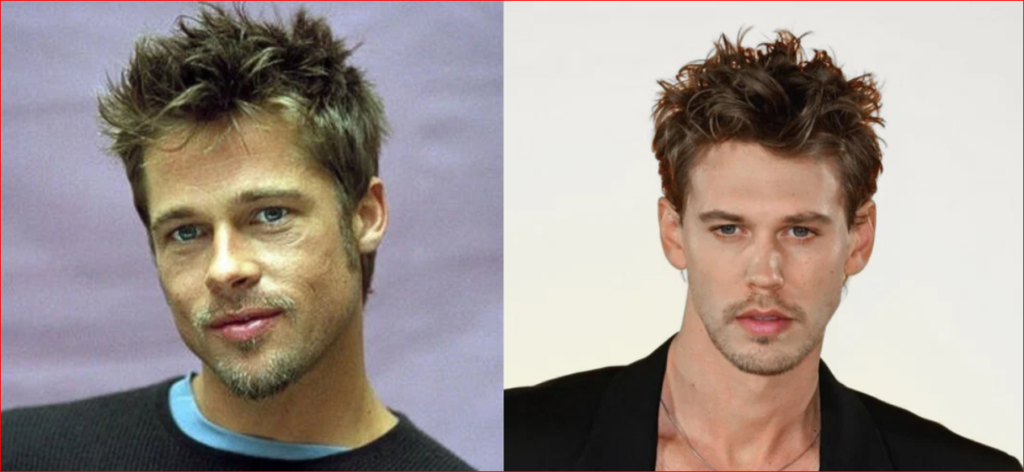
TikTok barbers started posting under #warriorcuthaircut in 2023. The hashtag hit 220 million posts. Austin Butler wore it on a red carpet. Brad Pitt wore something adjacent to it in Fight Club in 1999 before anyone had a phone to post the photo. Pall Mall Barbers named it the number one men’s cut in London for 2026. Gusto Hair in September 2026 confirmed they are seeing it requested in the chair every week.
The warrior cut is now one of the most requested men’s haircuts in barbershops globally. And yet most guides either oversell the drama or undersell the wearability.
This one does neither. Twenty warrior cut styles, the honest face shape guide, exactly what to tell your barber, whether it is actually high maintenance, and why the name is more dramatic than the cut itself.
At a Glance
| Need | Best Version |
|---|---|
| Most wearable 2026 | Classic low taper 2.5 to 3 inches |
| Most popular TikTok | Mid-fade warrior cut |
| Best grow-out | Low taper every 4-5 weeks |
| Office appropriate | Conservative 2 inches, low taper |
| Wavy hair, effortless | Sea salt and air dry, done. |
| Thick hair | Internal weight removal is essential. |
| Receding hairline | The work’s volume draws the eye upward |
| Brad Pitt reference | Short warrior, heavy texture |
| Austin Butler reference | Longer warrior, more movement |
What Is the Warrior Cut Haircut?
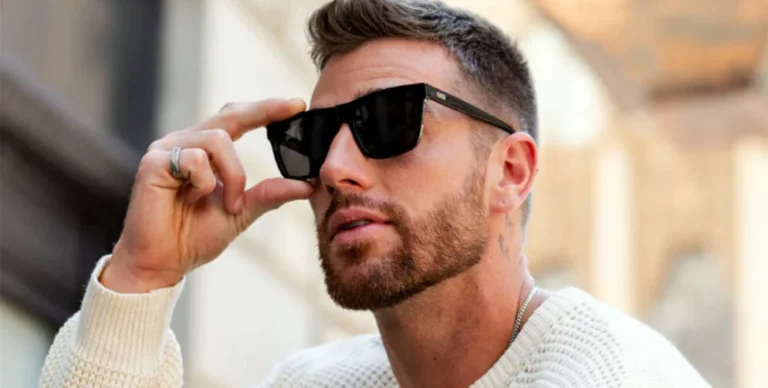
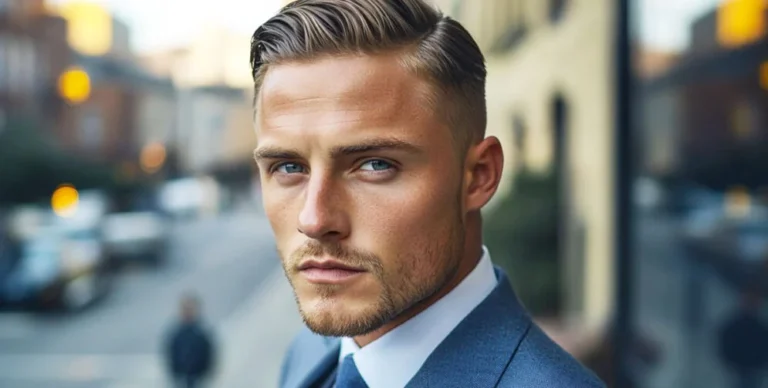
The warrior cut is a textured men’s haircut built around contrast and shape. The top is left longer—two and a half to four inches—with plenty of movement and separation created through point cutting. The sides are tapered or faded to create clean structure. The finish is deliberately undone: matte, natural, and slightly messy rather than smooth or polished.
Daimon Barber, whose May 2026 guide is the most technically precise on this topic, describes it as a style that exudes the undone confidence of a lived-in look that feels sharp without appearing overworked. That is accurate and useful. The warrior cut is not trying to look perfect. It is trying to make you look like you could look like this every day without effort, even though it took a skilled barber and three minutes of morning product to get there.
Where Did the Name Warrior Cut Come From?
Here is the detail nobody in the warrior cut content world explains: the name is a TikTok invention.
The term “warrior cut” does not come from barbershop tradition, historical warrior culture, or any established men’s grooming vocabulary. In 2023, TikTok barbers started posting textured, disconnected cuts under the hashtag #warriorcuthaircut, and the name caught because it matched the aesthetic of bold, masculine, slightly aggressive. The hashtag reached 220 million posts. By 2024 the term was being searched on Google and requested in barbershops by name.
The warrior cut is now a real barbershop request with a real established look. The name just did not exist before 2023.
Warrior Cut vs. Textured Crop What Is the Difference?
The warrior cut and the textured crop share a foundation of short sides, a textured top, and a matte finish. The differences are in degree rather than category.
The textured crop is the standard version: clean, moderate texture, and predictable finish. The warrior cut is the more aggressive version: layers are choppier, the disconnect between top and sides is more pronounced, and the deliberate messiness is stronger. Hairaide describes it as more aggressive; the layers on top are choppier, the disconnect more pronounced, and the overall vibe bolder.
Think of it this way: a textured crop says deliberately styled. A warrior cut says deliberately undone.
Is a Warrior Cut Like a Mullet?
No—but the confusion is understandable.
Both cuts use scissors as the primary tool. Both aim for deliberate texture and natural movement rather than clipper-precise structure. Both have experienced a 2026 revival.
The silhouettes are completely different. A mullet is short at the front, longer at the sides, and longest at the back—the classic business-front-party-back structure. A warrior cut has a full, textured top that is roughly equal in length throughout, closely tapered or faded sides, and no additional length at the back.
The common ground is the texture-first, scissors-over-clippers philosophy. The shape is unrelated.
For the full mullet guide, our modern mullet page covers the 2026 version.
Is the Warrior Cut the Same as the Wolf Cut?
Related aesthetics, different silhouettes.
The wolf cut is longer throughout the crown has short layers but the sides and back retain significant length, creating the shaggy, layered, movement-rich wolf silhouette. The sides are not closely cut. The overall shape is fuller and less structured.
The warrior cut is shorter and more structured. The sides are closely tapered or faded. The contrast between the textured top and the clean sides is the defining element. The warrior cut has more barbershop precision than the wolf cut more fade or taper, less overall length, cleaner perimeter.
For the full wolf cut guide, our wolf cut men page covers twenty layered variations.
Why Is the Warrior Cut Trending in 2026?
TikTok Started It 220 Million Posts
The timeline is clear. In 2023, TikTok barbers began posting disconnected textured cuts under #warriorcuthaircut. The content was shareable because the name was memorable and the before-and-after transformation was dramatic. 220 million posts followed.
By 2024, Austin Butler and Nicholas Galitzine were being spotted wearing versions of the cut at public events, providing the celebrity validation that moved it from social media into mainstream barbershop requests. Pall Mall Barbers in London named it as one of the cuts set to dominate 2026. In September 2026, Gusto Hair confirmed it is consistently being requested in the chair.
Brad Pitt Fight Club The 90s Original
The warrior cut has a cultural ancestor. Brad Pitt’s Tyler Durden in Fight Club 1999 wore a short, heavily textured, deliberately undone version that carries every aesthetic principle of the modern warrior cut. The messy separation, the choppy layers, the matte finish, the sense of not trying too hard while obviously having thought about it.
The modern 2026 version is more refined than the Tyler Durden original. Cleaner fades or tapers on the sides replace the more ambiguous side treatment of the film. Better matte products replace the heavy gel or wax of the 90s. The philosophy is the same: controlled chaos.
Austin Butler The 2026 Celebrity Validation
Austin Butler represents the more current reference point. His warrior-cut appearances from 2024 onward demonstrated that the style translates from TikTok screens to red carpets. The longer, more movement-rich version of the warrior cut — four or more inches on top with significant texture and flow — reads as fashion-forward in formal settings when executed correctly.
The Austin Butler version is not the starting point for most people. The Brad Pitt version shorter top, simpler texture, lower taper is the more practical daily-wear reference.
The Shift from Fades to Scissors
Gusto Hair in September 2026 placed the warrior cut within a broader cultural shift: away from ultra-sharp clipper work that has dominated for the last several years, toward something softer, more textured, and cut mostly with scissors.
This is the same shift that is driving the middle part and the wolf cut in 2026. Men are moving from the two-week skin fade maintenance cycle toward scissor cuts that grow out more gracefully and require less frequent barbershop visits.
The warrior cut is the bold end of that shift. The middle part is the softer end. Both share the same cultural direction: scissors over clippers, texture over precision, and movement over structure.
20 Warrior Cut Haircut Styles for 2026
Classic Warrior Cut
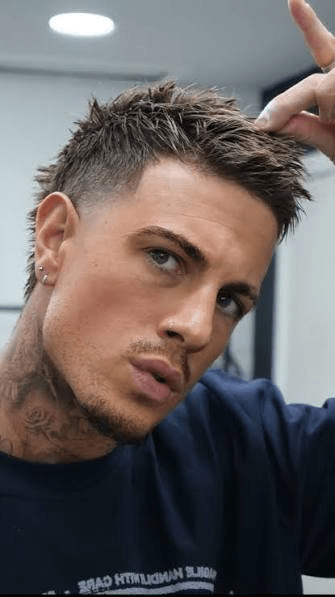
The baseline version Pete and Pedro describe in their August 2026 guide. Low taper on the sides, two and a half to three inches on top, heavy point cutting for peaks and valleys throughout the top section, messy piecey finish rather than smooth. This is the most wearable version — school-appropriate, office-appropriate, and achievable at any barbershop comfortable with scissor work.
Tell your barber, “Warrior cut. Keep two and a half to three inches on top—heavily point-cut for texture and separation. I want a messy, piecey finish, not a smooth scissor look. Low taper on the sides, no skin. Matte finish.”
Face shape: All — the most universally flattering version.
School safe: Yes.
Office safe: Yes.
Maintenance: Every 4-5 weeks.
Style time: 3-4 minutes — sea salt spray, rough dry, fingertip matte clay.
Warrior Cut with Mid Fade
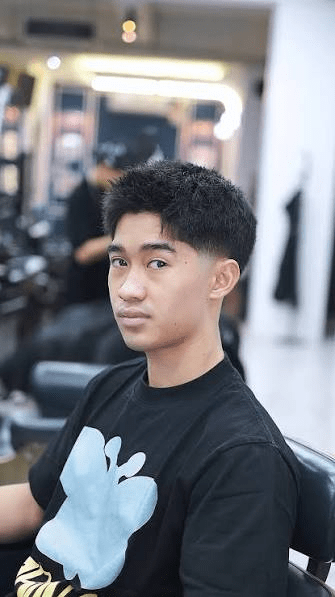
The most TikTok-requested version. A mid fade starting at the temple on the sides with a full warrior textured top above. The stronger contrast between the faded sides and the full top is what most reference photos show when someone searches warrior cut.
Tell your barber: “Warrior cut with a mid fade. Temple start. Number 1.5 at the lowest. Three inches on top — heavy point cutting, piecey finish. Bring a reference photo.”
Maintenance: Every 3-4 weeks.
For the full mid-fade guide, our mid-fade haircut page covers every variation.
Warrior Cut Low Taper
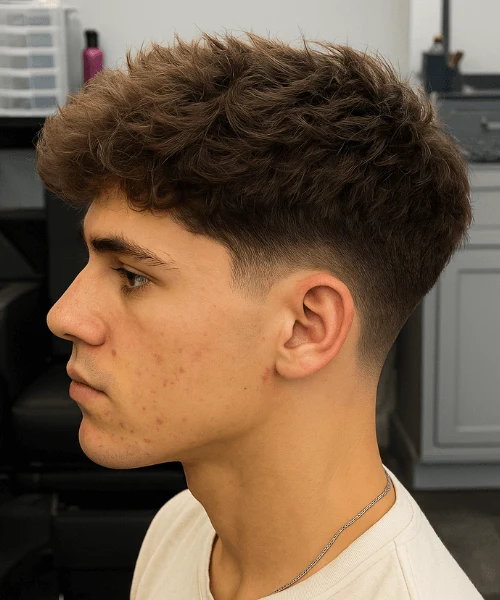
Pete and Pedro’s preferred version for longevity: the low taper keeps the look fresh longer without constant barbershop visits. The sides taper gradually with no skin visible anywhere. The mildest contrast warrior cut — most conservative and most professional.
Tell your barber, “Warrior cut with a low taper. Number 2 at the lowest is no skin. Two and a half to three inches on top, heavy point cutting. Office appropriate.”
Office safe: Yes, in every environment.
School safe: Yes, universally.
Maintenance: Every 4-5 weeks.
For the full low taper guide, our low taper fade page covers every conservative variation.
Warrior Cut Skin Fade
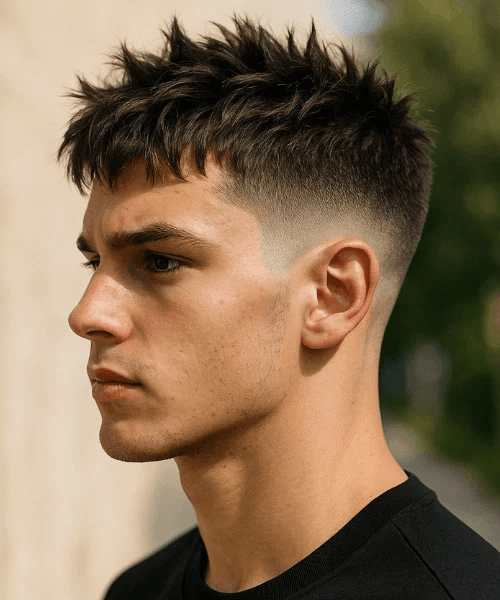
Maximum contrast. Zero guard at the lowest section, blending up to the full textured warrior top. The sharpest, most distinctive version. Bold enough to be a statement wherever it appears.
Tell your barber: “Warrior cut with a skin fade. Zero guard at the lowest — to skin. Mid to high start. Three to four inches on top — warrior texture and separation.”
School safe: Check — skin fades occasionally conflict with conservative dress codes.
Maintenance: Every 2-3 weeks.
For the skin fade technique, our skin fade haircut page covers the grow-out reality honestly.
Short Warrior Cut
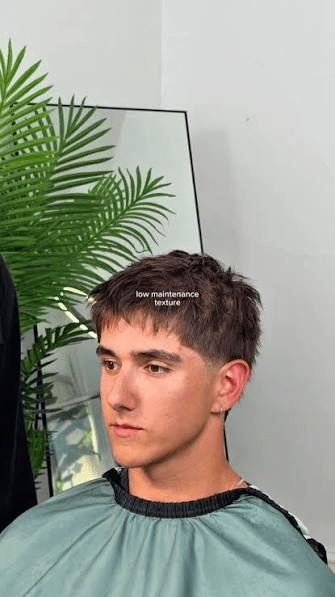
One and a half to two inches on top. Tighter and cleaner than the classic version. Lower maintenance and faster to style. The Brad Pitt Fight Club reference version — shorter, more aggressive texture, stronger contrast between the closely cropped look and the deliberate mess on top.
Tell your barber: “Short warrior cut. Keep one and a half to two inches on top — heavy point cutting for texture. Low to mid taper on the sides. Clean but aggressive texture.”
Style time: 2-3 minutes.
Maintenance: Every 3-4 weeks.
Longer Warrior Cut
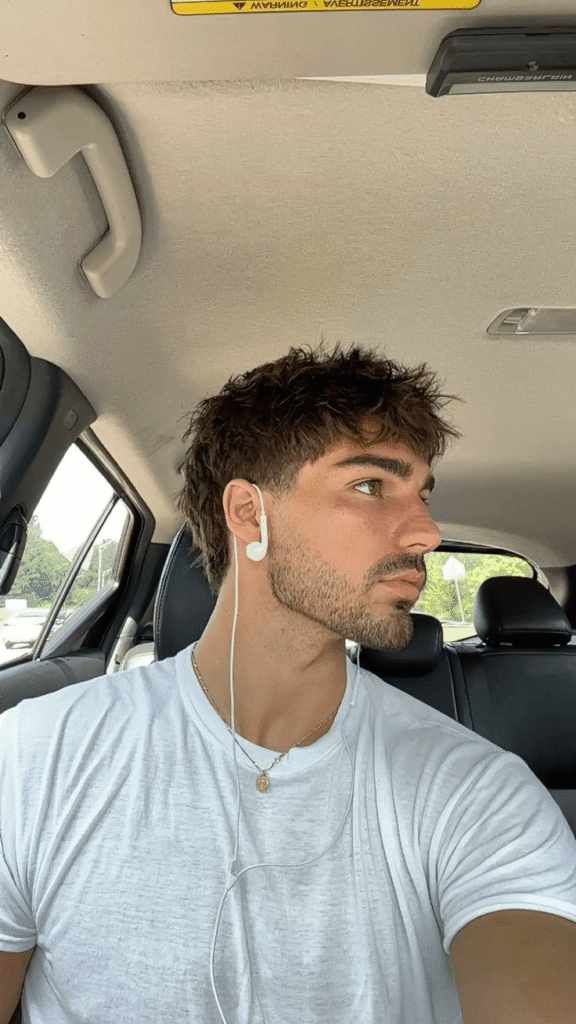
Four or more inches on top with significant movement, flow, and layering. The Austin Butler reference version. More editorial, more fashion-forward, closer to the wolf cut territory. Requires more styling time and a barber who can execute significant layering without the top collapsing flat.
Tell your barber: “Longer warrior cut. Keep four to five inches on top — heavy layering for movement and texture. I want the top to flow and move, not sit flat. Low to mid taper or scissors on the sides.”
Style time: 5-7 minutes — blow dry for direction and volume.
For the layered version reference, our wolf cut men guide covers the layering technique.
Warrior Cut with Textured Fringe
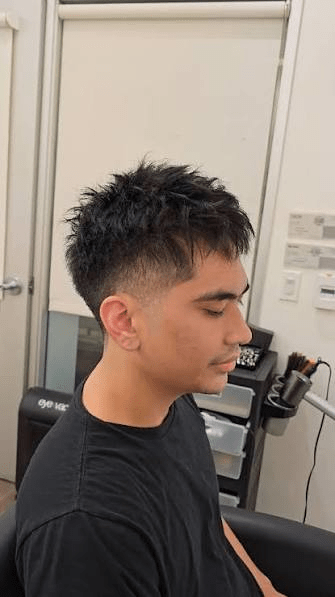
A forward-falling textured fringe combined with the warrior cut structure on the crown and sides. The fringe adds direction and softens the overall look while the warrior texture remains throughout the top section.
Tell your barber: “Warrior cut with a textured fringe. Keep the fringe falling forward — eyebrow to cheekbone length. Point-cut the fringe for separation. Heavy warrior texture through the crown. Low taper.”
For the fringe technique, our textured fringe haircut guide covers point-cutting in depth.
Warrior Cut with Beard
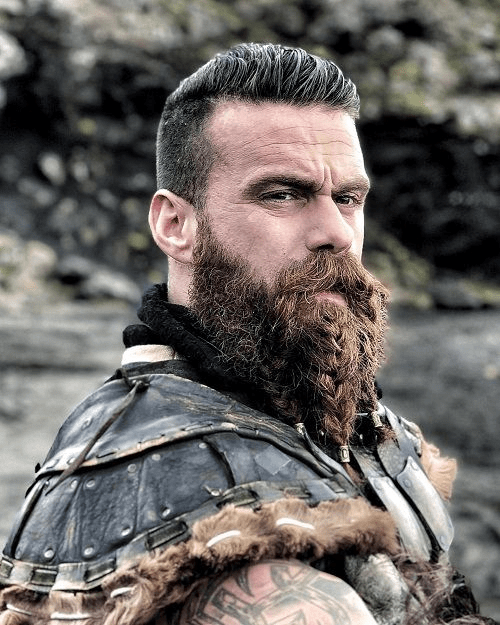
The most popular adult combination in 2026. Gusto Hair specifically notes that the warrior cut pairs best with a beard or stubble that is kept but not sharply lined — the deliberate softness of the beard edge matches the deliberately undone character of the warrior top.
Tell your barber: “Warrior cut with beard blend. Low taper on the sides fading into the beard at the sideburn — no hard line between the fade and the beard. Warrior texture on top.”
Maintenance: Every 4-5 weeks — beard and hair aligned.
Messy Warrior Cut
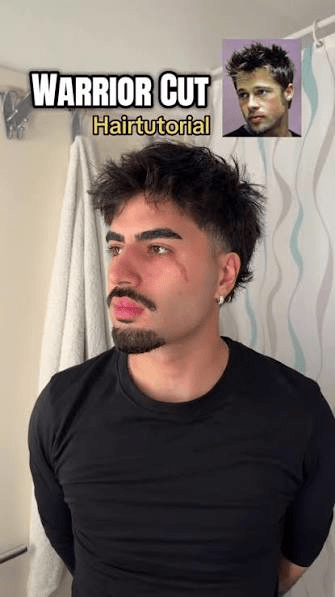
The most low-effort styling version. Heavy internal layering throughout the top section, deliberately irregular lengths, intentional disorder. Sea salt spray and air drying produces the full result. The version PureHairLogic describes as the “I just rolled out of bed and look amazing” hairstyle.
Tell your barber: “Messy warrior cut. Heavy internal layers throughout — I want maximum disorder and movement. Nothing should sit neatly. Scissor sides or low taper. No precise line.”
Style time: Sea salt spray, rough scrunch, air dry. Zero effort.
Warrior Cut Drop Fade
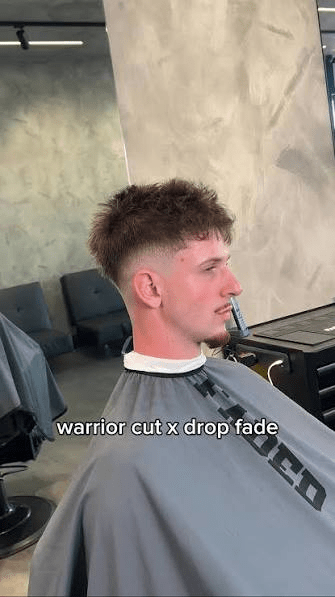
The curved arc of a drop fade behind the ear combined with the full warrior textured top. The drop fade adds dimensional interest at the sides while the warrior texture creates the full impact above. More distinctive than a standard fade warrior cut.
Tell your barber: “Warrior cut with drop fade. The fade should curve down behind the ear — arc shape, not straight across. Three inches on top, heavy warrior texture.”
For the drop fade technique, our drop fade haircut guide covers the curved method.
Warrior Cut for Wavy Hair
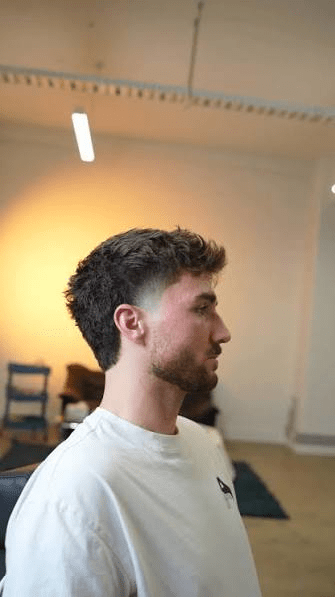
The easiest version of the warrior cut to achieve. Natural wave creates movement and separation automatically. Sea salt spray on damp hair, rough dry with hands, done. The wave does the texture work that straight hair requires product and technique to achieve.
Tell your barber: “Warrior cut for wavy hair. Let the natural wave drive the texture — do not fight it. Three to four inches on top, layered to remove weight so the wave can move. Low taper or scissor sides.”
Style time: Sea salt spray, rough scrunch, air dry. No further effort needed.
Warrior Cut for Curly Hair
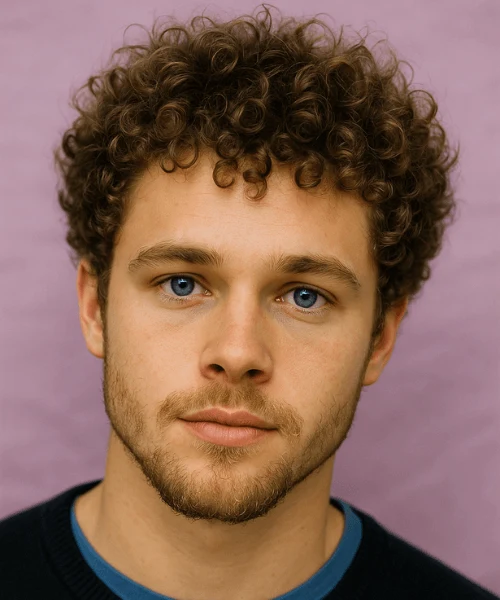
Natural curl produces warrior texture without any product. The curl pattern creates the peaks and valleys that straight hair needs point cutting and matte clay to achieve. The dry-cut rule applies: curly hair shrinks significantly when wet, and a wet-cut result is shorter than intended.
Tell your barber: “Warrior cut for curly hair. Please cut the top section dry — my curls shrink when wet. Keep three inches on top dry. Natural curl does the texture work. Low fade on the sides — the natural curl creates enough contrast without aggressive fading.”
For the complete curly guide, our curly hairstyles page covers types 2A through 4C.
Warrior Cut for Straight Hair
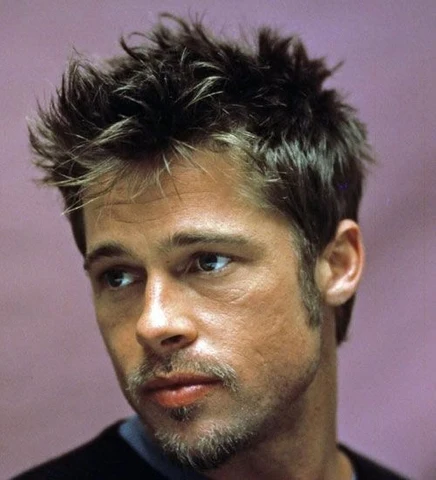
Straight hair needs the most product and technique to achieve warrior cut texture because the natural flat-lying strands do not create separation or movement independently. Point cutting is essential — blunt-cut straight hair produces a flat, heavy mass rather than the choppy, separated warrior result.
Tell your barber: “Warrior cut for straight hair. I need heavy point cutting throughout the top section to create separation — my hair lies flat without it. Two and a half to three inches on top. I will use matte clay at home for grip.”
Style time: 4-5 minutes — matte clay through dry or near-dry hair, fingertip application.
Warrior Cut for Thick Hair
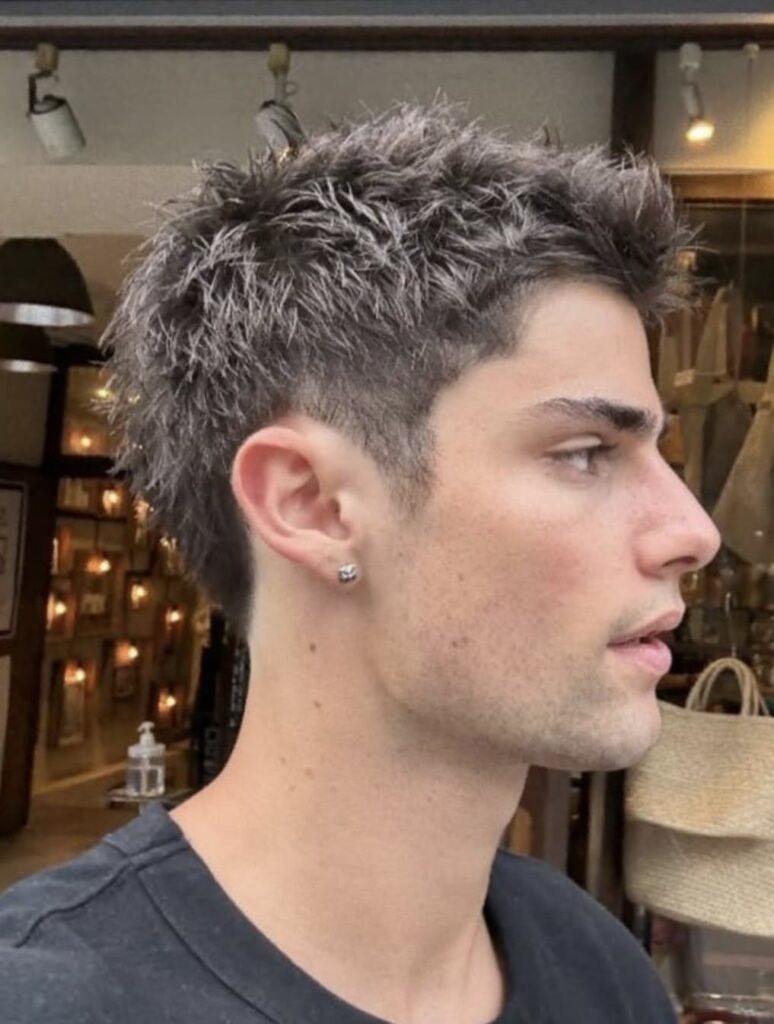
Thick hair without internal weight removal produces the helmet effect, a heavy, dense mass on top that does not separate or move regardless of how much product is applied. The barber must remove internal weight through the top section to allow the warrior texture to function.
Tell your barber: “Warrior cut for thick hair. Please remove internal weight throughout the top section — I want the ends to separate and the layers to move. Do not just cut the surface length. Three inches on top, internal thinning. Low to mid fade on the sides.”
Warrior Cut for Thinning Hair or Receding Hairline
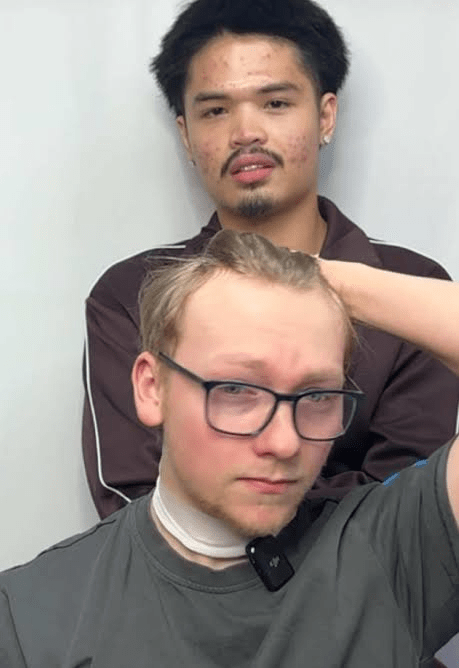
Forte Series confirmed in their guide that the warrior cut works for thinning hair — volume on top draws attention upward and helps create a fuller, balanced look. This is the version most men assume will not work for them and most competitors do not address.
The principle: concentrated texture and volume at the crown draws the eye away from hairline recession. The choppy, lifted warrior texture creates the appearance of density that thinning hair lacks at the surface.
Tell your barber: “Warrior cut adapted for thinning hair. Keep more volume at the crown — I want lift and texture there specifically. Low to mid taper on the sides. Avoid skin fade — keep the sides fuller to balance the overall silhouette.”
Warrior Cut with Mid Taper
The balanced version between the low taper and the mid fade. Temple start, moderate contrast, no skin. School-appropriate and office-appropriate. The most versatile version for men who want clear warrior cut character without the maintenance of a tight fade.
Tell your barber: “Warrior cut with a mid taper. Temple start — number 1.5 at the lowest, no skin. Three inches on top, heavy warrior texture. School and office appropriate.”
For the mid taper guide, our mid taper fade page covers every variation.
Warrior Cut High Fade
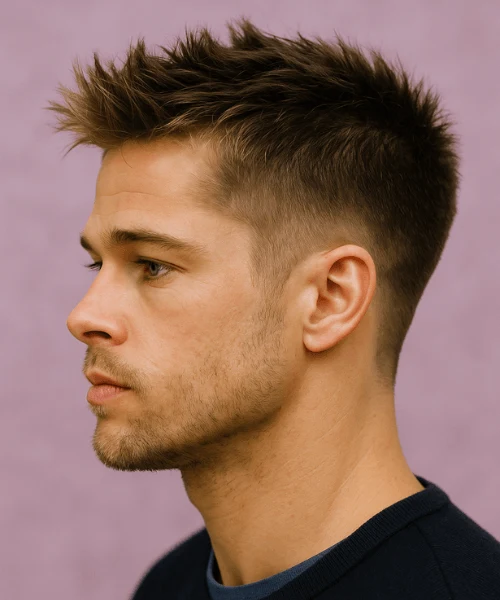
The boldest standard version. The fade starts above the temple creating a large area of closely cut sides. Maximum contrast between the clean sides and the full warrior top. Suitable for men who want the strongest possible statement and teen boys aged fifteen and above.
Tell your barber: “Warrior cut with a high fade. Start above the temple. Number 1 at the lowest. Three to four inches on top, warrior texture. Bold — check school policy first.”
School safe: Check — high fades occasionally conflict with conservative dress codes.
Maintenance: Every 2-3 weeks.
Warrior Cut Blowout Style
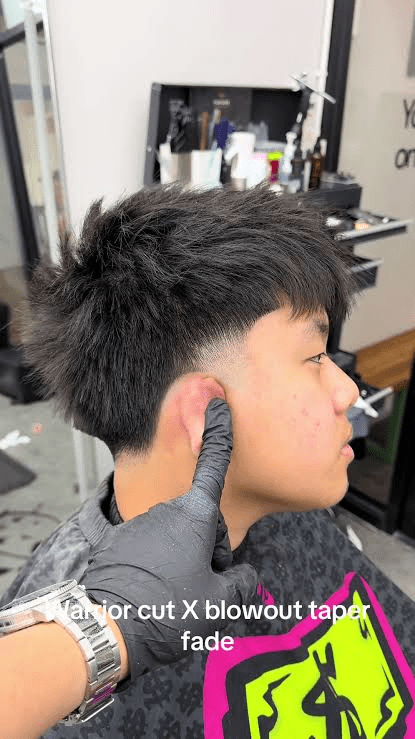
The blowout taper’s crown volume combined with the warrior cut’s choppy texture. The blow-dried root lift produces height at the crown while the point-cut warrior layering creates the texture and separation throughout. More volume than a standard warrior cut.
Tell your barber: “Warrior cut with blowout volume. Keep three to four inches on top — I want maximum root lift when blow-dried. Heavy point cutting for texture. Low to mid taper.”
For the blowout technique, our blowout taper guide covers the blow-dry method.
Warrior Cut Edgar Hybrid
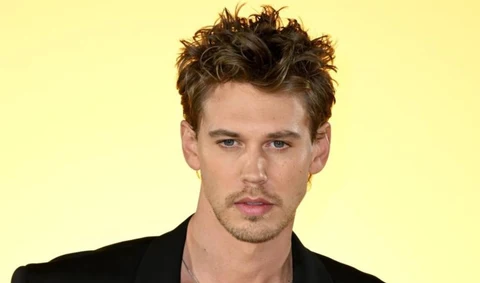
The Edgar cut’s straight blunt fringe combined with warrior cut texture throughout the crown section. The blunt front line is the Edgar element — the choppy, disconnected crown texture is the warrior element. Bold and deliberate.
Tell your barber: “Edgar warrior hybrid. Straight blunt fringe at eyebrow level. Warrior texture throughout the crown — heavy point cutting, choppy separation. High fade on the sides. Bold version — school policy check.”
For the full Edgar guide, our edgar haircut page covers every variation.
Conservative Office Warrior Cut
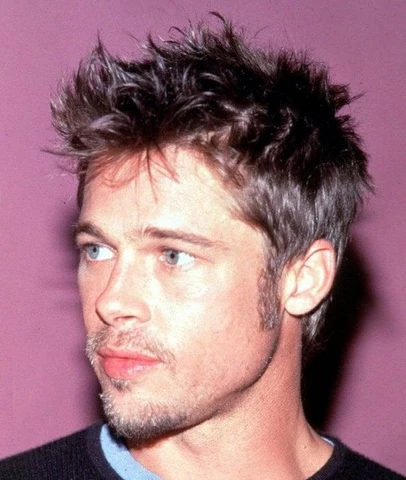
Two inches on top — shorter than the standard warrior cut — with heavy point cutting but a less aggressive overall silhouette. Low taper on the sides. Matte finish. The version that reads as deliberately textured rather than deliberately messy. Office-appropriate in every environment.
Tell your barber: “Conservative warrior cut. Keep two inches on top — point-cut for texture but keep it controlled, not too wild. Low taper, number 2 minimum. Office appropriate. Matte finish.”
Office safe: Yes everywhere.
School safe: Yes, universally.
Maintenance: Every 4-5 weeks.
Which Face Shape Suits the Warrior Cut?
Square and Rectangle The Best Match
PureHairLogic, in their May 2026 analysis, is specific: the warrior cut truly shines on square, rectangle, and diamond face shapes. The textured top on these faces plays perfectly off strong, defined features. The volume adds balance and creates a striking look where the cut and the bone structure work together rather than competing.
Square and rectangular faces have the structural definition that makes the warrior cut’s bold character feel intentional rather than overwhelming.
Oval Face Strong Match
Every warrior cut variation works on an oval face. The balanced proportions suit any top length and any taper or fade level. The classic, mid-fade, and short warrior all look equally strong.
Round Face: Adjust the Styling Direction
Round faces suit the warrior cut with one important adjustment. PureHairLogic is direct: keep the top slightly shorter and style upward rather than outward. Styling the warrior texture upward creates vertical proportion. Styling it outward, letting the choppy layers spread sideways, adds width to a face that benefits from length.
The mistake on round faces is taking a reference photo of the widest, most laterally explosive warrior cut and requesting it directly. The corrected version has the same character, but the texture lifts rather than spreads.
Diamond Face Good Match
The choppy warrior texture at the crown balances prominent cheekbones by creating visual interest above rather than at the cheekbone level. The textured top draws the eye upward and reduces the visual emphasis on the widest point of the face.
Oblong Face Softer Version
A very long face benefits from added width rather than height. Avoid the maximum-volume crown warrior cut that adds further vertical proportion. Choose a fuller, more outward-spreading texture rather than the lifted upward version. Softer sides with a low taper rather than a skin fade keep the overall silhouette balanced.
Heart Face Low Taper Preferred
A wider forehead with a narrower chin suits the warrior cut in its low taper version. The softer sides reduce the visual emphasis on the forehead width. A more moderate top length of two and a half inches rather than four produces better proportion than the longer, fuller warrior versions.
The Honest Self-Assessment
Reddit asks, “Would a warrior cut look good on me?” and the honest framework has three questions.
Do you have a strong bone structure, a defined jaw, prominent cheekbones, or a square or angular face? If yes, go bold. The stronger the structure, the more the warrior cut serves it.
Do you have softer or rounder features? If yes, go for the classic low taper version, style upward, and keep the top on the shorter end. The warrior cut still works. It just needs the adjustments above.
Are you comfortable with three to five minutes of morning effort? If yes, any version. If no—the short warrior cut with sea salt spray and air dry is the lowest-effort achievable version.
What Do I Tell My Barber for a Warrior Cut?
The Four Technical Elements
Pete and Pedro in their August 2026 guide break it down precisely. Point cutting or razor texture on top, not blunt scissor cutting. Messy, piecey finish on top, not smooth or controlled. Soft taper around the ears and nape rather than a skin fade. Mention any cowlicks before the cut starts.
That four-element brief prevents the most common warrior cut failure: getting a standard textured crop instead. Without these specific instructions, most barbers default to moderate texture and a standard taper. The warrior cut needs the explicit instruction that the finish should be more aggressive than their default.
The Universal Script
“Warrior cut. Keep two and a half to three inches on top, heavily point-cut for texture and separation. I want a messy, piecey finish, not a smooth scissor look. Low taper or mid-fade on the sides. Matte finish. Please mention any cowlicks I should know about before you start.”
Scripts Per Variation
Classic low taper: “Warrior cut low taper, number 2 sides, two and a half to three inches top, heavy point cutting, piecey messy finish.”
Mid-fade bold: “Warrior cut with mid-fade temple start, number 1.5, three to four inches top, choppy layers, deliberately undone finish.”
Professional office: “Conservative warrior low taper, number 2 minimum, two inches top, point-cut but controlled. Office appropriate.”
Beard combination: “Warrior cut paired with beard blend low taper fading into beard at sideburn, no hard line. Warrior texture on top.”
Wavy hair: “Warrior cut for wavy hair; let the natural wave drive the texture. Three to four inches, remove weight, not length. Low taper.”
The Right Barber for a Warrior Cut
Hairaide in their June 2026 guide is direct: the key is finding a barber comfortable with disconnected styles who can nail the choppy layered texture on top.
What that means in practice: look at the barber’s portfolio specifically for scissor work, textured cuts, and disconnected styles. A barber trained primarily in clipper fades can produce excellent fades but may default to a clipper-heavy approach on the top section that produces a standard textured crop rather than a warrior cut. The warrior cut is primarily a scissors-on-top job with a fade or taper added at the sides; the scissors skill is what separates the result.
Bring Reference Photos
Daimon Barber’s warning is worth repeating: without a reference image, many barbers will default to a standard textured crop rather than a true warrior cut. Bring a front photo showing the top texture and length and a side photo showing the disconnect or taper level and the overall silhouette.
Is the Warrior Cut High Maintenance?
The Honest Timeline
The warrior cut is not as high maintenance as the skin fade cycles that dominated men’s grooming for the previous five years.
The low taper version needs a barbershop visit every four to five weeks, the most forgiving schedule in the fade-adjacent world. The taper grows out gradually rather than showing obvious grow-back within two weeks like a skin fade. Daimon Barber confirms this specifically: the warrior cut grows out better than sharper disconnected cuts, making maintenance easier between barber visits.
The mid-fade version needs attention every three to four weeks. The skin fade version is every two to three weeks, similar to other skin fade styles.
Daily Styling: What It Actually Takes
Three to five minutes. The warrior cut’s deliberate messiness is an advantage here; the goal is textured and undone, not precise and smooth. Imprecision is the point.
Sea salt spray on towel-dried hair, rough-dried with hands, finished with fingertip matte clay. That is the complete method. The biggest styling mistake is spending more than five minutes; the more you perfect the warrior cut, the less it looks like one.
Annual Cost Comparison
| Version | Visits Per Year | Annual Cost (US) |
|---|---|---|
| Classic low taper | 10-12 | $300 to $360 |
| Mid fade | 12-15 | $360 to $450 |
| Skin fade | 17-26 | $510 to $780 |
At standard US barbershop prices of approximately $30 per visit as of September 2026, the low taper warrior cut is significantly cheaper annually than the skin fade versions that many men were maintaining previously.
Five Common Mistakes: The Complete List
Daimon Barber identified three. The full list is five.
Mistake one: using too much product. Heavy product kills the natural movement that makes the warrior cut look intentional. The goal is grip and texture, not structure and stiffness. A pea-sized amount of matte clay is enough.
Mistake two: choosing shine over matte. Pomades and high-shine products take the warrior cut in the completely wrong direction. The finish should feel dry, soft, and natural rather than wet or reflective.
Mistake three: going too aggressive with the fade. If the sides are taken too high or the disconnect is too sharp, the style loses its balance and starts to resemble an undercut rather than a warrior cut. A low taper works best as the starting point.
Mistake four: using the wrong barber. A clipper-focused barber without a strong scissors technique on top produces a standard textured crop, not a warrior cut. The difference is significant and visible.
Mistake five: skipping the reference photo. Without one, the barber interprets “warrior cut” according to their own template. The reference photo ensures the disconnect level, top length, and texture character are aligned before scissors touch hair.
Warrior Cut School and Office Guide
Is the Warrior Cut School Appropriate?
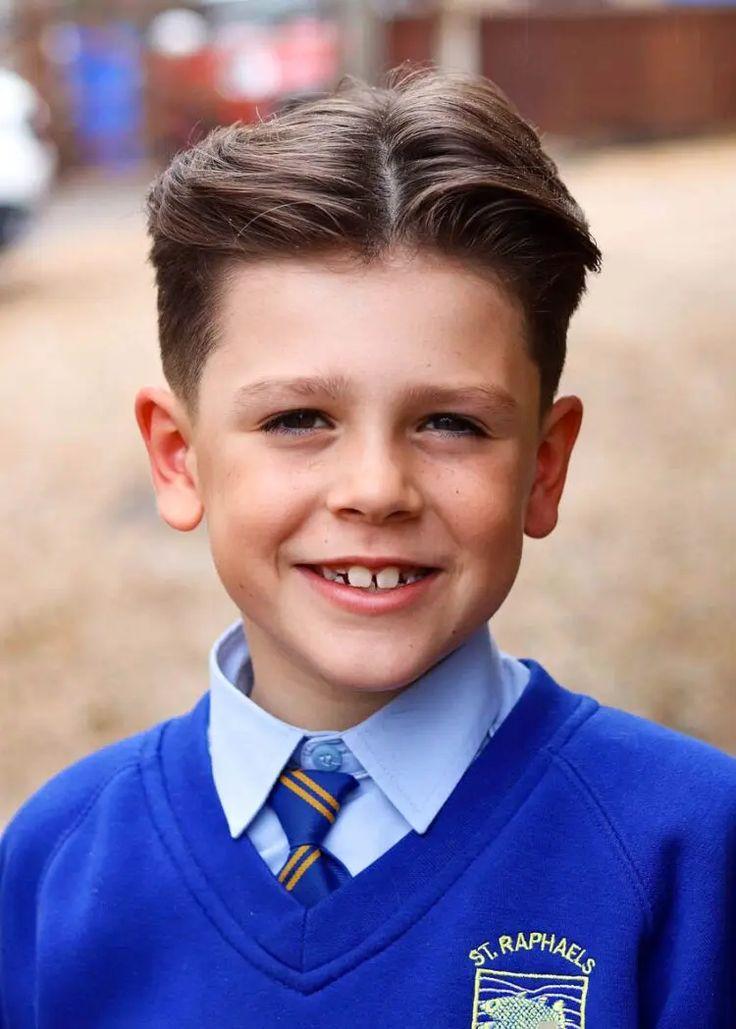
The classic low taper version is school-appropriate everywhere. No school dress code specifically prohibits a textured top with a low taper. Pete and Pedro confirm the classic warrior cut as wearable at school, work, or anywhere you need to look put together.
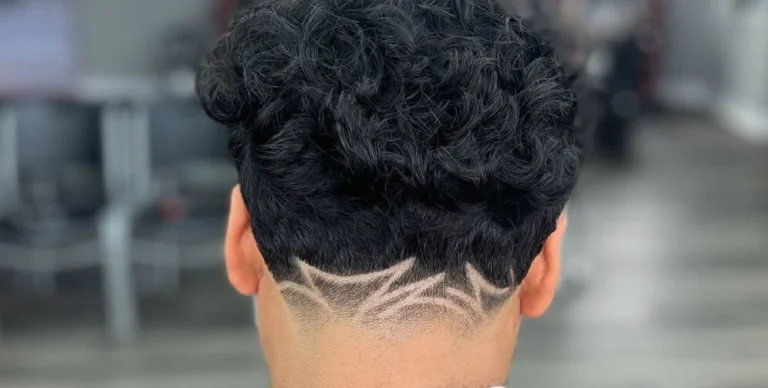
The skin fade and high fade versions need a policy check at conservative schools. The Edgar warrior hybrid and any version with shaved designs need a policy check at most schools.
Is the Warrior Cut Office Appropriate?
Yes, in its standard versions. PureHairLogic’s May 2026 guide addresses this directly: the clean fade on the sides keeps the look polished and professional. The textured top adds personality without looking inappropriate at work.
The conservative office warrior cut two inches on top, low taper, and controlled point cutting passes every professional environment without requiring any explanation or exception.
School and Office Safety Table
| Version | School Safe | Office Safe |
|---|---|---|
| Classic low taper | Yes, universally. | Yes, everywhere |
| Mid taper | Yes. | Yes. |
| Mid fade | Usually yes. | Yes. |
| High fade | Check policy. | Yes. |
| Skin fade | Check policy. | Yes, most environments |
| Warrior with design | Usually not | Yes. |
| Edgar warrior hybrid | Check policy. | Yes. |
How to Style the Warrior Cut
The Three-Minute Method
Start with towel-dried hair, not soaking wet, not bone dry. Damp is the window when products absorb rather than sit on top.
Apply sea salt spray by spraying directly onto the top section and working through with fingers. This adds texture, grip, and the directional separation that the warrior cut’s point-cut layers need to show.
Rough-dry with your hands for sixty seconds—no brush, no comb, no specific direction. The goal is removing moisture while building volume and mess. Point the dryer upward and tousle.
Apply a pea-sized amount of matte clay with fingertips, not palms. Work from the back forward, through the top section only. The fingertip application deposits product on the peaks of the point-cut layers rather than coating the entire surface.
Finish by pulling pieces upward and apart rather than pressing down. The warrior cut’s texture should point in multiple directions with visible separation between layers.
Total time: three to five minutes.
Products Honest No-Bias Guide by Budget
Budget under $12:
Not Your Mother’s Sea Mist Sea Salt Spray ($8) is a reliable salt spray for texture foundation. Got2B Phenomenal Matte Paste ($10) solid matte finish for straight and wavy warrior cuts.
Mid-range $12 to $20:
American Crew Fiber ($14) has a strong fibrous hold with a matte finish and works particularly well on thick straight hair warrior cuts. R+Co Rockaway Salt Spray ($16) is a premium salt spray with a better scent and consistency than budget alternatives.
Premium above $20:
Oribe Dry Texturizing Spray ($44) the strongest-performing texture spray available, particularly effective on fine or straight warrior cuts where standard salt sprays underperform. Moroccanoil Texture Clay ($24) consistent professional-grade matte hold across all hair types.
What Never to Use on a Warrior Cut
Heavy pomade adds weight that collapses the point-cut separation within two hours of styling. The choppy peaks that define the warrior cut cannot survive pomade weight.
High-shine products like gels, serums, and gloss finishes turn the warrior cut into a wet-look style that is exactly what the warrior cut is designed not to be. The 1999 Fight Club reference used heavy shine products. The 2026 version does not.
Anything applied with palms rather than fingertips coats the entire surface evenly, eliminating the intentional unevenness that the warrior cut’s technique created.
Browse More Related Guides
For the longer, more layered version, our wolf-cut men guide covers twenty variations with the post-shower styling method.
For the shorter textured alternative, our textured crop haircut page covers the moderate version of the same aesthetic.
For the fringe-focused version, our textured fringe haircut guide covers point-cutting technique in depth.
For the bold cultural alternative, our Edgar haircut page covers the blunt-fringe version.
For side treatment guides: our mid fade page, low taper guide, drop fade page, and blowout taper guide.
For the scissor-cut alternative if you want less contrast, our middle part haircut page covers the softer end of the 2026 scissors movement.
Frequently Asked Questions
What is the Warrior Cut?
The warrior cut is a textured men’s haircut with a longer, choppy, point-cut top of two and a half to four inches and closely tapered or faded sides. The finish is deliberately undone and matte rather than smooth or polished. The contrast between the textured top and the clean sides is the defining element. It is often compared to a more aggressive textured crop. The name originated on TikTok in 2023 and reached 220 million posts before becoming a mainstream barbershop request in 2026.
What do I tell my barber for a Warrior cut?
Say: “Warrior cut. Keep two and a half to three inches on top, heavily point-cut for texture and separation. I want a messy, piecey finish, not a smooth scissor look. Low taper or mid-fade on the sides. Matte finish.” Bring a front and side reference photo. Without the photo, many barbers default to a standard textured crop rather than the true warrior cut silhouette.
Is the Warrior Cut high maintenance?
Less than you might expect. The low taper version needs a barbershop visit every four to five weeks, comparable to a crew cut and significantly less frequent than the skin fade cycles many men maintained previously. Daily styling takes three to five minutes: sea salt spray on damp hair, rough dry with hands, and fingertip matte clay. The deliberately undone finish means imprecision is the goal rather than a problem.
Which face shape suits Warrior Cut?
Square, rectangle, and diamond face shapes are the strongest matches; the textured top plays off strong defined features. Oval faces suit every warrior cut variation. Round faces benefit from styling the texture upward rather than outward to create vertical proportion. Oblong faces suit fuller, more lateral texture rather than maximum crown height. Heart faces suit the low-taper version with shorter top length.
Is a warrior cut like a mullet?
No, the silhouettes are different. A mullet is short at the front, longer at the sides, and longest at the back. A warrior cut has a full textured top of roughly equal length throughout, with closely tapered or faded sides and no additional length at the back. Both use scissors as the primary tool, and both aim for natural texture over precision structure, but the shapes are unrelated.
What is the Gen Z haircut called?
The Gen Z men’s haircut in 2026 is primarily the middle part, the wolf cut, and the warrior cut, all scissor-cut, texture-first styles moving away from the skin fade and textured crop combinations that dominated the previous five years. The warrior cut specifically represents the bold end of Gen Z men’s hair in 2026: confident, textured, and deliberately not trying too hard.
What haircut is trending for 2026?
The warrior cut is one of the five defining men’s haircuts of 2026 alongside the middle part, wolf cut, textured crop, and crew cut. Pall Mall Barbers named the warrior cut as one of the cuts set to dominate London in 2026. Gusto Hair in September 2026 confirmed it is consistently being requested in the chair. It represents the bold end of the broader shift from clipper-heavy fades toward scissor-cut textured styles.
Is a warrior cut good?
Yes, for men who want texture, movement, and a masculine aesthetic without extreme daily styling effort. The warrior cut works across face shapes with appropriate adjustments, suits multiple hair types, grows out more gracefully than skin fades, and requires three to five minutes of morning effort rather than a complicated routine. The honest caveat is that it needs a barber comfortable with disconnected scissor work to achieve the correct result.
Would a warrior cut look good on me?
Three questions answer this. Do you have a strong bone structure, a defined jaw, prominent cheekbones, and an angular face? If yes, go bold. Do you have softer or rounder features? Adjust to a shorter top styled upward rather than outward, and use a low taper rather than a high fade. Are you comfortable with three to five minutes of morning effort? If yes, any version. If not, the short warrior cut with sea salt spray and air-dry is the lowest-effort version that still reads as deliberate.
What is a Japanese haircut called?
The Japanese-influenced men’s haircut most associated with warrior aesthetics is the samurai-inspired cut with a longer top section with closely shaved or undercut sides, occasionally worn in a top knot or bound at the crown. The warrior cut borrows the general aesthetic principle of contrast between closely cut sides and longer textured tops from this silhouette but applies it in a modern Western barbershop context with point cutting and matte products rather than the traditional samurai structure.
What is a wolf cut hairstyle?
The wolf cut is a layered men’s haircut with short crown layers and longer sides and back, creating a shaggy, movement-rich silhouette. It shares the warrior cut’s emphasis on texture, scissors, and natural movement but differs in structure: the wolf cut retains length throughout the sides and back while the warrior cut closely tapers the sides. The wolf cut is softer and more relaxed. The warrior cut is more structured and has higher contrast.
Is the warrior cut office appropriate?
Yes, in its standard versions. The classic low taper warrior cut passes every professional environment without exception. The textured top adds personality without being unprofessional when finished with a matte product. The skin fade and high fade versions are office-safe in most modern workplaces. Conservative offices may prefer the shorter two-inch top version with a low taper; this reads as deliberately textured rather than deliberately messy.
What are the 7 basic haircuts?
The seven foundational barbershop cuts are buzz cut, crew cut, side part, fade, taper, undercut, and textured crop. The warrior cut sits at the aggressive end of the textured crop category; it shares the same fundamental structure but applies heavier point cutting, more deliberate disconnection, and a more pronounced messy finish than the standard textured crop.
Which is better, a U or a V cut?
U-cut and V-cut refer to the shape of the neckline at the back of the head: a U-shaped curve versus a V-shaped point. For the warrior cut, most barbers default to a clean, squared, or rounded neckline. Neither specifically enhances or detracts from the warrior cut’s overall character, as the neckline is a small detail compared to the top texture and side treatment. If you have a preference, state it; most barbers will accommodate either without adjustment to the rest of the cut.
The warrior cut has a dramatic name and a surprisingly wearable result. That combination is exactly why 220 million TikTok posts happened in two years and why Pall Mall Barbers put it at the top of their 2026 London predictions.
The cut is not complicated. Heavy point cutting on top. Taper or fade on the sides. Matte product and three minutes in the morning. Grow-out that is more forgiving than the skin fades it is replacing.
Pick the version that fits your maintenance preference. The low taper is classic for the least frequent barbershop visits. The mid fade for the strongest TikTok-referenced version. The conservative two-inch top for office environments where bold is relative.
Bring a reference photo. Tell your barber the specific script from this guide. Find a barber with scissor-cut textured work in their portfolio.
For the longer, more movement-rich version, our wolf-cut men guide covers the adjacent territory. For the shorter, more structured alternative, our textured crop page covers the same aesthetic at lower intensity.