Wolf Cut Men 2026: 20 Styles, the Layering Guide Nobody Explains, and What to Do After You Shower
“Got a wolf cut last night, showered, and have no idea how to style it.”
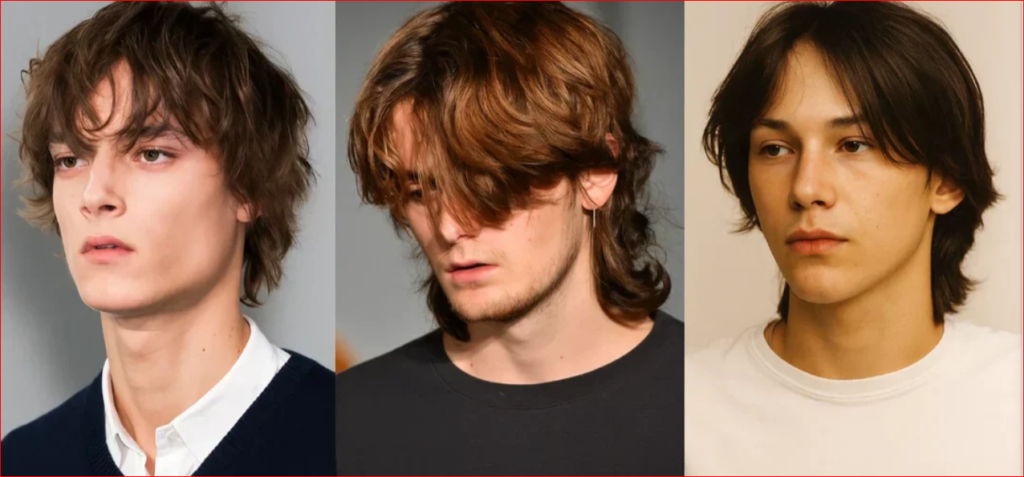
This Reddit post from last spring got hundreds of replies. Most of them were equally lost. One person suggested sea salt spray. Another said diffuser. Someone said to air dry and do nothing. Nobody gave a complete answer.
That gap is the entire problem with wolf-cut content online. Every guide shows you twenty photos. None of them tell you what happens when you wake up, shower, towel dry, and stand in front of the mirror with no idea what to do next.
The wolf cut for men has 60,500 monthly searches. It is one of the most popular haircuts of 2026. It has been evolving since BTS member Jungkook wore it in 2022, and it has not slowed down; searches grew 22 percent between 2025 and 2026. The Korean version is the most requested variation worldwide. The masculine choppy version is rising fast. The short wolf cut is the most wearable version for men who are not sure about committing to significant length.
This guide covers twenty wolf cut styles for men in 2026 with the layering technique most barbers do not explain, exact barber scripts, honest hair type matching, and the complete post-shower styling guide that Reddit could not provide.
At a Glance — Quick Picks
| Situation | Best Wolf Cut Version |
|---|---|
| First time, most wearable | Short wolf cut |
| K-pop-inspired | Korean wolf cut men |
| Wavy hair easiest | Classic wolf cut |
| Curly hair | Curly wolf cut |
| Straight hair | Korean or short version |
| Asian/thick hair | Asian wolf cut specific layering |
| Bold masculine | Masculine choppy wolf cut |
| Boys ages 12-18 | Short or classic school rated |
| Long hair maintained | Long wolf-cut men |
What Is a Wolf Cut for Men?
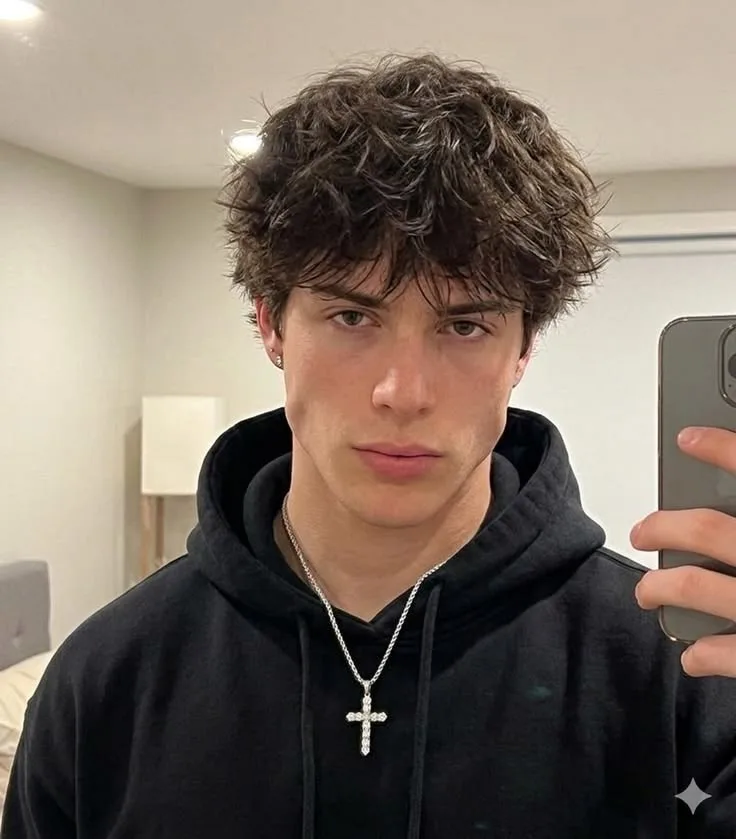
A wolf cut for men is a layered haircut that combines two classic styles: the shag cut’s heavy texture and the mullet’s volume-at-crown, longer-at-back structure. Short, choppy layers at the crown create volume and lift. Longer, lighter layers at the sides and back create flow and movement. The ends are feathered rather than blunt-cut, which is the technical detail that makes a wolf cut move the way it does.
The result is a haircut that looks like organized chaos. Volume where you want it. Length where it creates movement. Texture throughout.
Wolf Cut vs. Mullet: Not the Same
Is a wolf cut just a mullet? No. They share some DNA, but they are structurally different.
| Wolf Cut | Mullet | |
|---|---|---|
| Top section | Short choppy layers, full volume | Shorter, often flat |
| Sides | Layered, integrated | More defined separation |
| Back | Longer, feathered | Distinctly longer, often blunt |
| Texture | Shaggy throughout | Less integrated |
| Wearability | More versatile | More extreme statement |
The mullet has a clear visual separation between the short top and the long back. The wolf cut integrates layers throughout, so the length transitions gradually rather than in a defined section. Think of the mullet as architecture with clear zones with defined edges. Think of the wolf cut as landscape; everything flows into everything else.
For the full mullet guide, our modern mullet page covers the distinction in further depth.
Is the Wolf Cut better or the Butterfly Cut?
For men specifically, the wolf cut is generally the stronger choice. The butterfly cut, a V-shaped cut with layers at the bottom, is primarily designed for longer hair and focuses on creating a fluttery, feathered effect at the ends rather than volume at the crown. The wolf cut adds volume where men’s hair needs it most: at the top, where natural density and lift make the cut look intentional. The butterfly cut suits longer lengths. The wolf cut adapts from short to long.
Men’s Wolf Cut vs. Women’s Wolf Cut: The Structural Differences
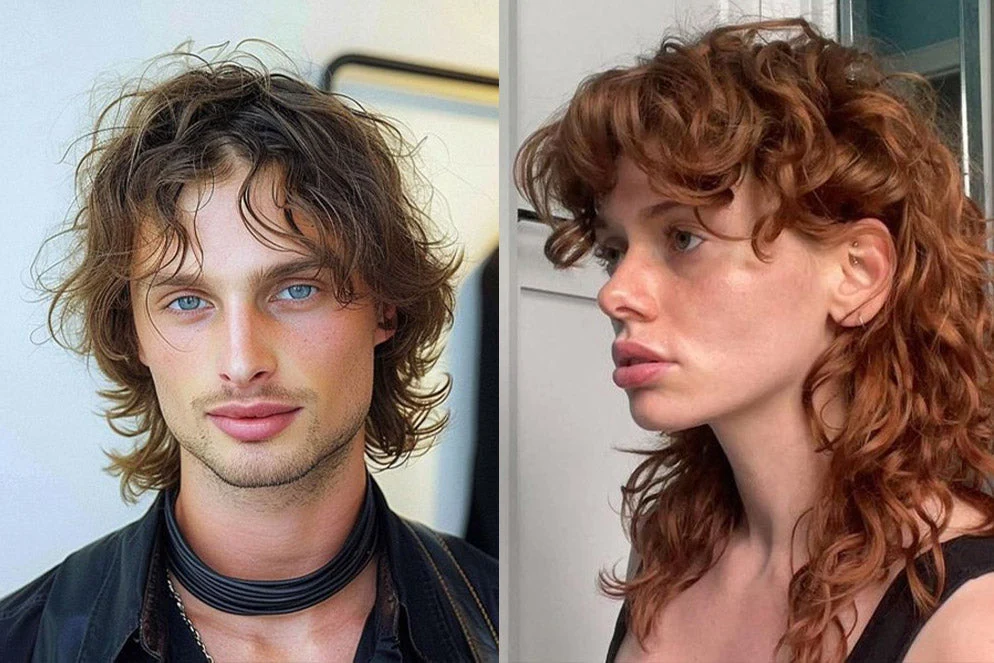
This is the section nobody else explains. Men’s wolf cut guides often show women’s wolf cut references. They are not the same cut.
The men’s wolf cut sits shorter overall, typically between ear-length and shoulder-length rather than the longer versions popular in women’s styling. The crown volume is more dramatic and sculpted in the men’s version, creating a taller top section. The disconnection between the short crown layers and the longer sides and back is more defined, giving a more structured silhouette. The texture is choppier and piecier throughout rather than the softer, feathered finish common in women’s versions.
When bringing a reference photo to a barber, make sure it is a men’s wolf cut specifically. A women’s wolf cut reference produces a different result.
Is a Wolf Cut a Korean Haircut?
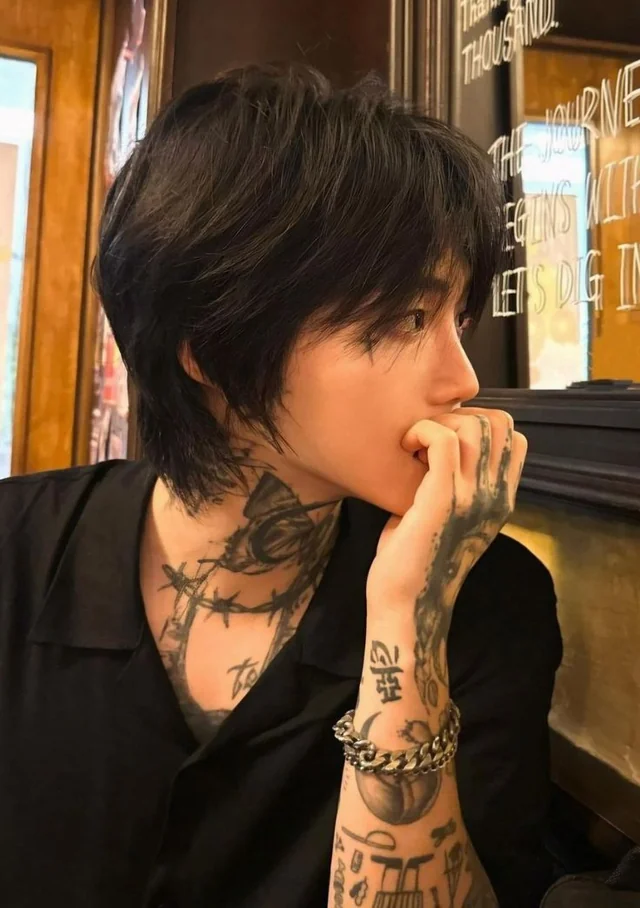
The wolf cut was ignited by Korean culture, specifically K-pop. BTS’s Jungkook wore it in 2022. Stray Kids’ Hyunjin. TXT’s Beomgyu. The style spread from South Korean television and music into TikTok and from TikTok into every barbershop in the US, UK, Australia, and beyond.
The Korean wolf cut is a specific variation with softer layering, a more refined finish, and a curtain fringe that frames the face that is less choppy and more polished than the Western masculine version. The Korean wolf cut is the most searched variation of the men’s wolf cut worldwide.
The wolf cut is not exclusively Korean. It has 90s Western rock roots and shag cut influence. Korean styling transformed it into something more accessible and mainstream.
20 Wolf Cut Styles for Men in 2026
Classic Wolf Cut Men
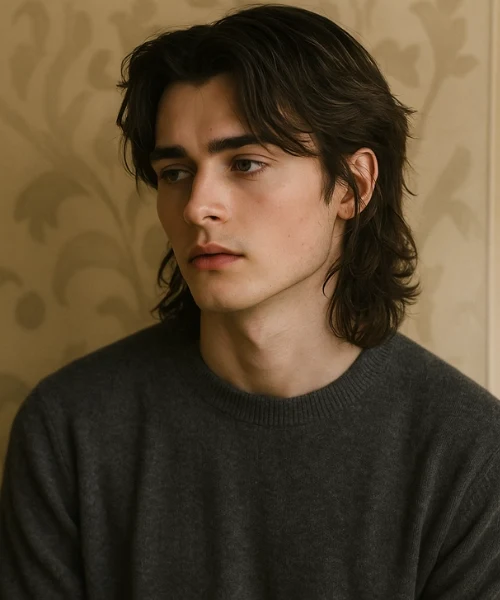
The original. Short, choppy crown layers for significant volume. Longer side and back layers that flow outward. Feathered ends throughout. This is what most people mean when they say “wolf cut” without specifying further. It works best on wavy and naturally textured hair where the layers have something to interact with.
Tell your barber, “Classic wolf cut. Short crown layers for volume of about two to three inches at the crown. Longer layers at the sides and back, ending at the collar or slightly below. Feather: All the ends do not blunt-cut anything. I want movement throughout.”
Face shape: Oval and oblong, the crown volume suits most proportions.
Hair type: Wavy and naturally textured for the best natural result.
Maintenance: Every 6-8 weeks.
Style time: 3-5 minutes of sea salt spray on damp hair, scrunch, and diffuse.
Korean Wolf Cut Men
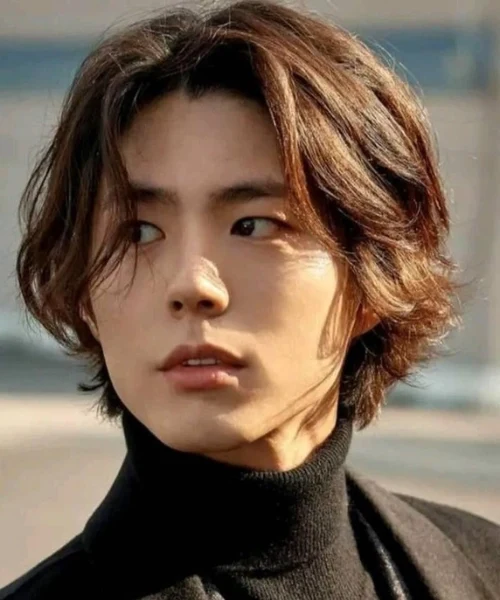
The most requested variation worldwide. Softer layering than the classic version. Curtain-style fringe that falls gracefully over the forehead rather than the choppy bang of the Western wolf cut. The ends stay smooth and feathered rather than rough and choppy. The overall vibe is polished and intentional rather than deliberately dishevelled.
Styling typically involves blow-drying the top sections upward and away from the face for a lifted, airy look rather than the scrunch-and-diffuse technique of the classic version.
Tell your barber, “Korean wolf cut. Soft layers are light and feathered, not choppy or rough. Curtain fringe falling to both sides. Blow-dry finish rather than textured finish. I want the K-pop-inspired version polished, not wild.”
Face shape: Oval and round, the curtain fringe suits both.
Hair type: Straight and slightly wavy; the smooth finish works best on these types.
Style time: 5-7 minutes. Blow dry upward, then outward, with light cream.
Maintenance: Every 6-8 weeks.
Short Wolf Cut Men
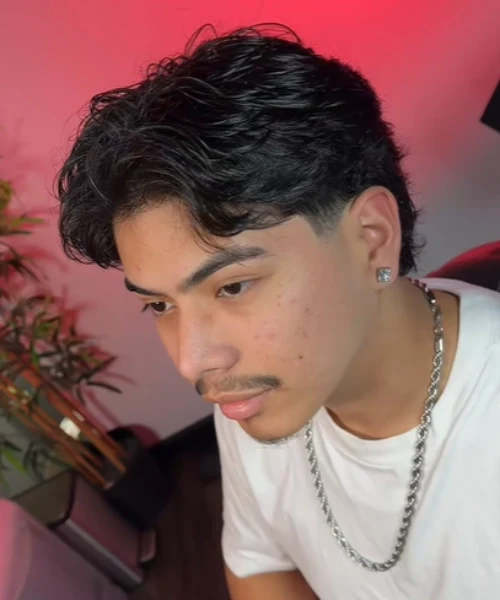
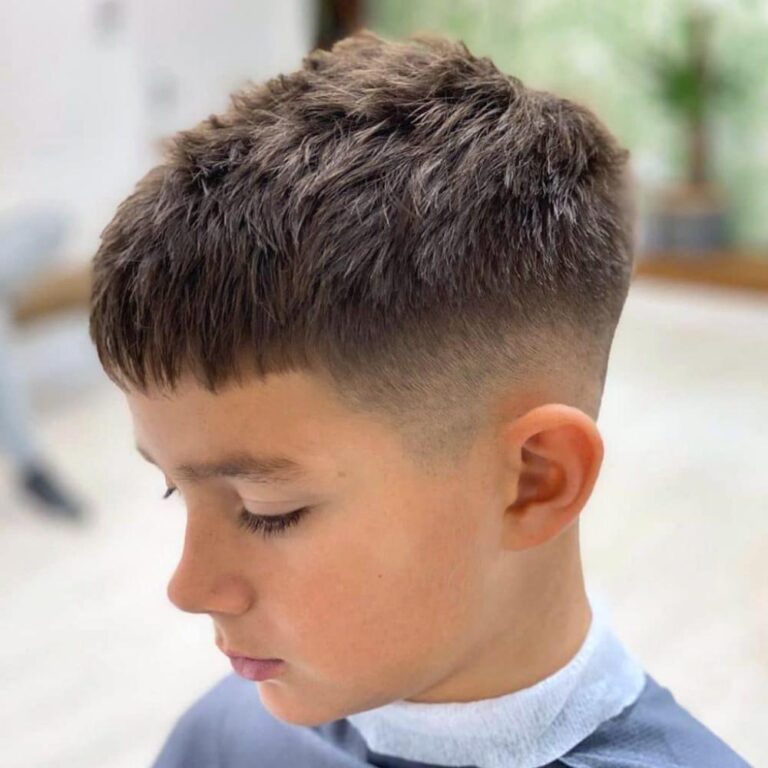
The most practical entry point for men who want the wolf cut without committing to significant length. All the wolf cut structure choppy crown layers, feathered ends, and volume kept above the jawline. The sides and back stay shorter. The overall cut remains manageable and works in most professional and school settings.
Tell your barber, “Short wolf cut. All the layering above the jaw—I want the wolf cut structure but short. Short crown layers for lift. Keep the sides and back tight. Feather all the ends.”
Face shape: All the shorter length is more universally flattering.
Hair type: All the shortened length makes it more manageable on straight hair.
School safe: Yes, in most settings.
Maintenance: Every 5-6 weeks.
Style time: 2-3 minutes.
Wolf Cut Men’s Long Hair
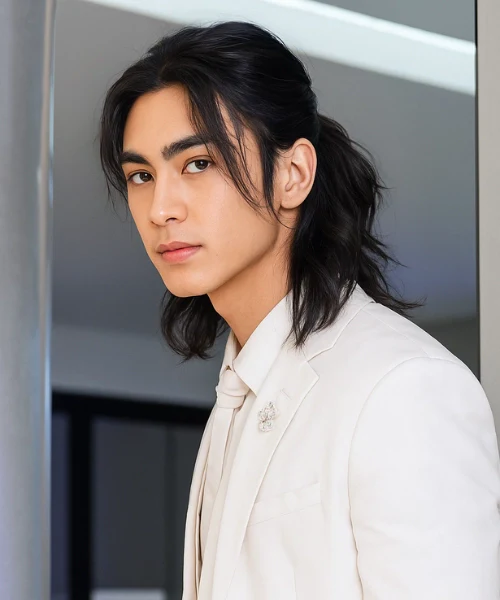
Shoulder length or below, with the wolf cut layer structure throughout. The long version requires the most length commitment; the crown layers still sit short for volume, while the back and side lengths extend significantly. The feathered ends create movement in the longer sections.
Tell your barber, “Long wolf cut. Keep significant length at the back and sides, from collar to shoulder or below. Short crown layers for volume. Feather all the ends. Do not cut the back length; focus on layers throughout the existing length.”
Face shape: Oval and oblong suits longer face proportions.
Maintenance: Every 8-10 weeks the long wolf cut grows out more gracefully than shorter fades.
Style time: 5-8 minutes of sea salt spray or leave-in, scrunch, and air dry.
For the grow-out strategy, our boys’ long haircuts on top guide covers the split appointment method.
Wolf Cut Men’s Straight Hair
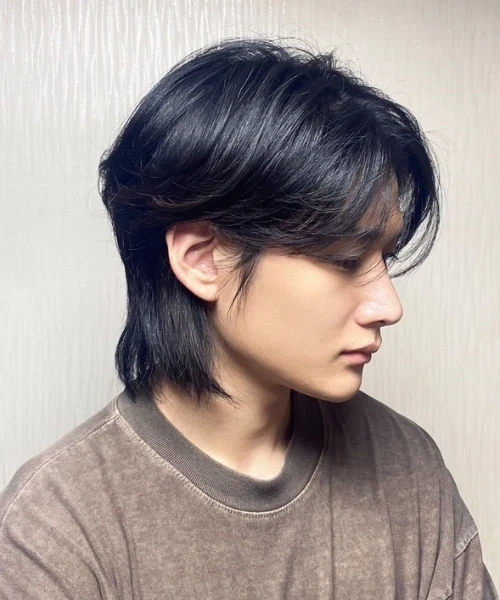
I was thinking about getting a wolf cut but have no idea how it would look with straight hair. This Reddit question represents the concern most straight-haired men have, and it is a legitimate one.
Straight hair lacks the natural texture that makes wolf cuts look effortless on wavy and curly types. The layered structure still works, but the styling effort required is significantly higher. Without texturizing spray and a diffuser, straight hair lies flat after washing, and the wolf cut loses its definition.
The honest assessment: straight hair wolf cuts look excellent when styled correctly. They require five to seven minutes of daily effort rather than two to three. The Korean version tends to work better on straight hair than the classic Western wolf cut because the softer layering and blow-dry finish suit straight hair’s natural behavior.
Tell your barber, “Wolf cut for straight hair. Soft Korean-inspired layering—I want movement, but my hair is straight. Medium crown layers for lift. Feather all the ends. Cut everything dry if possible so we can see the true fall.”
Style time: 5-7 minutes. Texturize spray on damp hair, diffuse upward, and do not let it air dry flat.
For the full straight hair guide, our boys’ haircuts for straight hair page covers twenty cuts for straight hair.
Wolf Cut Men with Curly Hair
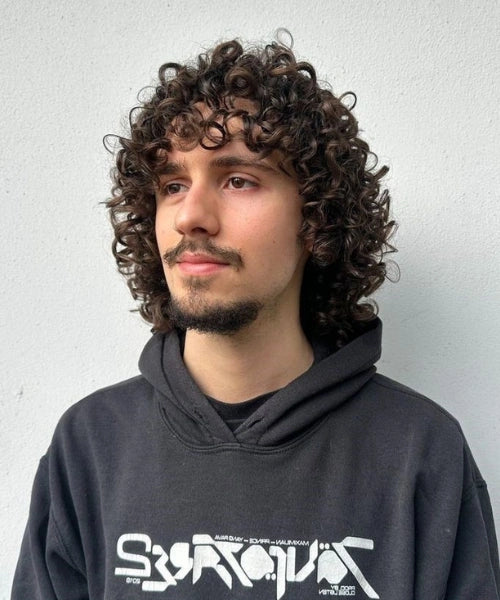
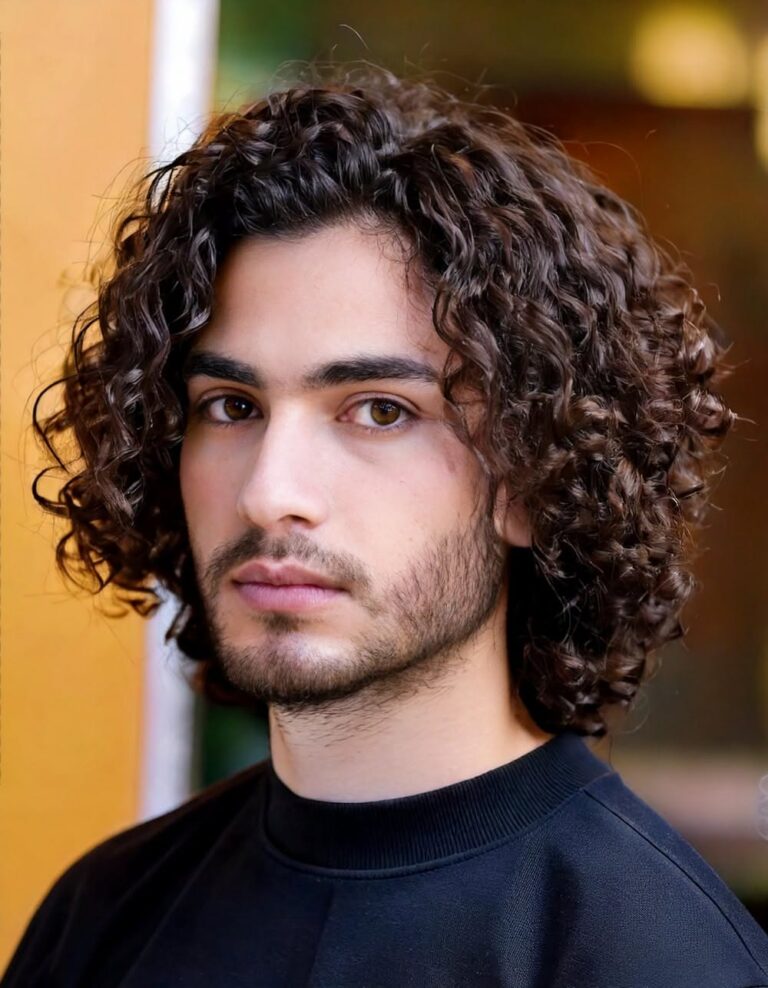
Curly hair is the easiest wolf cut canvas. The natural curl pattern creates texture, volume, and movement without any product or styling effort. The layers simply enhance the existing curl behavior; short crown curls lift and create volume naturally, and longer side and back curls fall with their natural spring.
The critical rule: ask the barber to cut everything dry. Curly hair shrinks between thirty and fifty percent when wet. A barber cutting wet produces significantly shorter layers than intended, and the dry result is shorter than expected.
Tell your barber, “Wolf cut for curly hair. Please cut everything dry; my curls shrink significantly when wet. Short crown layers, but cut them shorter than you think because they will spring up when dry. Longer layers at the sides and back. Let the natural curl do the texture work.”
Style time: Curl cream on damp hair, scrunch throughout, and diffuse or air dry. Zero product if natural curl is strong.
Maintenance: Every 6-8 weeks.
For the complete curly guide, our curly hairstyles for men page covers types 2A through 4C.
Wolf Cut Masculine
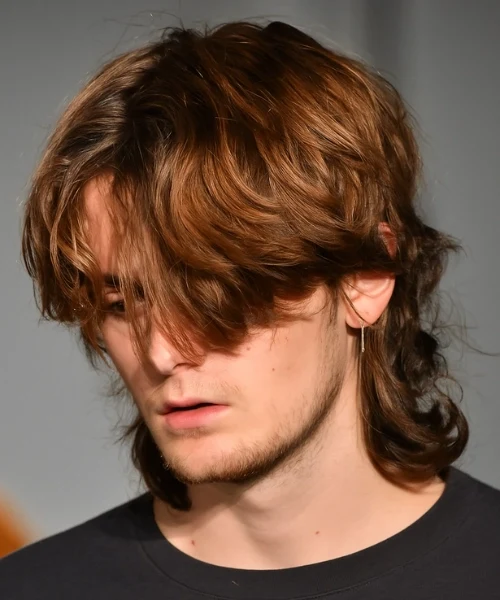
The Western, non-Korean version of the wolf cut taken to its most deliberate extreme. Choppier, more aggressive layering. Stronger disconnection between the crown and the sides. More texture throughout. Less smooth, more deliberately rough finish.
Tell your barber, “Masculine wolf cut. Choppy crown layers—I want strong texture and volume, not smooth. Aggressive feathering at all the ends. Strong disconnection between crown and sides. Maximum texture throughout.”
Hair type: Wavy and thick; the natural texture holds the choppy finish best.
Style time: Sea salt spray, scrunch, let air dry. Do not smooth anything.
Middle Part Wolf Cut Men
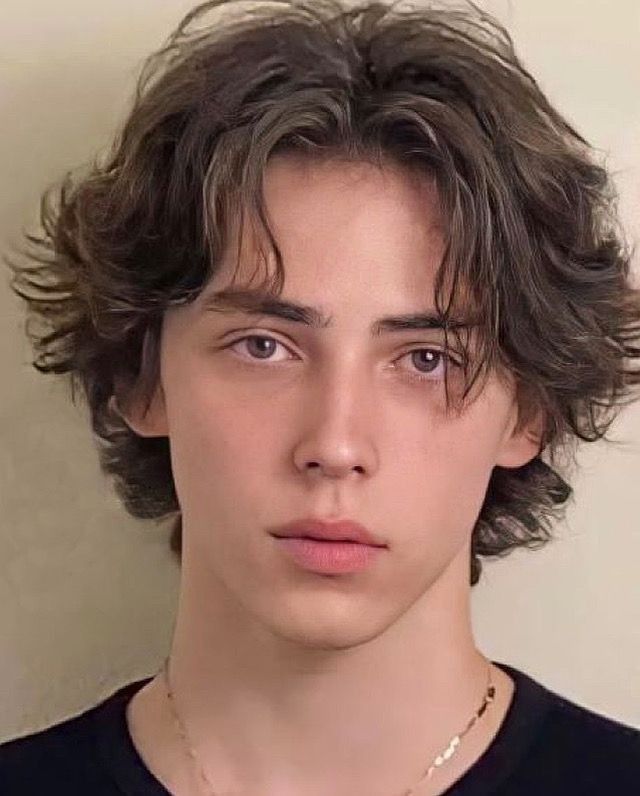
Center parting combined with the wolf cut layer structure. The curtain fringe falls to both sides from the middle part. The crown layers lift from that central point outward. The result sits between the Korean wolf cut and the classic polished at the front through the part, more textured through the sides and back.
Tell your barber, “Wolf cut with a center part. Center-parted fringe falling to both sides. Wolf cut layering throughout choppy crown, longer sides and back, and feathered ends.”
Face shape: Oval and oblong center parts suit balanced proportions.
Hair type: Straight and wavy; the part holds best on these types.
Style time: 3-4 minutes. Light cream, fingers to part, let dry.
Layered Wolf Cut Men
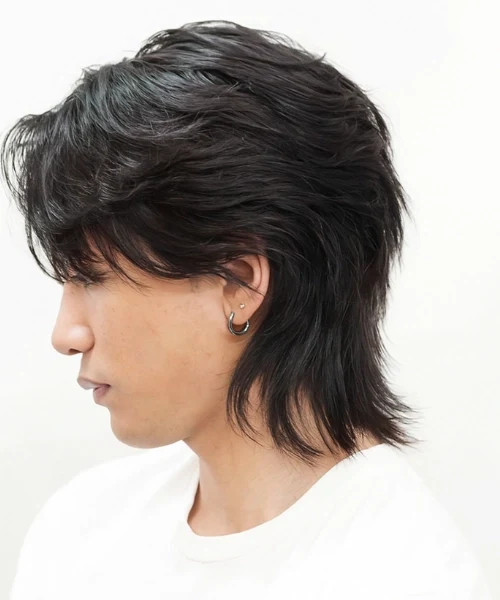
Maximum layering throughout short at the crown, progressively longer through every zone, and feathered ends at every length. This version creates the most movement and texture of any wolf cut variation. Every part of the cut is layered distinctly, creating visible separation between the crown, upper sides, lower sides, and back.
Tell your barber, “Maximum layered wolf cut. Heavy layering throughout—I want visible layers everywhere, not a smooth blend. Short crown, longer upper sides, longest at the back. Feather all the ends heavily.”
Maintenance: Every 6 weeks heavily layered cuts grow out faster visually.
Wolf Cut Mullet Male
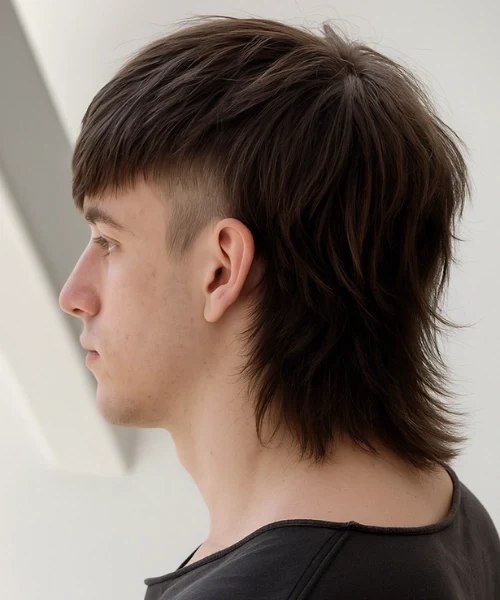
The hybrid between the wolf cut and the modern mullet. Wolf cut structure through the crown and sides’ heavy layers, volume, and texture. The mullet length at the back is longer, with a defined back section. The result has the wolf cut’s integrated texture up front with the mullet’s deliberate length contrast at the back.
Tell your barber, “Wolf cut mullet. Wolf layering at the crown and sides is choppy, voluminous, and feathered. Keep the significant length at the back longer than the wolf cut would normally go. I want the wolf structure in front and the mullet length at the back.”
For the full mullet guide, our modern mullet page covers the mullet structure in depth.
Wolf Cut Men Asian
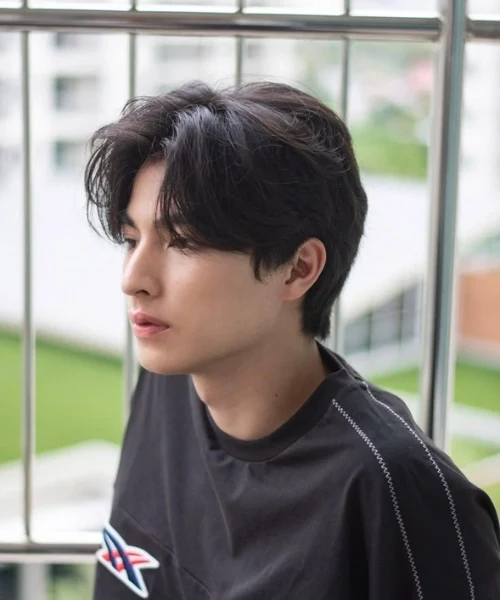
Thick, straight Asian hair produces a specific challenge for the wolf cut; the natural weight of the hair can suppress the crown volume that defines the wolf cut silhouette. The layering needs to be more aggressive to lift against the weight of thick strands.
Tell your barber, “Wolf cut for thick Asian hair. Aggressive layering at the crown I need short, choppy layers to fight the natural weight of my thick hair. Remove internal bulk without changing the surface shape. Feather all the ends. The top needs to lift against the natural weight.”
Styling technique: Blow-dry upward from the roots before allowing to set. Thickening mousse at the roots before blow-drying helps the crown layers hold their lifted position against the weight of thick hair.
Wolf Cut Men’s Wavy Hair
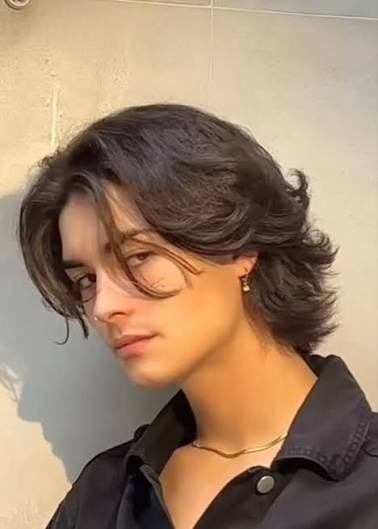
Wavy hair produces the closest-to-effortless result of any hair type. The natural wave creates movement and texture in the layers without product. The feathered ends catch the wave naturally. The diffuser amplifies what is already there rather than creating texture from scratch.
Tell your barber, “Wolf cut for wavy hair. Classic layering let the natural wave do the texture work. Short crown layers for lift. Longer wavy sides and back. Feather all ends.”
Style time: Two minutes of sea salt spray scrunch on damp hair, diffuse lightly, or air dry.
Wolf Cut Men Buzzed Sides
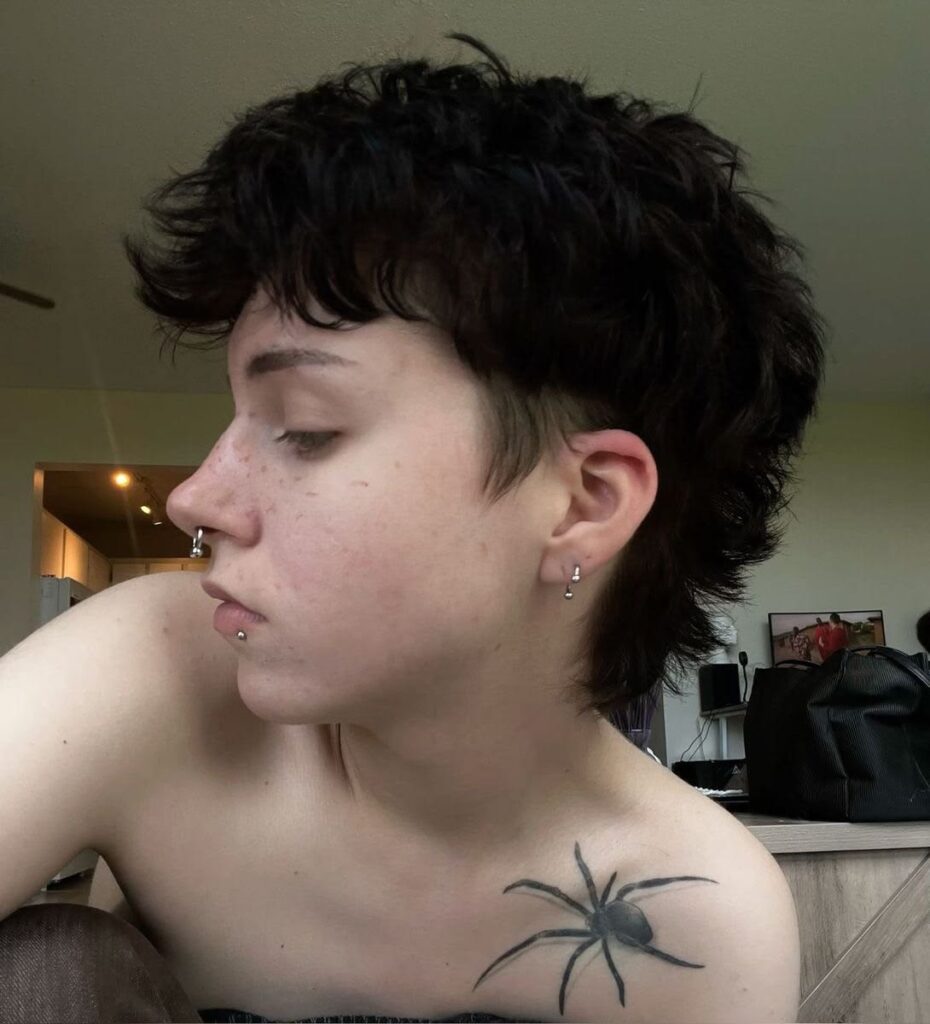
The wolf cut top combined with buzzed or faded sides. The crown and top section get the full wolf cut treatment: choppy layers, volume, and feathered texture. The sides are clipped short rather than layered. The result has significantly more contrast than a standard wolf cut.
Tell your barber: “Wolf cut on top with faded or buzzed sides. Keep the crown and top fully wolf-cut with short, choppy layers, volume, and feathered ends. Clip the sides short with a [number] guard. I want the wolf texture on top with tight sides.”
For the full buzz cut guide, our buzz cut page covers every guard number option.
Wolf Cut with Textured Fringe
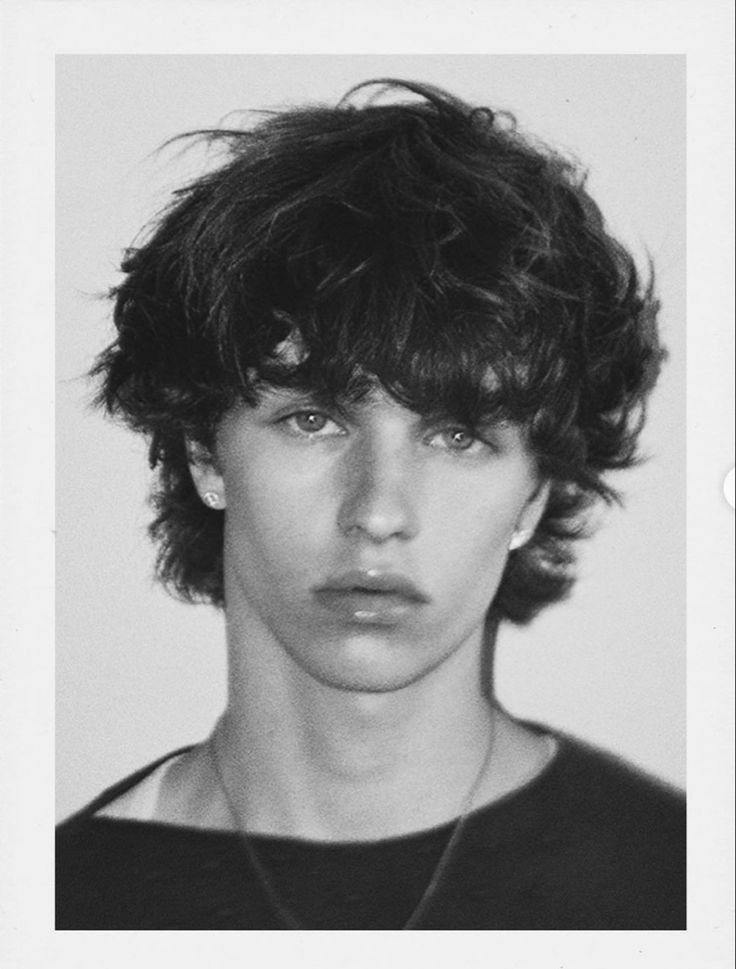
The wolf cut layer structure combined with a forward-falling textured fringe. The fringe adds definition at the forehead, while the wolf layers provide volume and texture throughout the rest of the cut.
Tell your barber, “Wolf cut with a forward fringe. Wolf layering throughout crown volume, feathered ends. Keep the fringe falling forward at eyebrow length; point-cut the fringe for texture.”
For the full fringe guide, our textured fringe haircut page covers the point-cutting technique.
Wolf Cut with Taper Fade
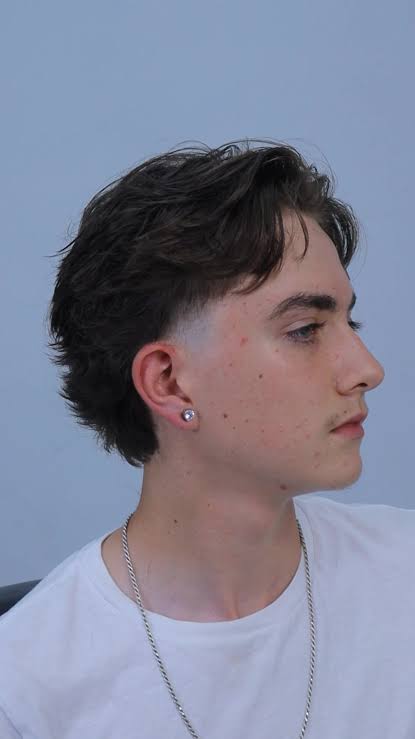
Wolf cut structure on the top and upper sides combined with a taper or fade at the lower sides and neckline. The wolf cut layers create texture above, while the taper keeps the sides clean below.
Tell your barber: “Wolf cut with a mid taper fade. Wolf layering on the top and upper sides, short crown layers, and longer integrated layers. Mid taper fade from the temple downward. Keep the wolf structure above the fade line.”
For the full mid-taper guide, our mid-taper fade page covers the fade technique.
Wolf Cut Boys and Teens
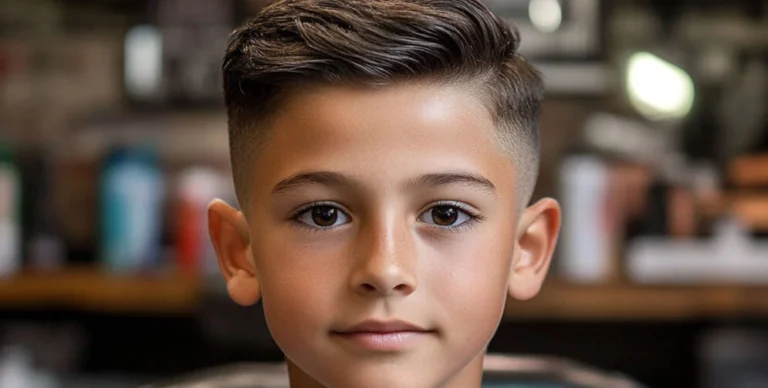
The wolf cut for men is one of the most requested styles among boys aged twelve to eighteen. The K-pop influence makes it particularly popular in this age group. The short wolf cut and the Korean wolf cut are the two most practical versions for school environments; both provide the wolf cut structure without length that might conflict with conservative dress codes.
For boys twelve to fifteen, the short wolf cut is the correct starting point. School-safe in virtually every setting.
For teens sixteen to eighteen, the classic or Korean wolf cut suits the age group. School-safe in most settings.
Tell your barber (for boys): “Short wolf cut for an [age]-year-old. School-appropriate. Crown layers for volume. Feathered ends. Nothing too long.”
For the full teen guide: our teen boy haircuts page covers ages thirteen to eighteen. Our boys’ haircut hub covers ages seven to twelve.
Short Wolf Cut Male
The cropped version where all layering stays above the jaw. Less length commitment. More wearable for men who want the texture and volume of a wolf cut without the length. Works in professional and school settings that longer versions might not.
Tell your barber, “Short wolf cut. Keep everything above the jaw. Crown layers for lift. Shorter feathered ends throughout. School and office appropriate.”
Wolf Cut for Oval Face Men
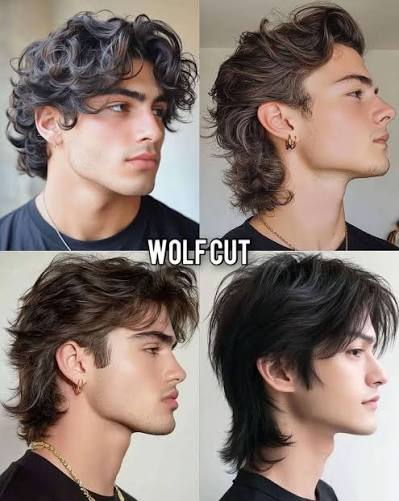
The oval face suits every wolf cut variation without adjustment. The balanced proportions mean neither the crown volume nor the side length creates a disproportionate effect.
The classic, Korean, and masculine versions all work equally well on oval faces. The only consideration is hair type; choose the version matched to the natural texture rather than adjusting for face shape.
Colored Wolf Cut
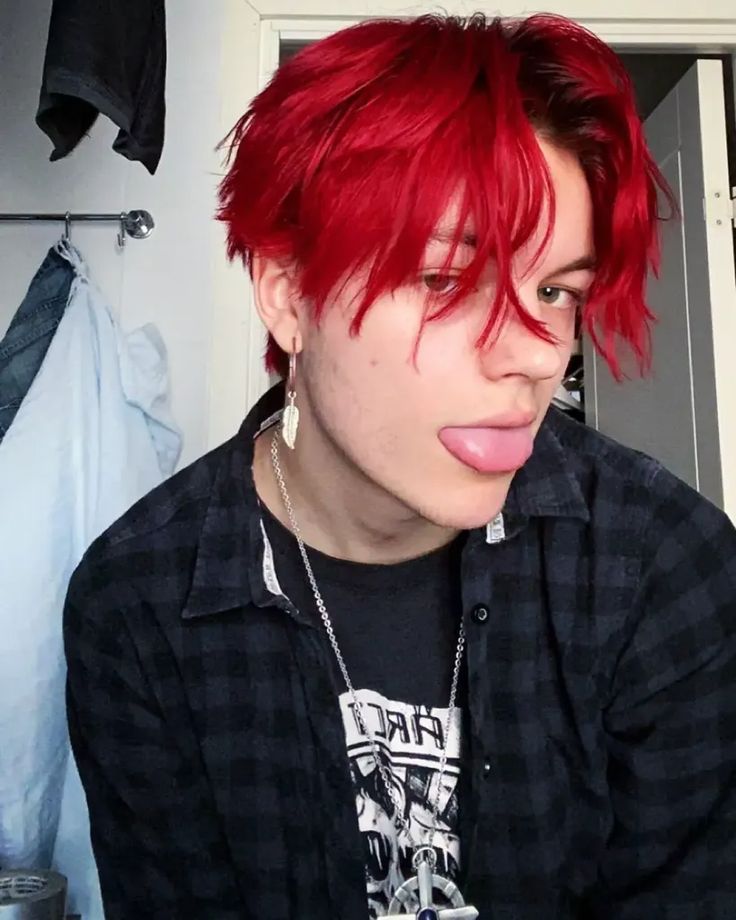
The wolf cut structure combined with color work bleached tips, highlights through the layers, or a full color change. The layers of the wolf cut show color work particularly well because the visible separation between lengths creates dimension in the color.
Tell your barber: “Wolf cut with [color work bleached tips/highlights/full color] wolf layering throughout for movement.” The color at [specific area]. Keep the wolf cut structure intact.”
Note: color work requires additional time and cost beyond the cut itself. Budget $50-150 additional at most salons as of September 2026.
Conservative Wolf Cut
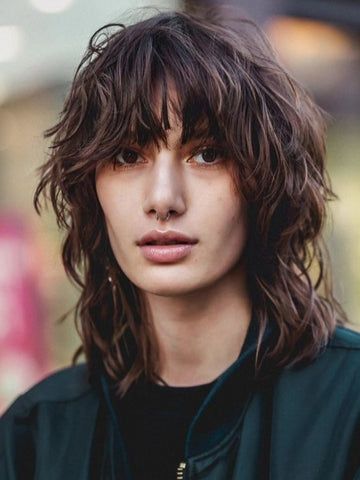
The professional-friendly version. Medium length overall. Softer layering rather than aggressive choppiness. Feathered ends are maintained for the wolf cut feel. No extreme crown volume or dramatic length contrast. The result reads as a layered cut rather than an explicitly wolf cut.
Tell your barber, “The conservative wolf cut is office appropriate.” Medium length. Soft layering rather than choppy. Feathered ends. I want the wolf-cut structure but a subtle wearable in a professional setting.”
School safe: Yes, universally.
Office safe: Yes.
Maintenance: Every 7-8 weeks.
Will a Wolf Cut Suit Me? The Honest Assessment
Will a wolf cut suit me? The honest answer is probably yes but with one key condition that most guides ignore.
Who the Wolf Cut Works Best On
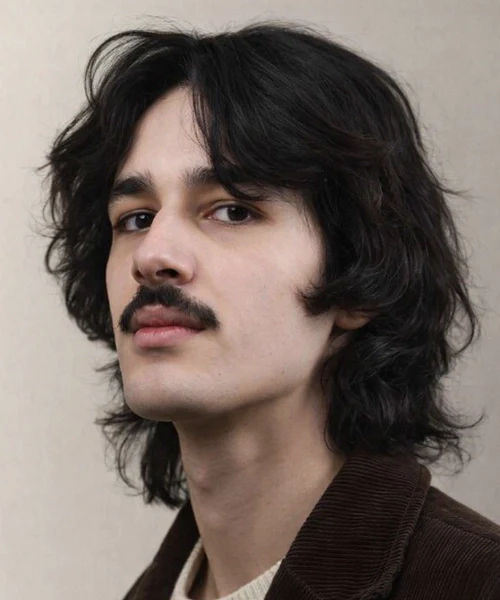
The wolf cut produces its best results on medium-to-thick hair density, naturally textured hair with some wave or curl, a face shape that benefits from crown volume and fringe coverage, and a willingness to spend three to five minutes on styling most mornings.
Oval face shapes suit every wolf cut variation. Square faces benefit from the Korean or soft version, where the layering softens angular features. Oblong faces suit the shorter wolf-cut versions that avoid adding extra height.
Who Should Think Twice
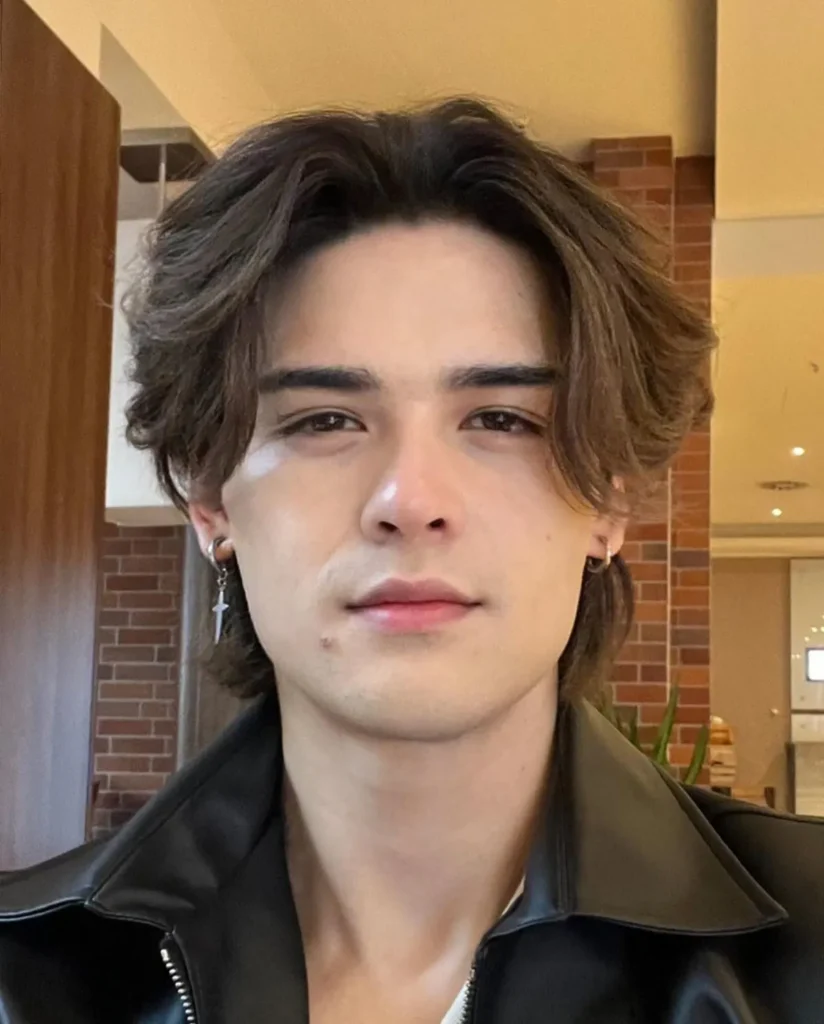
Very thin or fine hair produces the biggest challenge for the wolf cut. The visible layer separation that makes a wolf cut look intentional on thick hair looks sparse on thin hair. The layers become visible gaps rather than textured sections. The short wolf cut on fine hair is workable with the right products; the long wolf cut on fine hair is genuinely difficult to make look intentional.
If your hair is significantly thinning at the crown, the area where the wolf cut relies most heavily on volume; the heavy layering at the crown exposes rather than covers. A different cut that avoids crown layering produces a better result.
I am 12 and want a wolf cut. Is it suitable?
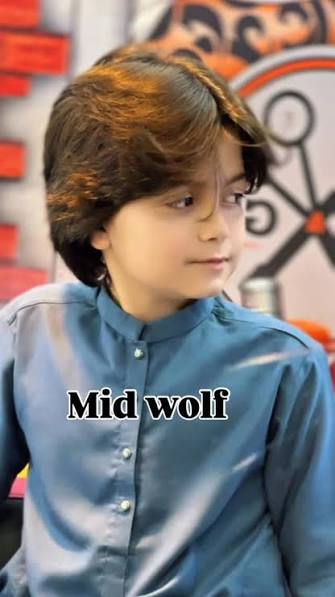
Yes. The short or Korean wolf cut suits twelve-year-olds in most school environments. The length stays manageable, the structure is subtle enough for school policies, and the styling effort is minimal enough to be realistic for morning routines at that age.
For parents searching on behalf of a twelve-year-old, the short wolf cut is the practical starting point. It provides the wolf cut look without length that might create school dress code conflicts.
For the full school safety guide, see the dedicated section below. For age-specific haircut guides, our teen boy haircuts page covers every variation.
Wolf Cut by Face Shape
| Face Shape | Best Version | What It Does | Avoid |
|---|---|---|---|
| Oval | Any version | All suit balanced proportions | Nothing |
| Round | Short wolf + crown volume | Adds vertical length | Heavy fringe adding width |
| Square | Korean soft version | Softens angular jaw | Very choppy, aggressive version |
| Oblong | Short wolf cut | Avoids adding more height | Extra-long version |
| Diamond | Center part wolf | Balances wide cheekbones | Side-heavy volume |
Is Wolf Cut Haram in Islam?
This question appears directly in Google’s People Also Ask for wolf cut men searches and reflects genuine concern among Muslim men about grooming practices.
What Scholars Say About Layered Cuts
The relevant Islamic prohibition is qaza, the practice of cutting some sections of the head short while leaving others long in a patchy, irregular way that creates an uneven appearance. The classical scholars who identified qaza as prohibited were describing the specific irregularity, not all variation in hair length.
The majority position among contemporary Islamic scholars who address modern men’s grooming is that layered cuts where the variation in length is gradual and integrated throughout the head rather than creating patches do not constitute qaza. The wolf cut is a layered cut with gradual length variation, not a cut with defined bare patches next to full-length sections.
What Is the 7:7-7 Rule?
The 7:7-7 rule is not a widely established classical Islamic grooming standard; the phrase appears in some online discussions but is not sourced from established fiqh literature. The established Islamic guidance on men’s hair relates primarily to avoiding qaza, keeping hair clean, and not imitating women’s styles. The wolf cut does not typically conflict with any of these established positions when executed in the conservative shorter version.
The Most Conservative Version
The short, conservative wolf cut, medium length, soft layering, and no extreme contrast are the versions most clearly within the permissible range under the majority scholarly position. It avoids the extreme layering contrast and keeps the overall length moderate.
Wolf Cut Men by Hair Type Complete Matching Guide
| Hair Type | Best Version | Natural Volume | Daily Effort |
|---|---|---|---|
| Straight | Korean or short | Very low | High (5-7 min) |
| Wavy | Classic or masculine | Medium | Low (2-3 min) |
| Curly | Curly wolf | Very high | Very low (scrunch only) |
| Thick/Asian | Asian version | High | Medium (3-5 min) |
| Fine/Thin | Short conservative | Very low | Medium-high |
Wolf Cut on Straight Hair
Straight hair can carry a wolf cut. It requires the right technique and honest daily effort. The texturizing spray is not optional; without it, straight hair lies flat after washing and the wolf cut disappears. The diffuser is not optional on straight hair; blow-drying downward presses the layers flat. The product goes on damp, the diffuser goes on medium heat pointed upward, and the hands stay out of the hair while it dries.
For the full straight hair guide, our boys’ haircuts for straight hair page covers twenty cuts with honest styling assessments.
Wolf Cut on Wavy Hair
The easiest wolf cut experience. Natural waves interact with the layers to create movement and texture without product or heat styling. Apply sea salt spray to damp hair, scrunch the whole head upward, clip the crown if needed to hold the volume while drying, and let it air dry. The result after twenty minutes of doing nothing looks like five minutes of deliberate styling.
Wolf Cut on Curly Hair
Cut everything dry. This is the only rule that matters for curly wolf cuts. Every other instruction in this guide is secondary to this one.
Curly hair shrinks. A barber cutting wet produces layers that spring up shorter than expected when dry. Ask specifically, “Please cut my hair completely dry. My curls shrink significantly when wet, and I want to see the real length before committing to the layers.”
For the complete curly guide, our curly hairstyles for men page covers every curl type.
Wolf Cut on Asian or Thick Hair
Thick, heavy hair needs internal bulk removal to allow the crown layers to lift. This is done through point-cutting and internal layering, not thinning scissors, which create surface frizz on thick hair. The barber needs to remove weight from inside the mid-section of the crown layers so they lift rather than lying flat under their own weight.
Tell the barber specifically: “My hair is thick; please remove internal bulk with point-cutting rather than thinning scissors. I need the crown layers to lift against the weight of my hair.”
Wolf Cut for Fine Hair
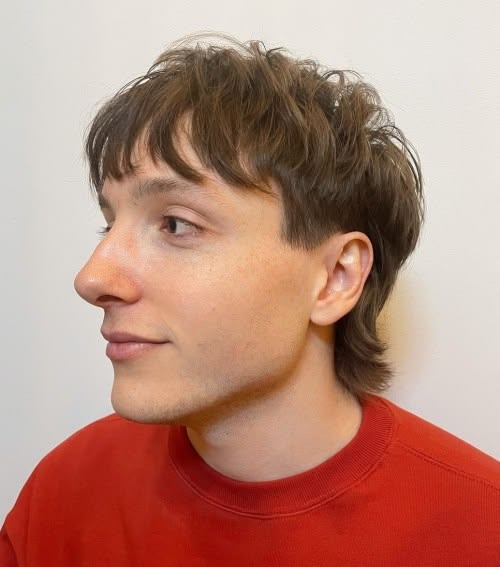
The short wolf cut is the only version that reliably works on fine hair. The longer wolf cut creates visible gaps in thin sections where layers separate. The short version keeps these separations manageable. Volumizing mousse at the roots before diffusing is essential; it adds temporary thickness to fine strands that helps the layers hold their shape longer.
What to Tell Your Barber for a Wolf Cut
The Universal Wolf Cut Script
“Wolf cut. Short crown layers for volume keep the top choppy and lifted. Longer layers at the sides and back for movement. Feather all the ends throughout do not blunt-cut anything. I want texture and movement, not a smooth finish.”
Scripts Per Variation
Korean wolf cut: “Korean wolf cut. Soft, refined layering, not choppy. Curtain fringe falling to both sides. Feathered ends. Blow-dry finish. More polished than the Western version.”
Masculine version: “Aggressive wolf cut. Maximum choppiness at the crown. Strong texture throughout. Feathered ends but deliberately rough. I want the full wolf cut silhouette with no smooth finish.”
Short wolf cut: “Short wolf cut. All layers above the jaw. Crown lift. Feathered ends. School and work appropriate.”
Long wolf cut: “Long wolf cut. Keep the back and sides long collar to shoulder. Short crown layers for volume. Feather every layer. Do not cut the back length; work with the layers throughout what is there.”
The Layering Technique: What Barbers Actually Do
The wolf cut requires three distinct layering zones executed together. Understanding these helps when communicating with the barber.
Crown zone: the shortest layers, approximately two to three inches, cut choppy and lifted away from the scalp. These create the signature volume.
Transition zone the upper sides and upper back, progressively longer than the crown layers, feathered to blend downward without a sharp line.
Length zone the lower sides and back, the longest layers, feathered at the ends to create movement rather than a blunt edge.
The ends throughout every zone are point-cut rather than blunt-cut. This is the technical detail that creates the wolf cut’s movement. A barber using blunt scissors straight across produces a shag or layered cut. The point-cutting scissors angled vertically into the hair create the feathered, separated ends that distinguish a wolf cut.
Two Photos, Always Two
The front photo shows the fringe style, crown volume, and how the layers fall around the face. The side photo shows how long the layers go at the sides and back. A single photo leaves the length and zone distribution to the barber’s interpretation.
How to Style a Wolf Cut After You Shower
This section exists because of Reddit. The thread that asked this question got hundreds of replies that mostly disagreed with each other. Here is the complete method.
The First Five Minutes: The Critical Window
Hair is most shapeable in the window between soaking wet and completely dry. The critical window is at approximately seventy to eighty percent dry damp but not dripping. This is when the layers can be directed into their final position. Fully wet hair has no control. Fully dry hair is already set in whatever position it dried in.
The common mistake: waiting until hair is almost dry before attempting to style it. By then the layers have already decided where they are going.
Step-by-Step Post-Shower Method
Step 1: Towel scrunch, not rub, the hair to approximately sixty to seventy percent dry. Scrunching upward and squeezing maintains the layer structure. Rubbing disrupts it.
Step 2: Apply product to damp hair immediately after towel scrunching. Do not wait until it dries more. Sea salt spray for wavy and curly hair. Texturising spray for straight and fine hair. Lightweight mousse for thick hair.
Step 3: Scrunch the product upward from the ends toward the crown. This directs the layers upward into the volume position rather than allowing them to fall flat.
Step 4: Clip the crown section upward if you want maximum crown volume small claw clips holding the crown layers in the lifted position while the rest dries. Remove when fully dry.
Step 5: Diffuse on medium heat pointed upward at the roots. Never blow-dry a wolf cut downward. Downward drying flattens the crown layers and defeats the structure of the cut. Upward and sideways only.
Step 6: Do not touch the hair while it is drying. Running fingers through drying hair breaks up the layer separation and creates frizz rather than defined texture.
Step 7: Final scrunch when ninety-five percent dry to separate any sections that have merged.
Products by Hair Type
Wavy and curly hair: Sea salt spray applied to damp hair, scrunched upward, diffused, or air-dried. A light curl cream on top for definition. Total product cost: $8-18.
Straight hair: Texturising spray applied to damp roots before diffusing. Matte clay applied after drying for hold. Without both, straight hair wolf cuts lose definition within two hours.
Thick hair: Lightweight volumizing mousse at the roots before diffusing. The mousse adds temporary thickness to the crown layers and helps them hold their position against the natural weight of the hair.
Fine hair: Volumizing spray applied to damp roots. Diffuse upward. A light-textured powder at the roots after drying extends the volume through the day.
Never use heavy pomade, wet-look gel, or oil-based products on a wolf cut. These flatten the layers and eliminate the movement that makes the wolf cut look the way it does.
What If It Dried Wrong?
The rescue method for a wolf cut that has air-dried flat or in the wrong direction: dampen both hands slightly, work them through the problem section with upward motions, apply a small additional amount of texturising spray, scrunch upward again, and let it air dry for ten to fifteen minutes without touching it. Do not re-wet completely; just enough to reactivate the product and reshape the layers.
Is It Worth Getting a Wolf Cut?
Is it worth getting a wolf cut? Is it hard to keep?
The honest answer depends on three questions. Are you realistic about spending three to five minutes styling on most mornings? Are you comfortable returning to the barber every six to eight weeks? Do you have the hair type and density for the version you are considering?
If all three are yes, the wolf cut is worth it. When it works, it genuinely looks effortless and current. It photographs well. It suits most face shapes. It is one of the most versatile layered cuts in men’s styling right now.
If any of the three are not particularly the hair type question, there are better starting points. The mid taper fade or blowout taper both create similar visual impact with less daily maintenance commitment.
Growing Out the Wolf Cut
The grow-out question comes up regularly: how do I grow out a wolf cut, and is a prom fifteen months away enough time to grow it back out?
The wolf cut grows out gracefully compared to most fades because the feathered ends mean there is no hard line to grow past. At six to eight weeks the cut still looks intentional. At twelve weeks it looks like a growing-out layered cut rather than a neglected haircut.
For someone fifteen months out from prom, cutting the wolf cut now and allowing it to grow creates a gradual transition rather than an abrupt change. The wolf cut grown out over fifteen months produces a longer, still-layered version. Prom-ready length is achievable from most starting points in fifteen months.
| Weeks After Cut | Appearance |
|---|---|
| Weeks 1-6 | Fresh wolf cut full structure |
| Weeks 7-10 | Growing out but intentional |
| Weeks 12-16 | Layered, grown-out look |
| Months 5-8 | Longer layered style developing |
| Months 12-15 | Significant length with natural layers |
Annual Cost
| Version | Trims Per Year | Annual Cost (US, $30/cut) |
|---|---|---|
| Short wolf cut | 7-8 | $210-240 |
| Classic wolf cut | 6-7 | $180-210 |
| Long wolf cut | 5-6 | $150-180 |
Wolf Cut School Safety Guide
What Passes Every School Policy
The short wolf cut in every variation. The Korean wolf cut in its standard version. Both sit at lengths that avoid any school dress code conflict. The wolf cut itself as a layered cut without skin fades or shaved designs, which rarely creates school policy issues.
What to Check
The long wolf cut occasionally conflicts with conservative school policies that specify maximum hair length. Coloured wolf cuts conflict with any school that prohibits unnatural hair colour. Both are worth checking specifically before committing.
School-Safe Wolf Cut Script
“Conservative short wolf cut. Nothing past the collar. Crown layers for texture. Feathered ends. School-appropriate.”
For full school safety guidance across all boys’ haircuts, our boys’ haircuts hub covers every age from seven to eighteen with per-style ratings. Our teen boy haircuts guide covers the full teen range.
Browse More Related Guides
For the adjacent mullet style, our modern mullet guide covers the full mullet structure with every variation.
For the fringe combination, our textured fringe guide covers the fringe layering technique in dedicated depth.
For the fade combination, our mid taper fade page covers the taper technique for the wolf cut with faded sides variation.
For a long hair growth strategy, our boys’ long haircuts on top guide covers the grow-out phase with a split appointment strategy.
For curly hair specifically, our curly hairstyles for men guide covers every curl type from 2A through 4C.
Not sure which version suits your face shape and hair type? Our teen haircut finder quiz takes sixty seconds.
Frequently Asked Questions
What is a wolf cut for men?
A wolf cut for men is a layered haircut combining the shag cut’s heavy texture with the mullet’s crown volume and longer-back structure. Short choppy layers at the crown create lift. Longer, lighter layers at the sides and back create flow. All ends are feathered rather than blunt-cut. The men’s version sits shorter overall than the women’s version and has more dramatic crown volume and stronger layer disconnection.
Is wolf cut haram in Islam?
Most contemporary Islamic scholars consider wolf cuts permissible because the gradual variation in layer lengths does not constitute qaza, the prohibited practice of patchy, irregular unevenness between very short and very long sections. The wolf cut’s integrated layering creates a gradual transition rather than defined bare patches. The short conservative wolf cut is the version most clearly within the majority permissible position.
Will a wolf cut suit me?
Probably yes with conditions. Medium-to-thick hair density suits the wolf cut best. Wavy and curly hair produce the most natural results. Fine and very thin hair suits only the short version. Oval and square face shapes suit most versions. The Korean wolf cut suits the widest range of face shapes and hair types. Very thin hair at the crown or significant thinning may produce better results with a different cut.
What do I tell my barber for a wolf cut?
“Wolf cut. Short crown layers for volume choppy, not smooth. Longer layers at the sides and back for movement. Feather all the ends, no blunt-cutting anywhere. I want texture and movement throughout.” Add the specific variation: “Korean” for softer layering, “short” for above the jaw, and “masculine” for aggressive choppiness. Bring a front photo and a side photo.
Is a wolf cut just a mullet?
No. The mullet has defined zones, short on top and long at the back, with a clear transition point. The wolf cut has integrated layers throughout the entire head, transitioning gradually from shorter at the crown to longer at the back without a defined zone separation. The wolf cut is more textured, more shaggy, and more integrated. The mullet is more architectural.
Is the wolf cut better or the butterfly cut?
For men, the wolf cut generally suits better. The butterfly cut is primarily designed for longer hair and creates a fluttery end effect rather than crown volume. The wolf cut adds volume where men’s styling needs it most — at the crown — and adapts from short to long lengths. The butterfly cut suits longer lengths specifically.
Does a wolf cut a Korean haircut?
The wolf cut has Western 90s rock roots; it is a descendant of the shag cut and the mullet. Korean K-pop culture transformed and popularized the modern version, making it accessible and mainstream. BTS Jungkook, Stray Kids Hyunjin, and TXT Beomgyu all wore versions that drove global interest starting around 2022. The Korean wolf cut is now the most searched variation, but the style itself is not exclusively Korean in origin.
What is the Gen Z haircut called?
The wolf cut is one of the defining Gen Z haircuts alongside the textured fringe, blowout taper, and curtain bangs. The Korean wolf cut is the specific variation most associated with Gen Z male styling in 2026. It is also called the shaggy wolf cut, the K-pop wolf cut, and in some communities the wolf cut without a space.
Do guys like wolf cut?
Yes, the 60,500 monthly searches for “wolf cut men” and the 22 percent growth in 2026 confirm consistent and rising demand. It is one of the most requested layered cuts in barbershops. The Korean version is particularly popular among younger men. The masculine version appeals to men who want texture without the Korean softness.
Is it worth getting a wolf cut?
Yes, if you are realistic about maintenance. The wolf cut requires a trim every six to eight weeks, three to five minutes of styling most mornings, and the right product for your hair type. If all three are manageable, the wolf cut delivers on its promise of effortless-looking texture that photographs well and suits most face shapes. If daily styling is genuinely not happening, the low taper fade or blowout taper delivers similar visual impact with lower maintenance.
Can I have a wolf cut with thin hair?
Yes, but the short version only. The long wolf cut on thin hair creates visible layer separation that looks sparse rather than textured. The short wolf cut keeps the layers manageable and the gaps invisible. Volumizing mousse at the roots before diffusing is essential; it adds temporary thickness that helps thin layers hold their position. Avoid the aggressive masculine version of thin hair.
I am 12 and want a wolf cut. Is it suitable?
Yes. The short or Korean wolf cut suits twelve-year-olds in most school environments. The length stays manageable, the structure is subtle enough for school policies, and the styling effort is realistic for morning routines. The short wolf cut is the practical starting point—it provides the wolf cut look without length that might create school dress code conflicts.
How to style a wolf cut after a shower?
Towel scrunches to seventy percent dry. Apply sea salt spray or texturising spray to damp hair. Scrunch upward from ends to crown. Diffuse on medium heat, pointed upward, never downward. Do not touch while drying. Final scrunch at ninety-five percent dry. Total time: three to five minutes active. The critical mistake to avoid: waiting until hair is nearly dry before applying product or diffusing. The shaping window is at seventy to eighty percent dry.
How long does a wolf cut last before needing a trim?
Six to eight weeks for the classic and Korean versions. Five to six weeks for the short version. Eight to ten weeks for the long version. The wolf cut grows out more gracefully than most fades because the feathered ends mean there is no hard line to pass; the grow-out is gradual rather than suddenly unkept.
The wolf cut for men has been growing for four years. It is not a trend anymore. It is a permanent addition to the men’s haircut vocabulary alongside the fade, the textured crop, and the undercut.
The effortless look that drives 60,500 monthly searches requires understanding the layering technique, matching the version to the hair type, and knowing what to do in those first five minutes after the shower. That is what this guide covered.
Pick the version that matches your hair type and face shape. Save the barber script. Give the barber two photos. And the morning after, your first cut, texturizing spray on damp hair, scrunch upward, diffuse upward, hands off.
For the wolf cut’s closest relatives, our modern mullet guide covers the longer-back variation, and our textured fringe guide covers the fringe layering technique.