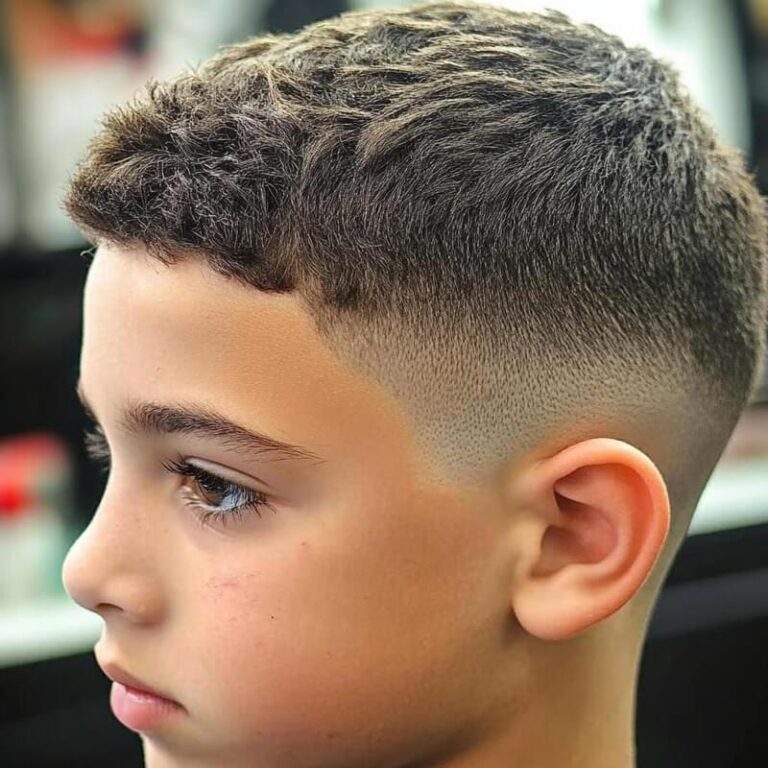
Textured Fringe Haircut 2026: 20 Styles, Barber Scripts, and the Point-Cutting Guide Nobody Else Gives You
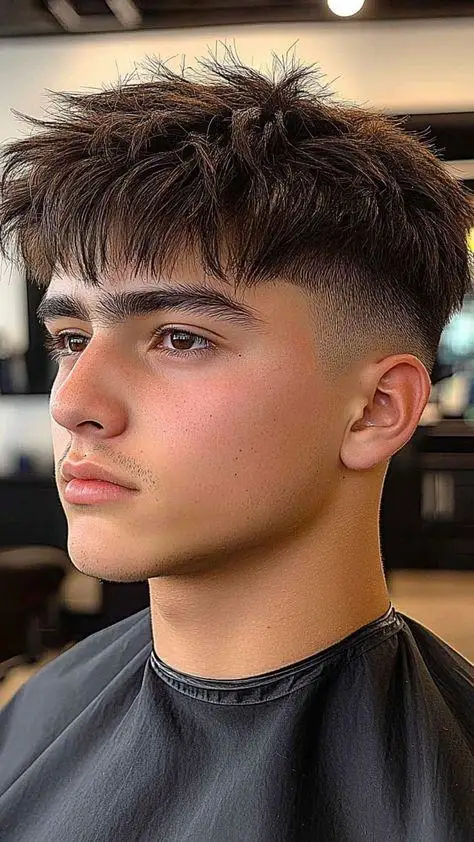
The internet called it a broccoli cut. Then an alpaca cut. Then a mop. The memes kept coming. The haircut kept getting requested.
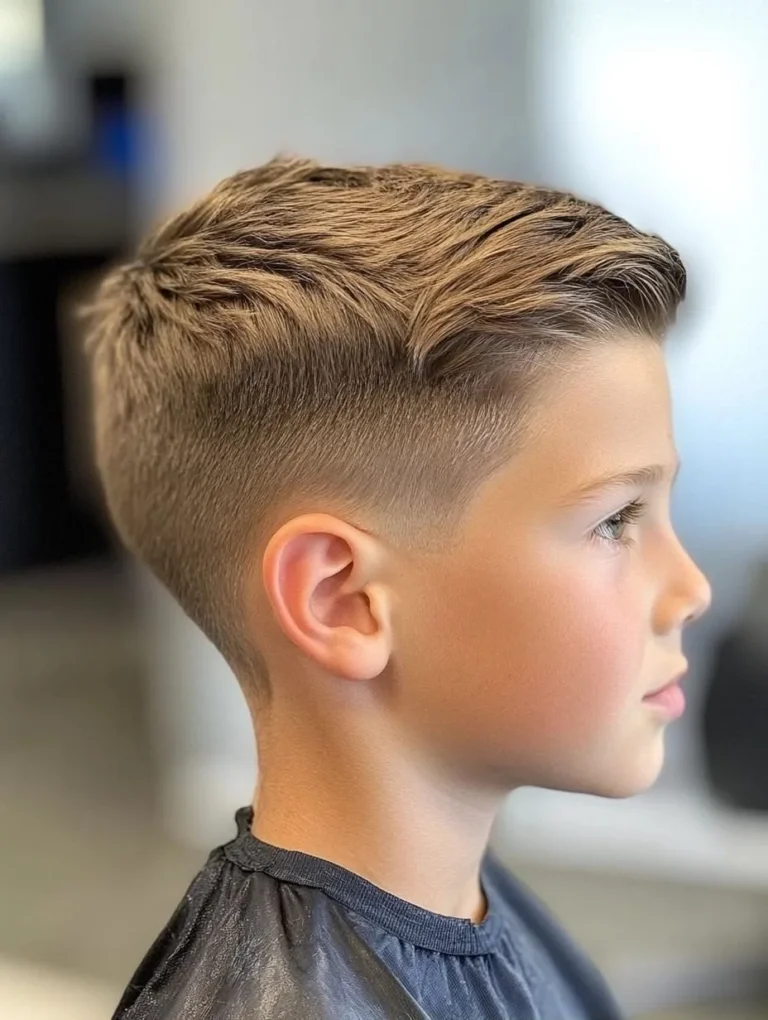
There is a reason the textured fringe survived every attempt to make it a joke. It solves something most haircuts cannot: it adds volume and movement at the front without looking deliberately styled. The fringe falls forward, slightly choppy and slightly separated, and the whole thing reads as effortless even when it is not.
The 2026 version is not the same as the oversized permed broccoli top that peaked in 2022. That was a chemical process fighting against the hair’s natural texture. The modern textured fringe works with the hair instead. Natural waves, natural separation, natural fall. The DNA is the same. The execution is cleaner.
This guide covers twenty textured fringe haircut styles for 2026, the point-cutting technique that separates a good textured fringe from a great one, honest hair type matching, and the barber script that produces the exact result in the photo every time.
At a Glance — Quick Picks
| Situation | Best Textured Fringe Version |
|---|---|
| Most requested 2026 | Mid-fade textured fringe |
| First time, easiest | Classic with low taper |
| Straight hair | Classic or side-swept |
| Wavy hair | Messy textured fringe, minimal effort |
| Curly hair | Curly textured fringe cut dry |
| School-safe | Conservative with low taper |
| Office-appropriate | Side-swept with soft taper |
| Bold weekend | High taper or undercut version |
| Boys ages 10-18 | Classic or mid-fade school-aged |
What Is a Textured Fringe Haircut?
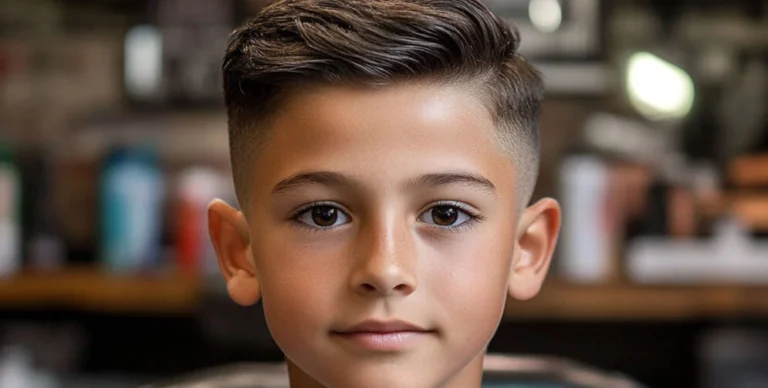
A textured fringe haircut is a style where the front section of hair falls forward across the forehead with choppy, separated ends that create natural movement and dimension. Unlike a blunt fringe that sits in a hard straight line, a textured fringe has visible gaps between strands, a slightly uneven finish, and a fall that looks like it happened naturally rather than being cut to a precise edge.
The sides are typically tapered or faded to create contrast with the longer, fuller top. The fringe is the focal point; everything else in the cut supports it.
Textured Fringe vs. Regular Fringe: The Actual Difference
The difference is the cutting technique, not the length or direction.
A regular or blunt fringe is cut straight across with scissors held horizontally. The result is a hard line where all the strands end at the same point. It looks deliberate and structured, which suits some styles but creates the helmet-like appearance that made the broccoli cut a target.
A textured fringe is cut using point-cutting scissors held vertically, cutting upward into the hair rather than straight across. This creates irregular endpoints that catch light differently, separate naturally, and move independently rather than as a single blunt mass.
Same length. Same direction. Completely different result.
The Broccoli Cut to Modern Textured Fringe: How It Evolved
The broccoli cut of 2020 to 2022 was a heavily permmed version with tight curls or waves on top, faded sides, and full volume at the crown. It worked on naturally curly hair. On straight hair it required aggressive chemical processing to create a curl structure that fought against the hair’s natural direction.
The modern textured fringe dropped the perm. Instead of adding chemical curl, it relies on point-cutting to create natural movement from the hair’s existing texture. On straight hair this means less volume but cleaner separation. On wavy and curly hair, it means the natural texture does the work that the perm used to do.
Same DNA. Much cleaner execution. Fewer salon chemicals. Lower maintenance.
What Is Point-Cutting and Why It Makes All the Difference
Point-cutting is the single most important technique in a textured fringe haircut. It is also the one thing most guides mention in one line and never explain.
The barber holds the scissors with the tips pointing upward into the hair rather than across it. Instead of cutting a clean horizontal line, the scissors cut into the ends at varying depths, creating irregular endpoints that no two strands share. The result is fringe that falls in separate pieces rather than as a solid mass.
Why does this matter? Blunt-cut fringe has a definable edge. Once that edge grows out, the fringe looks overgrown and shapeless. Point-cut fringe grows out gradually because there is no single edge to pass the irregular endpoints, meaning the grow-out is a progression rather than a sudden change. It also moves differently throughout the day, responding to natural hair movement rather than sitting as a fixed shape.
20 Textured Fringe Styles for 2026
Classic Textured Fringe with Low Taper
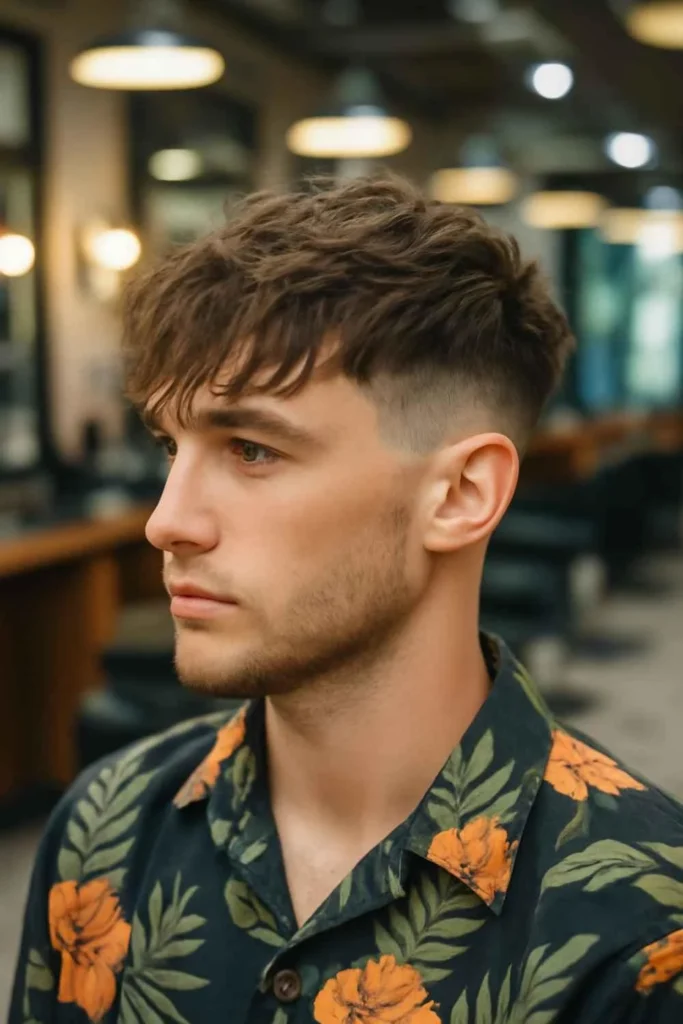
The starting point. Low taper on the sides fading gently above the ear, choppy textured fringe falling to just above or at the eyebrow line. The most conservative and universally appropriate version. Grows out cleanly, works in every setting, and suits every face shape.
Tell your barber, “Classic textured fringe with a low taper. Keep the fringe at eyebrow length point-cut the fringe, not blunt. Low taper starting just above the ear, number 2 at the lowest, blending to 4. Cut the top dry.”
Face shape: All.
Hair type: All.
School safe: Yes, universally.
Guard numbers: 2 at lowest, blend to 4.
Maintenance: Every 4-5 weeks.
Style time: 90 seconds matte clay forward.
Mid-Fade Textured Fringe
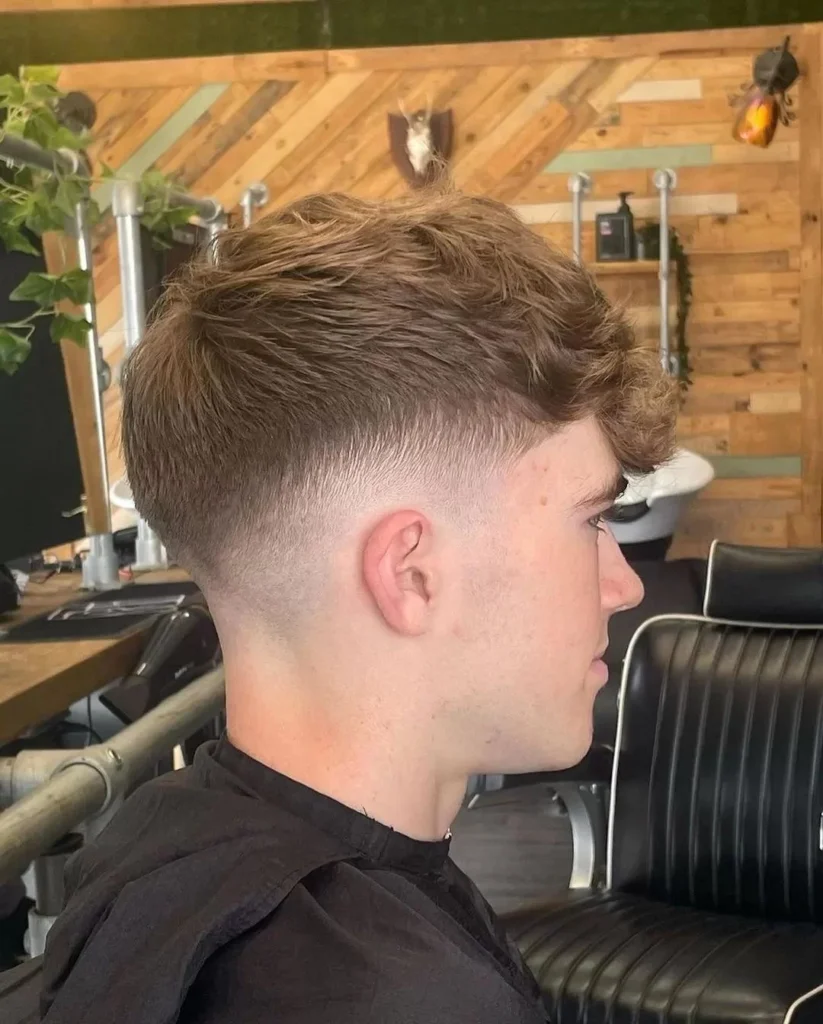
The most requested version in barbershops. Mid taper starting at ear level, creating visible contrast with the longer textured top. The fringe drops forward with choppy, separated pieces. This is what most people mean when they search “textured fringe” without specifying further.
Tell your barber: “Mid fade textured fringe. Mid fade starting at the ear. Keep two and a half inches on top heavy point-cutting on the fringe. Fringe to eyebrow length. Number 1.5 at the lowest, blending to 3.”
Face shape: Oval and round.
Hair type: All best on wavy and straight.
School safe: Yes, in most settings.
Guard numbers: 1.5-2 at tightest, blending to 3.
Maintenance: Every 3-4 weeks.
Style time: 2 minutes blow-dry forward, then clay.
High-Taper Textured Fringe
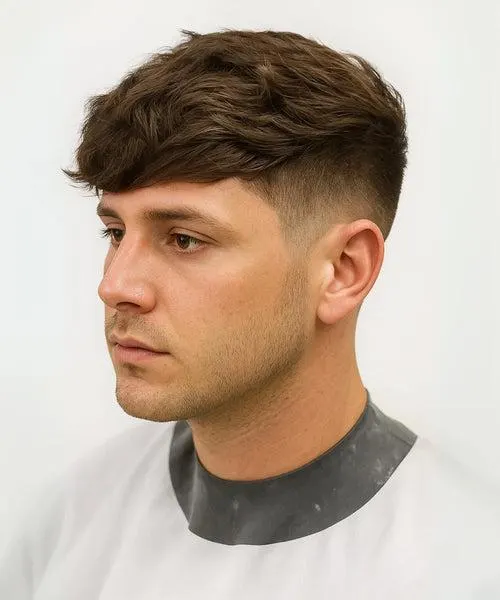
The boldest version. High taper starting well above the ear, creating maximum contrast with the full textured top. The fringe has more volume and length because the aggressive sides draw more attention to the top.
Tell your barber, “High taper textured fringe. Start the taper well above the ear; I want strong contrast. Heavy point-cutting on the fringe. Keep the fringe at eyebrow length. Number 1 at the tightest.”
Face shape: Oval and oblong; the height suits longer proportions.
School safe: Check some schools’ flag very high tapers.
Guard numbers: 1 at tightest, blend to 3.
Maintenance: Every 2-3 weeks.
Textured Fringe on Straight Hair
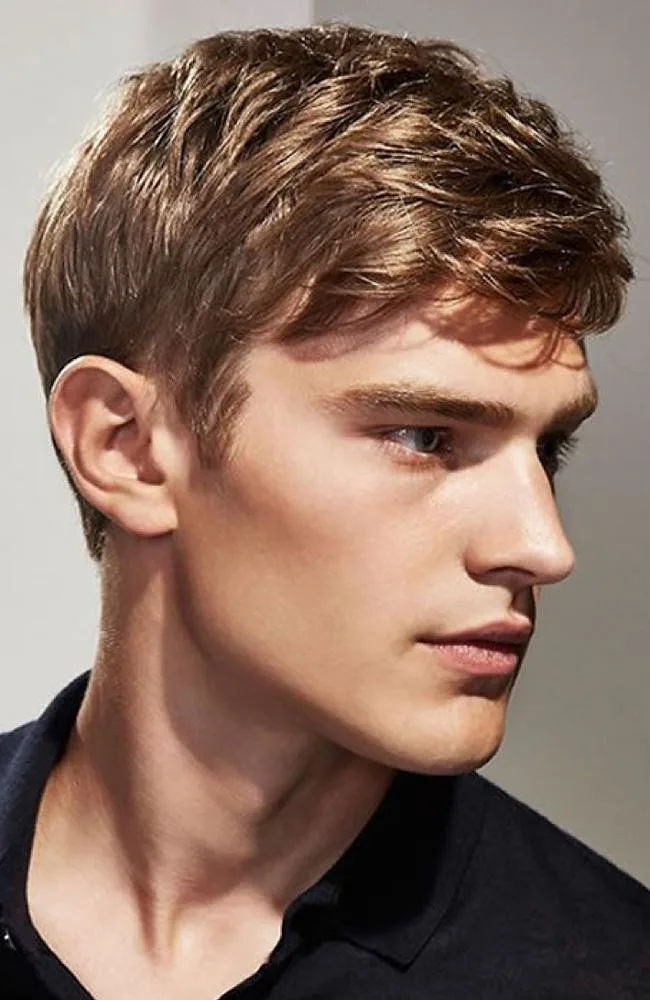
Straight hair is the most challenging canvas for a textured fringe because there is no natural texture to work with. Everything the curl pattern provides on wavy or curly hair movement, separation, and dimension has to be created through point-cutting and product on straight hair.
The result, when done correctly, is the cleanest-looking version. Straight strands separate precisely and hold their position consistently throughout the day. The trade-off is the daily effort. Without product and a blow dryer aimed forward at the roots, straight hair lies flat, and the fringe loses its dimension within hours.
Tell your barber, “Textured fringe for straight hair. Mid fade on the sides. Heavy point-cutting on the fringe I need the technique to do the work my hair texture cannot. Keep two and a half inches on top. Cut the fringe dry so we can see where it falls.”
Face shape: Oval, square, or oblong.
Daily effort: Medium clay and 2 minutes forward.
Style time: 2-3 minutes.
Maintenance: Every 4 weeks.
For twenty cuts specifically designed for straight hair boys, our boys’ haircuts for straight hair guide covers every style with barber scripts.
Curly Textured Fringe
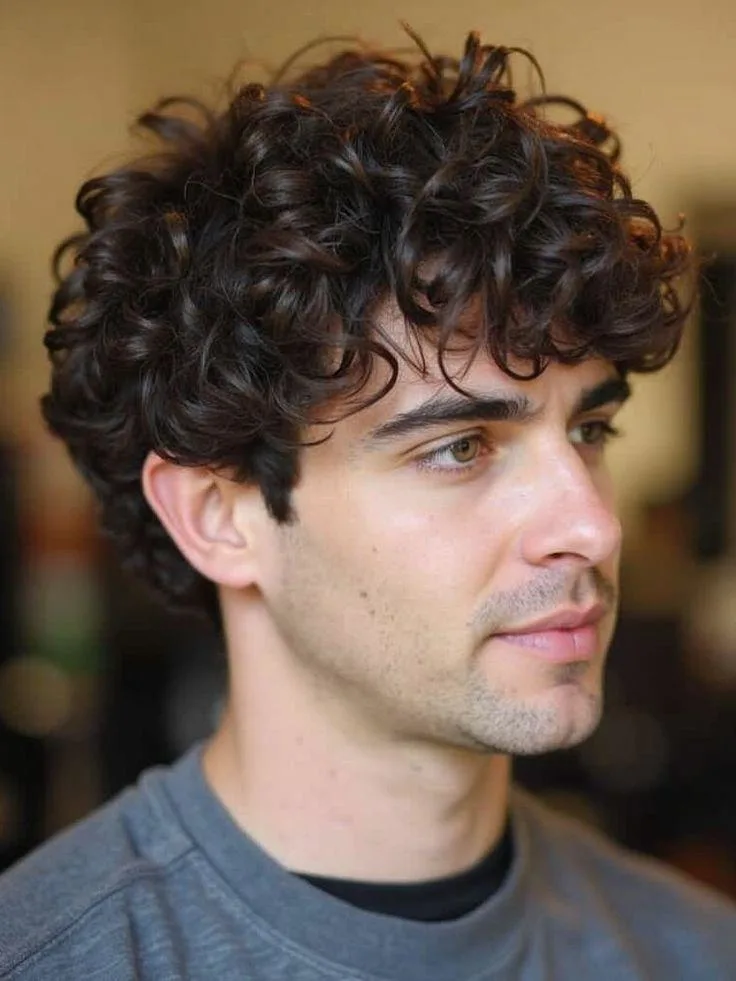
The easiest version. Tight curls and waves create the texture, separation, and dimension that straight hair needs product and technique to produce. The curl pattern does the point-cutting’s job automatically. The barber’s job is to shape the fringe length and ensure the curls are cut dry so their true length after shrinkage is visible.
Tell your barber, “Curly textured fringe. Mid- or low taper on the sides. Please cut the fringe section dry my curls shrink when dry, and I do not want it shorter than I expect. Keep at least two and a half inches on top for the curl pattern to form.”
Face shape: Oval and round curls add natural width.
Daily effort: Low curl cream, scrunch, air dry.
Maintenance: Every 3-4 weeks.
For the complete curly guide, our curly hairstyles for men page covers types 2A through 4C with dedicated barber instructions.
Low-Fade Textured Fringe
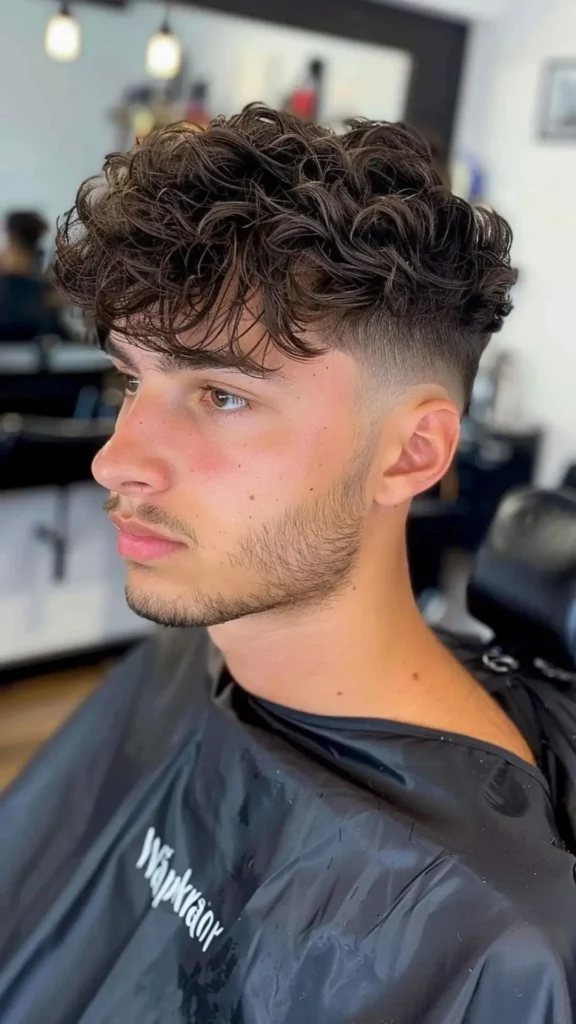
The most conservative fade level. Low fade staying just above the ear, gradual blend, full textured top with forward-falling fringe. The version for office environments, conservative school dress codes, and anyone who wants the textured fringe look without any potential conflict with professional or school policies.
Tell your barber: “Low fade textured fringe. Number 2 at the lowest is no skin. Gradual blend. Point-cut the fringe. Conservative office appropriate.”
School safe: Yes, universally.
Maintenance: Every 5 weeks.
Style time: 90 seconds.
Messy Fringe with Mid-Taper
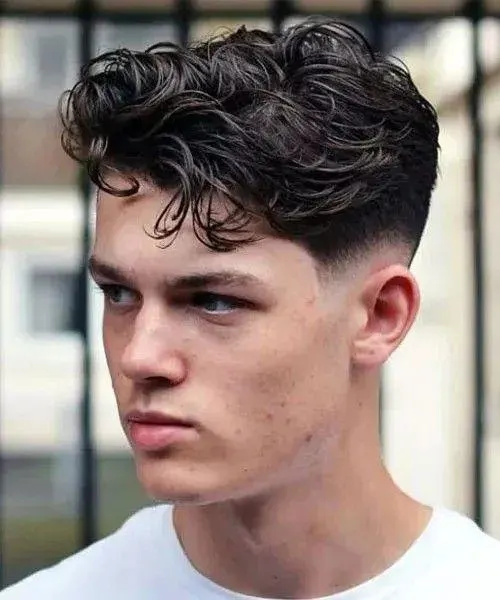
The deliberately undone version. Mid taper on the sides, fringe pushed forward with intentional disorder, pieces going slightly different directions, some forward, some slightly to the side. The goal is effortless rather than precise.
Tell your barber, “Messy textured fringe with mid taper. Heavy point-cutting on the fringe—I want it to look deliberately unstructured. Fringe at eyebrow length. Mid taper.”
Face shape: All.
Style time: Under 90 seconds, damp fingers forward, done.
Maintenance: Every 4 weeks.
Textured Fringe Short
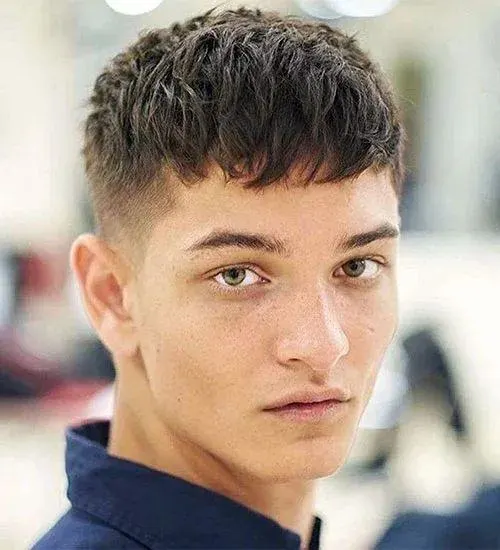
A cropped version of the textured fringe where the top is kept shorter, around an inch and a half to two inches. The fringe still falls forward but with less length and volume. The fade is typically mid to high to maintain the contrast with the shorter top.
Tell your barber, “Short textured fringe. Keep the top to an inch and a half and still point-cut the fringe for texture. Mid fade. Forward fringe direction.”
Face shape: A round and oval shorter version adds less height.
Maintenance: Every 3-4 weeks.
Style time: Under 60 seconds.
School safe: Yes.
Wavy Textured Fringe
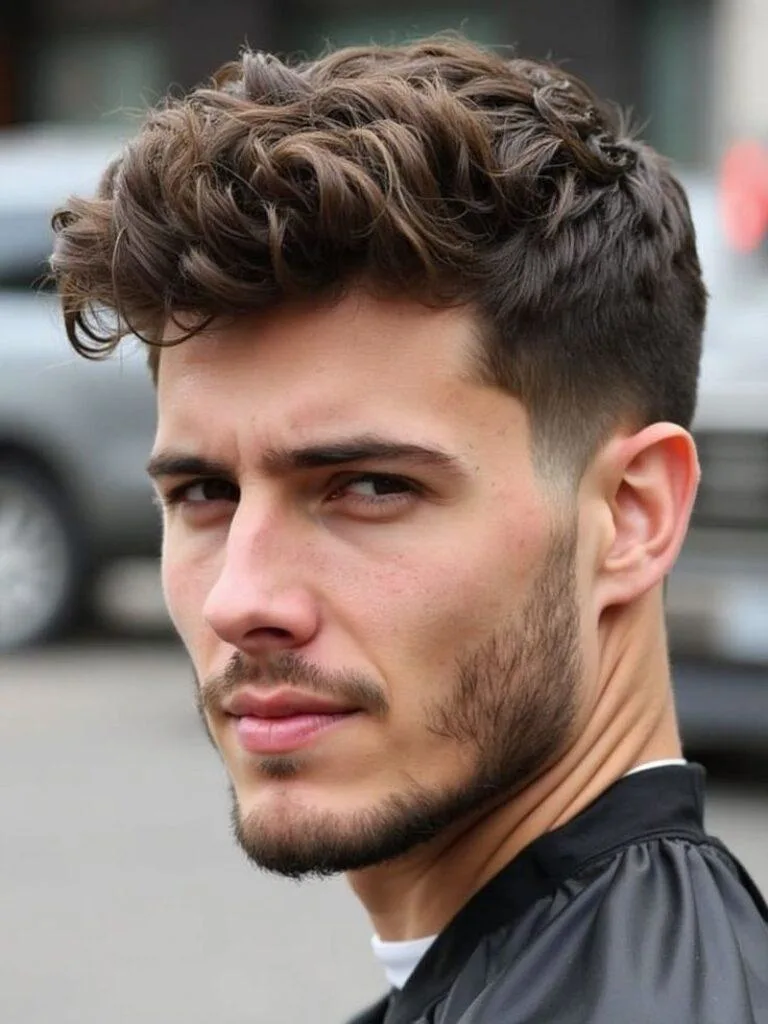
The best natural result of all hair types. Natural waves create movement and separation automatically, reducing the daily styling effort to near zero. The fringe falls forward with the wave, adding dimension that straight hair requires product to achieve.
Tell your barber, “Textured fringe for wavy hair. Low to mid taper. Leave enough length for the wave to form at least two and a half inches. Point-cut the fringe. I want the wave to do the texture work.”
Daily effort: Minimal sea salt spray on damp hair, air dry.
Maintenance: Every 4-5 weeks.
Style time: Under 2 minutes or zero with air dry.
Textured Fringe with Undercut
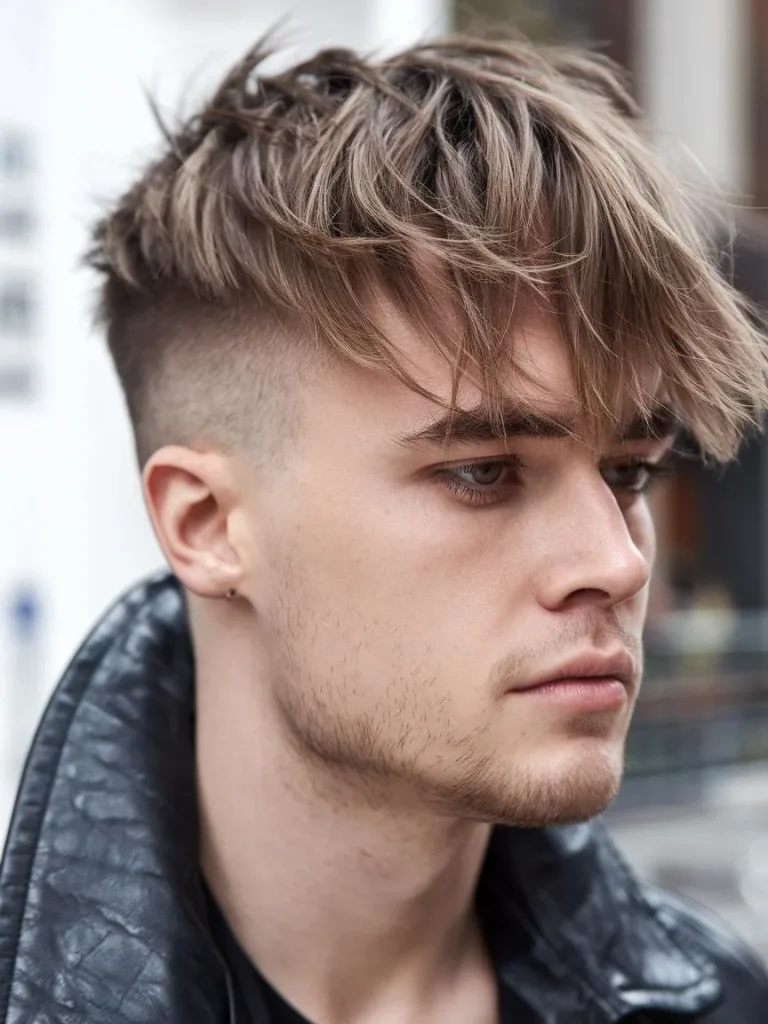
The disconnected version. Very short sides with a clear visual line between the undercut and the longer textured top. The fringe falls forward from the volume created by the undercut contrast.
Tell your barber, “Textured fringe with undercut. I want a clear disconnection between the sides and the top, not a fade, a hard undercut line. Heavy point-cutting on the fringe. Keep three inches on top.”
Face shape: Oval and square; the strong contrast suits defined features.
School safe: Check disconnected undercuts occasionally; they get flagged.
Maintenance: Every 4-5 weeks.
Burst Fade Textured Fringe
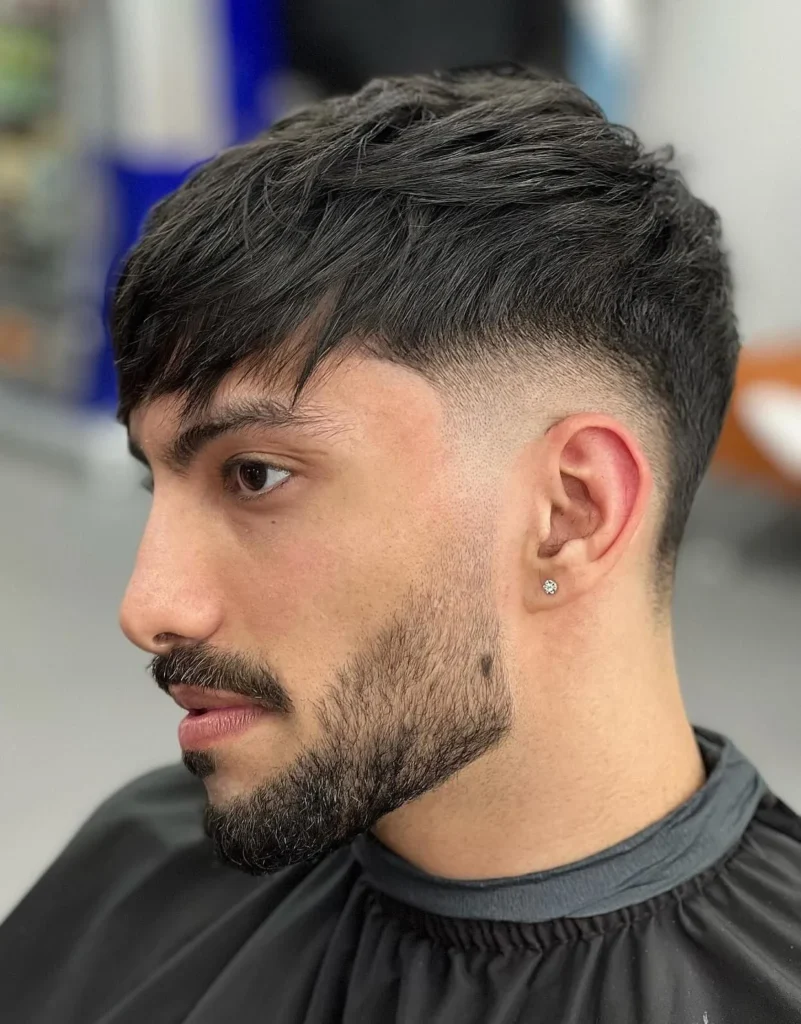
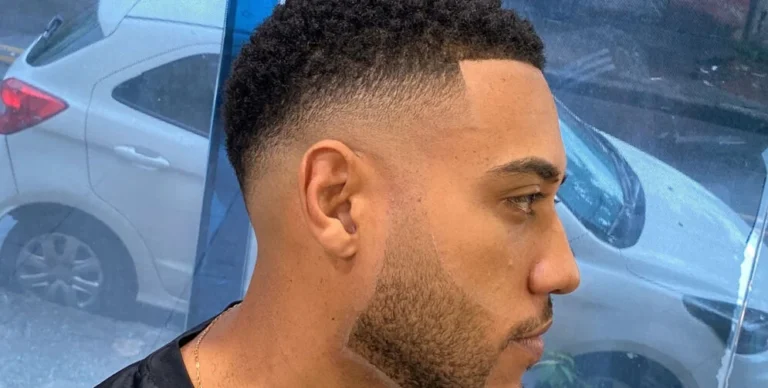
The burst fade follows a curved line around the ear rather than a straight horizontal line. Combined with a textured fringe, the curved fade creates a silhouette that mirrors the natural fringe fall, producing a more organic overall shape particularly suited to curly and wavy hair.
Tell your barber, “Textured fringe with burst fade. The fade should curve around the ear rather than go straight across. Point-cut the fringe. Keep two and a half inches on top.”
For the full burst fade technique, our burst fade guide covers every variation.
Textured Fringe Blowout
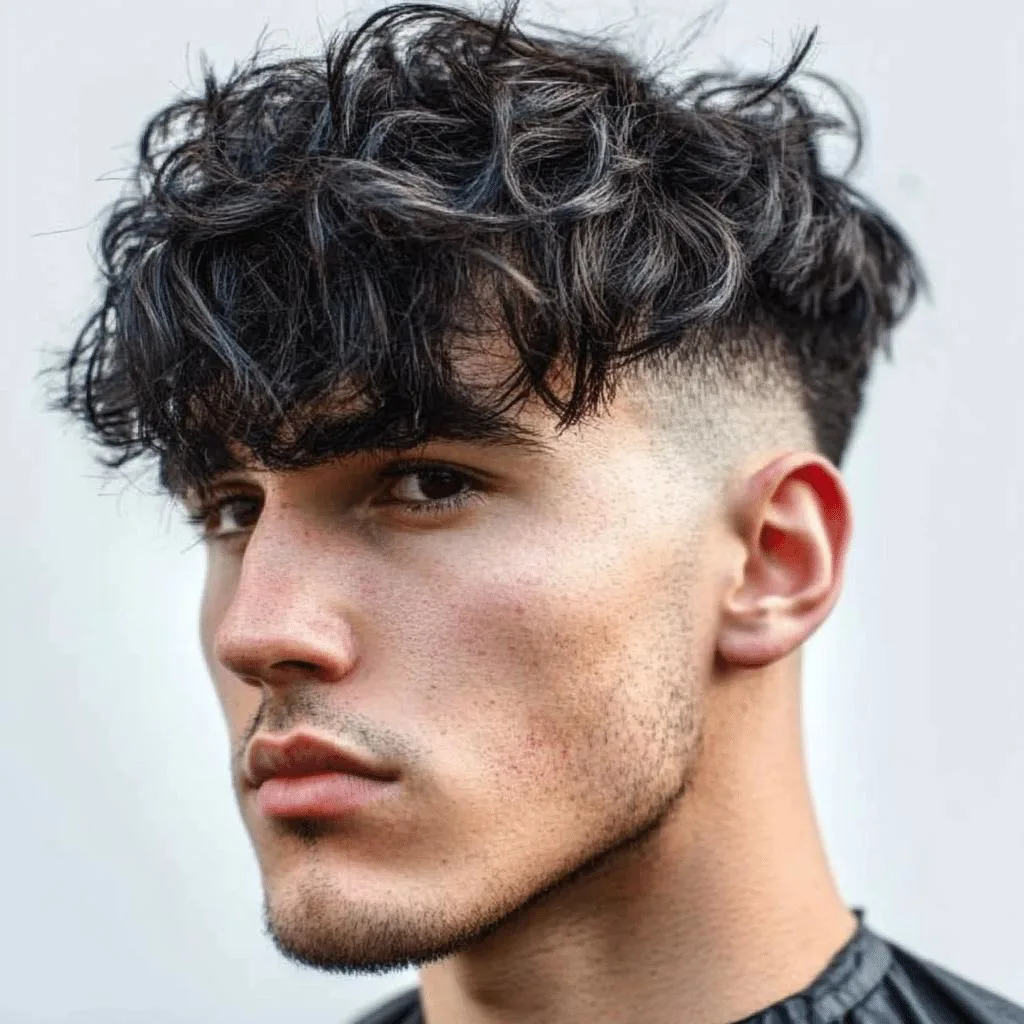
Blowout volume at the crown combined with a forward-falling textured fringe. The blowout lifts the back and sides of the top section while the fringe maintains its forward direction. The result has significantly more overall volume than a standard textured fringe.
Tell your barber, “Textured fringe blowout. Keep three inches on top enough for blowout volume. Point-cut the fringe. Low to mid taper. Leave weight at the back and sides of the top for the blowout shape.”
For the full blowout guide, our blowout taper page covers every variation with honest blow-dry guidance.
Long Textured Fringe
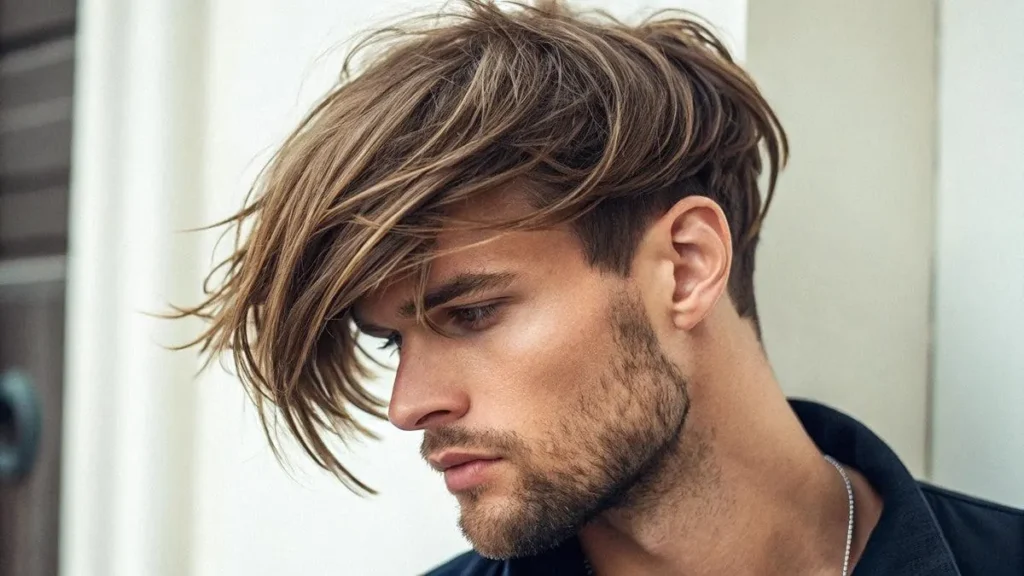
A more dramatic version where the fringe falls significantly past the eyebrow line. The longer length creates more movement and personality; the fringe sweeps or falls across the forehead rather than sitting at it.
Tell your barber, “Long textured fringe. I want the fringe past the eyebrow at least two and a half inches of fringe length. Point-cut heavily for separation. Low to mid taper.”
Face shape: Oblong and heart; the fringe length adds width.
School safe: Yes, length is not the issue; only fade level matters.
Side-Swept Textured Fringe
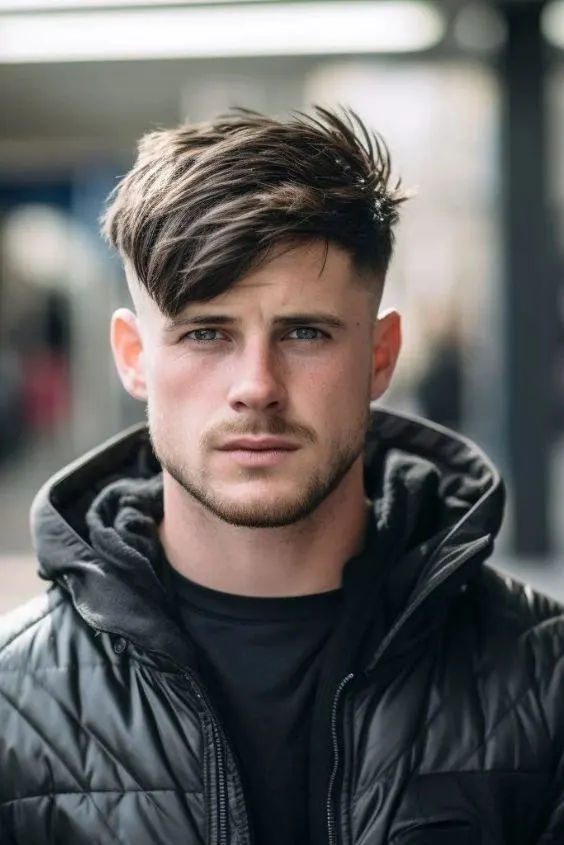
The fringe falls predominantly to one side rather than straight forward. This version suits the office environment because it reads as more deliberately styled than the straight-forward versions. Works particularly well on straight and wavy hair where the strands lie consistently in the swept direction.
Tell your barber: “Side-swept textured fringe. I want the fringe to fall to the left or whichever side has the natural hair growth direction. Point-cut the fringe so individual pieces separate as they sweep. Low taper.”
Setting: Office, formal, professional, the most conservative-looking version.
Style time: 2 minutes blow-dry in sweep direction, light cream.
French Crop with Textured Fringe
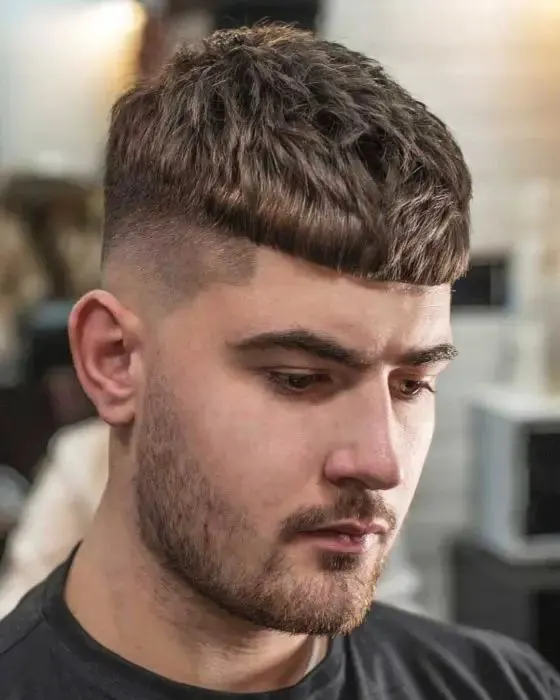
The French crop’s blunt fringe updated with a point-cutting technique. Instead of a hard straight line at the forehead, the fringe has texture and separation while still sitting at a defined position.
Tell your barber, “French crop with textured fringe. Blunt position at mid-forehead, but with point-cutting at the ends, I want texture, not a hard line. Mid fade.”
For the Caesar cut adjacent style, our Caesar haircut guide covers the related family of forward-fringe cuts.
Textured Fringe with Beard
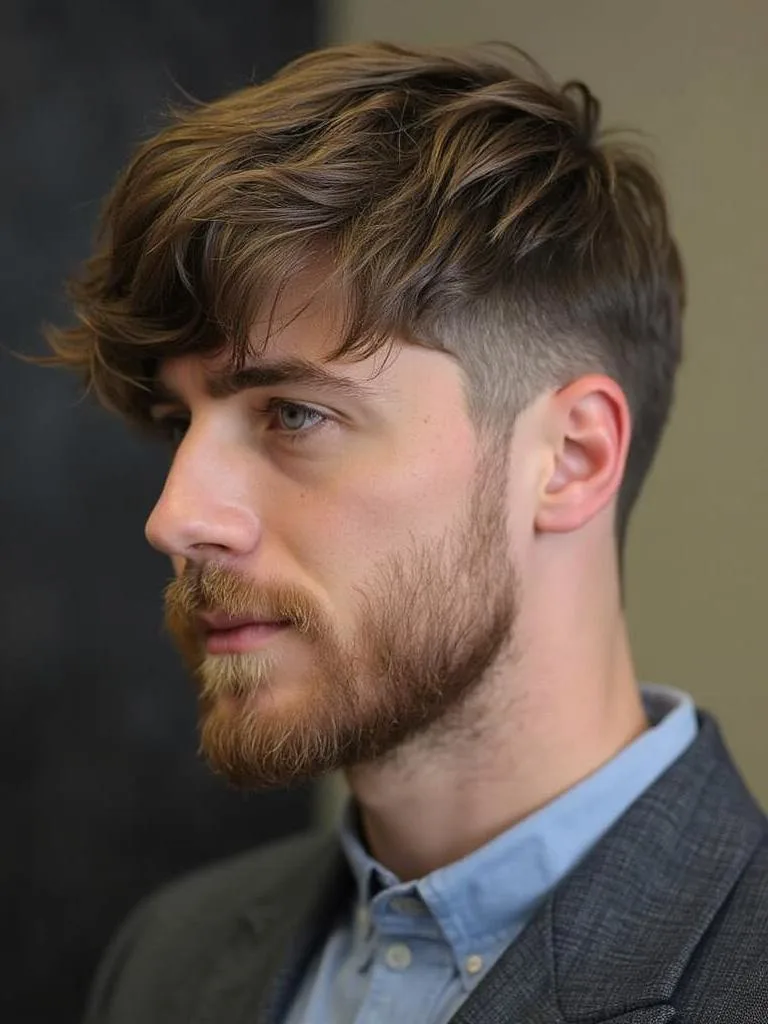
Adult men aged twenty-five to forty-five requesting a textured fringe often want it combined with an existing beard. The transition from the faded sides into the beard requires seamless blending; the barber fades into the beard rather than cutting a hard line at the sideburn.
Tell your barber, “Textured fringe. I have a beard; please blend the fade smoothly into the beard at the sideburn. No hard line. Point-cut the fringe. Mid taper above the beard level.”
Setting: A professional and casual beard adds maturity to the youthful fringe.
Maintenance: Every 3-4 weeks, the beard and fade grow at the same rate.
Fluffy Textured Fringe
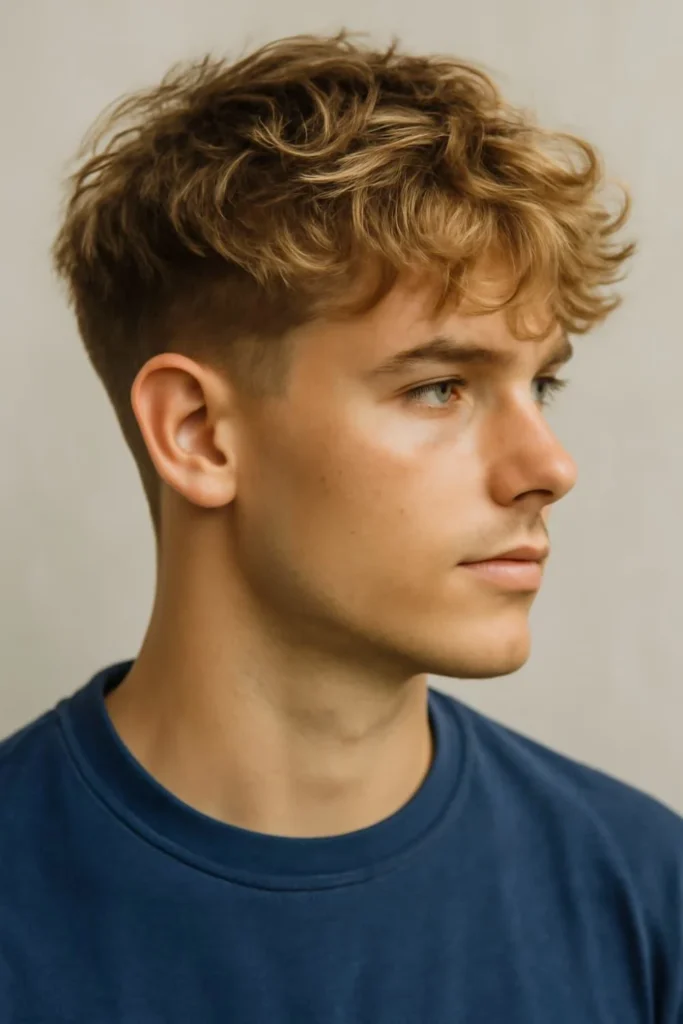
Maximum volume version. The fringe is blow-dried forward and upward at the roots to create lift before falling forward. The result has more height and fullness at the crown than the standard textured fringe.
Tell your barber, “Fluffy textured fringe. Keep three inches on top—I want volume and height before the fringe falls forward. Heavy point-cutting. Mid fade. Leave weight at the crown for lift.”
Style time: 5-7 minutes round brush + blow dryer upward then forward.
Products: Thickening mousse before blow-drying, matte clay after.
Spiky Textured Fringe
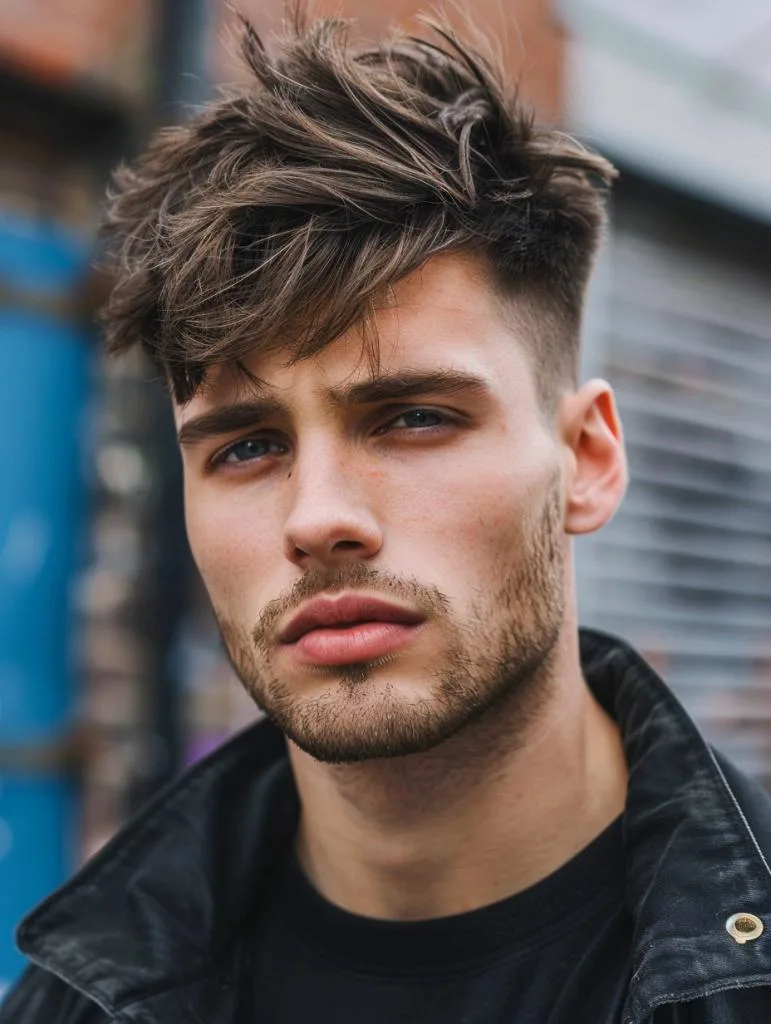
The more aggressive version where the fringe pieces are styled to point outward and forward rather than falling smoothly. More rebellious energy. Works best on straight and wavy hair where the strands hold their directed position.
Tell your barber, “Spiky textured fringe. Heavy point-cutting: I want very visible separation and individual pieces I can spike forward. Mid- to high-taper.”
School safe: Check the combination of high taper and spiky styling, which occasionally conflicts with conservative policies.
Style time: 3-4 minutes; clay worked through and pieces directed.
Textured Fringe for Boys and Teens
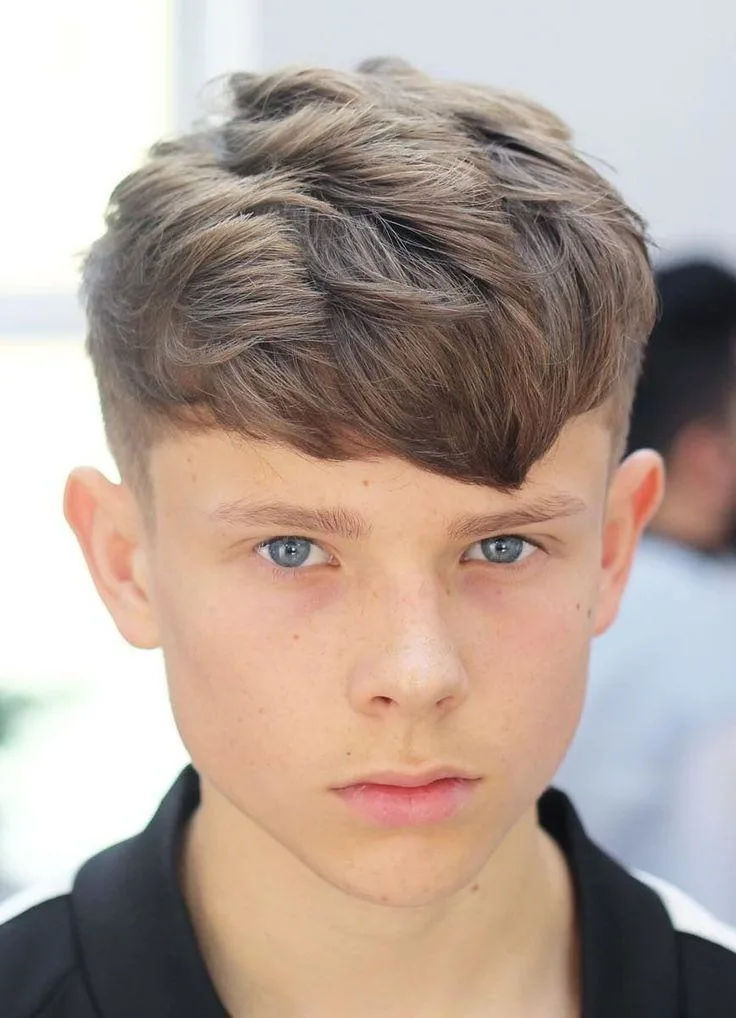
The textured fringe is the most requested cut among boys aged ten to eighteen in 2026. Most come in with a specific reference photo already. The considerations are school safety, maintenance reality, and choosing the correct fade level for the age and school environment.
For boys ten to thirteen, the low taper version is the correct starting point. School-safe everywhere, grows out cleanly, and requires minimal morning effort.
For teens fourteen to eighteen, the mid-fade version matches what older peers and content creators wear. Still school-safe in most settings with a standard fade level.
Tell your barber (for teens): “Textured fringe for an [age]-year-old. Low to mid taper. Point-cut the fringe; he wants texture, not a blunt line. Keep it school-appropriate.”
For the full age-specific guides: our teen boy haircuts page covers thirteen to eighteen. Our boys’ haircut hub covers every age from seven to twelve with school safety ratings.
Conservative Textured Fringe
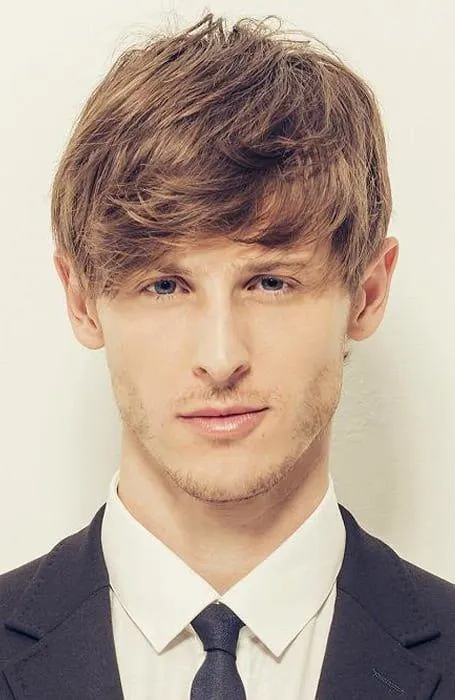
The most restrained version on this list. Number 2 or 3 guard at the sides—no skin visible anywhere. Fringe at mid-forehead length. Point-cut texture but not overly choppy. This version passes every professional and school dress code without any discussion.
Tell your barber, “Conservative textured fringe. Number 2 at the lowest is no skin. Gradual low taper. Fringe at mid-forehead. Light texture from point-cutting is subtle, not aggressive. Office-appropriate.”
Setting: Corporate, school, and formal events are universally accepted.
Maintenance: Every 5-6 weeks the most forgiving grow-out.
What Is Point-Cutting? The Technique Behind Every Great Textured Fringe
This section does not exist in any other guide at the depth it deserves. Point-cutting is the technique that makes the difference between a textured fringe that looks natural and one that looks like a bowl.
Blunt Cutting vs. Point-Cutting: The Visual Difference
Blunt cutting holds scissors horizontally and cuts straight across the hair. Every strand in the fringe ends at exactly the same point, creating a definable edge that sits as a single mass. This is what the old broccoli cut had: a solid, rounded shape that moved as one piece rather than as individual strands.
Point-cutting holds scissors at a vertical or diagonal angle and cuts upward into the hair in short snipping motions. The result is irregular endpoints; no two strands end at exactly the same length. This creates the separation, movement, and natural-looking dimension that defines the modern textured fringe.
The difference in grow-out is equally significant. A blunt fringe grows past a defined edge and suddenly looks overgrown. A point-cut fringe grows gradually; the irregular endpoints mean there is no single moment where the fringe crosses from tidy to unkept.
What to Say to Your Barber About Point-Cutting
Most people do not know to ask for this specifically. The barber will default to whatever technique they use most often, which on a textured fringe should be point-cutting, but is not always.
The exact words: “Please use point-cutting on the fringe cut the scissors upward into the hair, not straight across. I want soft, separated ends, not a blunt line.”
Most barbers will nod immediately. Some will ask what you mean. If they ask, “Vertical scissors, cutting into the hair. Not horizontal across.” That description covers it.
How Long Should the Fringe Actually Be?
The length of the fringe relative to the face changes how the overall cut reads on different face shapes. This is where Forte Series and every other competitor give a generic answer. Here is the specific guidance.
Large forehead or heart face: A fringe at the mid-forehead provides maximum coverage and creates balance. Do not cut shorter than mid-forehead, or the coverage disappears.
Average forehead, oval face: a fringe at eyebrow level is the classic position. Sits naturally, suits most styling directions.
Round face: A fringe slightly below the eyebrow line covering a bit more of the forehead adds vertical proportion that round faces benefit from.
Oblong face: fringe at eyebrow level or slightly below, adding a horizontal element without going too long.
Textured Fringe by Hair Type: Which Version Works on You
| Hair Type | Best Version | Blow Dryer | Natural Texture | Daily Effort |
|---|---|---|---|---|
| Straight | Classic or side-swept | Essential | Zero | Medium |
| Wavy | Messy or classic | Optional | High | Low |
| Curly | Curly textured fringe | No, diffuser | Very high | Low |
| Thick | Mid-fade version | Yes | High | Medium |
| Fine/Thin | Short textured fringe | Essential | Very low | Medium-high |
Textured Fringe on Straight Hair
Straight hair’s lack of natural texture means point-cutting is not a nice-to-have; it is mandatory. Without it, straight hair falls as a single mass, and the textured fringe looks like an ordinary blunt fringe within hours.
The other essential tool is a blow dryer aimed forward at the roots on damp hair. This creates the root lift that gives straight hair fringe its forward momentum before the clay holds it in position.
For the full straight hair guide, our boys’ haircuts for straight hair page covers twenty cuts specifically designed for straight hair.
Textured Fringe on Wavy Hair
Wavy hair is the sweet spot for the textured fringe. The natural wave creates movement and separation without product or heat styling. Point-cutting enhances what is already there rather than creating something from nothing.
Apply a sea salt spray to damp hair, scrunch the fringe forward, and air dry. The wave does the rest. This is the version that delivers the “effortless” result that the style promises on every reference photo.
Textured Fringe on Curly Hair
Curly hair requires the dry-cut rule above everything else. Curly hair shrinks between thirty and fifty percent when dry; a barber who cuts the fringe wet is cutting significantly shorter than requested. Always ask specifically for the fringe section to be cut dry.
The curl pattern creates automatic texture and separation. The barber’s job on curly textured fringe is shaping the outline and removing any bulk that makes the fringe sit too wide or too heavy, while leaving enough length for the curls to form properly.
For dedicated curly guidance, our curly hairstyles for men guide covers every curl type from 2A through 4C.
Textured Fringe on Thick Hair
Thick hair holds the textured fringe shape better than any other type once it is set. The volume gives the fringe natural lift, and the strands have enough weight to hold their forward direction without constant re-styling.
The challenge is bulk thick hair without internal layering can create a fringe that sits too heavy and loses individual strand separation. Ask specifically for point-cutting with internal layering through the top to remove bulk without changing the surface shape.
Textured Fringe for Fine Hair
Fine hair benefits from the texture illusion that point-cutting creates. The choppy, irregular ends catch light differently and create the appearance of more density than actually exists.
Texture powder at the roots before styling adds grip and lift that fine hair cannot produce independently. Apply to dry hair at the roots, work through with fingers, then style the fringe forward. The powder absorbs oil and adds friction that keeps fine strands in position longer.
Textured Fringe by Face Shape
What face shape is good for a textured fringe? Almost every face shape benefits from the specific version changes based on proportions.
Oval face: The most flexible face shape. All textured fringe versions work. The mid-fade version looks particularly strong on oval proportions.
Round face: The textured fringe adds a horizontal element at the forehead, while the height on top adds vertical proportion. The fringe should fall to eyebrow level or slightly below—not above the eyebrow, where it reduces the coverage. The mid fade keeps the sides tight, which avoids adding width.
Square face: The textured fringe softens the strong jaw by drawing attention upward to the fringe. Side-swept and classic versions work well. Avoid very high fades that emphasize the angular jaw.
Oblong face: An excellent match. The fringe adds a horizontal element to what is a predominantly vertical face shape. Keep fringe at eyebrow level. Avoid very tall, fluffy versions that add more height.
Heart face: The wide forehead benefits from fringe coverage. The textured fringe at mid-forehead length provides coverage while the choppy texture keeps it from looking too heavy. A French crop with textured fringe suits heart faces well.
Who Should NOT Get a Textured Fringe
This is the section every other guide omits. The honest answer is that some hair situations and face characteristics make the textured fringe genuinely difficult.
Weak hair density at the front means the fringe will expose the scalp as the individual strands separate. The textured fringe relies on visible separation when density is low; that separation becomes scalp visibility rather than style. A denser cut or a French crop fringe with less separation works better.
A very high natural hairline limits the forehead real estate available for fringe. The fringe needs forehead to fall against. Very high hairlines either push the fringe very short or create a look where the cut ends feel disconnected from the face.
Receding temples combined with a forward fringe can create an awkward contrast of full fringe at the front with noticeably thin areas at the sides. A different cut choice that works with the hairline rather than against it produces a better result.
How to Style a Textured Fringe at Home
Step-by-Step Guide
Start with clean hair towel-dried to about eighty percent dry. The damp state helps products absorb, and the hair is still shapeable before setting.
Apply a small amount of thickening mousse or sea salt spray to the roots of the fringe section while hair is damp. This creates the texture base that holds the point-cut separation in place after drying.
Use a blow dryer aimed forward at the roots of the fringe. The direction matters forward and slightly downward, not upward. Upward blow-drying creates volume that pushes the fringe back rather than forward. The goal is for the roots to be lifted off the scalp with the fringe direction maintained forward.
Once roughly dry, use fingers to pull individual fringe pieces forward and separate them. Do not use a comb; a comb removes the piece separation that is the entire point of the textured fringe.
Finish with a cool shot from the blow dryer. Cold air locks the shape in place significantly longer than stopping at the warm stage.
Apply a small amount of matte clay or texture paste to dry hair, distributing through the fringe with fingers. Add final separation to any pieces that have merged back together.
Styling Per Hair Type
Straight hair: Clay applied to damp roots, blow-dry forward, cool shot, light clay through fringe. Seven to ten minutes total.
Wavy hair: Sea salt spray on damp hair, scrunch the fringe forward, and air dry completely. Two minutes active, then zero effort.
Curly hair: Curl cream on damp hair, scrunch forward, and diffuse or air dry. Do not touch the hair while drying; touching curly hair while wet breaks up the curl formation.
Best Products for Textured Fringe
Hair clay for textured fringe is the most searched product query related to this cut. The right clay matters; heavy pomade weighs the fringe down and removes the separation. Wet-look products defeat the purpose entirely.
Budget ($5-12):
Gatsby Wax Fiber ($6) for short- to medium-textured fringes. Provides grip and matte finish without weight. Any drugstore sea salt spray ($8-10) for wavy and curly versions, like Kenra Platinum Silkening Mist or similar.
Mid-range ($12-20):
American Crew Fiber ($14) for straight and wavy hair. Provides a flexible hold with a natural finish. Bumble and Bumble Surf Spray ($18) for the wavy version—adds texture without stiffness.
Premium ($20+):
Moroccanoil Texture Clay ($24) is one of the most effective matte holds for a textured fringe across all hair types. Provides definition without shine.
Can I Pull Off a Textured Fringe? The Honest Assessment
Can I pull off a fringe-cut male? The honest answer is probably yes—but with specific conditions.
Who It Works Best On
The textured fringe produces its best results on men with medium to thick hair density at the front, some natural movement in the hair texture, a face shape that benefits from fringe coverage, and a willingness to spend ninety seconds on styling most mornings.
If all four of those apply, the textured fringe will deliver on what the reference photos promise.
Who Should Think Twice
This is not a low-effort cut for everyone. As one barber guide puts it, this is not a lazy man’s cut. The layering has to be sharp. The sides need upkeep. And the styling needs intention. Weak density, rushed trims, or sloppy product use will show fast.
Very low front hair density means the separated strands will reveal the scalp rather than create the textured dimension the cut relies on. A different cut choice produces a better result without fighting against the hair’s limitations.
Extreme cowlicks at the forehead front can work against the forward fringe direction consistently. This is solvable with the right barber and the right product, but it adds daily effort.
The Commitment Question
The textured fringe requires a trim every three to four weeks for the mid-fade version and every four to five weeks for the low taper version. It requires ninety seconds of morning effort on most days. It requires a small amount of product on most mornings.
If all three of those commitments are genuinely not happening, the cut will look intentional for about ten days and then stop. In that case, the low taper fade with a natural top or the crew cut with a low taper will deliver a better sustained result with less dependence on consistent maintenance.
For the no-fringe alternatives, our low taper fade guide and short boys’ haircuts page cover every option.
How to Ask Your Barber for a Textured Fringe
The Universal Textured Fringe Script
“Textured fringe with [low/mid/high] taper. Keep the fringe at [mid-forehead/eyebrow] length. Please use point-cutting to cut the scissors upward into the fringe, not straight across. I want soft, separated ends with natural movement. Keep [X] inches on top.”
This script contains every piece of information a barber needs: fade level, fringe length, cutting technique, and top length.
Scripts Per Variation
Classic with low taper: “Classic textured fringe. Low taper, number 2 at the lowest. Fringe at eyebrow length. Point-cut the fringe. Conservative.”
Mid fade: “Textured fringe mid fade. Number 1.5 is the tightest. Point-cut fringe to eyebrow length. Two and a half inches on top.”
Curly version: “Curly textured fringe. Mid taper. Please cut the fringe dry; my curls shrink significantly when wet.” At least two and a half inches on top.”
Short version: “Short textured fringe. Inch and a half on top. Mid fade. Point-cut the fringe; I want texture even at this length.”
Side-swept: “Side-swept textured fringe. Low taper. Fringe to fall to the left point-cut so individual pieces sweep in that direction.”
Bangs vs. Fringe: What to Say
What are bangs vs. fringe? The same thing with different names. “Bangs” is the American English term. “Fringe” is the British English term. Say either one to any barber in any country; both are understood. The cutting technique and result are identical regardless of which word is used.
Fringe Glossary Key Terms
Point-cutting: Scissors held vertically, cutting upward into the hair to create texture.
Choppy fringe: Fringe cut with heavy point-cutting, very visible piece separation.
Feathered ends: Light point-cutting creates a soft, airy fringe finish.
Textured ends: The result of point-cutting irregular endpoints with natural movement.
Natural texture: Using the hair’s existing wave or curl rather than adding product or heat.
Two Photos, Always Two
The front photo shows the fringe direction, length, and top volume. The side photo shows the fade level and where the taper starts. A single front photo leaves the entire side and back interpretation to the barber. Two photos remove ninety percent of misinterpretation.
Is a Textured Fringe School Appropriate?
Yes, in every version except the most aggressive high-skin-fade combinations with shaved designs.
What Passes Every School Policy
Low taper textured fringe, yes, everywhere. Mid-fade textured fringe is yes in most settings. The fringe itself is never the issue. Schools flag aggressive fade levels and shaved designs, not fringe direction or length.
What to Check Before Getting
A high skin fade starting above the ear combined with a textured fringe occasionally gets flagged at more conservative schools. The solution is requesting a mid or low fade rather than a high skin fade; the fringe remains exactly the same, only the side treatment changes.
Shaved designs added into the fade are the most commonly flagged element in any haircut. The textured fringe itself carries no school policy risk.
Best School-Safe Versions
The conservative textured fringe with a number 2 low taper style 20 above passes every school environment. The classic textured fringe with low taper style 1 is equally safe. Both deliver the textured fringe look without any potential dress code conflict.
For full school safety guidance across all styles: our boys’ haircuts hub rates every cut for school dress codes. The teen boy haircuts guide covers the full age range with per-style safety ratings.
How Often Should You Trim a Textured Fringe?
The fringe grows faster than it appears to because the forward-falling direction makes length increase more visible than it would on a style that grows upward or outward.
Maintenance Table by Version
| Version | Looks Sharp | Grow-out Visible | Trim Frequency |
|---|---|---|---|
| Low taper | Weeks 1-4 | Week 5 gradually | Every 4-5 weeks |
| Mid fade | Weeks 1-3 | Weeks 3-4 | Every 3-4 weeks |
| High taper | Weeks 1-2 | Weeks 2-3 | Every 2-3 weeks |
| Undercut | Weeks 1-4 | Weeks 4-5 | Every 4-5 weeks |
The Fringe-Only Trim Trick
This is the practical tip nobody else publishes. The fringe grows visibly faster than the sides. By the time the sides need a full trim, the fringe may have already passed the point where it lies naturally at the right length.
A fringe-only trim takes five minutes and costs less than a full cut at most barbershops. Ask specifically, “Can I just have a fringe trim today? The sides are still good.” This extends the life of the full cut and keeps the fringe in its optimal position between full appointments.
Annual Cost by Fade Level
| Fade Level | Trims Per Year | Annual Cost (US, $30/cut) |
|---|---|---|
| Low taper | 9-10 | $270-300 |
| Mid fade | 12-15 | $360-450 |
| High taper | 17-25 | $510-750 |
Browse More Related Guides
For the most popular base fade beneath a textured fringe, our low taper fade guide covers every variation with guard numbers and barber scripts.
One level up, our mid taper fade page covers the standard mid fade that pairs with the most requested textured fringe version.
For the blowout volume combination, our blowout taper haircut page covers the volume + fringe combination in full depth.
For boys and teens specifically: our teen boy haircuts guide and boys haircuts hub cover every age from seven to eighteen with school safety ratings.
For curly hair: our curly hairstyles for men guide covers every curl type from 2A through 4C with barber instructions.
For straight hair: our boys’ haircuts for straight hair guide covers twenty cuts for straight hair with honest styling assessments.
Not sure which style suits your face shape and hair type? Our teen haircut finder quiz takes sixty seconds.
Frequently Asked Questions
What is a textured fringe haircut?
A textured fringe haircut is a style where the front section of hair falls forward across the forehead with choppy, separated ends created by point-cutting rather than a clean blunt line. The texture comes from the cutting technique: scissors held vertically to create irregular endpoints that move independently and look natural rather than forced.
What is a fringe haircut?
A fringe haircut is any style where the hair at the front of the head falls forward across the forehead, rather than being styled back or to the sides. Fringe is the British English term for bangs both words refer to the same thing. A textured fringe is one specific version using the point-cutting technique for natural movement.
How do I ask my barber for a textured fringe?
Say: “Textured fringe with [low/mid/high] taper. Keep the fringe at eyebrow length. Please use point-cutting scissors upward into the fringe, not straight across. I want separated ends with natural movement, not a blunt line.” Bring a front photo and a side photo showing the fade level.
What face shape is good for a textured fringe?
Almost every face shape benefits from a textured fringe. Oval faces suit all versions. Round faces benefit from the forward fringe adding a horizontal element. Square faces benefit from the softening effect on angular features. Oblong faces benefit from the horizontal fringe adding width. Heart faces benefit from forehead coverage. The version and fringe length change per face shape; the suitability does not.
What are bangs vs. fringe?
The same thing with different names. “Bangs” is the American English term. “Fringe” is the British English term. Both refer to hair cut to fall forward across the forehead. Say either word to any barber—both are universally understood.
What is the Gen Z boy haircut called?
The textured fringe is the defining Gen Z haircut of 2026. Also called the choppy fringe, messy fringe crop, or textured crop fringe. It shares the same general characteristics as the old broccoli cut but with the modern point-cut execution that dropped the aggressive perm and heavy volume in favor of natural movement.
Can I pull off a fringe-cut male?
Yes, in most cases. The conditions that work best: medium to thick hair density at the front, some natural movement in the hair, a face shape that benefits from fringe coverage, and willingness to spend ninety seconds on styling. The situations that make it more difficult: very low front hair density, extreme forehead cowlick, and very high natural hairline.
Who should not wear a fringe?
Men with very low hair density at the front, the separated strands of a textured fringe will reveal the scalp rather than create texture. Men with receding temples where the fringe creates contrast with thin side areas. Men who genuinely will not spend ninety seconds styling on most mornings. In these cases, a different cut produces a better sustained result.
Do fringes suit chubby faces?
Yes, when done correctly. A well-shaped textured fringe frames the face and draws attention to the eyes rather than the width of the face. The key is keeping the fringe at eyebrow level or slightly below; a fringe that sits above the eyebrow exposes more of the forehead and adds visual width. A mid fade that keeps the sides tight adds vertical proportion that balances rounder proportions.
How to style a textured fringe?
Apply thickening spray or matte clay to damp roots. Blow dry forward and slightly downward at the fringe roots, not upward. Separate pieces with fingers while drying. Cool shot to lock shape. Light matte clay distributed through the fringe with fingers for final separation. Total time: ninety seconds to two minutes for wavy hair, two to three minutes for straight hair.
Is textured fringe school appropriate?
Yes, in all standard versions. The fringe itself never conflicts with school dress codes. The potential issues are aggressive fade levels, very high skin fades, and occasional getting flagged at conservative schools. Request a low or mid taper rather than a high skin fade, and the textured fringe passes every school environment without discussion.
How often should you trim a textured fringe?
Low taper version every four to five weeks. Mid-fade version every three to four weeks. High taper version every two to three weeks. The fringe itself grows visibly faster than the sides. A fringe-only trim between full cuts is a practical option at most barbershops and costs less than a full appointment.
What hair clay is best for textured fringe?
A matte clay or texture paste rather than pomade or a wet-look product. Pomade weighs the fringe down and removes the separation that is the entire point of the textured fringe. Budget: Gatsby Wax Fiber. Mid-range: American Crew Fiber. Premium: Moroccanoil Texture Clay. All three provide the matte hold that keeps fringe separated without visible product weight.
What is the difference between textured fringe and curtain bangs?
The curtain bangs part in the center and fall to both sides, framing the face symmetrically. A textured fringe falls forward across the forehead without a center part, covering the forehead rather than framing it. The cutting technique point-cutting can be used for both, but the direction and styling are different. Textured fringe is forward. Curtain bangs are split and swept to each side.
The textured fringe survived the broccoli memes. It survived the alpaca comparisons. It survived every attempt to make it uncool. It is the most requested cut of 2026 for the same reason it kept getting requested through all of that; when it is done correctly, it is genuinely a very good haircut.
The difference between the version that earns those results and the version that looks like a bowl is one technique: point-cutting. The difference between the version that stays looking right for five weeks and the version that falls apart in two is the correct fade level for your lifestyle. Both are in this guide.
Pick the version that matches your hair type and face shape. Save the barber script. Say the point-cutting instruction before the scissors start. Bring two photos.
For the full range of related styles, our taper vs. fade guide explains every fade level with exact terminology. For boys and teens, our boys’ haircuts hub covers every age from seven to eighteen.