Low Taper Fade Complete 2026 Guide with Styles, Barber Scripts and Everything You Need to Know
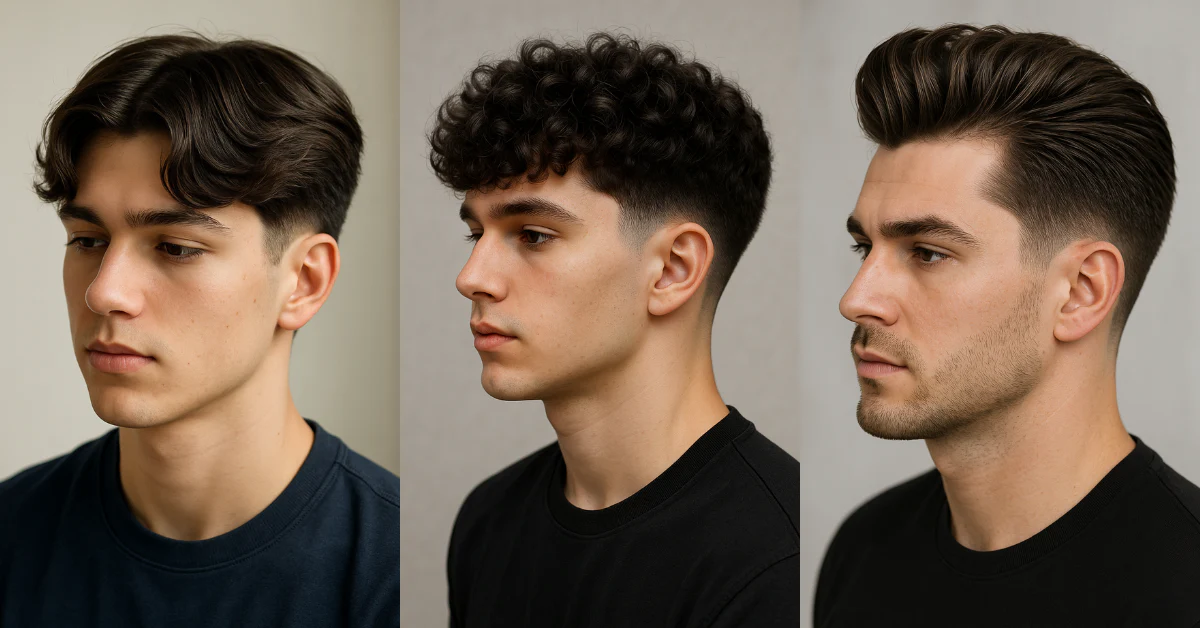
A man sat down in my chair last spring and said three words: “Low taper fade.”
A man sat down in my chair last spring and said three words: “Low taper fade.”
I asked him to show me a photo. He pulled up a picture of a mid fade, sides cut tight halfway up the head, sharp contrast, and strong line. He called it a low taper. His last barber had given him exactly what he asked for. The result looked nothing like what he wanted.
That gap between what someone says and what they actually mean is why bad haircuts happen.” “Low taper fade” is the most searched haircut term in barbershops right now; 368,000 people search it every month, and most of them are working from a slightly different definition.
This guide fixes that. What a low taper fade actually is. How it differs from a low fade, a mid taper, and everything adjacent. Twenty styles with exact barber scripts and guard numbers. Face shape matching. Hair type guide. And the one sentence that guarantees you leave the barbershop with the cut you actually wanted.
Build Your Perfect Low Taper Fade
Answer 8 quick questions and get your exact low taper version, guard numbers, top length, maintenance plan and barber script.
🌀 What is your natural hair type?
Choose what your hair naturally does after air-drying.
🙂 What face shape is closest?
This helps decide height, width and fringe balance.
🏢 Where will you wear it most?
This controls how conservative or visible the taper should be.
📏 How long is your hair on top?
Choose your current or target top length.
🔥 How bold do you want it?
This changes contrast and guard choice.
⏱️ How much time will you style the top?
Pick your real routine.
🧔 Do you have a beard?
If yes, the sideburn should blend into it smoothly.
✂️ Is this your first fade?
First-timers usually suit a softer low taper best.
💡 Why This Suits You
⚠️ Important Barber Notes
🔥 Also Worth Considering
At a Glance Quick Picks
| Need | Best Low Taper Version |
|---|---|
| First time getting a fade | Classic low taper, softest version |
| Office and professional | Conservative low taper, number 2 guard |
| Straight hair | Classic low taper with textured top |
| Curly hair | Low drop fade cut, dry |
| Long hair on top | Low taper flow or low taper long hair |
| With beard | Low taper fade with beard blend |
| School-safe | Soft low taper, number 2-3 sides |
| Wavy hair | Textured low taper waves do the work |
What Is a Low Taper Fade?
A low taper fade is a haircut where the hair gradually shortens around the sideburns, temples, and neckline, starting just above the ear and blending smoothly downward. The key word is low. The fade zone is restricted to the bottom section of the head, roughly one to two inches above the natural hairline.
The top stays at whatever length you want. The sides stay at their natural length above the fade zone. Only the area around the ears, temples, and neckline transitions from shorter to skin or near-skin.
That restraint is why it works everywhere—office, school, weekends—without looking too aggressive or too plain.
Low Taper Fade vs Low Fade The Actual Difference
These two terms are used interchangeably. They should not be. The difference changes the result significantly.
| Low Taper | Low Fade | |
|---|---|---|
| Where it starts | Just above the ear | Above the ear |
| How far it goes | Blends to short, not always skin | Often goes to skin |
| Contrast level | Subtle, gradual | Sharper, more visible |
| How long it lasts | 4-6 weeks | 2-4 weeks |
| Grow-out | Gradual, no hard line | A visible line appears fast |
| Best for | Office, school, first-timers | Weekend, bold looks |
A taper keeps some visible hair all the way to the hairline. A fade can go all the way to bare skin. That distinction matters because a low fade at a mid-level on some barbers is still called "low." The safest thing you can do is bring a photo and specify exactly where the fade starts in inches from the natural hairline.
Is low fade better than taper? Neither is better. They serve different purposes. The low taper is more conservative and lasts longer between trims. The low fade creates sharper contrast and makes more of a statement. Which is better depends entirely on your lifestyle, setting, and how often you want to visit the barbershop.
Low Taper vs. Mid Taper: Which One Should You Get?
Should you get a low or mid taper? The honest answer depends on three things.
Choose a low taper if you work in a conservative environment, this is your first fade, you want maximum time between trims, or you prefer a subtle, understated look that works everywhere without adjustment.
Choose a mid taper if you want more visual contrast, you work in a creative or casual environment, you are already comfortable with fades, or you want the sides to look distinctly shorter than the top.
The mid taper starts at the middle of the head — at or slightly above the ear level — and creates a stronger contrast. The low taper stays below that point. The difference in appearance is visible but not dramatic. The difference in maintenance is significant — a mid taper needs a touch-up roughly one week sooner than a low taper.
The Guard Numbers Explained
What is a number 1 haircut? What is a 2-fade haircut? These numbers refer to clipper guard sizes — the attachment that determines how short the clippers cut.
| Guard | Length | What It Looks Like |
|---|---|---|
| 0 (bare) | Skin | Completely shaved |
| 0.5 | 1.5mm | Near-skin, just above bare |
| 1 | 3mm | Very tight, tightest visible fade |
| 1.5 | 4.5mm | Common for lowest fade section |
| 2 | 6mm | Short but not severe |
| 3 | 9mm | Short, blends into a number 4-5 |
| 4 | 12mm | Medium-short |
For a standard low taper fade, the tightest section near the skin uses a number 1 or 1.5, blending up to a number 2 or 3 at the top of the fade zone. The blend between these guards is what a skilled barber does, working the clipper upward in short strokes to eliminate any visible line between lengths.
20 Low Taper Fade Styles for 2026
Classic Low Taper Fade
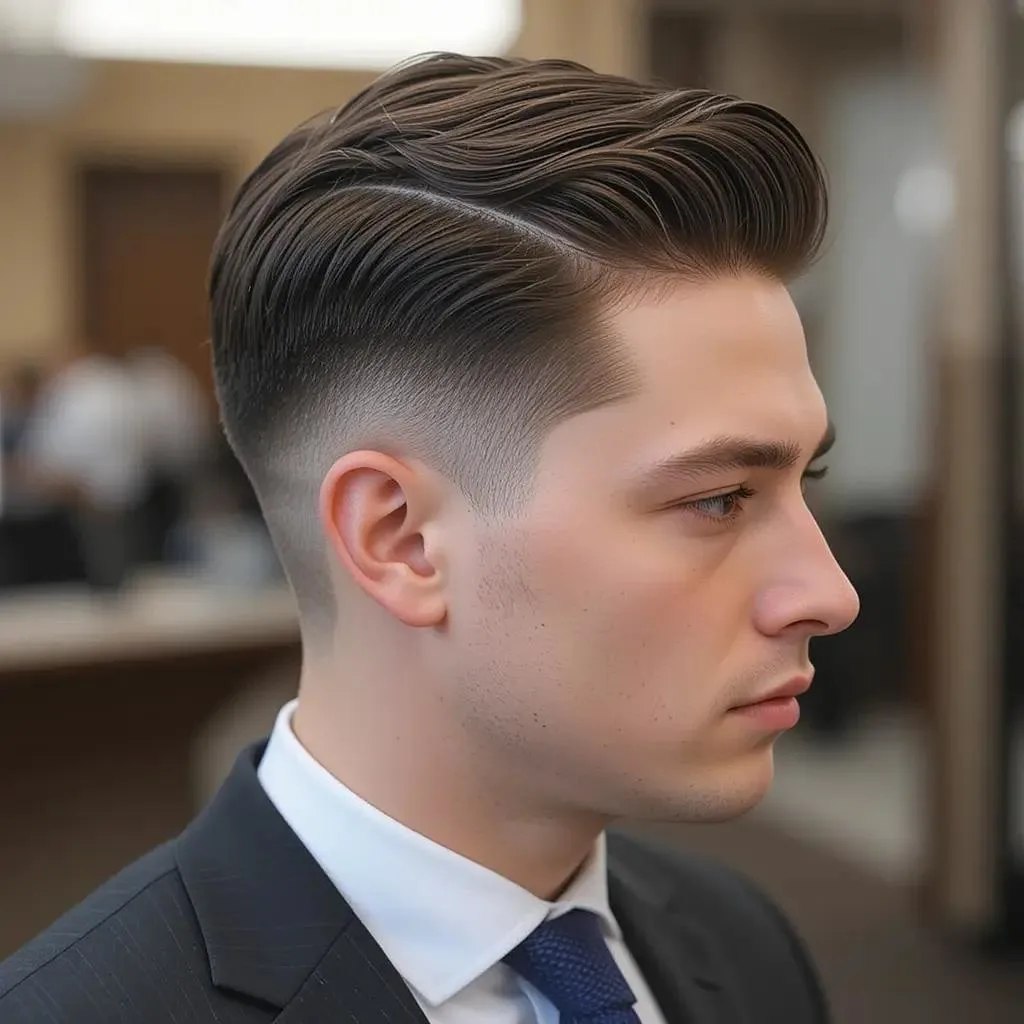
The foundation. Sides and neckline tapered low with a gradual blend, topped or left at whatever length suits the individual. This is the version barbers recommend when someone is unsure it works on every face shape, every hair type, and in every setting.
Tell your barber: "Classic low taper fade. Start the taper just above the ear and blend gradually down to the neckline. Number 1.5 at the bottom blending to a 3 at the top of the fade zone. Keep [X] inches on top."
Face shape: All.
Hair type: All.
Setting: Office, school, or casual; universally safe.
Guard numbers: 1.5 at skin, blended to 3.
Maintenance: Every 4-5 weeks.
Style time: Depends on the top, zero to 3 minutes.
Low Taper Fade with Textured Top
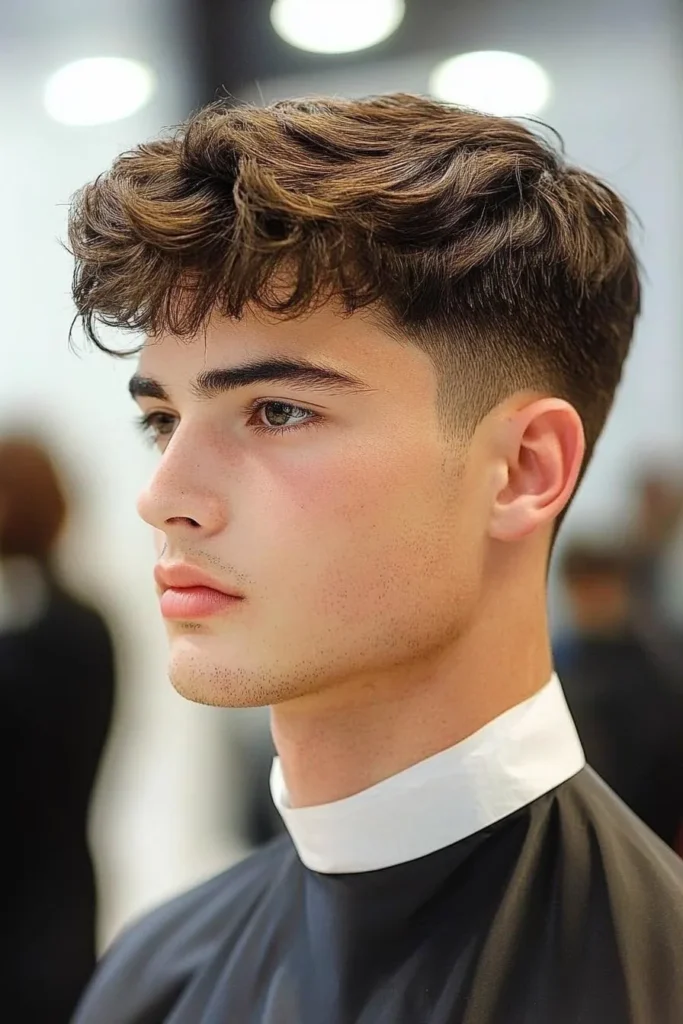
The most requested combination in 2026. Low taper on the sides with two to three inches of point-cut textured hair on top. The texture creates movement that makes the fade look more intentional. This is what most people are actually asking for when they show a photo of a "low taper."
Tell your barber: "Low taper fade. Keep two and a half inches on the top point cut for texture. Number 1.5 fading to a 3 on the sides. Cut the top dry so we can see where it falls."
Face shape: Round and oval.
Hair type: Straight, wavy, or mildly curly.
Setting: Office, school, casual.
Maintenance: Every 4-5 weeks.
Style time: 90 seconds — light clay.
Low Taper Fade on Straight Hair
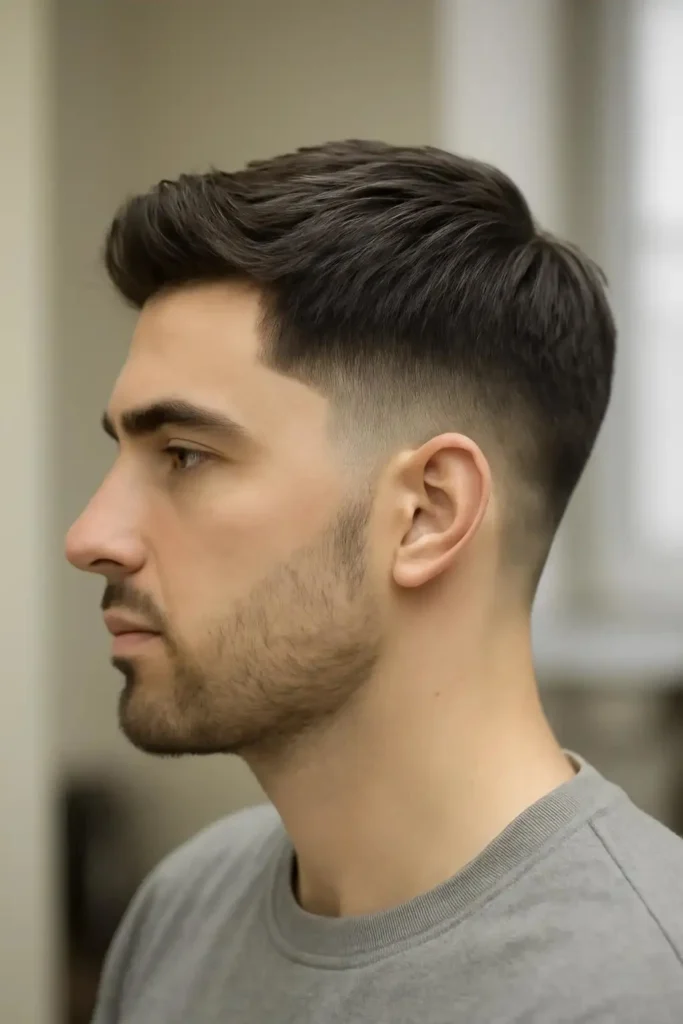
Straight hair holds a low taper better than any other type. The clean lines stay crisp longer because straight strands lie flat and consistent. The main challenge is the top straight hair has no natural volume, so the style of the top matters more here than on any other hair type.
Tell your barber: "Low taper fade. Number 1.5 at the lowest, blending to 3. Cut the top dry; my hair is straight and loses length when dry. Two inches on top, point-cut for texture."
Face shape: All are particularly good on squares and oblongs.
Setting: Anywhere — straight hair makes this the most professional-looking version.
Maintenance: Every 4-5 weeks. Grows out cleanly.
Style time: 90 seconds with light matte clay.
This is the highest-searched variation of the low taper fade for a reason. Straight-haired men find that most fade styles look better on naturally textured hair; the low taper is the exception because its softness works with straight hair's natural clean lines rather than against them.
Low Taper Fade on Curly Hair
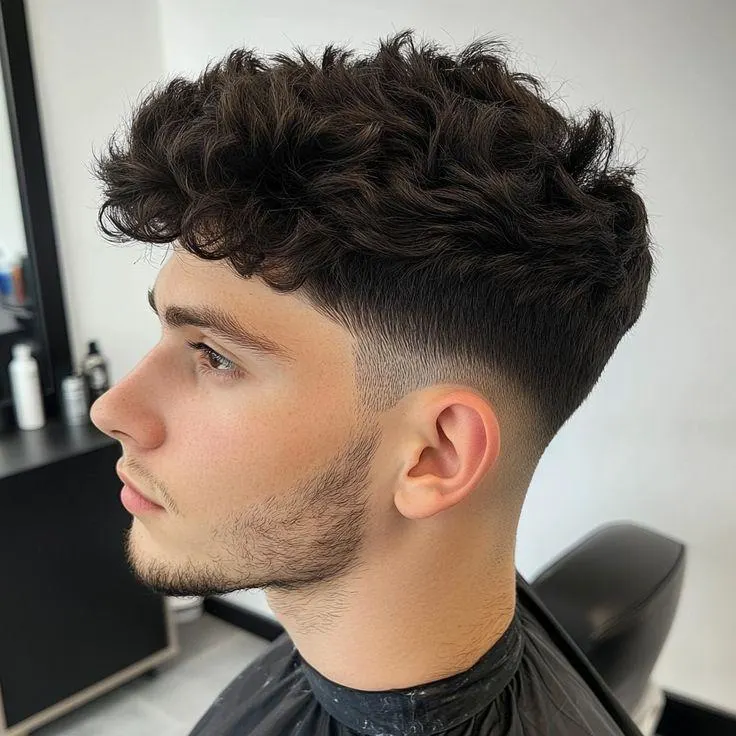
Curly hair needs two things from a low taper: enough length on top for the curl pattern to form and a barber who cuts the top dry. Curly hair shrinks between thirty and fifty percent when dry — a barber who cuts it wet is guessing at the final length.
Tell your barber: "Low taper fade. Number 1 at the skin, blend to 3. Leave at least two and a half inches on top; please cut the top dry so we can see the curl pattern before taking more off. Shape the outline clean."
Face shape: Oval and round.
Maintenance: Every 3-4 weeks curly hair at the fade grows out faster.
Style time: Curl cream on damp hair, scrunch, and air dry.
For the complete curly hair guide, our curly hairstyles for men page covers every curl type from 2A through 4C.
Low Taper Fade with Fringe
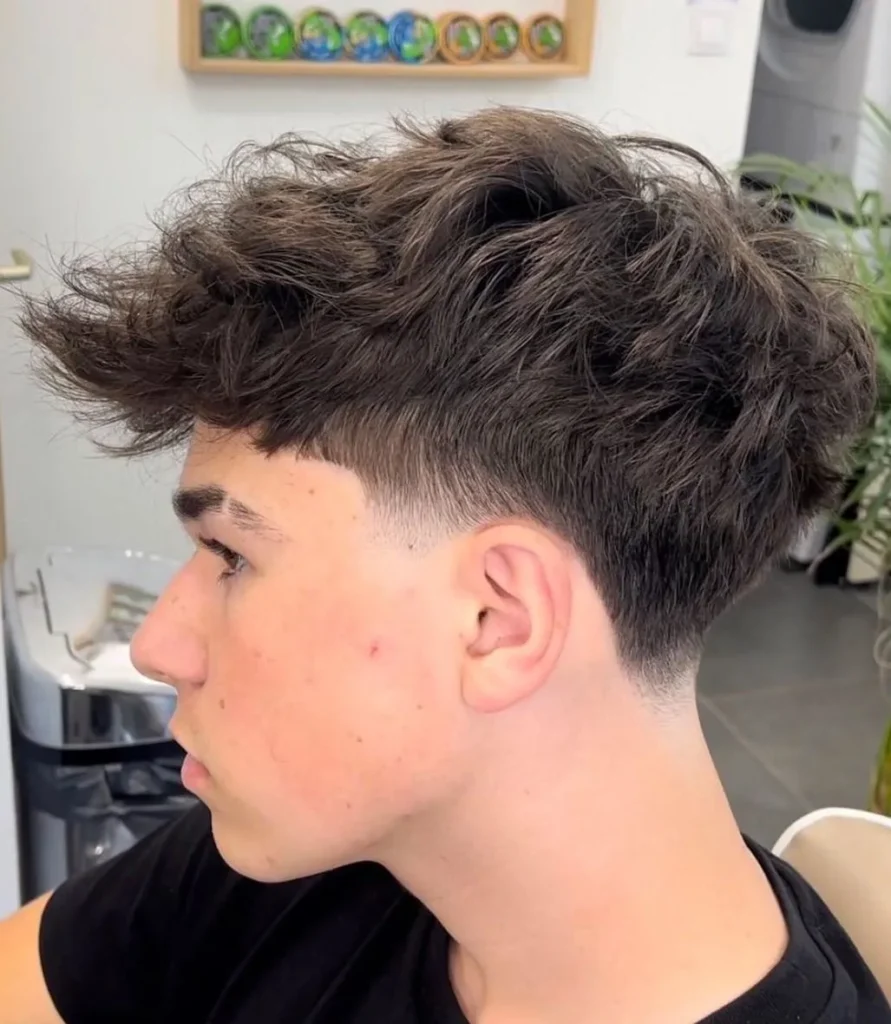
A low taper on the sides combined with a forward-falling fringe on top. The fringe adds structure at the front while the low taper keeps the sides clean. This combination works particularly well on oblong and heart-shaped faces where the fringe provides horizontal balance.
Tell your barber: "Low taper fade. Keep the fringe long enough to fall across the forehead about two and a half inches. Point-cut the fringe so it sits choppy, not straight across. Number 1.5 fading to 3 on the sides."
Face shape: Oblong, heart, and large foreheads.
Hair type: Straight and wavy.
Setting: School-safe, office-safe.
Maintenance: Every 5 weeks.
Low Taper Fade Long Hair
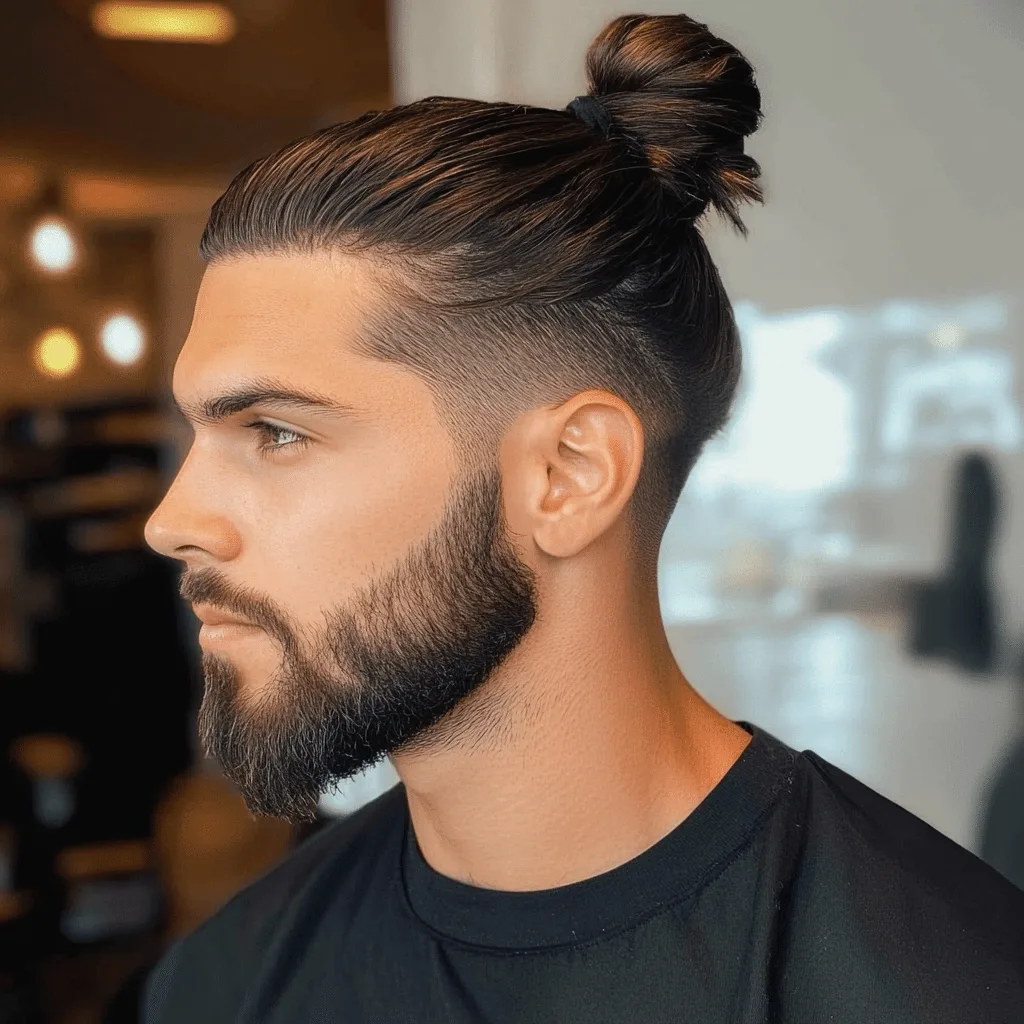
Long hair on top combined with a low taper on the sides. This is the hybrid that gives the most styling flexibility; the sides stay clean while the top retains enough length for curtain bangs, a bro flow, a slick back, or any medium-to-long style. The low taper is the correct fade choice for long hair because a high or mid fade creates too much contrast with significant top length.
Tell your barber: "Low taper fade. Keep the top at [X] inches; do not touch the top length. Number 1.5 at the skin blending to 3. Clean neckline."
Face shape: Oval and oblong.
Maintenance: Sides every 4-5 weeks. Top every 8-10 weeks.
For the full long-on-top guide, our boys' haircuts long-on-top page covers the grow-out phase and split appointment strategy.
Low Taper Fade with Beard
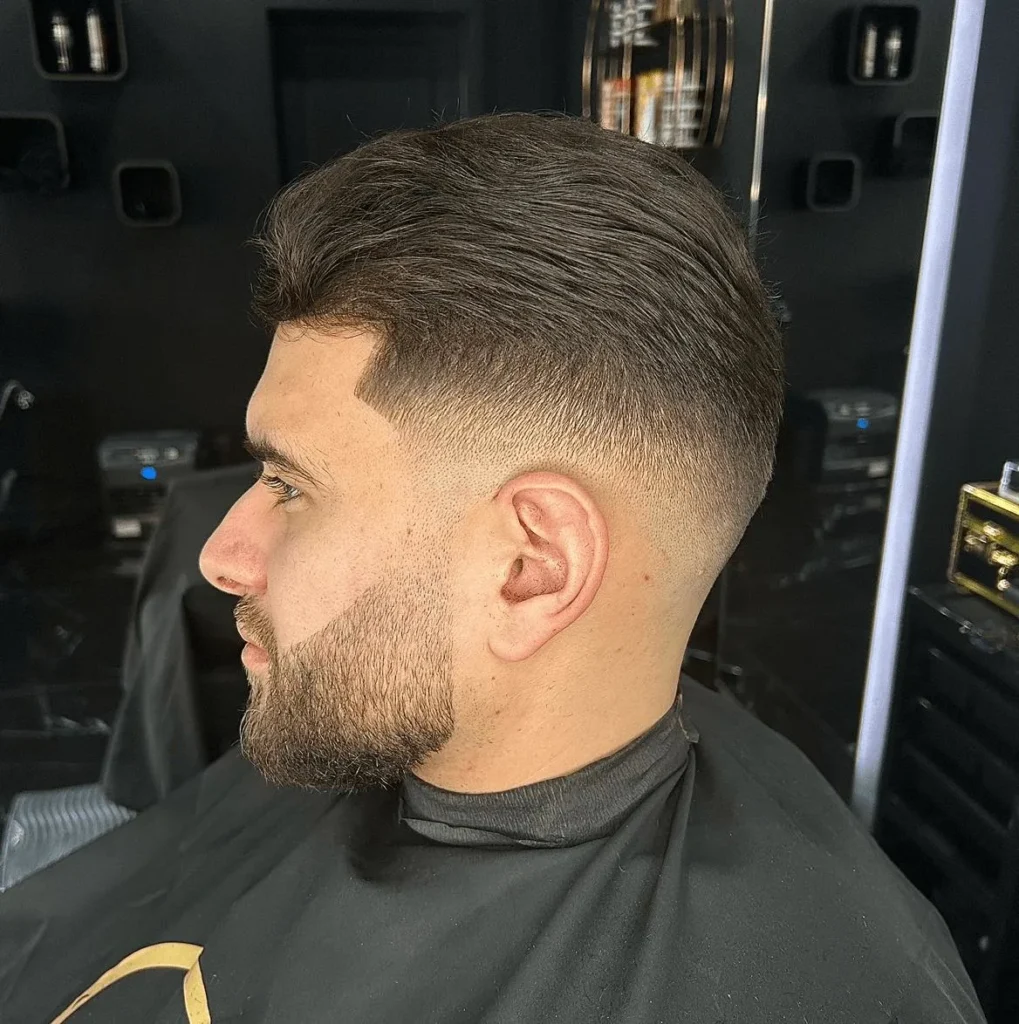
When the low taper blends into a beard, the transition from fade to facial hair needs to be seamless. The barber fades the sideburn into the beard rather than cutting a hard line. This is called a beard fade or a blend, and it requires a barber who is comfortable working across the jawline.
Tell your barber: "Low taper fade blending into my beard. I do not want a hard line at the sideburn; blend the fade smoothly into the beard. Number 1.5 at the lowest, blending up to 3."
Face shape: Oval and square. The beard adds jaw definition that suits these shapes.
Setting: Professional with short beard, casual with longer beard.
Maintenance: Every 3-4 weeks the beard grow-out matches the fade.
Low Taper Fade Fluffy Hair
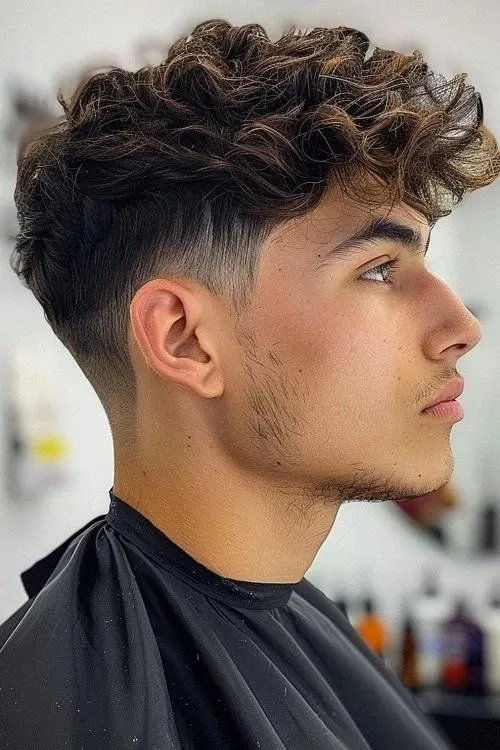
Fluffy hair, thick, voluminous, slightly wavy, or loosely curly, benefits from a low taper because the soft blend at the sides does not fight the natural volume on top. The contrast between the fluffy top and tapered sides creates a clean, intentional look without needing to flatten or suppress the natural texture.
Tell your barber: "Low taper fade. Leave three inches on top; do not thin it out, just point-cut for shape. Number 1.5 is fading to a 3. I want to keep the volume on top."
Hair type: Thick, wavy, or loosely curly.
Face shape: Round benefits most from volume on top and adds height.
Style time: 3-4 minutes. Blow dry upward at the roots for maximum lift.
Low Taper Fade on Wavy Hair
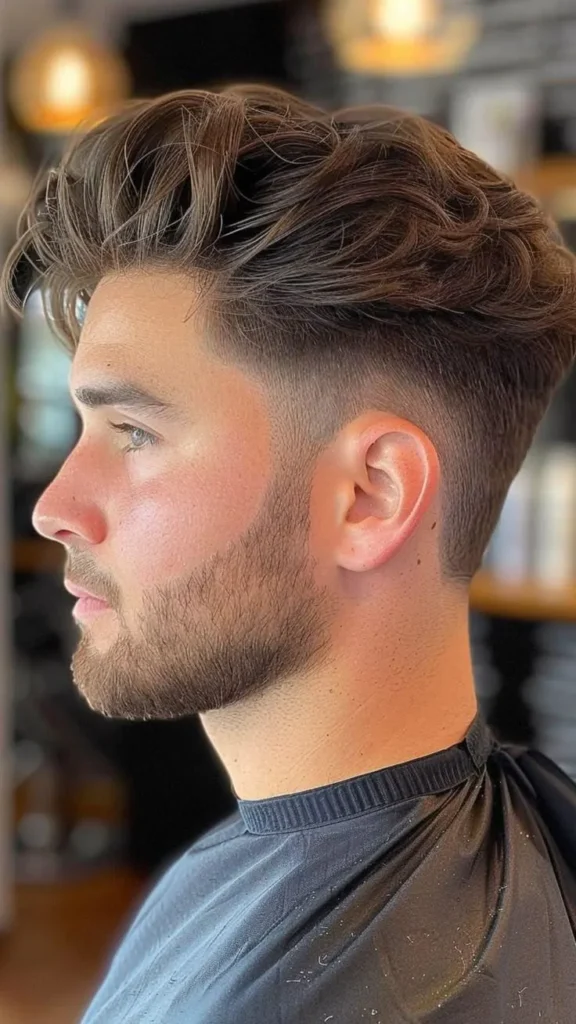
Wavy hair has a natural advantage with the low taper. The waves disguise the grow-out as the fade extends over weeks, making the overall look stay intentional for longer. The texture on top adds dimension without product.
Tell your barber: "Low taper fade. Number 1.5 at the lowest, blend to 3. Leave two and a half to three inches on top; the waves will add natural volume."
Maintenance: Every 4-5 weeks waves hide the grow-out phase better than straight hair.
Style time: Sea salt spray on damp hair, scrunch once, and air dry.
Low Taper Fade with Messy Top
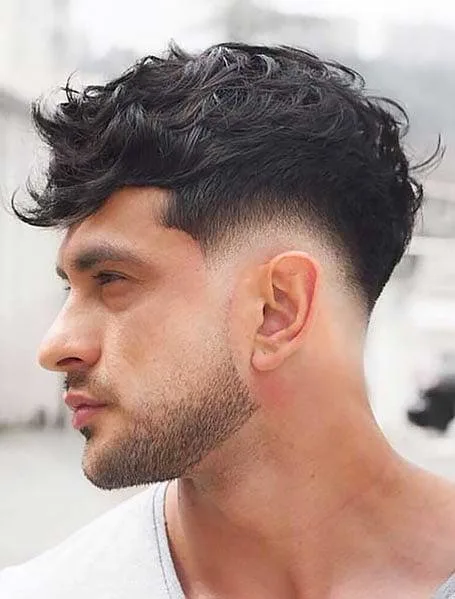
A deliberately undone top style — pushed forward or finger-styled rather than combed or structured. The contrast between the clean low taper and the relaxed messy top creates a look that reads as effortless rather than over-groomed.
Tell your barber: "Low taper fade. Keep two and a half inches on top; point-cut everything for texture. I want the top to look natural and undone, numbers 1.5 to 3 on the sides."
Face shape: All.
Setting: Casual and weekend; the messy top is less formal than a structured style.
Style time: Under 2 minutes damp hand through top, done.
Low Taper Fade Short Hair
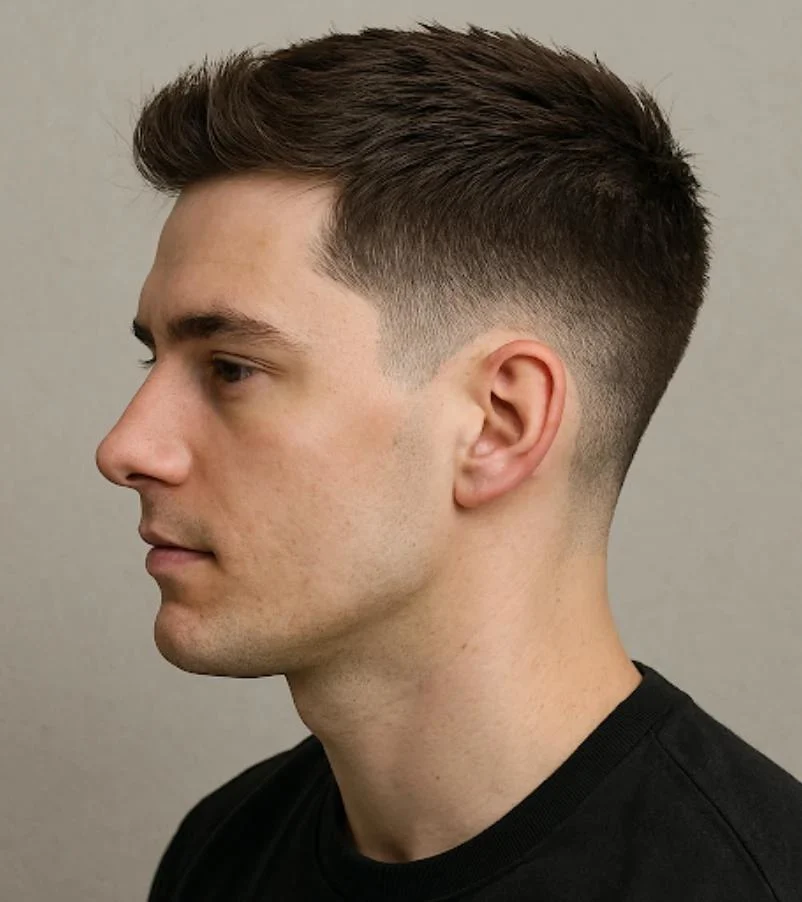
A short top combined with a low taper, the total length from top to bottom stays close, creating a clean, low-maintenance result that requires almost nothing in the morning. The crew cut with low taper is the most common version of this.
Tell your barber: "Low taper fade. Keep an inch and a half on top. Number 1.5 fading to 3 on the sides. Clean neckline."
Maintenance: Every 4-5 weeks.
Style time: Zero.
Low Taper Fade Blonde
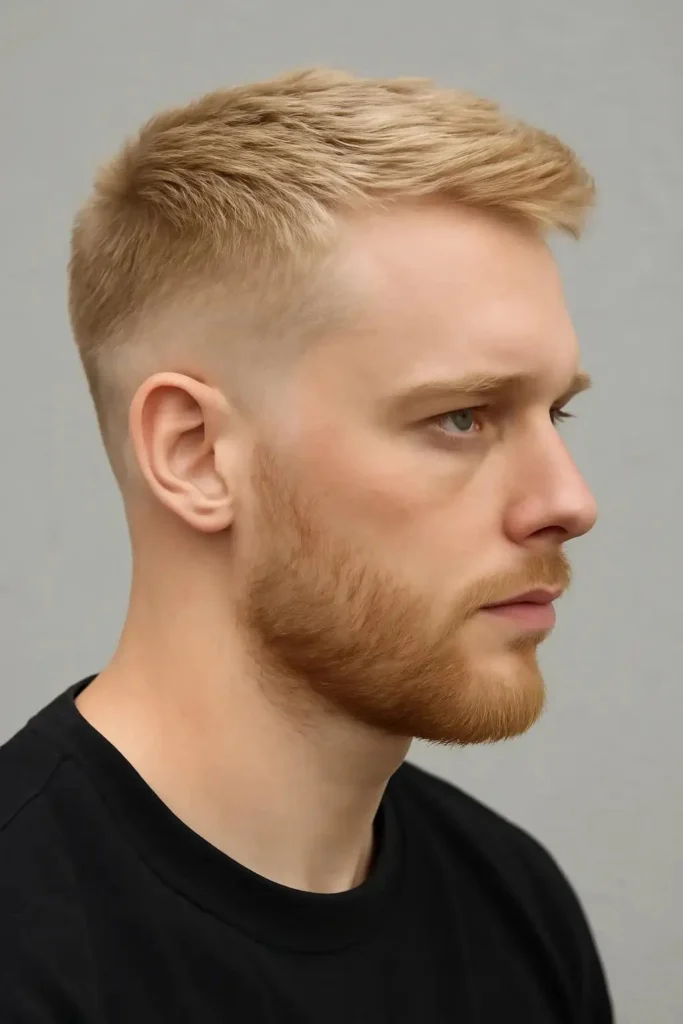
Blonde hair makes the fade gradient more visible because the contrast between the light hair on top and the near-skin at the sides reads more dramatically. The low taper keeps this contrast intentional rather than jarring. Avoid heavy products on blonde hair; they create a greasy appearance that straight or dark hair hides more easily.
Tell your barber: "Low taper fade. Number 1.5 at lowest, blend to 3. Keep the top long enough for natural movement. Cut dry if possible."
Products: Matte clay only. No pomade or wet-look products on blonde hair.
Maintenance: Every 4-5 weeks.
Low Taper Fade with Perm
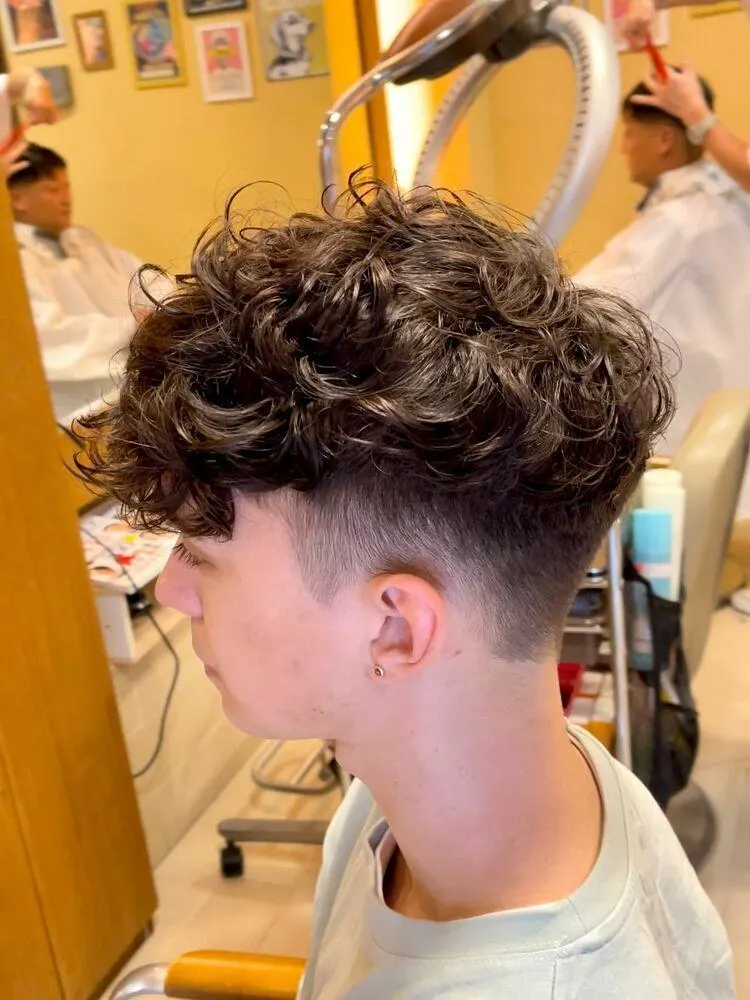
A perm on top combined with a low taper creates the broccoli cut or the curly crop effect without needing natural curl texture. The perm adds volume and definition to the top while the low taper keeps the sides clean.
Tell your barber: "Low taper fade. The top has a perm; please cut it dry and cut less than you think you need to. Permed hair springs back significantly when dry. Number 1.5 to 3 on the sides."
The critical instruction: Tell the barber about the perm before he starts. Permed hair and natural curls both shrink when dry; the dry-cut rule is essential here.
Low Taper Drop Fade
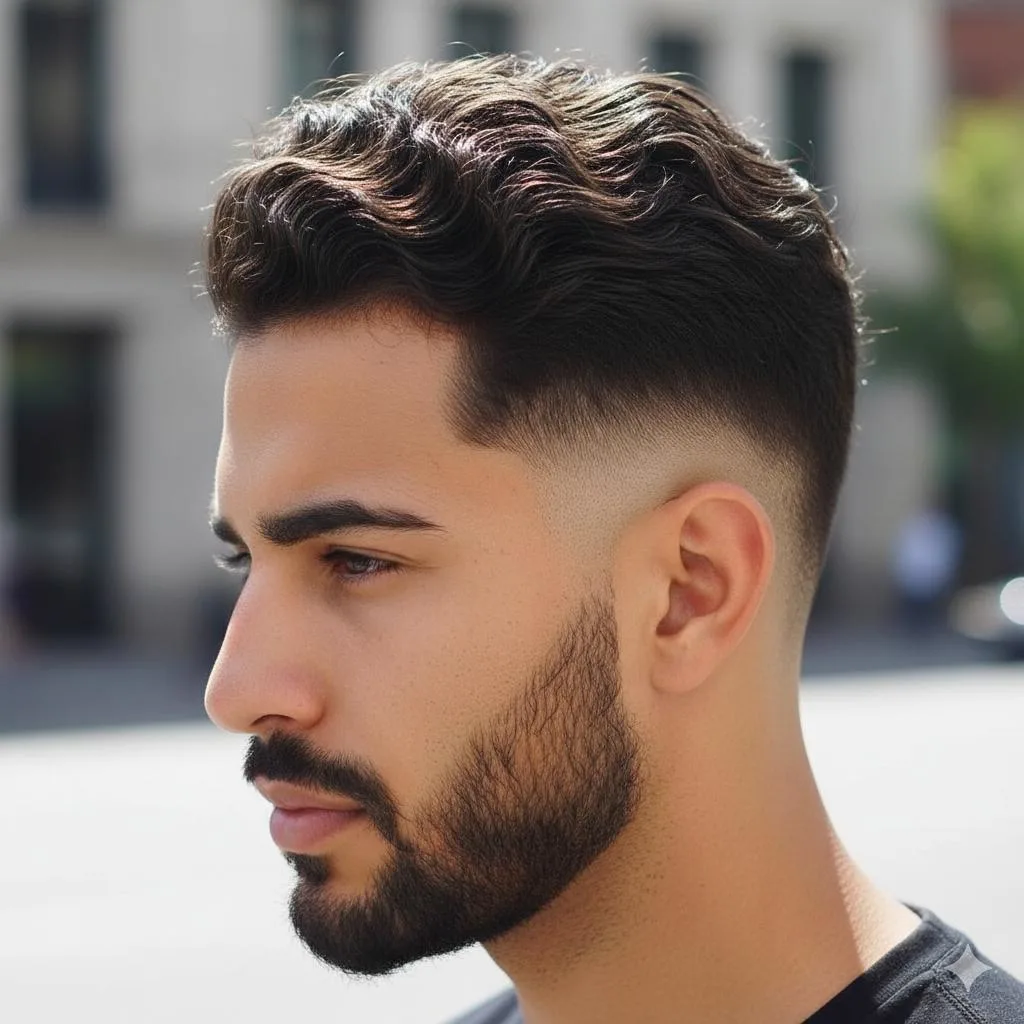
The drop fade follows a curved line behind the ear rather than a straight horizontal line. On a low taper, the drop creates a subtle arc that follows the natural curve of the head. It adds dimension without going extreme.
Tell your barber: "Low taper with a drop. The fade line should curve down behind the ear rather than going straight across. Number 1.5 at the lowest, blending to 3."
For the full drop fade guide, our drop fade haircut page covers every variation in depth.
Low Taper Fade Flow Hair
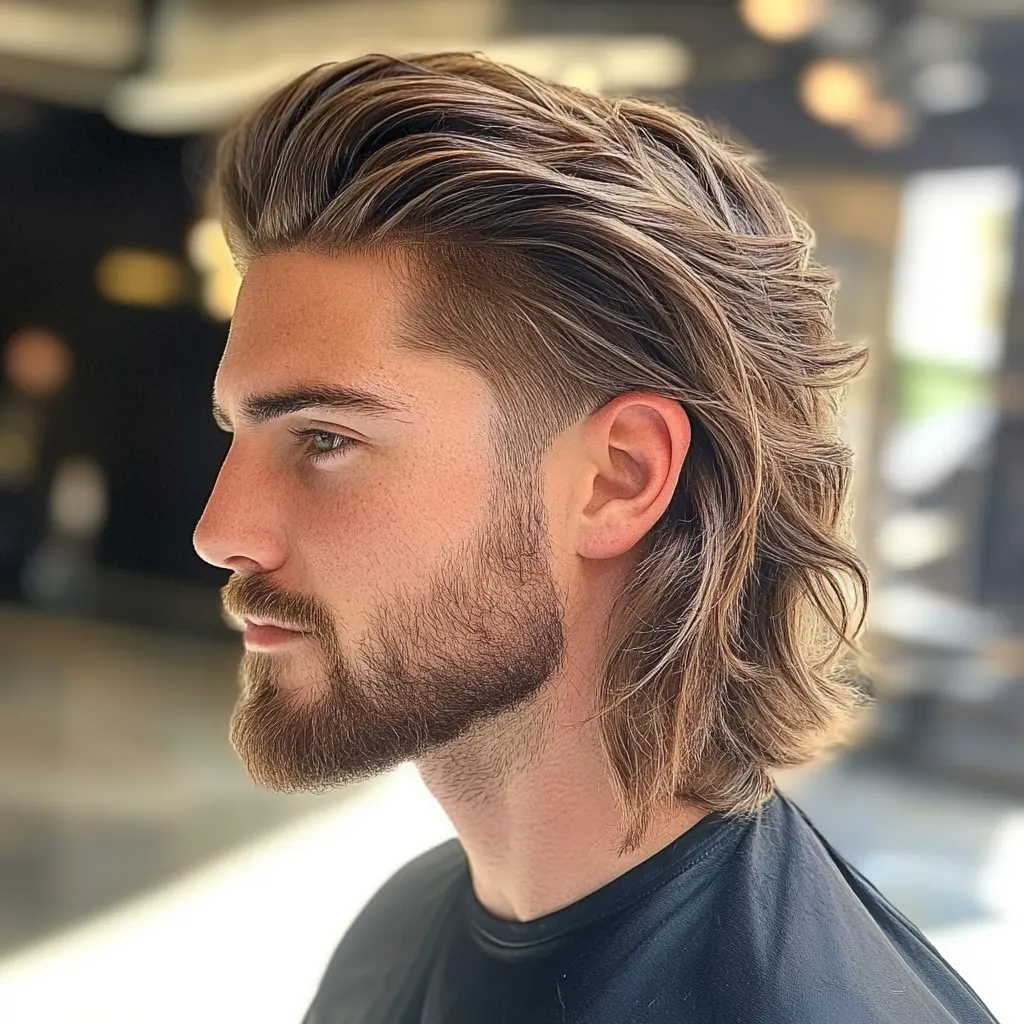
Bro flow on top combined with a low taper on the sides. The sides stay clean while the top grows to medium or long length. This is the version for men who want to grow their hair out but keep the sides managed.
Tell your barber: "Low taper on the sides only; do not touch the top. Number 1.5 fading to 3. Just clean up the taper."
Maintenance: Sides every 4-5 weeks. The top grows out untouched.
Textured Low Taper Fade
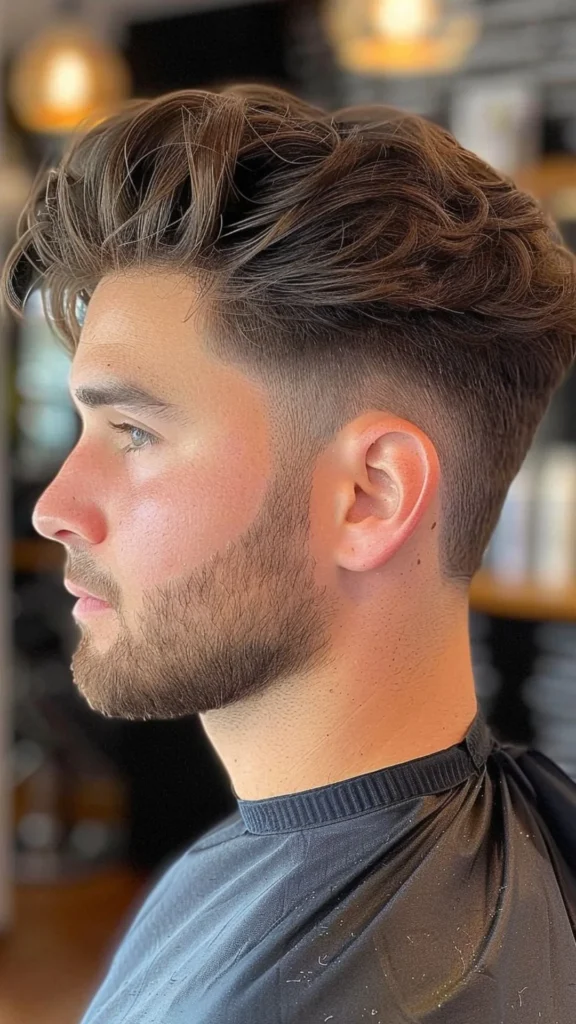
The textured version uses point-cutting on the top to create more defined separation and movement than a standard low taper. The texture comes from the scissors, not from the product, making this one of the lowest-maintenance versions on this list.
Tell your barber: "Textured low taper fade. Point-cut the top heavily; I want clear texture and separation. Two inches on top. Number 1.5 to 3 on the sides."
Style time: Under 90 seconds with a damp hand or a small amount of matte clay.
Low Taper Fade for Black Hair
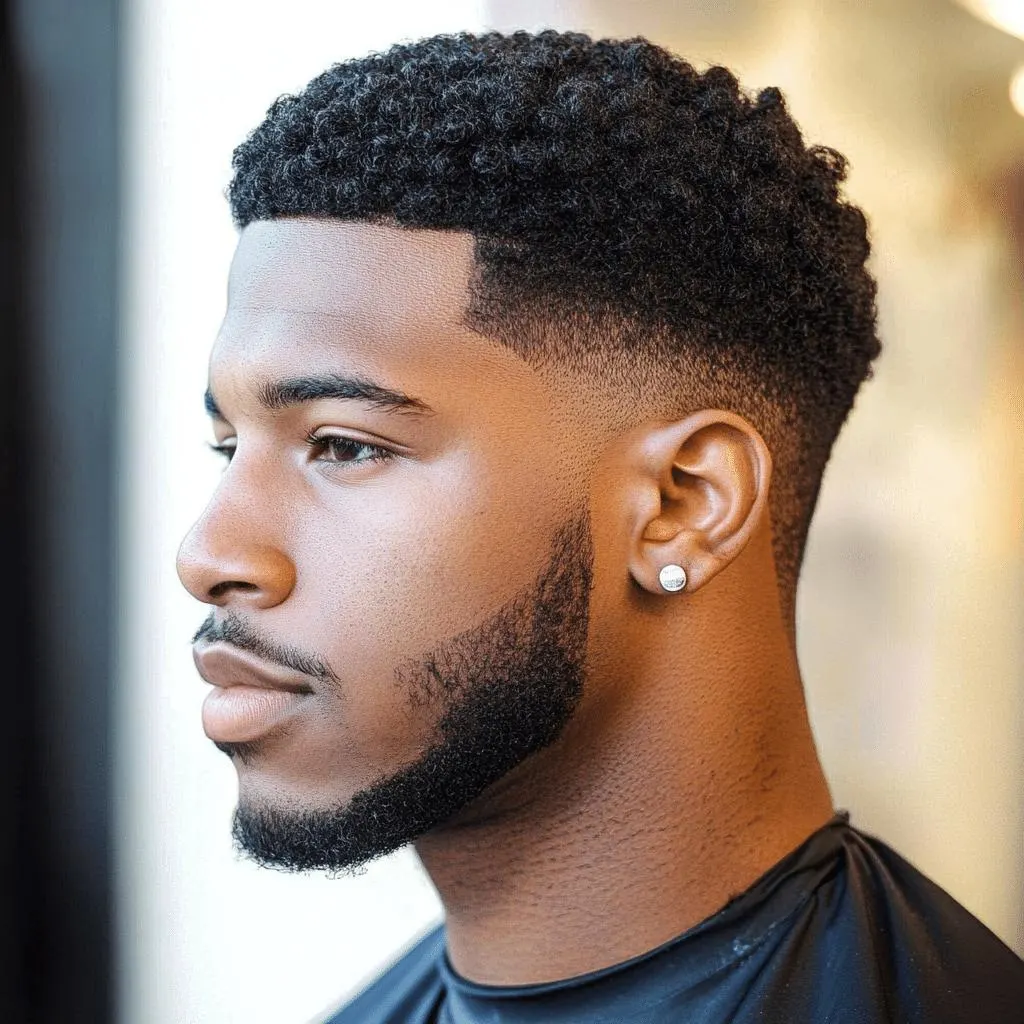
Type 4 coils and tight curls require specific handling on the low taper. The key is keeping enough length on top for the natural texture to form its own shape and cutting the top section dry so the true length is visible before committing to a shorter cut.
Tell your barber: "Low taper fade. Number 1 at the lowest, blend up to 3. Keep at least two inches on top; cut the top dry. Clean shape-up at the hairline."
Critical instruction: Ask for the shape-up separately after the fade is complete. The shape-up at the forehead and temples turns the low taper into a complete look.
Maintenance: Every 3 weeks, type 4 hair at the fade grows and shapes visibly faster.
Low Taper Fade Executive Version

The most conservative version of the low taper. Number 2 or 3 guard at the shortest point — no skin visible. The blend is exceptionally gradual. This is the version that passes every professional environment without a second look.
Tell your barber: "Conservative low taper, nothing dramatic, office-friendly. Start the taper just above the ear. Keep the lowest section at a number 2; I do not want skin showing. Blend very gradually."
Face shape: All.
Setting: Corporate, client meetings, formal events.
Maintenance: Every 5-6 weeks the conservative version grows out the slowest.
Style time: Under 2 minutes — side part or natural fall.
Low Taper Fade for Boys
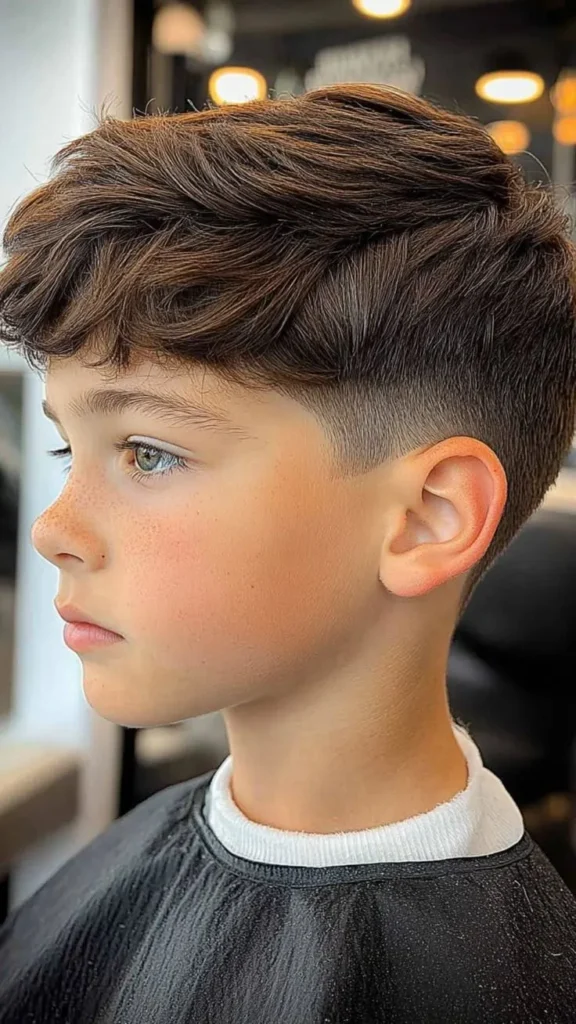
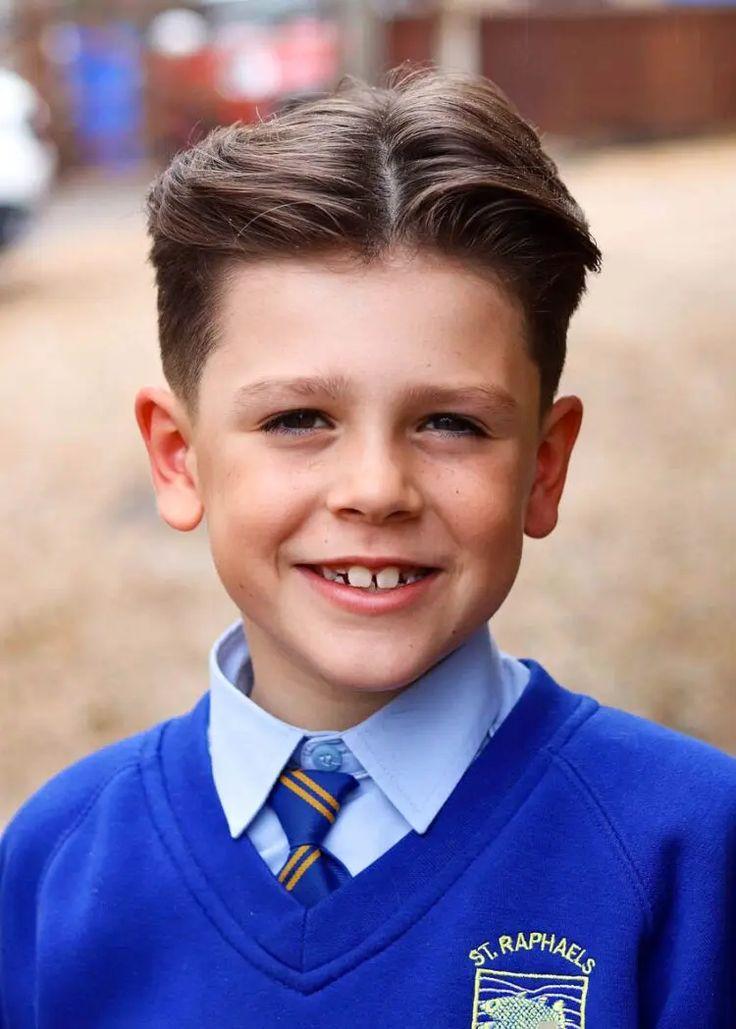
The low taper is the most requested haircut for boys aged seven to sixteen for one reason — it works on every hair type, passes every school dress code, and requires almost no morning effort. It is also the first proper barbershop fade most boys get.
Tell your barber: "A low taper fade for a [age]-year-old. Start just above the ear. Number 2 is the lowest, not skin. Blend gradually. Keep it school-appropriate."
For first-time fades, tell the barber it is his first fade and ask them to explain what each step will feel like before starting.
For full age-specific guides, our boys' haircuts hub and teen boy haircuts guide cover every age from toddler to eighteen.
Low Taper Fade First-Timer Guide
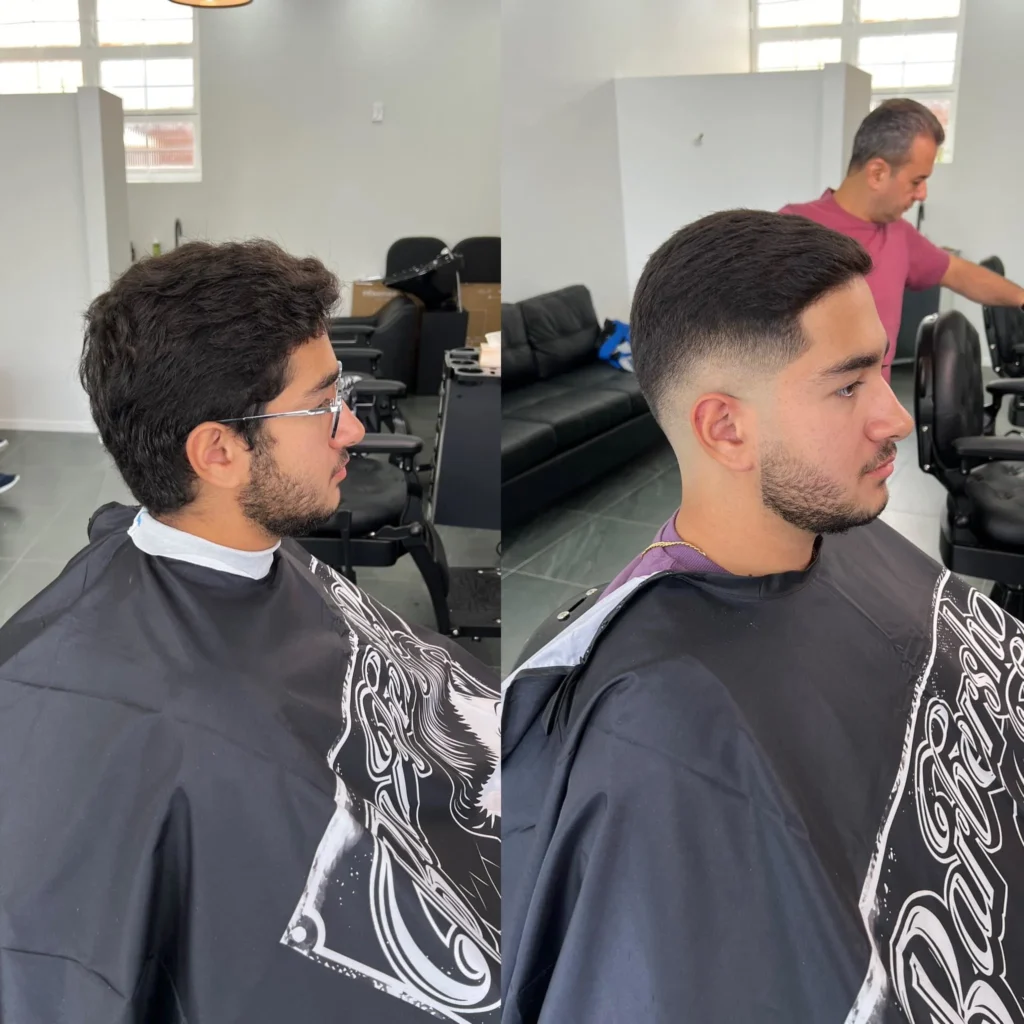
Getting your first fade is the version most people overthink. The low taper is the correct starting point specifically because the contrast is soft enough that any small imperfection in the blend is invisible. High fades show every mistake. Low tapers hide them.
Tell your barber: "This is my first fade. The low taper starts just above the ear and blends gradually. Do not go shorter than a number 2. Show me before you go shorter."
What to expect: The clippers will vibrate against the skin at the sides and neckline. The neckline is the most sensitive area. A good barber will warn you before starting each section. None of it is painful — the sensation is unfamiliar on a first visit and completely normal after two or three cuts.
Low Taper Fade by Hair Type Complete Matching Guide
| Hair Type | Best Version | Guard at Lowest | Barber Script Key |
|---|---|---|---|
| Straight | Classic low taper | 1.5 | "Cut top dry." |
| Wavy | Textured low taper | 1.5 | "Leave natural waves." |
| Curly | Low taper curly | 1 | "Cut top dry curls shrink." |
| Tight coils/Type 4 | Low taper + shape-up | 1 | "Add shape-up after a fade." |
| Thick | Conservative low | 2 | "Point-cut top, no thinners" |
| Fine/Thin | Soft low taper | 2-3 | "No skin keep coverage." |
| Fluffy | Low taper, fluffy | 1.5 | "Keep volume on top." |
Low Taper Fade on Straight Hair
Straight hair is the most forgiving canvas for a low taper. The clean lines stay crisp longer because straight strands lie consistently. The grow-out is gradual and clean — no dramatic line appears as the fade extends.
The challenge is volume on top. Straight hair has none naturally. For styles that require lift, blowout, taper, or a fluffy top, a blow dryer and mousse are not optional. For styles that work with straight hair's natural fall side part, textured crop, or curtain bangs, zero styling effort is needed.
For twenty cuts specifically designed for straight hair, our boys' haircuts for straight hair guide covers every style with barber scripts.
Low Taper Fade on Curly Hair
Curly hair needs the dry-cut rule every time without exception. Curly hair shrinks between thirty and fifty percent when dry. A barber who cuts curly hair wet is cutting at least one inch shorter than the client requested.
The low taper on curly hair creates clean sides that contrast naturally with the curl volume on top. The burst fade is an alternative worth considering for tight curls; the curved fade line mirrors the natural curl silhouette rather than cutting against it.
Low Taper Fade on Thick Hair
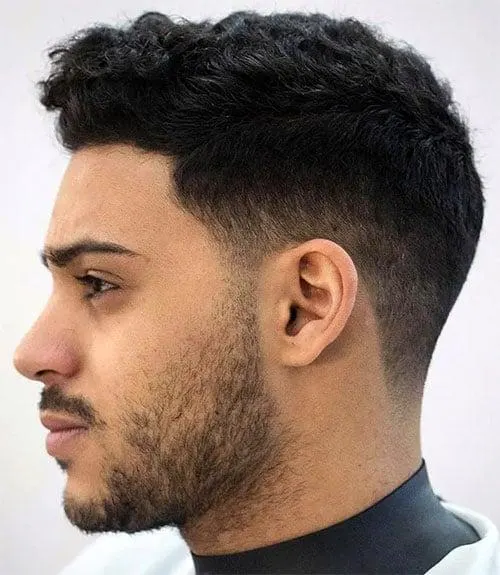
Thick hair needs internal point cutting on top rather than thinning scissors. Thinning scissors create frizz on thick hair by cutting strands at inconsistent lengths. Point-cutting removes bulk while keeping the surface smooth and defined.
Tell your barber: "I have thick hair; please point-cut the top rather than use thinning scissors."
For curly and textured styling, our curly hairstyles for men guide covers care and styling by curl type.
Low Taper Fade for Fine or Thinning Hair
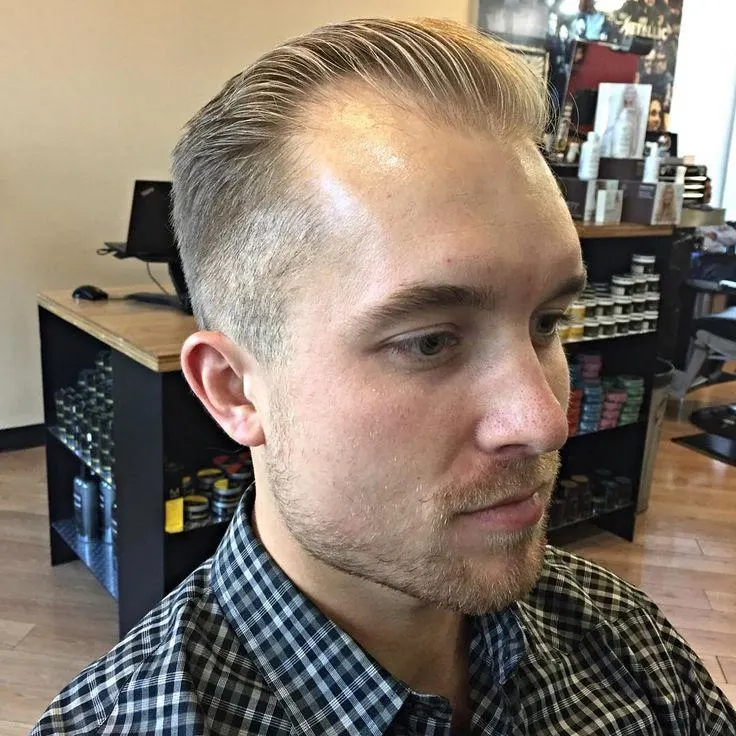
Fine hair benefits from keeping a number 2 or 3 as the lowest guard, avoiding skin exposure near the temples and sides. Skin contrast on fine hair emphasizes the thinning rather than concealing it. The soft low taper creates the appearance of more hair at the sides by maintaining some visible length throughout.
Low Taper Fade by Face Shape
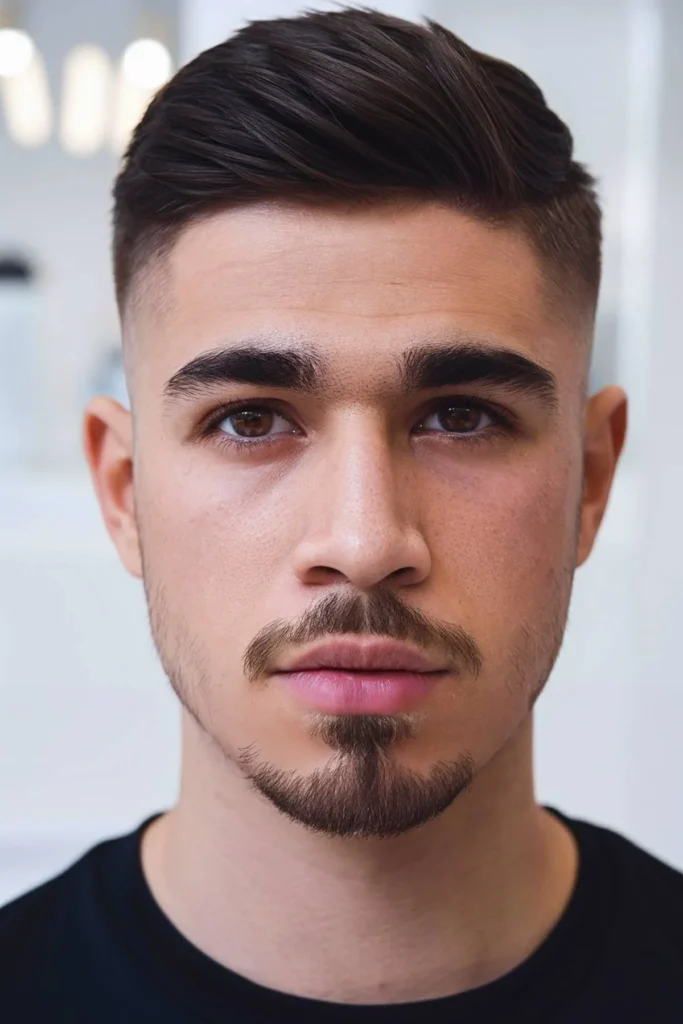
What is the most attractive fade? The honest answer is the fade that suits the face shape, not the most popular version. The low taper adapts to every face shape more easily than any other fade type because its softness does not impose a strong silhouette.
Round face: The low taper with height on top adds vertical proportion. A quiff, blowout, or textured top above the low taper creates the upward direction that balances a round face. Avoid very flat tops that add width.
Oval face: Most versions of the low taper work. The oval face is the most flexible shape. The classic low taper and the textured top version both look particularly clean on oval proportions.
Square face: Softer top styles balance the strong jaw. Curtain bangs, a side part, or a textured natural fall all work. Avoid hard side parts with strong lines that emphasize the angularity.
Oblong face: Width is needed, not height. A low taper with a fringe or curtain bang adds horizontal spread. Avoid tall quiffs or blowout tapers that add length to an already long face.
Diamond face: A fringe creates balance by reducing the visual width of the forehead. The low taper with fringe or the textured fringe version both suit diamond faces well.
Low Taper Fade by Setting Office, School, Casual
Low Taper Fade for Office and Professional Settings
The executive version of the low taper is the most conservative cut on this list and the one most consistently approved in formal environments. Number 2 or 3 at the lowest point — no skin showing. An extremely gradual blend. A top style that sweeps to the side or lies natural.
"Conservative low taper, nothing dramatic, office-friendly." This exact phrase tells a barber everything they need to know.
The professional setting version is also the most forgiving for first-time visitors to a new barbershop — the restraint of the low taper means a slight difference in interpretation produces a minor variation rather than a drastically different result.
Low Taper Fade for School
The low taper passes every school dress code in every setting. The only potential conflict is if the lowest section uses a zero or 0.5 guard near the temple; some conservative schools flag visible skin. Requesting a number 2 as the lowest guard eliminates this entirely.
"Low taper, school-appropriate. Keep the lowest section at a number 2 — no skin showing."
For boys specifically, our boys' haircuts guide and short boys' haircuts page both include school safety ratings for every style.
Low Taper Fade for Casual and Weekend
The creative versions — harder part lines, design elements in the fade, or a low taper combined with a bold top style — are better suited to casual environments where school and office policies do not apply. The drop fade variant, the disconnected undercut version, and the burst fade combination all work as weekend styles built on a low-taper foundation.
Should I Get a Low or Mid Taper?
This Reddit debate, "Which is easier, a fade or a taper?" Now fight" captures the genuine confusion between these options. The practical answer depends on how you weigh three factors.
Choose low taper if you prioritize longevity, subtlety, and versatility across multiple settings. Choose mid taper if you prioritize visual impact, contrast, and a more distinctly styled appearance.
The Grow-Out Comparison
The grow-out is where the low taper wins definitively. Because the contrast is gentle at the start, the grow-out is gradual and clean. No hard line appears at week three. No obvious point at which the fade looks unintentional.
| Fade Type | Looks Fresh | Grows Out Visibly | Needs Trim |
|---|---|---|---|
| Soft low taper | Weeks 1-4 | Week 5 gradually | Every 5-6 weeks |
| Classic low taper | Weeks 1-3 | Week 4 gradually | Every 4-5 weeks |
| Mid-taper | Weeks 1-2 | Week 3 noticeably | Every 3-4 weeks |
| High fade | Days 1-10 | Day 12 obviously | Every 2-3 weeks |
Annual Cost Comparison
| Fade Type | Trim Frequency | Annual Visits | Annual Cost (US) |
|---|---|---|---|
| Soft low taper | Every 5-6 weeks | 8-9 cuts | $200-225 |
| Classic low taper | Every 4-5 weeks | 10-12 cuts | $250-300 |
| Mid-taper | Every 3-4 weeks | 13-16 cuts | $325-400 |
| High fade | Every 2-3 weeks | 17-26 cuts | $425-650 |
The low taper costs roughly half of a high fade over a year. That financial argument alone explains a significant part of why it is the most requested cut of 2026.
How to Ask for a Low Taper Fade: Complete Barber Scripts
Most bad haircuts happen at this stage. Not because the barber lacks skill but because "low taper fade" means something slightly different in every shop, and most people do not give enough detail to bridge that gap.
The Universal Script
"I want a low taper fade. Start the taper just above the ear, no higher. Number 1.5 at the lowest section, blending up to a 3 at the top of the fade zone. Keep it conservative; I want the fade to stay low, not creep up. [X] inches on top."
That script contains every piece of information a barber needs: where the fade starts, the guard numbers, the height constraint, and the top length.
What to Say for Each Setting
Office: "Conservative low taper. Start just above the ear. Keep the lowest section at a number 2, nothing going to skin. Blend very gradually. Office-friendly."
School: "Low taper, school-appropriate. Number 2 is the lowest no skin. Keep it clean and standard."
Casual — first time: "Low taper fade. Start just above the ear. This is my first fade; please go slowly and let me see before you go shorter."
With a beard: "A low taper that blends into my beard. No hard line at the sideburn; blend the fade into the beard seamlessly."
Curly hair: "Low taper fade. Please cut the top dry; my curls shrink significantly when wet. Number 1 at the lowest, blending to 3."
Photos to Bring
One front-facing photo is not enough. Bring a front photo and a side photo. The side photo is what tells the barber exactly where the fade starts and how high it travels. A front photo alone leaves the entire side and back to interpretation.
Three Questions to Ask Before He Starts
Have you done a low taper on [my hair type] before? How high are you planning to bring the fade? Can you show me the guard you are starting with before you begin?
These three questions tell you in thirty seconds whether the barber is going to hit the brief.
Is a low taper fade haram?
This question appears directly in Google's People Also Ask and is searched genuinely by Muslim men across the US, UK, and internationally. The answer deserves an honest, respectful response.
What Islamic Scholars Say
The Islamic prohibition most relevant to haircuts is the concept of qaza cutting some parts of the head short while leaving others long in a way that creates an irregular, patchy appearance. Most classical scholars cite "qaza" as prohibited based on hadith.
The key question is whether a fade haircut constitutes Qaza. Scholarly opinion is not uniform on this, but the majority position among contemporary Islamic scholars is that a gradual fade, one that creates a smooth, blended transition rather than a patchy contrast, is not qaza and is therefore permissible.
Low Taper vs Qaza Key Difference
"Qaza" refers to uneven sections shaved bare next to sections left long without blending. A low taper fade creates a gradual, blended transition from shorter to longer. There is no bare scalp next to full-length hair without a blend between them.
The conservative low taper using a number 2 or 3 as the lowest guard, with no skin visible, is the version most consistently cited as permissible by scholars who engage with this question because the blend is so gradual that it does not create the uneven patchy appearance that qaza describes.
The Conservative-Friendly Version
If you want a haircut that is clearly on the permissible side of the scholarly discussion, request the executive or conservative version of the low taper. Number 2 is the lowest, extremely gradual blend, with no skin visible at any point. This version avoids the scenarios that scholars flag while still producing a clean, professional result.
A skin fade that leaves the scalp bare next to full-length hair is the version most likely to be considered problematic. The soft low taper avoids this entirely.
How Long Does a Low Taper Fade Last?
Maintenance Schedule by Version
| Version | Lasts Sharp | Grows Out Clean | Trim Frequency |
|---|---|---|---|
| Conservative soft low | 5-6 weeks | Yes | Every 5-6 weeks |
| Classic low taper | 4-5 weeks | Yes | Every 4-5 weeks |
| Low taper curly | 3-4 weeks | Mostly | Every 3-4 weeks |
| Low drop fade | 3-4 weeks | Yes | Every 3-4 weeks |
How to Touch Up at Home
The neckline is the only section most people can safely maintain at home between barbershop visits. A standard trimmer with a number 2 guard run along the neckline removes the first half-inch of growth and extends the life of the cut by one to two weeks.
Do not attempt to blend the fade itself at home. The blend between guard sizes is what makes a fade look intentional rather than patchy, and it requires the barber's technique running the clipper upward in short strokes to remove guard lines. Attempting this without practice creates visible lines that are very difficult to fix without cutting everything shorter.
Products That Maintain the Look
Budget ($5-12):
Gatsby Wax Fiber ($6) for textured and short tops. Sea salt spray ($8-10) for wavy and natural texture styles.
Mid-range ($12-20):
American Crew Fiber ($14) for structured tops. Bumble and Bumble Surf Spray ($18) for wave definition.
Premium ($20+):
Moroccanoil Texture Clay ($24) for matte definition on textured tops. Highland Glacial Clay Pomade for clean hold without heavy shine.
Low Taper Fade: Browse More Guides
For the full comparison between all fade types, our taper vs. fade guide explains the difference between every fade level with exact terminology.
For the curved version that works particularly well on curly hair, our burst fade guide covers every variation with barber scripts.
One level up from the low taper, the mid-taper fade guide covers the stronger-contrast version with the same depth of barber scripts and face-shape matching.
For boys and teens specifically: our boys' haircuts hub covers ages two to eighteen. The teen boy haircuts guide covers ages thirteen to eighteen with the full range of low-taper variations.
For hair type-specific guides: boys' haircuts for straight hair and curly hairstyles for men.
Not sure which version suits your face shape and hair type? Our teen haircut finder quiz takes sixty seconds.
Frequently Asked Questions
What is a low taper fade?
A low taper fade is a haircut where the hair gradually shortens around the sideburns, temples, and neckline, starting just above the ear and blending smoothly downward toward the skin or near-skin. The top stays at whatever length the individual wants. The fade zone is restricted to the lower section of the head, creating a clean, subtle result that works in professional, school, and casual settings equally.
Is low fade better than taper?
Neither is objectively better; they serve different purposes. A low fade creates more contrast and makes more of a visual statement. A low taper is more subtle, lasts longer between trims, and suits a wider range of settings. If you want maximum longevity and versatility, the low taper wins. If you want sharper contrast and a bolder appearance, the low fade wins.
Should I get a low or mid taper?
Choose low if you work in a conservative environment, this is your first fade, or you want four to six weeks between trims. Choose mid if you want more visual contrast between sides and top, work in a casual or creative environment, or are already comfortable with fades and want something slightly bolder.
What is a number 1 haircut?
A number one guard cuts hair to three millimeters, the tightest fade level before bare skin. It is used for the shortest section of a low taper fade, near the natural hairline. Higher guard numbers mean longer hair. Number two is six millimeters; number three is nine millimeters.
What is a 2-fade haircut?
A number two guard cuts hair to six millimeters. On a conservative low taper, a number two is often the shortest guard used, keeping some visible hair at the sides without going to skin. It creates a subtle fade that stays professional in every environment.
What is the most attractive fade?
The most attractive fade is the one matched to the face shape and hair type. For round faces, a fade that adds height on top. For oval faces, most fades work. For square faces, softer fades like the low taper balance the jaw. The low taper is the most universally flattering fade because its subtlety does not impose a strong silhouette on any face shape.
Is a low taper fade haram?
Most contemporary Islamic scholars consider a gradual low taper fade to be permissible because it does not constitute qaza, the prohibited practice of cutting some sections bare while leaving others long without blending. The conservative low taper, which uses a number 2 as the shortest guard and avoids any bare skin, is the version most consistently cited as permissible. Skin fades that leave scalp bare next to full-length hair are more contested among scholars.
How long does a low taper fade last?
A soft conservative low taper lasts five to six weeks before needing a touch-up. A standard low taper lasts four to five weeks. A low taper on curly hair needs a trim every three to four weeks because curl growth at the fade is more visible than straight hair growth.
Can you change a drop fade into a low taper?
Yes. A drop fade can be converted to a low taper by filling in the curved section behind the ear and creating a more horizontal, subtle blend. This requires growing out the dropped section slightly before the barber reshapes it. The transition takes one to two cuts to complete properly.
Is a low taper fade good for straight hair?
Yes, straight hair is one of the best hair types for a low taper fade. The clean lines stay crisp longer because straight strands lie consistent and flat. The grow-out is gradual and clean. The main consideration is the top straight hair has no natural volume, so choose a top style that works with the natural fall rather than requiring daily blow-drying.
How do I ask for a low taper fade?
The universal script: "Low taper fade. Start the taper just above the ear, no higher. Number 1.5 at the lowest section, blending up to a 3. Keep [X] inches on top." Add one sentence about your hair type and specify whether you want a conservative or standard version. Always bring a front photo and a side photo.
What is the difference between a low taper fade and a low fade?
A low taper blends gradually without necessarily reaching bare skin. A low fade typically goes closer to or all the way to skin, creating a stronger contrast. The taper is more conservative and grows out more gradually. The fade is bolder and needs more frequent touch-ups.
Is a low taper fade suitable for school?
Yes. The low taper fade passes every school dress code when the lowest guard is a number 2 or higher, keeping some visible hair at the sides with no skin showing. Request: "Low taper, school-appropriate. Number 2 at the lowest, no skin." This version satisfies every school grooming policy encountered in the US and UK.
How often should I get a low taper fade trimmed?
Every four to five weeks for a standard low taper. Every five to six weeks for a conservative soft low taper. Every three to four weeks for curly hair on a low taper. The fade itself grows out gradually; no hard line appears suddenly as it does with higher fades.
The low taper fade is the most requested haircut of 2026, not because it is trending but because it solves a specific problem. It keeps the sides clean, works in every setting, lasts longer than any other fade type, and suits every hair type and face shape without adjustment.
Pick the version that matches your hair type from this guide. Save the barber script. Bring two photos. Say the one sentence about where the fade starts before the scissors move.
That combination produces the same result every time, which is exactly what the most searched haircut in barbershops right now deserves.