Skin Fade Haircut 2026: 20 Styles, Honest Grow-Out Reality, and Everything You Need to Tell Your Barber
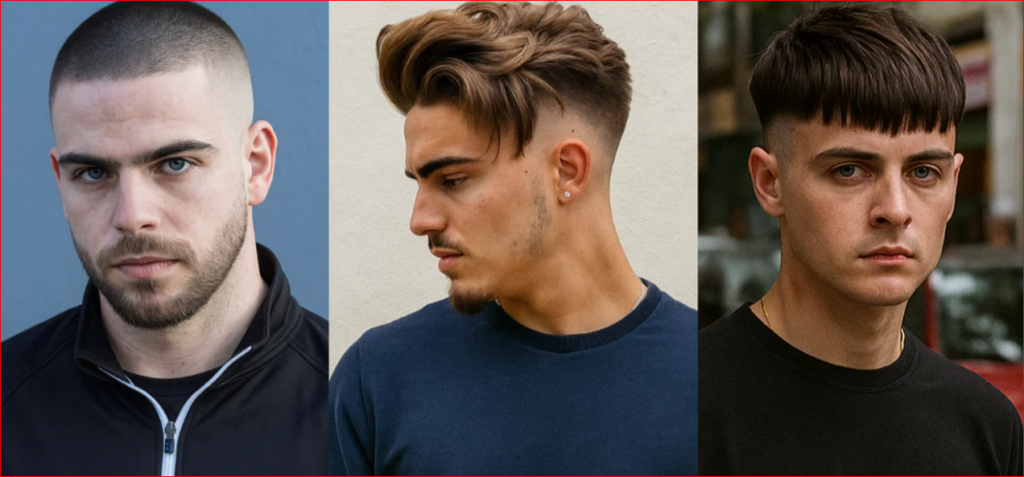
The skin fade has not changed. The styling above it has.
In 2022 a skin fade meant a perfectly smoothed, gelled-down top with maximum contrast and a finish that photographed well and grew out visibly within ten days. That combination was everywhere. Some people on Reddit started asking when skin fades would stop being popular. They did not stop. What changed is what sits above the fade.
In 2026 the same skin fade paired with a textured crop, natural waves, or a loosely styled top produces a result that reads current without looking like a copy of every barbershop photo from four years ago. The technique at the sides is identical. A zero guard at the lowest section, blending upward through 0.5, 1, 1.5, and 2. The difference is the creative direction above it.
The skin fade is still one of the most requested cuts in barbershops across the US and UK. Over 60 percent of men under 40 request some type of fade, and the skin fade is the most dramatic version of all of them.
This guide covers twenty skin fade styles for 2026, the honest day-by-day grow-out reality. Reddit keeps asking about exactly who the skin fade is and is not worth it for, and every barber script you need to get the right version the first time.
At a Glance
| Need | Best Skin Fade Version |
|---|---|
| First time, most conservative | Low skin fade |
| Most popular 2026 | Mid-skin fade with textured crop |
| Maximum impact | High skin fade |
| Office professional | Low skin fade, side part |
| School appropriate | Low skin fade, check policy |
| Curly hair | Any level, cut top dry |
| Best combo 2026 | Mid-skin fade with textured crop |
| Boys ages 12 to 18 | Low skin fade, school rated |
What Is a Skin-Fade Haircut?
A skin fade haircut is a men’s style where the hair on the sides and back gradually blends down to bare skin at the lowest section. The barber uses a zero guard or 0.5 guard at the bottom, creating a point where no hair is visible before the blend transitions upward through progressively longer guard sizes toward the full-length top.
The result is the sharpest possible contrast between the sides and the top. Nothing reads cleaner at the barbershop on day one.
Is a Fade and a Skin Fade the Same?
No. The confusion is understandable because the terms overlap constantly.
A fade is a technique where the hair gradually shortens from longer to shorter as it moves down the sides. It describes the blending method, not the final length. A low taper fade, a mid fade, and a drop fade are all fades. None of them necessarily go to bare skin.
A skin fade is a specific outcome where the fade technique is taken all the way to skin level at the bottom. All skin fades use the fade technique. Not all fades reach bare skin.
When someone says “give me a fade” without specifying skin, the barber has no idea whether to go to skin or keep some hair coverage. The guard number at the lowest section is the one piece of information that clarifies everything. Specifying zero means skin. Specifying 1 or 1.5 means a traditional fade with visible hair throughout.
What Is a Bald Fade Haircut?
A bald fade and a skin fade are the same haircut described by different regional names. In the United States the standard term is skin fade. In the United Kingdom, Caribbean countries, and parts of Africa and the African-American community, the same result is called a bald fade. The word “bald” refers to the bare skin section, not to the person wearing the haircut. Both terms tell the barber to take the sides to bare skin. Use whichever your barber is more familiar with.
The 2026 Shift: Same Fade, Different Story
The dramatic era of the gelled, perfectly smoothed skin fade top has softened. Not because the fade itself became less popular, but because the aesthetic above it evolved.
Modern Cuts Barbershop in September 2026 put it directly: while the skin fade itself has not disappeared, more clients are asking for natural movement, slight waves, or a styled but relaxed texture on top rather than the heavy gel-finished look of earlier years. This creates contrast without relying on an extreme fade height.
The practical result: a mid-skin fade paired with a textured crop or a natural wavy top produces a result that feels current in 2026 rather than peak-2021. The technique at the sides is unchanged. The creative direction above has shifted.
Who Invented the Fade Haircut?
The fade has roots in military grooming regulations of the 1940s. US Army regulations required short, clean sides, and barbers developed the gradual blending technique to transition efficiently from the very short neckline to the slightly longer top. This became known informally as white sidewalls.
Black barbershop culture in the 1960s, 1970s, and particularly the 1980s took the military technique and transformed it into a form of cultural expression, precision artistry, and community identity. Hip-hop culture amplified the skin fade in the 1980s and 1990s, and the style crossed into mainstream barbershop culture from there.
What Are the Different Types of Fades?
Fades are categorized in two ways: by height and by shape.
By height: a low fade starts just above the ear, a mid fade starts at the temple, and a high fade starts above the temple toward the crown.
By shape: drop fade curves behind the ear following the skull contour, burst fade creates a semicircle around the ear, and temple fade stays only at the temple area.
Any of these shape and height options can be taken to skin level. A low drop skin fade, a high burst skin fade, and a mid temple skin fade are all skin fades at different heights with different shapes.
Low vs. Mid vs. High Skin Fade The Complete Breakdown
The height of a skin fade describes where on the head the fade begins, not how dramatic the final result is. All three versions go to bare skin at the bottom.
Low Skin Fade
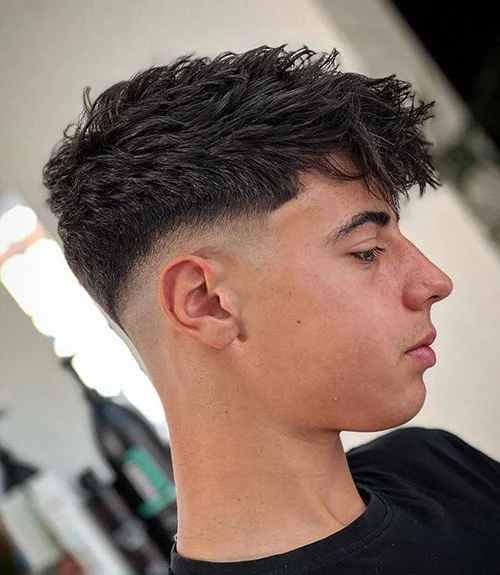
The fade starts just above the ear. The skin section is relatively small because the fade begins low and the blend from skin to full length happens in a compact zone. The overall result is clean and modern without being bold or extreme. This is the most conservative skin fade option and the one most likely to work in professional environments and school settings.
Mid-Skin Fade
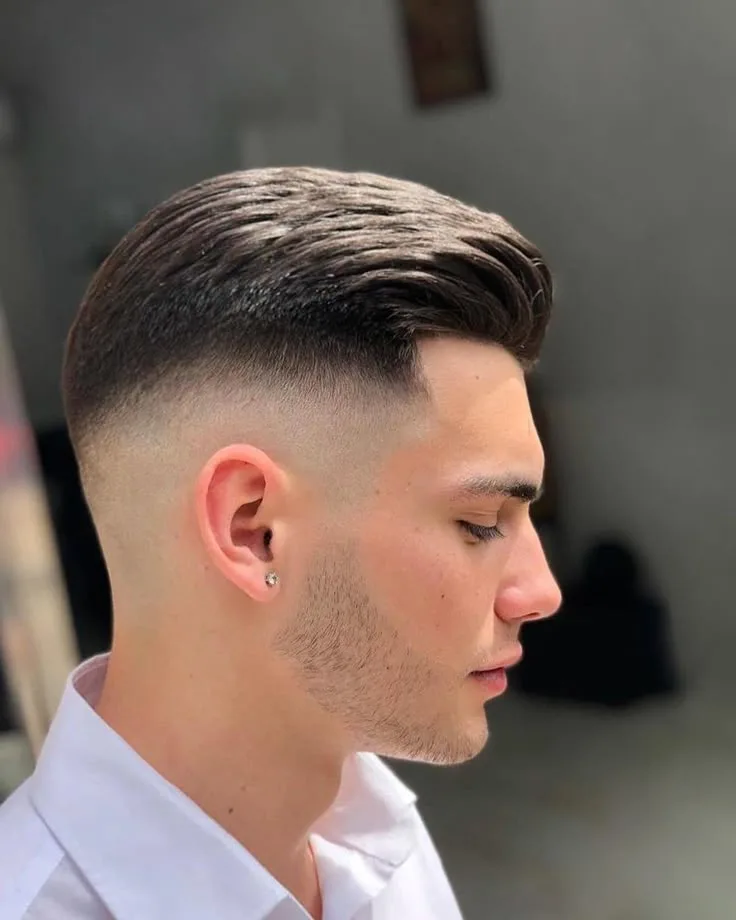
The fade starts at the temple, approximately one and a half to two inches above the ear. This is the most popular skin fade level globally. The skin section is more visible than the low version because the fade covers a larger area of the sides. The contrast between the skin lower section and the full top is clearly visible from the front and side.
High Skin Fade
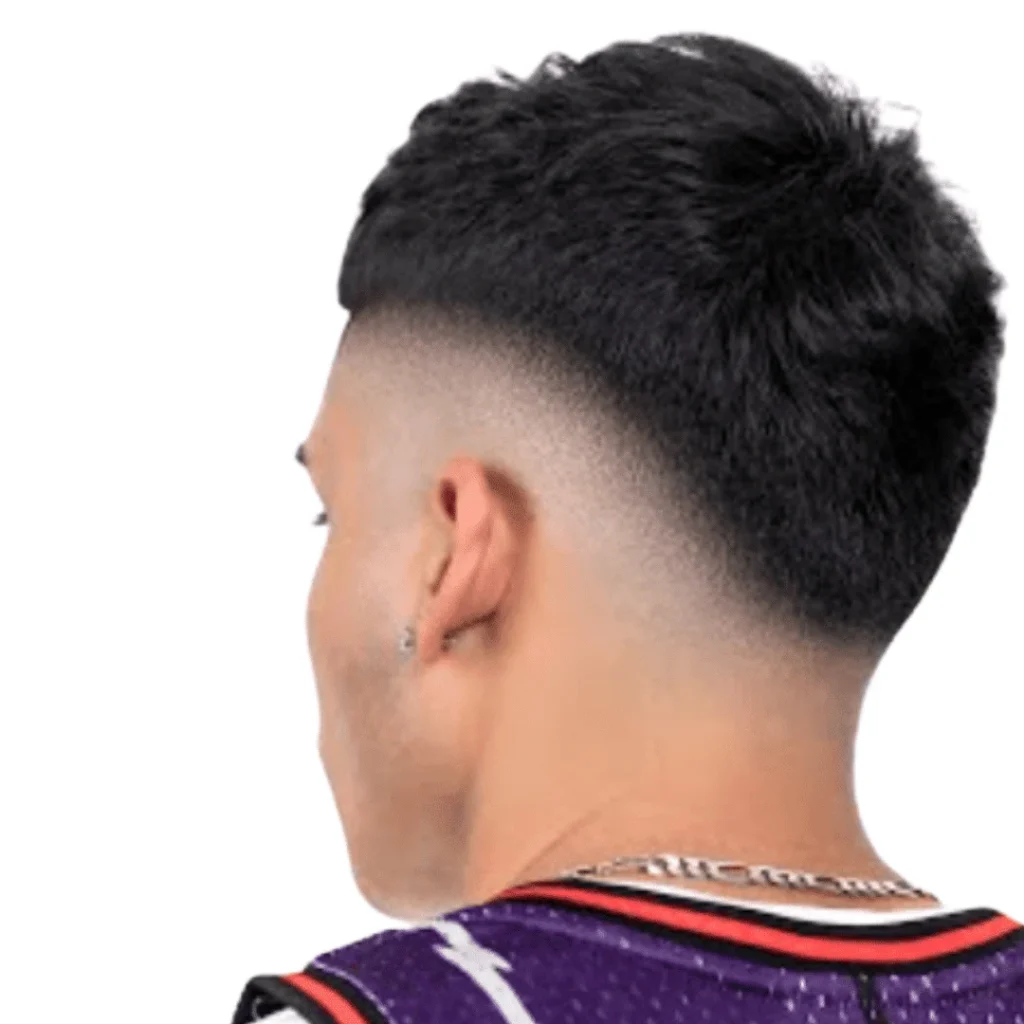
The fade starts well above the temple, near or toward the crown. The skin section covers most of the sides of the head. Maximum contrast. When fresh, nothing reads sharper. Grows out the fastest because the large skin section becomes visible stubble within a week.
What Fade Should I Get?
The honest decision guide: if this is your first skin fade, start with the low version. The smaller skin section is more forgiving during grow-out, and the result is still clean and deliberate. If you want the most popular and balanced option, the mid-skin fade suits the widest range of face shapes and lifestyles. If maximum visual impact is the priority and maintenance every ten days is genuinely manageable, the high skin fade delivers.
What Does a Fade Haircut Look Like?
From the front, a fade shows the natural length of the top hair descending into progressively shorter hair at the sides. The blend is gradual and smooth, with no visible lines between guard sizes. From the side, the gradient from full length at the top of the sides to bare skin at the bottom is visible as a smooth transition. On a skin fade specifically, the lowest section shows a bare scalp before the blend begins.
20 Skin Fade Haircut Styles for 2026
Low Skin Fade Classic
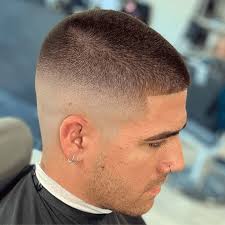
The starting point for skin fades. The fade begins just above the ear and blends down to bare skin at the sideburn and neckline. The contrast is clean and modern without being aggressive. The top is left at whatever length and style suits the individual.
Tell your barber, “Low skin fade. Start just above the ear. Zero guard at the lowest section. Gradually blend upward to a number 2 at the top of the fade zone. Keep the skin section small and clean.”
Face shape: All.
School safe: Usually yes, a low start point is less likely to conflict.
Guard numbers: 0 at lowest, blend to 2.
Maintenance: Every 2-3 weeks.
Mid-Skin Fade Classic
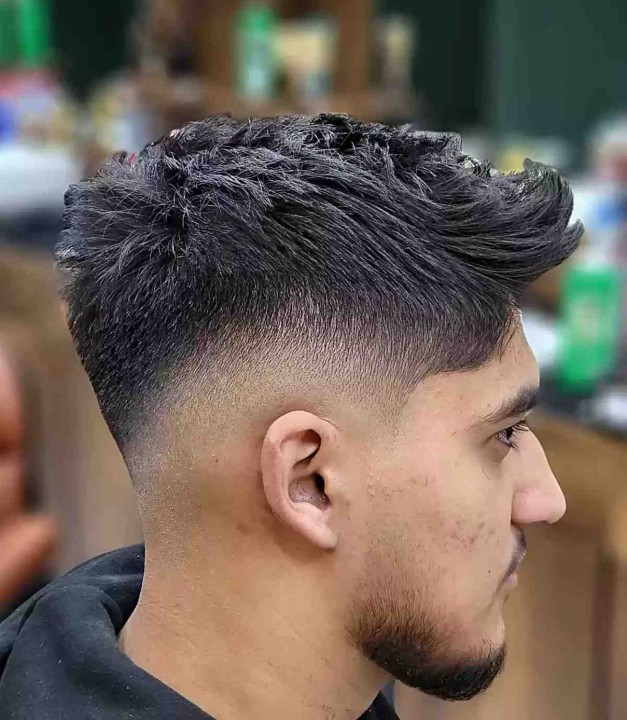
The most requested skin fade. Temple level starts, zero guard at the bottom, and smooth blend through the sides. This is the version most people picture when they search for a skin fade. Works with every top style, from a buzz cut to a wolf cut to a textured crop.
Tell your barber, “Mid-skin fade.” Temple start. Zero guard at the bottom. Blend gradually upward to a number 3 at the top of the fade zone. Check both sides from directly behind before blending.”
Face shape: Oval and round, with most proportions.
School safe: Check mid-skin fade level needs policy verification.
Guard numbers: 0 at lowest, blend to 3.
Maintenance: Every 10-14 days.
High Skin Fade Classic
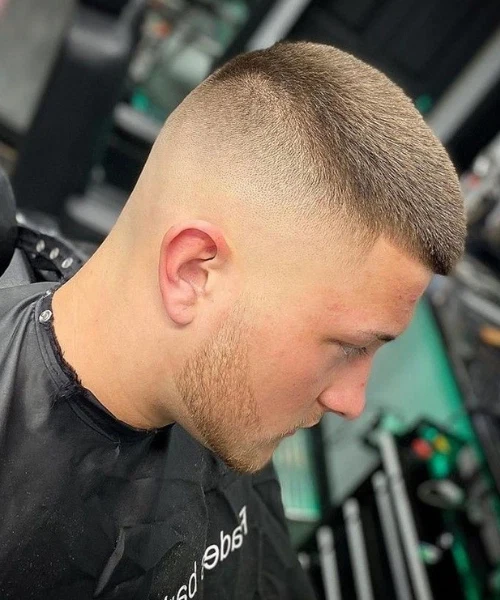
Maximum contrast. The fade starts above the temple and covers most of the sides of the head. The skin section is large, and the contrast between bare sides and the full top is the defining visual element of the cut. When done correctly on the right face shape, it reads as one of the sharpest looks a barbershop produces.
Tell your barber, “High skin fade. Start above the temple. Zero guard at the bottom. Aggressive contrast. Check symmetry from directly behind before blending. I want both sides to match.”
School safe: Often flagged, high skin fades frequently conflict with conservative school dress codes.
Guard numbers: 0 at lowest, blend to 3-4.
Maintenance: Every 7-10 days.
Skin Fade with Textured Crop
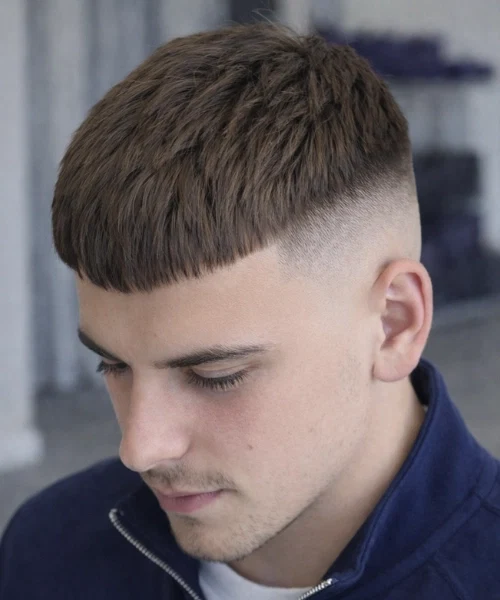
The most popular combination in barbershops in 2026. Mid-skin fade on the sides with a point-cut textured crop on top. The skin sides create sharp contrast, while the choppy, separated texture on top adds modern movement. This is the combination that defines 2026 skin fade styling; the shift away from gelled tops and toward natural texture happened through this pairing.
Tell your barber, “Mid-skin fade with a textured crop on top.” The temple starts. Zero at the bottom. Two inches on top point-cut for texture and separation. Cut the top section dry.”
School safe: Check depends on fade height.
Maintenance: Every 3-4 weeks for the top. Skin fades every 10-14 days.
For the full textured crop technique, our textured crop haircut page covers point-cutting and styling in dedicated depth.
Skin Fade with Textured Fringe
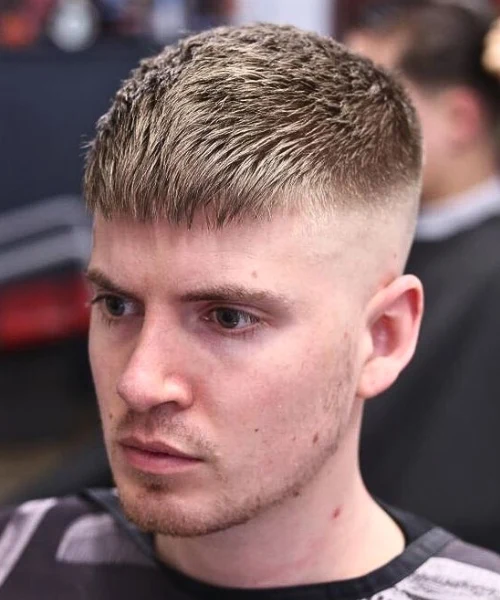
A forward-falling textured fringe on top combined with a skin fade on the sides. The skin fade provides sharp contrast at the sides, while the fringe falls forward with point-cut texture and separation.
Tell your barber, “Skin fade with a textured fringe. Low to mid skin fade. Zero at the bottom. Fringe at eyebrow length — point-cut for texture and separation, not blunt.”
For the full textured fringe guide, our textured fringe haircut page covers the point-cutting technique.
Skin Fade on Curly Hair
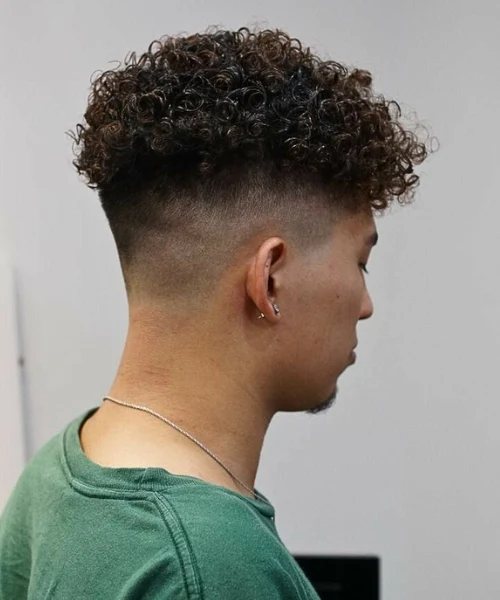
Curly hair produces the strongest visual impact of any hair type with a skin fade. The natural curl volume above creates dramatic contrast with the bare skin below. The combination has been a cultural staple in Black barbershop culture for decades.
The dry-cut rule is non-negotiable: curly hair shrinks between thirty and fifty percent when dry. A barber who cuts the top section wet produces a significantly shorter result than intended.
Tell your barber, “Skin fade for curly hair. Mid-skin fade. Please cut the top section dry; my curls shrink when wet. Keep at least two and a half inches on top for the curl pattern to form. Clean edge-up at the forehead and temples.”
Style time: Curl cream on damp hair, scrunch, and air dry.
Maintenance: Every 2 weeks curly hair at the skin section grows visibly fast.
For the complete curly guide, our curly hairstyles for men page covers every curl type.
Skin Fade on Straight Hair
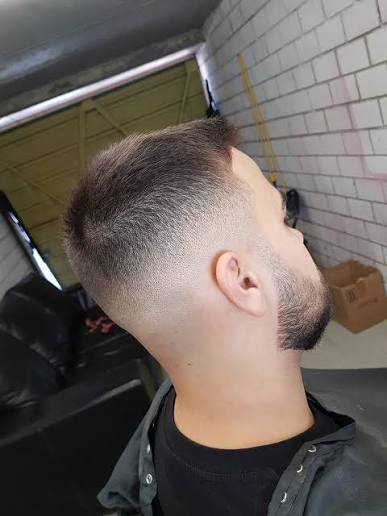
Straight hair makes every detail of the skin fade visible. The consistent flat strands show the barber’s blending precision clearly, which is both the advantage and the demand. A perfectly executed skin fade on thick, straight hair reads as exceptionally sharp because the strands lie flat and the fade line is crisp and consistent.
Tell your barber, “Skin fade for straight hair. Low to mid start. Zero at the bottom. The straight hair will show every detail of the blend; please take extra care with the gradient symmetry. Cut the top section dry.”
For the straight hair guide, our boys’ haircuts for straight hair page covers twenty cuts.
Skin Fade with Blowout
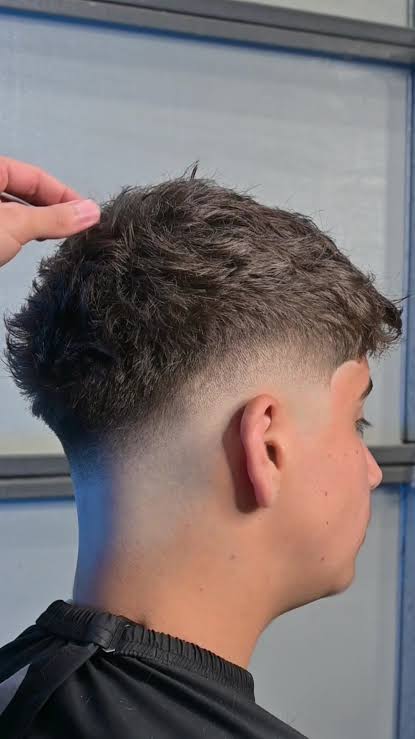
Blowout volume on top combined with a skin fade on the sides. The blown-out, lifted top creates significant volume above the sharp skin sides. The contrast between the full-volume crown and the bare sides is one of the most dramatic combinations available.
Tell your barber: “Mid skin fade with blowout on top. Zero at the bottom. Keep three inches on top — leave weight at the upper sides for the blowout shape.”
For the full blowout technique, our blowout taper guide covers styling in detail.
Skin Fade with Beard
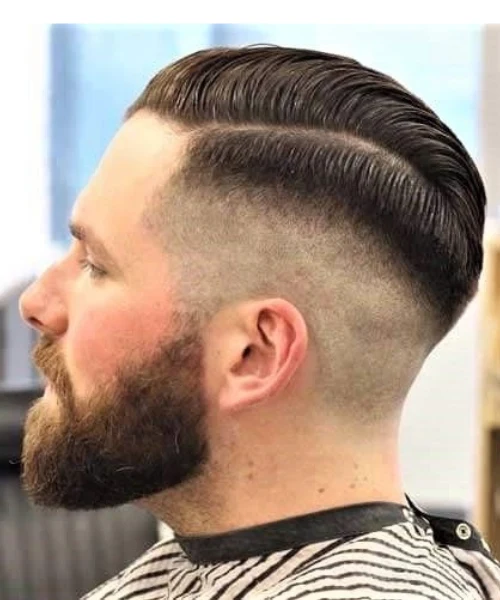
One of the most requested combinations. The skin fade at the sides blends seamlessly into the beard at the sideburn rather than cutting a hard line. The transition from the bare skin of the fade into the full density of the beard creates a gradient effect that reads as a complete, deliberate look from every angle.
Tell your barber: “Skin fade blending into my beard. I want the sideburn to blend smoothly into the beard — no hard line between the fade and the beard. Taper the fade into the beard rather than cutting across it.”
Maintenance: Every 2 weeks, beard and skin fade grow at similar rates.
Skin Fade Afro
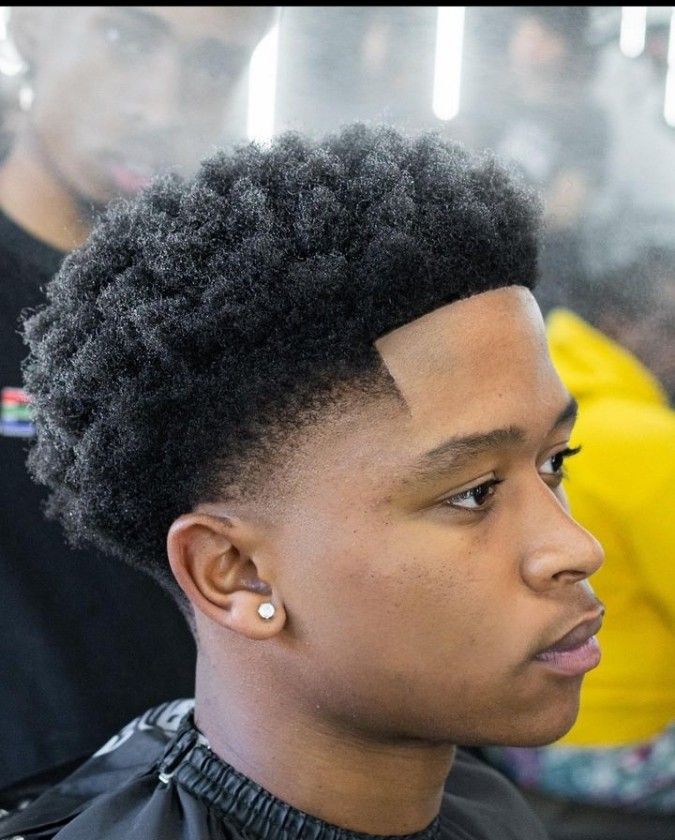
High skin fade paired with a natural afro on top. The sharp contrast between the closely faded sides and the full natural afro volume above is one of the most visually striking combinations in men’s grooming. The edge-up at the forehead and temples completes the look.
Tell your barber: “High skin fade with natural afro on top. Zero at the bottom. Keep two to three inches on top for the afro volume. Clean edge-up at the forehead and temples. Check symmetry from behind.”
Style time: Two minutes with an Afro pick.
Maintenance: Every 10-14 days.
Skin-Fade Side Part
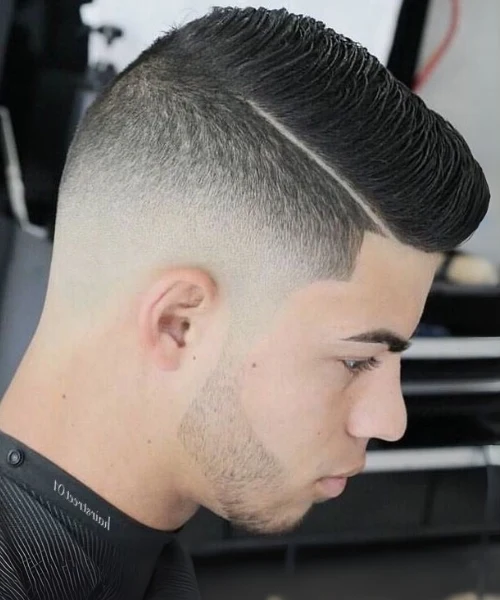
The most professional version of the skin fade. A clean, defined side part on the longer top section with a mid- or low skin fade on the sides and back. The combination reads as deliberately styled and professional across most environments.
Tell your barber, “Skin fade with a defined side part. Low to mid skin fade. Clean side part on the left. Two and a half inches on top. Zero at the bottom of the fade.”
Office safe: Yes, in most professional environments with a low or mid skin fade.
Skin Fade Edgar Cut
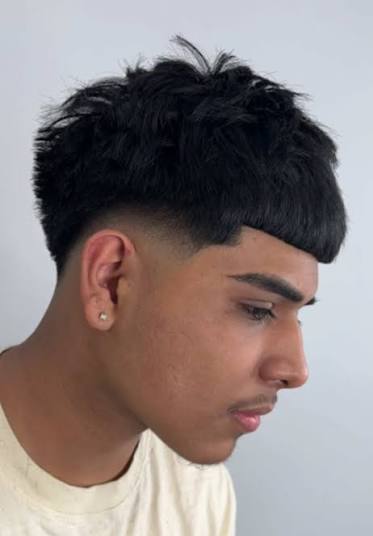
The Edgar structure with a skin fade base. Blunt fringe at the forehead, high skin fade on the sides, and the clear visual disconnection between the faded sides and the top that defines the Edgar cut. A cultural staple in Latino barbershops.
Tell your barber, “Edgar cut with skin fade. High skin fade to zero. Straight blunt fringe at eyebrow level. Clear disconnection between the fade and the top.”
For the full Edgar guide, our Edgar haircut page covers every variation.
Drop Skin Fade
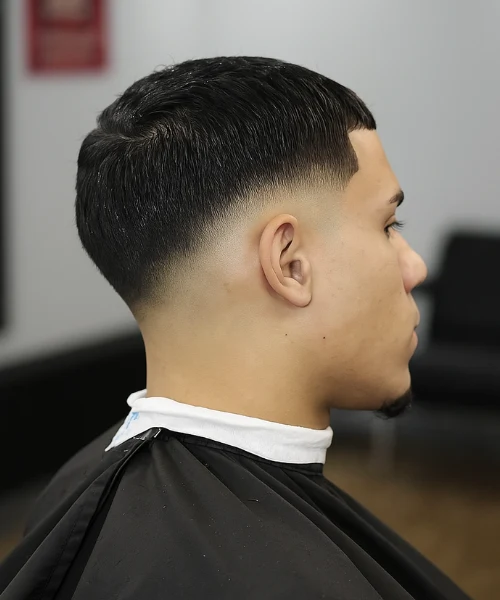
The curved arc of the drop fade taken to bare skin. The fade line curves behind the ear following the skull contour, then blends to zero at the lowest section. The curve adds dimensional interest compared to the straight-across version.
Tell your barber, “Drop skin fade. The fade line should curve down behind the ear rather than go straight across. Zero at the lowest section. The curve should follow the natural skull contour.”
For the full drop fade guide, our drop fade haircut page covers the curved technique.
Burst Skin Fade
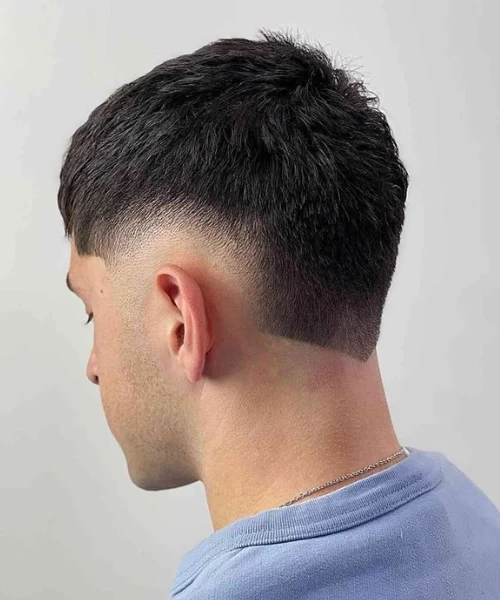
The semicircle arc of the burst fade taken to bare skin. The fade radiates outward from around the ear rather than following a straight or dropping line. Particularly effective with mohawks, faux hawks, and mullets where the outward radiation of the burst fade complements the central-ridge top styles.
Tell your barber, “Burst skin fade. The fade should arc around the ear in a semicircle to bare skin. Zero at the lowest section.”
For the full burst fade guide, our burst fade page covers the technique.
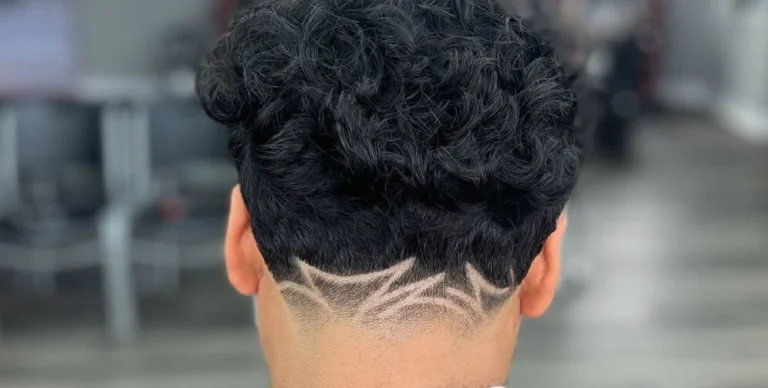
Skin Fade with Design
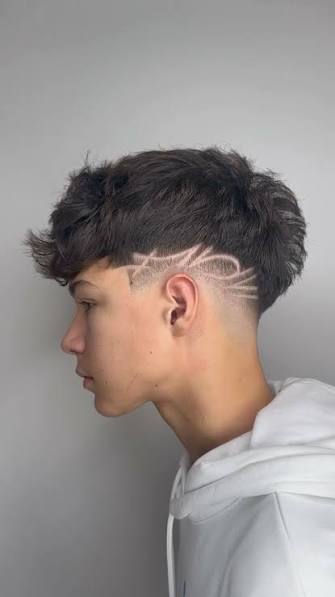
Razor art added into the skin fade zone. The large canvas of a high skin fade provides significant space for geometric patterns, lines, and razor designs. This is the version for special events, personal expression, and cultural statement.
Tell your barber: “High skin fade with a design. Zero to skin. I want [describe design] at the temple or side area. Please show me your design portfolio before we start.”
School safe: Usually no—shaved designs are the most commonly flagged element in school dress codes.
Skin Fade with Wolf Cut
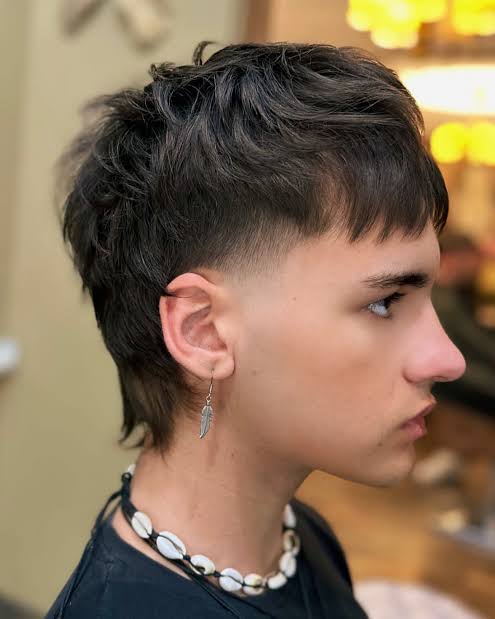
The wolf cut’s longer, layered top combined with a skin fade on the sides. The contrast between the longer, flowing wolf-cut top and the bare sides creates a bold, distinctive silhouette. A popular combination in 2026 that pairs two of the most searched men’s styles.
Tell your barber: “Wolf cut on top with a mid-skin fade on the sides. Keep the wolf cut layers on top. Zero at the bottom of the fade. The wolf cut and fade should feel like one connected style.”
For the full wolf cut guide, our wolf cut men page covers twenty variations.
Skin Fade Buzz Cut
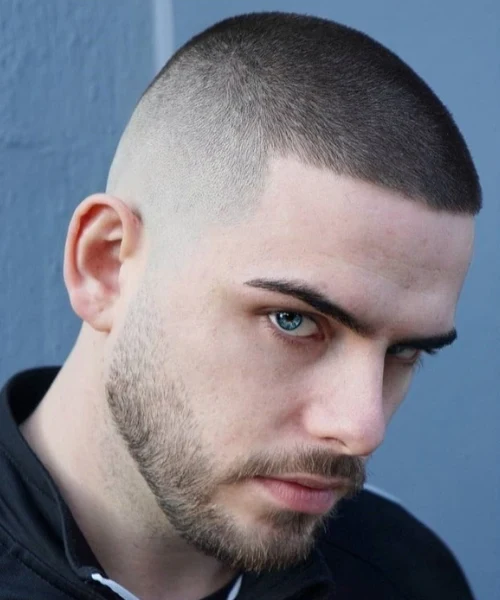
Uniform short length all over the top with a skin fade on the sides. Zero daily styling. Maximum efficiency. The skin fade on the sides gives a standard buzz cut a deliberately modern barbershop character.
Tell your barber, “Skin fade buzz cut. Number 2 or 3 on top all over. Mid-skin fade on the sides. Zero at the bottom.”
School safe: Usually yes — buzz top keeps the overall look conservative.
For the full buzz cut guide, our buzz cut page covers every guard number.
Skin Fade with Mid Part
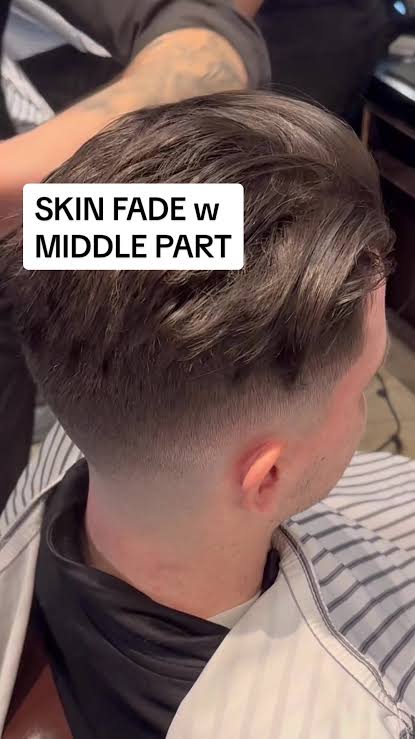
Center parting on the longer top section combined with a skin fade on the sides. The curtain-style fringe falls to both sides from the middle part, while the skin fade provides clean, sharp contrast below.
Tell your barber, “Skin fade with a center part. Mid-skin fade. Zero at the bottom. Keep enough length on top to fall naturally to both sides from a center part.”
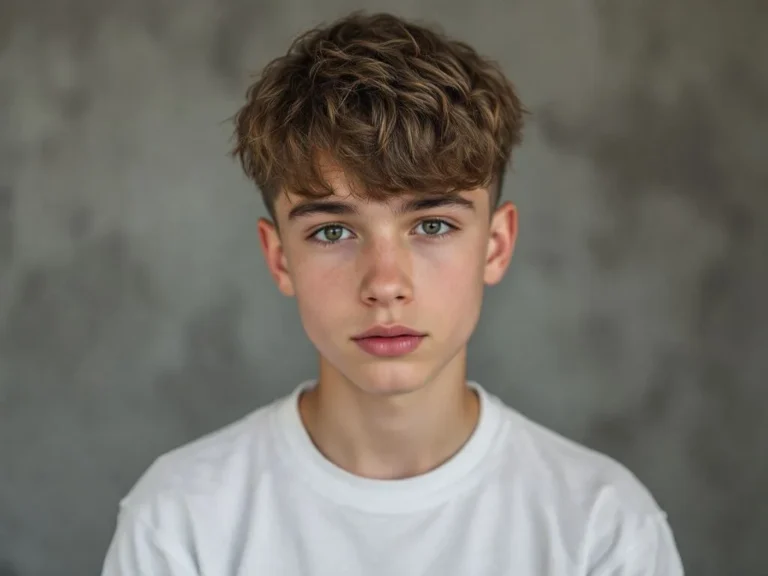
Skin Fade for Boys and Teens
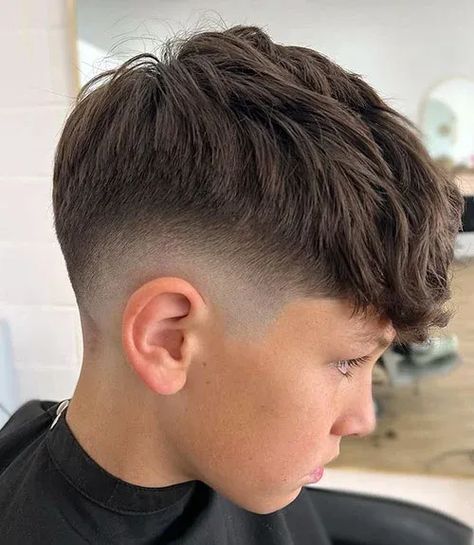
The skin fade is requested regularly by boys aged twelve to eighteen. The low skin fade is the most school-appropriate starting point. The mid- and high-skin fades need a school policy check before committing.
For boys twelve to fifteen, low skin fade only. Check school policy. The skin section is more likely to conflict with dress codes than a standard fade.
For teens sixteen to eighteen, low or mid skin fade. Standard school-appropriate with a low start. Mid-skin fade needs policy verification.
Tell your barber (for boys): “Low skin fade for an [age] year old. Start just above the ear. Zero at the bottom but keep the skin section small. School appropriate.”
For the full guides: our teen boy haircuts page and boys’ haircuts hub.
Low Conservative Skin Fade
The most restrained skin fade available. The fade starts just above the ear, the skin section stays small and close to the hairline, and the blend is exceptionally gradual. This version passes most professional and school environments because the skin section is modest in size.
Tell your barber, “Conservative low skin fade. Start just above the ear. Zero at the very bottom, but keep it tight to the hairline. Gradual, subtle blend. School and office appropriate.”
Maintenance: Every 2-3 weeks the small skin section takes longer to become obviously grown out.
Is a Skin Fade Worth It? The Honest Answer
PAA asks this directly, and nobody gives a straight answer. Here it is.
The Case for a Skin Fade
The skin fade produces the sharpest sides possible. Nothing reads cleaner at day one. It works with every top style, from a buzz cut to a wolf cut. It photographs exceptionally well in any lighting. For many men it represents a grooming investment that signals care and intentionality. For communities where the skin fade has cultural significance, it carries meaning beyond aesthetics.
The Case Against
The skin fade is the most expensive fade to maintain annually. A mid-skin fade at a standard barbershop price of thirty dollars per visit, trimmed every ten to fourteen days, costs between seven hundred and nine hundred dollars per year. A visible grow-out stage begins around day ten to twelve for most skin fades, which means the sharp version exists for less than half the time between trims. Not every professional environment accepts aggressive skin fades. School dress codes frequently flag them.
The Honest Decision Framework
A skin fade is worth it when the maintenance cost fits the budget, the environment accepts the bold contrast, the face shape benefits from the strong vertical lines at the sides, and the hair is thick enough to show a clean blend.
A skin fade is not the right choice when visiting the barbershop every two weeks creates a financial burden, when a conservative office or school environment applies, when the hair at the temples is fine or thinning and the skin section during grow-out will look patchy rather than clean, or when the lifestyle does not practically allow that maintenance frequency.
The low taper fade or mid fade both produce a clean, modern look at a fraction of the annual cost and with significantly more grow-out forgiveness.
Does a Skin Fade Grow Back Ugly? The Honest Grow-Out Guide
Reddit asks this regularly and deserves a direct answer. Yes, skin fades grow back in a way that looks noticeably less sharp than day one, faster than most haircuts. That is not a flaw. It is the nature of the cut.
What Actually Happens Day by Day
Day one to five: the cut is at its sharpest. The skin section is bare, the blend is crisp, and the contrast between sides and top is at maximum.
Days six to ten: a visible shadow appears in the skin section as hair regrows. On darker hair colors this shadow is more noticeable. The fade is still clean but clearly a few days past fresh.
Day eleven to fourteen: the skin section has visible stubble rather than bare skin. The smooth gradient of the blend starts to look softer. This is when most skin fade clients book a touch-up.
Day fifteen and beyond: the skin section is growing back unevenly in most cases because different areas of the scalp grow at slightly different rates. Temples often grow faster than the neckline. The uneven regrowth produces the patchy appearance that Reddit describes as looking ugly.
Why the Grow-Back Looks Patchy
The uneven grow-out pattern is biological, not a barber error. Different follicle densities across the scalp produce different regrowth rates. The area just above the ear and at the temples typically grows faster than the lower neckline section. This creates a patchy appearance where some areas are already past stubble while others are still bare.
Fine hair shows this less clearly than dark, coarse hair because the contrast between bare skin and growing stubble is lower. This is one reason the skin fade suits thick, dark hair particularly well and is less forgiving on very fine hair.
The Edge-Up Solution
Book an edge-up appointment on day ten rather than waiting for the full grow-out. An edge-up refreshes only the hairline and the clean lines at the forehead and temples. It does not address the fade body itself, but it extends the overall sharp appearance by five to seven days without the cost of a full fade recutting. Most barbershops offer edge-ups at a reduced price compared to a full skin fade appointment.
Is a Taper Better for Grow-Out?
Yes, definitively. A low taper fade keeps visible hair throughout the gradient. There is no bare skin section to grow back patchy. The grow-out is gradual over four to six weeks and never produces the suddenly patchy appearance of a skin section growing back unevenly.
For the full comparison of every fade and taper level, our taper vs. fade guide covers the maintenance comparison in full. Our low taper fade page covers the conservative alternative with the longest grow-out of any fade type.
Skin Fade by Hair Type
| Hair Type | Best Skin Fade Level | Key Note |
|---|---|---|
| Straight | Low or mid | Shows precision of blend clearly |
| Wavy | Mid | Natural top texture adds dimension. |
| Curly or coily | Any level | Best visual contrast, cut top dry |
| Thick | Mid or high | Natural density handles the skin section. |
| Fine or thin | Low only | High skin on fine hair shows patchy grow-out |
Skin Fade on Curly Hair
The cut-dry rule applies without exception. State it before the barber touches the top. The skin sides create dramatic contrast with the natural curl volume above, and the two elements complement each other naturally.
For the complete curly guide, our curly hairstyles for men page covers types 2A through 4C.
Skin Fade on Fine Hair
The honest guidance: a high skin fade on fine hair at the temples produces a grow-out phase where individual hairs are visible against the scalp rather than a clean shadow. The low skin fade with a small, tight skin section is the workable version for fine hair. The high skin fade is not recommended because the patchy grow-out on fine hair is more pronounced than on thick hair.
Skin Fade by Face Shape
Do Girls Like Guys with Skin Fades?
Studies on physical attractiveness consistently show that clean, well-maintained haircuts rate highly across demographics. The skin fade specifically signals grooming investment and regular barbershop attendance, which contributes positively to perceived care and intentionality.
The freshness window matters significantly. A skin fade from day one to seven reads as sharp and deliberately maintained. The same fade at day fourteen reads as overdue. The difference in perception is substantial, which is why the maintenance commitment directly connects to the social return on the haircut.
The version of the skin fade also matters. A low skin fade reads as polished and professional across most contexts. A high skin fade with design work reads as a bold personal statement that suits some environments well and others less well.
Oval face: The most flexible face shape. All skin fade levels work. The mid-skin fade is the strongest match for balanced oval proportions.
Round face: The skin fade adds strong vertical contrast that makes round faces look longer and more proportionate. The mid- or high-skin fade is the best choice for round faces specifically.
Square face: A low or mid skin fade is more flattering than a high skin fade for square faces. The mid-skin fade adds modern contrast without creating excessive angularity at the temple-to-jaw line.
Oblong face: A low skin fade avoids adding the additional height that a high skin fade creates on an already long face. Keep the top style at medium rather than very tall.
Diamond face: The mid-skin fade balances prominent cheekbones. A forward fringe combined with a mid-skin fade suits diamond proportions particularly well.
Is a Taper or Skin Fade Better?
Neither is objectively better. They serve different purposes, and the correct choice depends on face shape, hair type, maintenance tolerance, and environment.
A taper keeps visible hair throughout the gradient at all times. The shortest point on a taper is still hair you can see. The grow-out is gradual, and the transition from fresh to grow-out is gentle rather than patchy.
A skin fade goes to bare skin and creates the sharpest possible contrast. The grow-out is fast, and the transition from fresh to grown-out is more abrupt.
Maintenance Comparison Table
| Style | Looks Sharp | Annual Visits | Annual Cost |
|---|---|---|---|
| Low taper | 5 to 6 weeks | 8 to 9 | $240 to 270 |
| Mid fade | 3 to 4 weeks | 12 to 15 | $360 to 450 |
| Low skin fade | 2 to 3 weeks | 17 to 26 | $510 to 780 |
| Mid-skin fade | 10 to 14 days | 26 to 36 | $780 to 1,080 |
| High skin fade | 7 to 10 days | 36 to 52 | $1,080 to 1,560 |
The high skin fade is the most expensive haircut to maintain annually by a significant margin. A man getting a high skin fade every ten days at thirty dollars per visit is spending over one thousand dollars per year on the fade alone.
Is a Skin Fade Low Professional?
Yes. A low skin fade starting just above the ear and producing a small, modest skin section reads as clean and professional in most environments. The skin fade specifically is not the issue in professional settings. The height and aggressiveness of the fade level, and whether a design or hard part is added, are the elements that occasionally create conflicts with professional dress codes.
Do Barbers Know What a Taper Fade Is?
Every trained barber knows what a taper fade is. The confusion comes from regional terminology variations and the fact that “taper fade” means something slightly different in different barbershop traditions. Some barbers use “taper” to mean any gradual blend. Others use it specifically to mean a non-skin fade.
The practical solution is to specify what you actually want rather than relying on the terminology. “Mid fade, number 1.5 at the lowest” is clearer than “mid taper fade” because the guard number removes all ambiguity about whether skin is involved.
Which Is Easier, Taper or Fade?
Both use the same fundamental blending technique. A taper over a shorter range with visible hair throughout is generally considered more forgiving for a barber to execute than a skin fade, because skin fades require absolute precision at the zero guard level, where any inconsistency in the blend is immediately visible against bare skin. A taper allows slightly more margin for variation because the hair maintains some coverage throughout.
Are Skin Fades Haram in Islam?
This keyword is specifically searched with 50 monthly searches. The question deserves a direct, respectful answer.
The relevant Islamic prohibition is qaza, the practice of cutting some parts of the head very short while leaving others long in a patchy, irregular way. The scholarly debate around fades and skin fades focuses on whether a smooth, gradual gradient constitutes qaza or whether the prohibition applies specifically to the patchy, uneven look that qaza describes.
The majority position among contemporary Islamic scholars who engage with men’s grooming is that a gradual skin fade with a smooth blend does not constitute qaza because the transition is smooth rather than patchy. The skin section blends gradually upward rather than creating an abrupt bare patch next to full-length hair.
The version more likely to draw scholarly scrutiny is a high skin fade where a very large bare section of scalp sits directly next to full-length hair at the top, without a gradual transition zone. The low skin fade with its smaller skin section and more gradual blend is the version most consistently considered permissible under the majority scholarly position.
For men who want to stay clearly on the permissible side, a low taper fade keeps visible hair throughout with no bare skin at any point. For the full discussion, our pages on the low taper fade and mid taper fade cover the alternatives with similar aesthetic results.
How to Ask for a Skin Fade Complete Barber Scripts
The Critical Mistake: Never Say Just This
“Give me a skin fade” without specifying the height leaves the barber to decide where the fade starts. A low skin fade and a high skin fade are dramatically different haircuts. “Mid skin fade” is better. “Mid skin fade, temple start, zero at the bottom, blend to a 3” is complete.
The Book of Barbering’s award-winning barber Khamis Maiouf puts it directly: the words “just a fade” should never leave your mouth. Specify the height, the guard at the lowest section, and the top length before any clippers start.
Universal Skin Fade Script
“Skin fade. [Low/mid/high] start. Zero guard at the lowest section. Blend gradually upward. Check symmetry from directly behind before blending. Keep [X] inches on top.”
Scripts Per Level
Low skin fade: “Low skin fade. Start just above the ear. Zero guard at the bottom. Gradual blend up to a number 2 at the top of the fade zone. Conservative skin section.”
Mid-skin fade: “Mid-skin fade. The temple starts. Zero at the bottom. Blend smooth to a number 3. Check from directly behind before blending.”
High skin fade: “High skin fade. Start above the temple. Zero at the bottom. Aggressive contrast. Both sides must match when viewed from behind before you blend.”
With beard: “Skin fades blending into my beard. Taper the fade into the beard at the sideburn rather than cutting a hard line. Smooth transition from skin to beard density.”
How Long Does a Fade Last?
A low skin fade looks sharp for two to three weeks. A mid-skin fade maintains its freshest appearance for ten to fourteen days. A high skin fade needs attention every seven to ten days to stay at its sharpest. These windows describe when the cut looks its best, not when it needs to be recut by structural necessity.
Can Great Clips or Supercuts Do a Skin Fade?
Both chains technically employ barbers trained in fades. Whether the individual at any given location has the experience and precision required for a true skin fade is variable. A skin fade requires absolute precision at the zero guard level where the skin section meets the blend. This precision is harder to guarantee at volume chain locations where the primary model is speed and turnover.
For a first skin fade or for a high skin fade with a large skin section, a specialist independent barbershop with a barber who shows skin fade work in their portfolio is the recommended choice. For a low, conservative skin fade, most competent chain location barbers can execute the result.
Skin Fade School Safety Guide
School Safety Per Level
| Version | School Safe |
|---|---|
| Low skin fade, no design | Usually yes, check policy. |
| Mid-skin fade, no design | Check school policy. |
| High skin fade | Often flagged by schools |
| Any skin fade with design | Usually not permitted |
School-Safe Skin Fade Script
“Low skin fade. Start just above the ear. Keep the skin section small and conservative. School appropriate.”
For the full age-specific guides: our boys’ haircuts hub covers ages seven to eighteen. The teen boy haircut guide covers the full teen range with per-style school safety.
Browse More Fade Guides
For the full comparison between every fade and taper type, our taper vs. fade guide covers every level with exact terminology.
For the non-skin alternatives at the same heights, our low taper fade guide, mid taper fade page, and high taper fade guide all cover the versions that keep visible hair throughout.
For the best top style combination with a skin fade in 2026, our textured crop haircut page covers the most requested pairing.
For curved skin fade alternatives: our drop fade guide and burst fade page.
For boys and teens: our boys’ haircut hub and teen boy haircut guide.
Frequently Asked Questions
What haircut is a skin fade?
A skin fade is a men’s haircut where the hair on the sides and back gradually blends down to bare skin at the lowest section. The barber uses a zero or 0.5 guard at the bottom, creating a smooth transition from bare skin upward to the full-length hair on top. The result is the sharpest possible contrast between the faded sides and the top and the highest maintenance of all fade types.
Is taper or skin fade better?
They serve different purposes. A taper keeps visible hair throughout the gradient and grows out gradually over four to six weeks. A skin fade goes to bare skin and grows out visibly within ten to fourteen days. For professional environments and low-maintenance needs, the taper is more practical. For maximum visual impact and men comfortable with frequent barbershop visits, the skin fade delivers the sharpest result.
What is the most attractive fade?
The most attractive fade is the one matched to the face shape and maintained within its freshness window. Round faces benefit most from the vertical contrast of a mid- or high-skin fade. Oval faces suit all levels. Square and oblong faces are better served by low or mid fades. A skin fade at day one looks significantly sharper than the same fade at day fourteen, so the maintenance commitment directly affects how attractive the cut reads in practice.
Is a skin fade worth it?
Yes, for men who can visit the barbershop every ten to fourteen days, whose environment accepts the bold contrast, and whose hair is thick enough to show a clean blend. Not worth it for men whose budget or schedule cannot accommodate that maintenance frequency, who work in conservative professional environments, or who have fine hair that produces a patchy grow-out appearance.
Do girls like guys with skin fades?
Research on physical attractiveness consistently shows that clean, well-maintained haircuts rate positively. The skin fade specifically signals grooming investment and regular care, which contributes to positive perception. The freshness of the cut matters significantly; day one versus day fourteen produces very different impressions. The level of the skin fade also matters depending on the social context.
Is a low skin fade professional?
Yes. A low skin fade starting just above the ear with a modest skin section reads as clean and professional across most environments. The skin fade is not inherently unprofessional. High skin fades with very large skin sections, and designs are more environment-specific. The low conservative skin fade is one of the most broadly professional-appropriate modern haircuts available.
What are the three types of fades?
By height: a low fade starts just above the ear, a mid fade starts at the temple, and a high fade starts above the temple. By shape, there are additionally the drop fade, which curves behind the ear, and the burst fade, which arcs around the ear in a semicircle. All of these can be taken to skin level.
Which is easier, taper or fade?
Both use the same fundamental blending technique. The taper is generally considered more forgiving to execute because visible hair throughout the gradient hides minor inconsistencies in the blend. A skin fade requires absolute precision at the zero guard level, where any unevenness is immediately visible against bare skin.
Which type of fade is better?
Depends on face shape, lifestyle, and environment. The low skin fade is the most universally practical. The mid-skin fade is the most popular globally. The high skin fade produces the most impact. None of these is objectively best. The correct fade is the one that matches the individual’s face shape, hair type, maintenance tolerance, and environment.
What lasts longer, a fade or a taper?
A taper lasts significantly longer. A low taper fade keeps its clean appearance for five to six weeks because there is no bare skin section to grow back visibly. A mid-skin fade needs a trim every ten to fourteen days. A high skin fade needs attention every seven to ten days. The taper’s superior grow-out is its primary practical advantage over the skin fade.
Is a fade and a skin fade the same?
No. A fade is a technique where hair gradually shortens from longer to shorter as it moves down the sides. A skin fade is a specific outcome where the fade is taken all the way to bare skin at the lowest section. All skin fades use the fade technique. Not all fades go to skin.
What is a low skin fade for men?
A low skin fade starts the fade just above the ear and blends down to bare skin at the sideburn and neckline. The skin section is relatively small because the fade begins at a low starting point. It is the most conservative and professional-appropriate of the three skin fade heights.
Do barbers know what a taper fade is?
Yes. Every trained barber understands the taper fade. The terminology varies regionally and between barbershop traditions. The most reliable way to communicate what you want is to specify the height where the fade starts and the guard number at the lowest section rather than relying on the terminology alone.
Do skin fades grow back ugly?
Yes, the grow-out phase of a skin fade looks noticeably less sharp than day one, faster than most haircuts. The bare skin section grows back as visible stubble unevenly because different areas of the scalp grow at different rates. This begins to appear around day ten to twelve and becomes more pronounced by day fourteen and beyond. This is not a barber error. It is the nature of any cut that reaches bare skin. An edge-up at day ten extends the sharp appearance by several days. A full recut at day fourteen resets the cycle.
The skin fade has not changed. It is still the sharpest fade a barbershop produces. What changed is the creative direction above it and the honest conversation around maintaining it.
The ten-to-fourteen-day window, the annual cost table, and the day-by-day grow-out reality—none of that is a reason not to get a skin fade. It is the information needed to choose it correctly rather than by accident.
Pick the level matched to your face shape and lifestyle. Specify the guard number and starting height rather than just the name. Book the edge-up at day ten rather than waiting for day fourteen. Bring a front photo and a back photo.
For the non-skin alternatives that grow out more gracefully, our low taper fade guide and mid taper fade page cover every variation. For boys and teens, our boys’ haircuts hub covers every age from seven to eighteen.