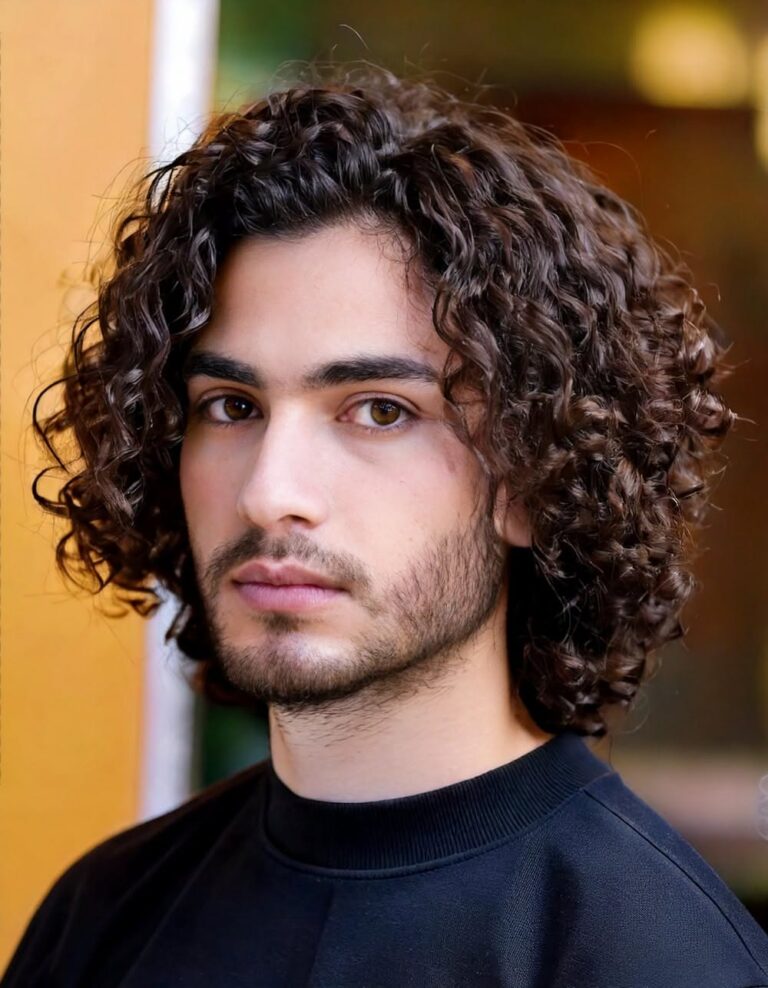
Textured Crop Haircut 2026: 20 Styles, the Point Cutting Guide That Changes Everything, and What to Tell Your Barber
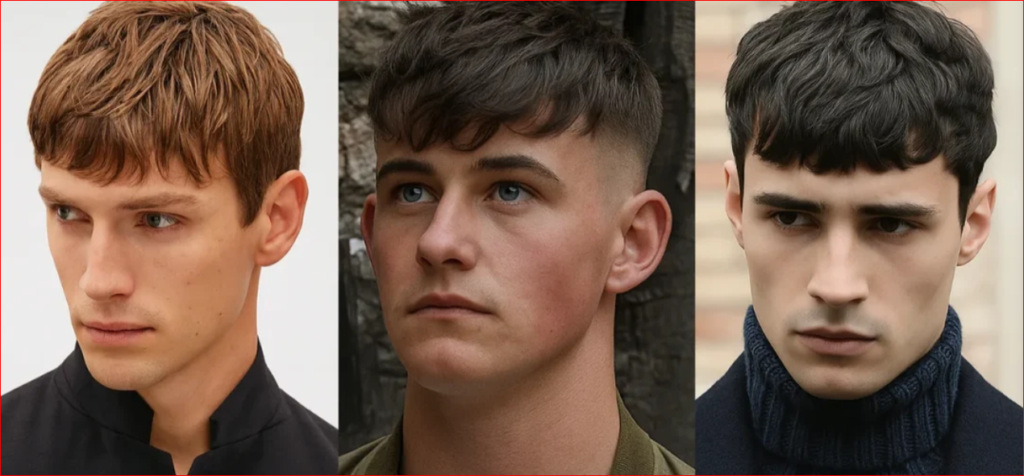
SWAGGER Magazine called it the most requested men’s haircut of the moment. Urban Splatter confirmed it in March 2026. Reuzel confirmed it in April. Every barbershop report from the first half of 2026 says the same thing.
The textured crop is the most requested men’s haircut of 2026. Not because it photographs well, though it does. Not because celebrities wear it, though Tom Hardy has worn variations throughout 2025 and 2026. Because it solves the specific problem most men have with their hair.
It looks like you tried. Without requiring that you actually did.
The choppy, separated pieces on top. The forward fringe that sits at or just above the eyebrow. The short, faded, or tapered sides. This combination produces a result that reads as deliberately styled from across the room and completely effortless up close. Achieving that result requires one technique from the barber and about three minutes from you each morning.
This guide covers twenty textured crop styles for 2026, the point-cutting technique properly explained, the dedicated thin hair guide no other page gives you, how to transition from a side part, and exactly what to say before the scissors start.
At a Glance — Quick Picks
| Need | Best Textured Crop Version |
|---|---|
| Most requested 2026 | Classic textured crop mid fade |
| Office professional | Conservative low-taper version |
| Thin or thinning hair | French crop-specific technique |
| Wavy hair easiest | Messy or medium-length version |
| Curly hair | Curly crop cut dry |
| School-safe | Classic with low taper |
| Bold weekend | Textured crop skin fade |
| Boys ages 10-18 | Classic mid-fade school rated |
What Is a Textured Crop Haircut?
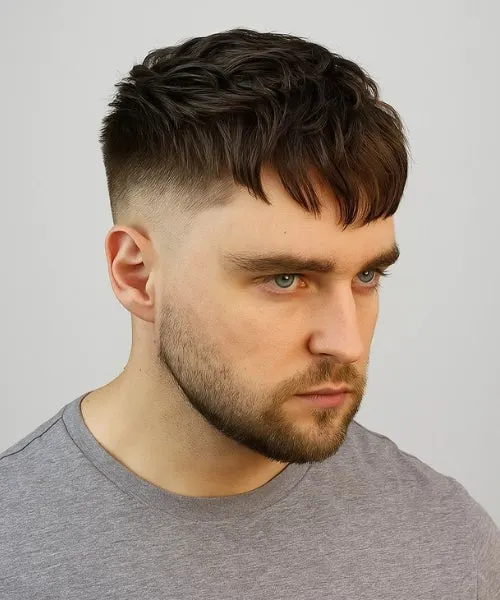
A textured crop haircut is a short men’s style with shorter faded or tapered sides and a slightly longer top, typically one and a half to two inches, cut using the point-cutting technique to create natural-looking separation and movement. The fringe falls forward at or just above the eyebrow, and the top section has a choppy, layered texture that looks lived-in rather than combed or polished.
The defining word is textured. A standard crop has a smooth, even top. A textured crop has visible separation between strands, with individual pieces moving independently rather than sitting as a single mass. That separation comes entirely from how the barber cuts the top, not from how much product you use.
The Insight Nobody Else Gives You Where Texture Actually Lives
Here is what most textured crop guides miss: the texture does not live in the fringe. It lives behind the fringe.
The fringe, the section that falls forward and sits at eyebrow level, should sit slightly heavier and be more weighted than the rest of the top. It has a natural fall. The choppy, separated texture is in the mid-section and crown behind it. The contrast between the weighted fringe at the front and the loose, layered interior behind it is what makes the style read as intentional rather than simply grown out.
The most common mistake when styling a textured crop is working product into the fringe first and heavily. The fringe does not need texture; it needs weight and direction. The crown and mid-section behind the fringe need the texture and separation. Apply product to the back first, work forward through the crown, and let a minimal amount reach the fringe last.
Attempting to add heavy texture to the fringe itself produces a result that looks messy rather than styled. This is the reason many men style their textured crop and feel something is slightly off; the texture is in the wrong section.
Textured Crop vs. French Crop: The Real Difference
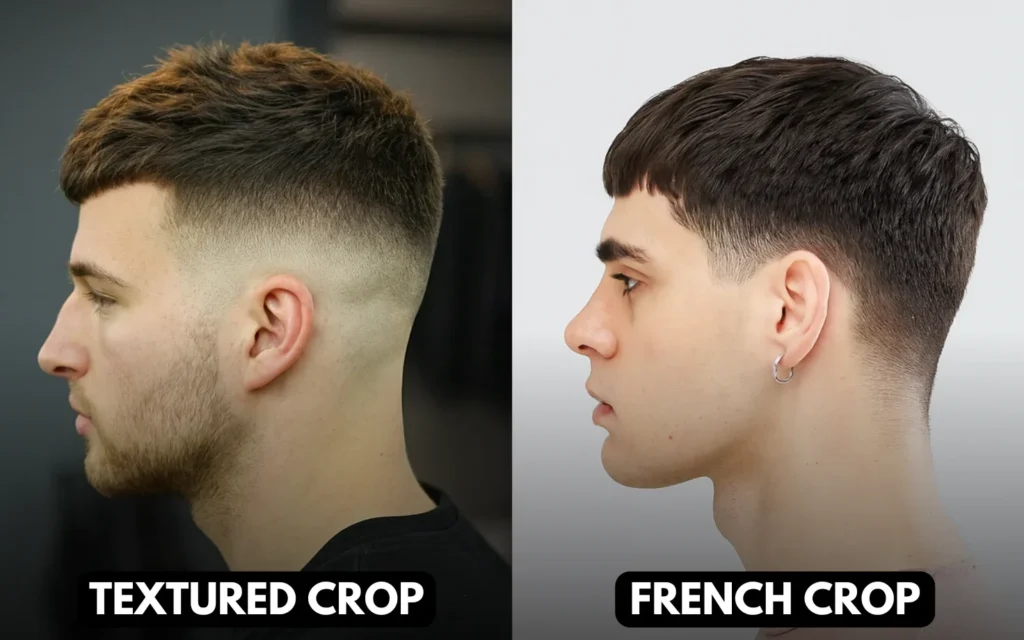
Both styles share the same structure: short faded sides and a forward-falling fringe. The difference is the fringe.
The textured crop fringe falls in loose, piecey sections; the individual strands separate and move independently. It looks relaxed and organic.
The French crop fringe cuts straight across the forehead in a defined horizontal line, heavier, blunter, and more deliberate. It looks structured and sharp.
The cutting technique produces both outcomes. A textured fringe is point-cut heavily with scissors held vertically, cutting upward into the hair. A French crop fringe is cut with a blunter, more horizontal scissor angle and less vertical cutting.
Both use the same general structure. One technique decision produces two completely different style personalities.
What Is Point-Cutting? The Technique That Makes the Textured Crop Work
Point-cutting is the single most important technique in a textured crop. Every guide mentions it. Almost none explain what it actually does to the hair.
The barber holds scissors vertically, tips pointing upward into the hair rather than across it. Instead of cutting a clean horizontal line where all strands end at exactly the same length, the vertical scissors cut into the ends at varying depths. The result is irregular endpoints; no two strands end at the same point.
Those irregular endpoints catch light differently from every angle. They separate naturally rather than clumping as a single mass. They grow out gradually rather than reaching a defined edge that suddenly looks overgrown. They move independently throughout the day rather than lifting or falling as one piece.
A blunt cut creates a defined edge. Point-cutting creates a texture zone. The same length of hair produces two completely different results depending entirely on which technique the barber uses on the top section.
Tell the barber specifically: “Please use point-cutting on the top cut; the scissors should be upward into the hair, not straight across.” “I want separation and movement, not a blunt edge.”
What Is the Gen Z Haircut?
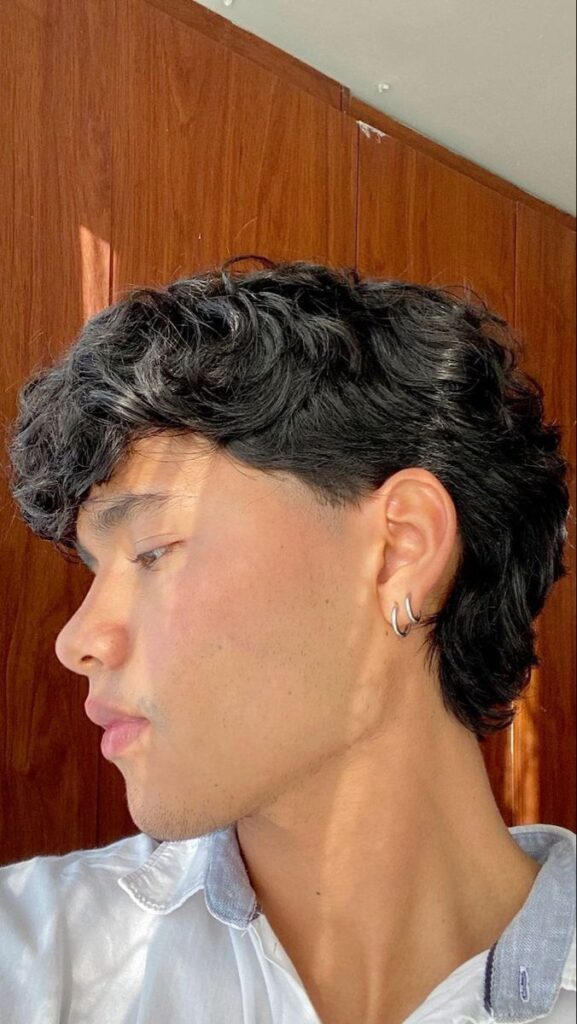
The textured crop is the defining Gen Z haircut of 2026. It shares that title with the wolf cut, curtain bangs, and the blowout taper, but the textured crop leads the category in search volume and barbershop request frequency across demographics. What makes it specifically Gen Z is the philosophy behind it: natural texture prioritized over structured styling, effortless finish over precision, and authenticity over perfection.
20 Textured Crop Haircut Styles for 2026
Classic Textured Crop Mid-Fade
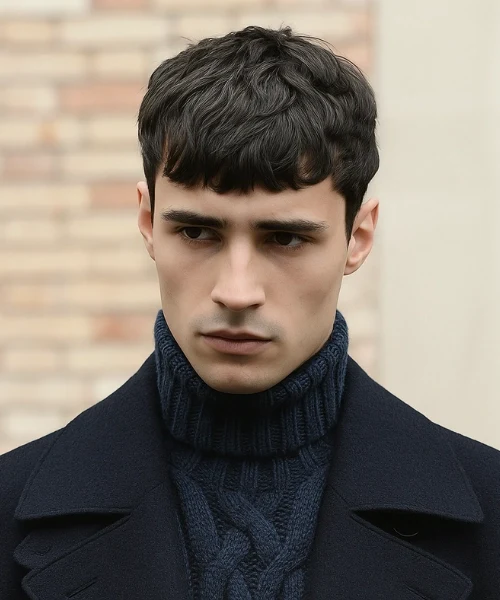
The baseline. Mid fade on the sides starting at the temple, two inches on top with heavy point-cutting, and a forward fringe sitting just above the eyebrow. This is the version most people picture when they search for a textured crop. Versatile enough for the office on Monday, casual enough for the weekend, and the grow-out phase at weeks four and five still looks intentional rather than neglected.
Tell your barber, “Classic textured crop with a mid fade. Mid fade starting at the temple. Keep two inches on top heavy point-cutting for texture and separation, not blunt. Fringe at eyebrow level. Cut the top dry so we can see the natural fall.”
Face shape: Oval and round, the forward fringe balances width.
Hair type: All best on straight and wavy.
School safe: Yes, in most settings.
Guard numbers: 1.5 at lowest, blend to 3.
Maintenance: Every 3-4 weeks.
Style time: 3 minutes, matte clay, back to front.
Textured French Crop
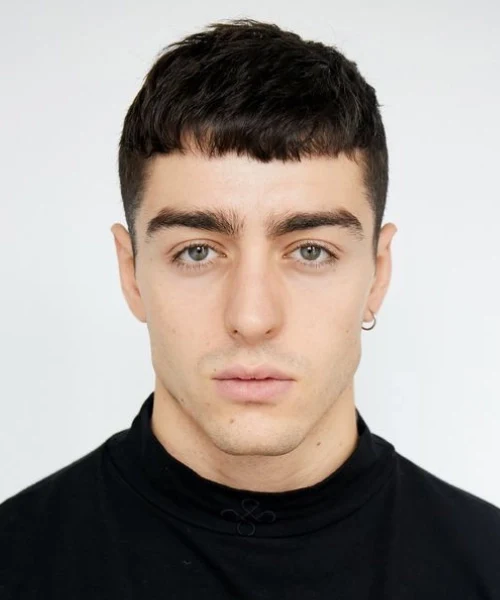
A harder, more structured version. The fringe cuts straight across the forehead in a defined horizontal line, heavier and more deliberate than the standard textured crop’s piecey fringe. The top is still point-cut and textured, but the strong blunt fringe is the defining element.
The French crop is particularly effective for men with a receding hairline. The solid horizontal fringe line draws the eye forward and down rather than allowing the hairline above to show a practical advantage most style guides do not mention.
Tell your barber, “Textured French crop. Blunt fringe cut straight across at mid-forehead I want a defined horizontal line, not piecey softness at the fringe. Heavy point-cutting on the top behind the fringe. Low to mid fade.”
Face shape: Round, wide forehead, receding hairline. French crop fringe adds coverage and balance.
Hair type: Straight to wavy with medium to good density.
School safe: Yes.
Maintenance: Every 3-4 weeks.
Textured Crop with Skin Fade
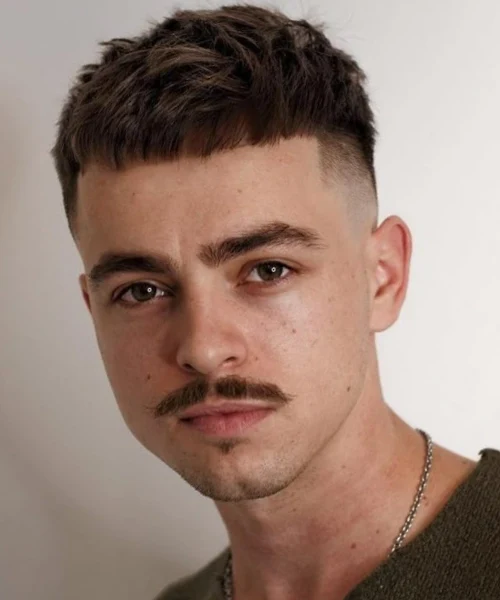
The highest-contrast version. The sides drop to bare skin, a sharp visual break between the faded sides and the textured top. When fresh, nothing reads cleaner. Maintenance-heavy — skin fades grow out noticeably within two to three weeks.
Tell your barber, “Textured crop with skin fade. Take the sides to skin zero guard. Mid- or low-skin fade. Two inches on top of heavy point-cutting. Fringe at eyebrow level.”
School safe: Check skin fades occasionally, which conflicts with conservative school policies.
Maintenance: Every 2-3 weeks.
Textured Crop Low Taper
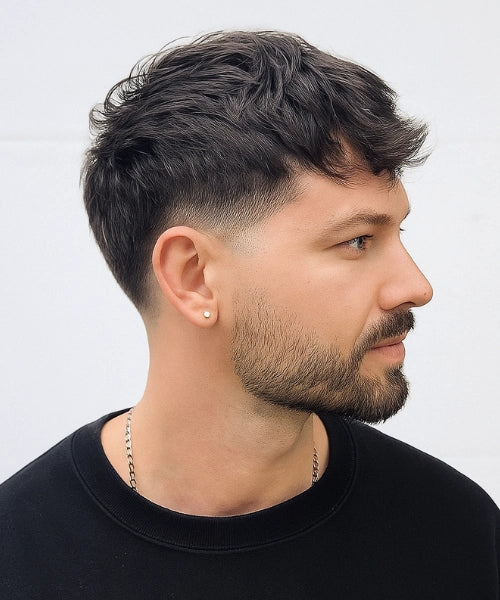
The most professional and low-maintenance version. The sides never reach bare skin; the taper blends gradually without the skin contrast of a fade. The grow-out phase looks intentional rather than neglected because there is no hard contrast line that becomes obvious as it softens.
Tell your barber, “Textured crop with a low taper. Low taper on the sides, no skin, gradual blend. Number 2 is at the lowest. Two inches on top point-cut for texture. Office appropriate.”
Office safe: Yes, in every professional environment.
School safe: Yes, universally.
Maintenance: Every 4-5 weeks, most forgiving grow-out.
For the full low taper guide, our low taper fade page covers every variation.
Textured Crop High Fade
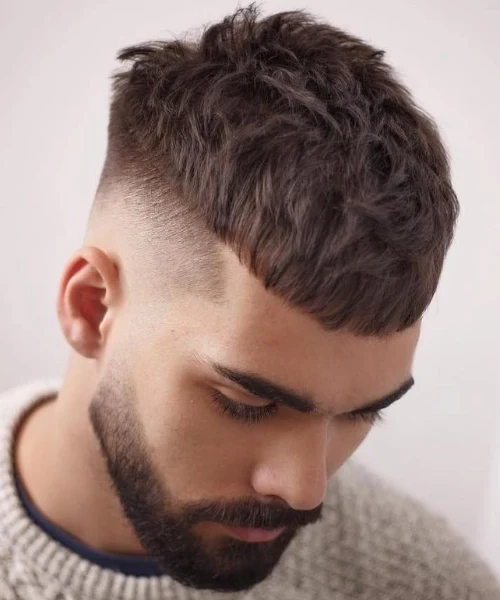
The boldest version. High fade starting above the temple—the contrast is dramatic. There is a proportion rule that most guides skip: a high fade demands a shorter, tighter fringe. A high fade with a heavy, hanging fringe creates visual imbalance; the top looks like a floating block disconnected from the stripped sides. Shorter fringe, more texture in the crown, and tighter sides—that combination keeps the proportions correct.
Tell your barber, “Textured crop with high fade. Start above the temple. I want the fringe shorter than a standard crop; the high fade needs shorter fringe for balance. Heavy point-cutting on the crown. Number 1 at the lowest.”
School safe: Check high fade level needs policy verification.
Maintenance: Every 2-3 weeks.
Messy Textured Crop
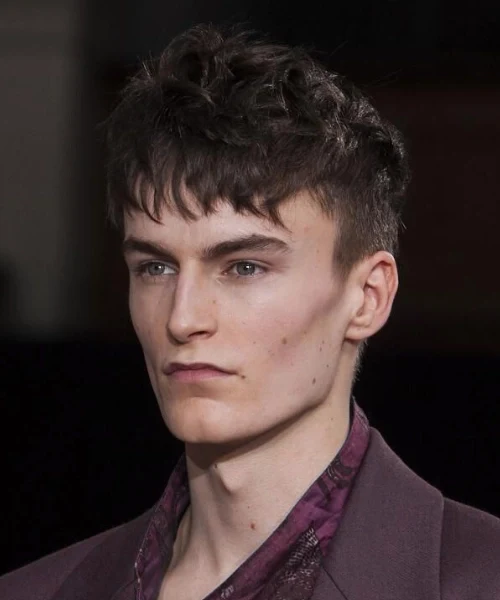
The loosest interpretation. Longer layers, more movement, less fringe definition. The sides stay short, but the top has extra length that gives a lived-in, tousled result rather than the structured texture of the classic. This is the crop for men who prefer their hair to look like it happened.
Tell your barber, “Messy textured crop. Keep more length on top, two and a half to three inches. Loose, uneven layers—I want it to look deliberately undone. Low to mid taper. Point-cut everything but heavily.”
Style time: 90 seconds; light product scrunched through, air dry.
Maintenance: Every 4 weeks.
Textured Crop on Straight Hair
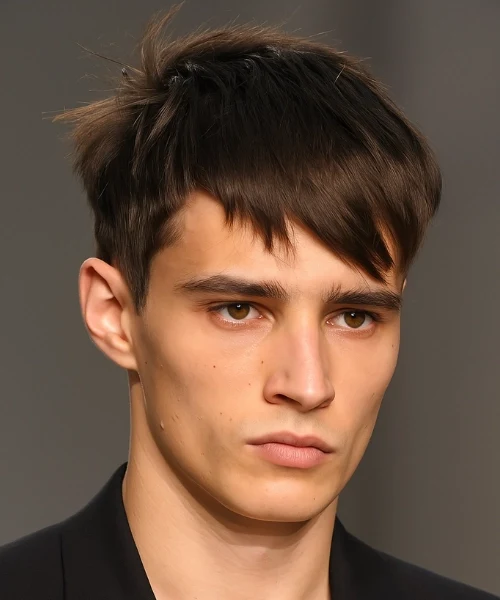
Straight hair is the most effort-intensive canvas for the textured crop. The lack of natural texture means every piece of separation in the top comes from the point-cutting technique and the product applied after, not from the hair’s own behavior. The result, when executed correctly, is one of the sharpest-looking versions of the textured crop because straight strands hold their position consistently.
Tell your barber, “Textured crop for straight hair. Heavy point-cutting on the top of my hair has no natural texture, so the technique needs to do all the work. Two inches on top. Mid fade. Cut the top section dry.”
Style time: 3-5 minutes; matte clay applied to dry hair, back to front.
For the full straight hair guide, our boys’ haircuts for straight hair page covers twenty cuts.
Textured Crop on Curly Hair
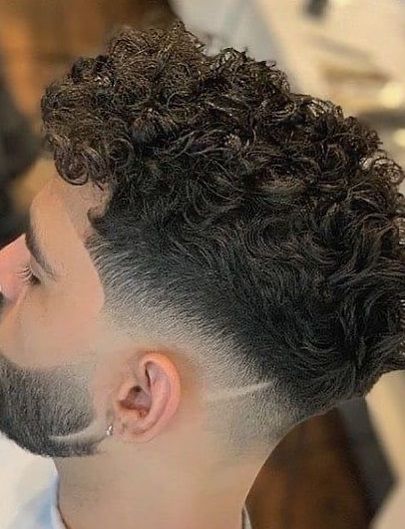
Curly hair produces the most effortless textured crop result. The natural curl pattern creates separation, dimension, and movement automatically; the point-cutting technique simply enhances what is already there rather than creating it from nothing.
The dry-cut rule is non-negotiable: curly hair shrinks between thirty and fifty percent when dry. Always ask the barber to cut the top section dry.
Tell your barber, “Textured crop for curly hair. Please cut the top section dry; my curls shrink when wet. Keep at least two inches on top dry. Low to mid fade.”
Style time: Curl cream on damp hair, scrunch, and air dry.
For the complete curly guide, our curly hairstyles for men page covers types 2A through 4C.
Textured Crop on Wavy Hair
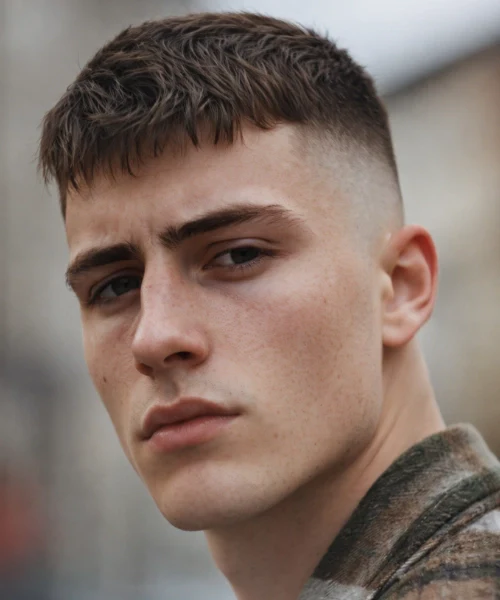
Wavy hair is the natural sweet spot for a textured crop. The wave adds dimension and movement to the top section without product or heat; the result after thirty seconds of sea salt spray and air drying produces the effortless finish that the textured crop promises.
Tell your barber, “Textured crop for wavy hair. Low to mid taper. Keep two to two and a half inches on top. The natural wave will add texture point-cut to enhance it, not fight it.”
Style time: Sea salt spray, scrunch forward, air dry.
Maintenance: Every 4-5 weeks.
Textured Crop for Thin Hair
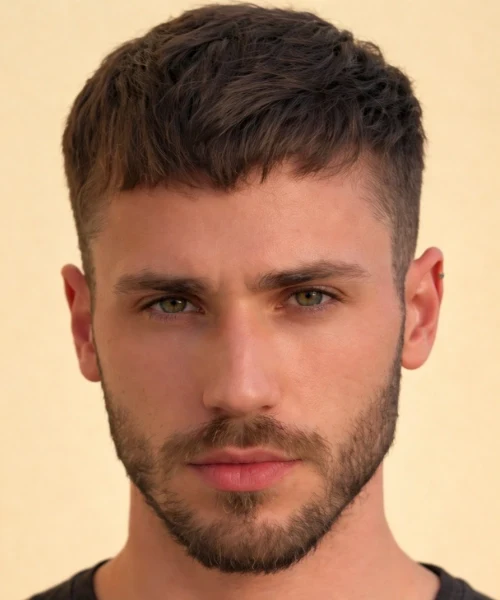
Thin hair requires a specific approach to the textured crop that differs significantly from the thick or straight hair version. The principles are different. The product is different. The fringe choice is different.
This version gets its own dedicated section below; see the complete thin hair guide.
Tell your barber, “French crop fringe for thin hair. Blunt fringe to cover the hairline. Low taper, no skin. Point-cut the top for texture but leave more weight than you normally would. I want the separation without exposing the scalp.”
Modern Textured Crop
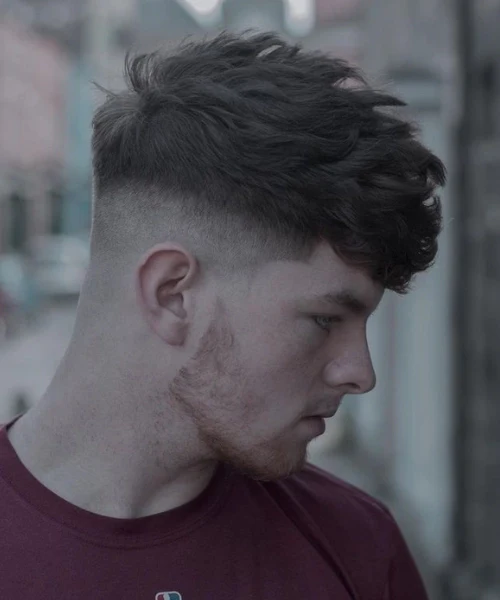
The 2026-specific update to the classic. Softer edges, more natural movement throughout, and less aggressive point-cutting than the classic version. The modern textured crop has a lived-in quality that reads as current without being obviously styled more casual than the classic or more polished than the messy version.
Tell your barber, “Modern textured crop. Light to medium point-cutting; I want natural movement rather than very choppy, defined separation. Mid- to low-fade. Two inches on top.”
Maintenance: Every 4 weeks.
Textured Crop Drop Fade
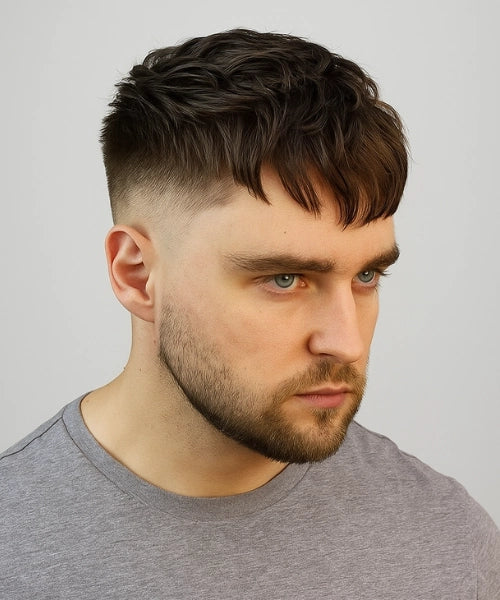
The drop fade curves behind the ear rather than running straight across. Combined with a textured crop top, the curved fade adds a more dimensional, organic silhouette at the back and sides. For men with flatter backs to their heads, the drop fade’s arc adds perceived depth and shape.
Tell your barber, “Textured crop with drop fade. The fade should curve down behind the ear, not straight across. Textured crop on top, two inches, point-cut. Number 1.5 at the lowest.”
For the full drop fade guide, our drop fade haircut page covers the curved technique.
Textured Crop Buzz Cut
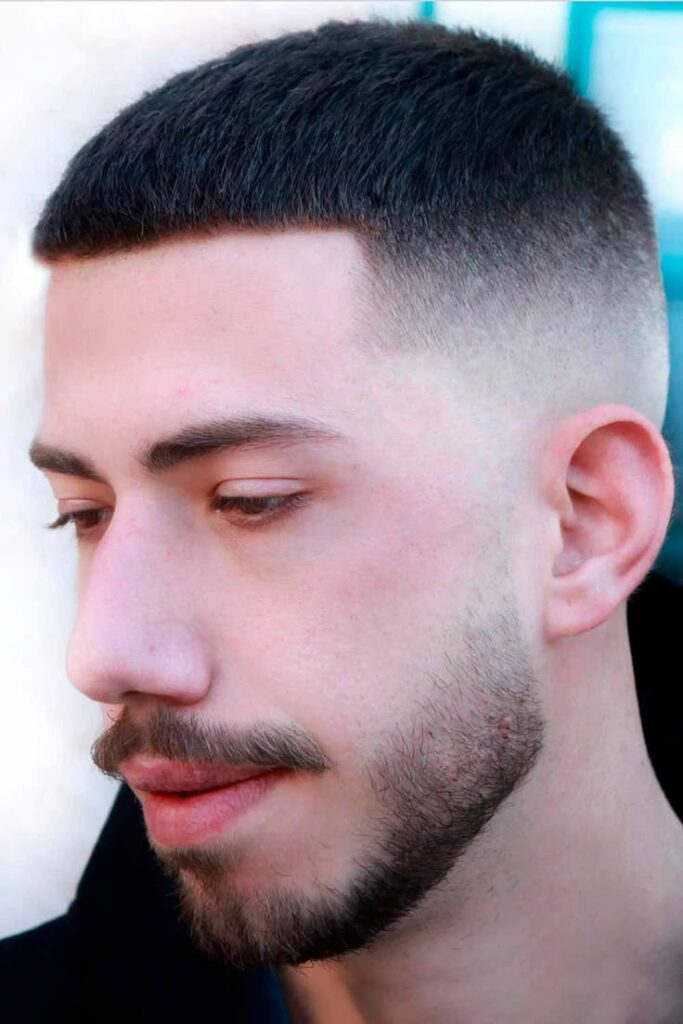
A very short, uniform top number 2 or 3, six to nine millimeters with a mid fade on the sides. The fringe section is cut at the same length as the rest of the top but with point-cutting to maintain some texture and separation even at a very short length.
Tell your barber: “Textured crop buzz cut. Keep the top at a number 2 or 3 uniform. Mid fade on the sides. Point-cut through the top to break up the uniformity.”
For the full buzz cut guide, our buzz cut page covers every guard number.
Textured Crop with Beard
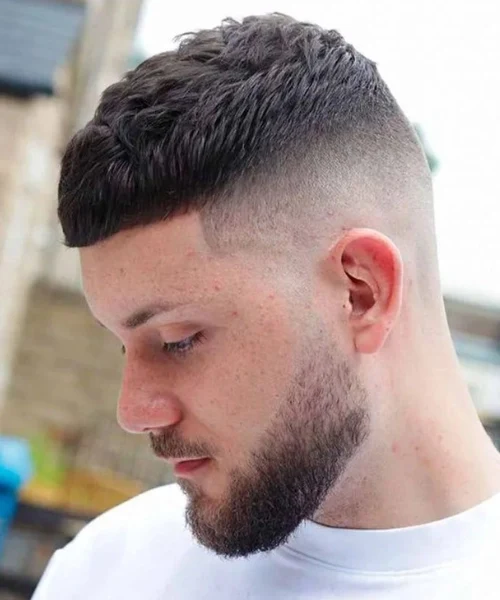
A textured crop combined with an existing beard. The fade at the sides blends into the beard at the sideburn rather than cutting a hard line. Adult men twenty-five to forty-five find this combination particularly effective because the beard adds maturity that balances the youthful energy of the crop.
Tell your barber, “Textured crop blending into my beard. Blend the fade smoothly into the beard at the sideburns—no hard line. Textured crop on top.”
Maintenance: Every 3-4 weeks, beard and fade grow at similar rates.
Textured Crop Undercut
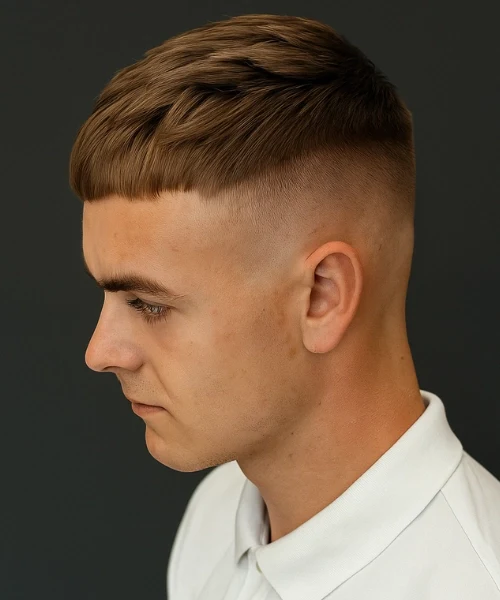
The sides go short with a hard, disconnected line rather than a gradual fade; the transition from the textured top to the sides is abrupt rather than blended. The undercut version creates more visual drama and works well on square and angular face shapes where the strong disconnected line adds definition.
Tell your barber, “Textured crop undercut. I want a disconnected line, not a fade blend where the top meets the sides. Textured crop on top with heavy point-cutting.”
School safe: Check disconnected undercuts occasionally; they conflict with school policies.
Textured Crop Side Swept
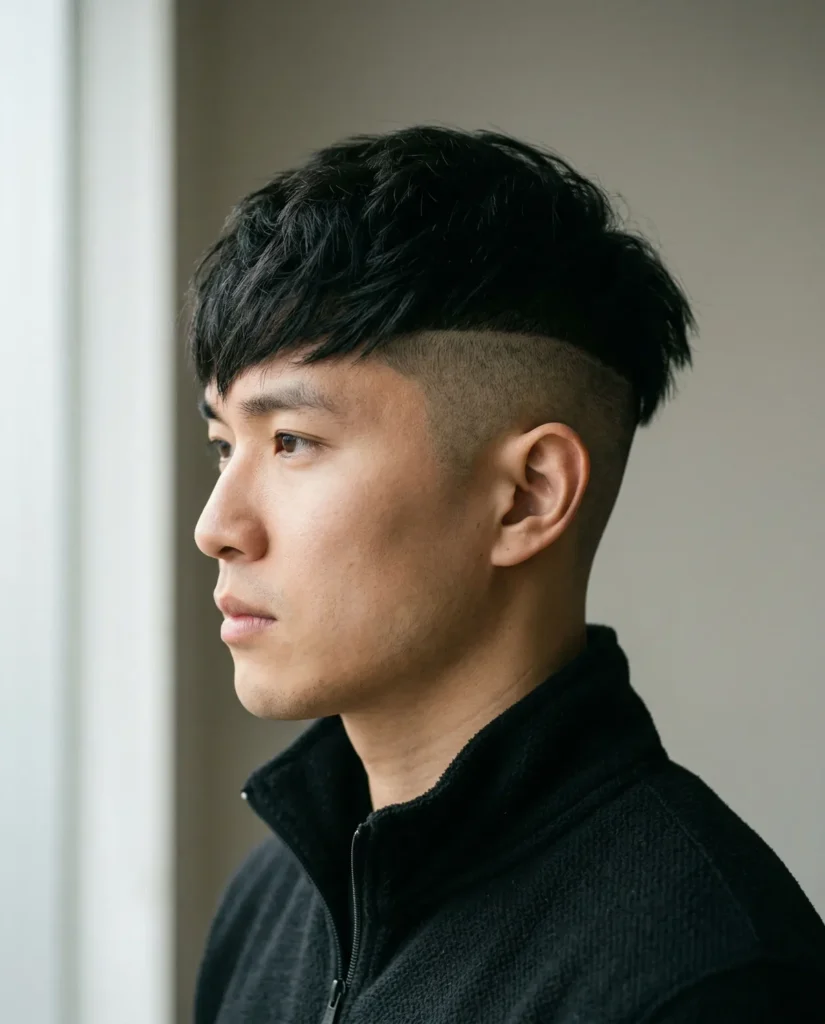
Most textured crops direct the fringe forward. This version sweeps the top to one side, a directional variation that reads significantly more professional than the standard forward-facing version. The top is still point-cut for texture, but the direction is sideways rather than forward.
Tell your barber, “Textured crop swept to one side. Direct the hair to the left and blow-dry in that direction first. Point-cut the top for texture. Low taper.”
Office safe: Yes, the most professional-looking version of the textured crop.
Style time: 3-4 minutes blow-dry to set direction, light product to hold.
Textured Edgar Crop
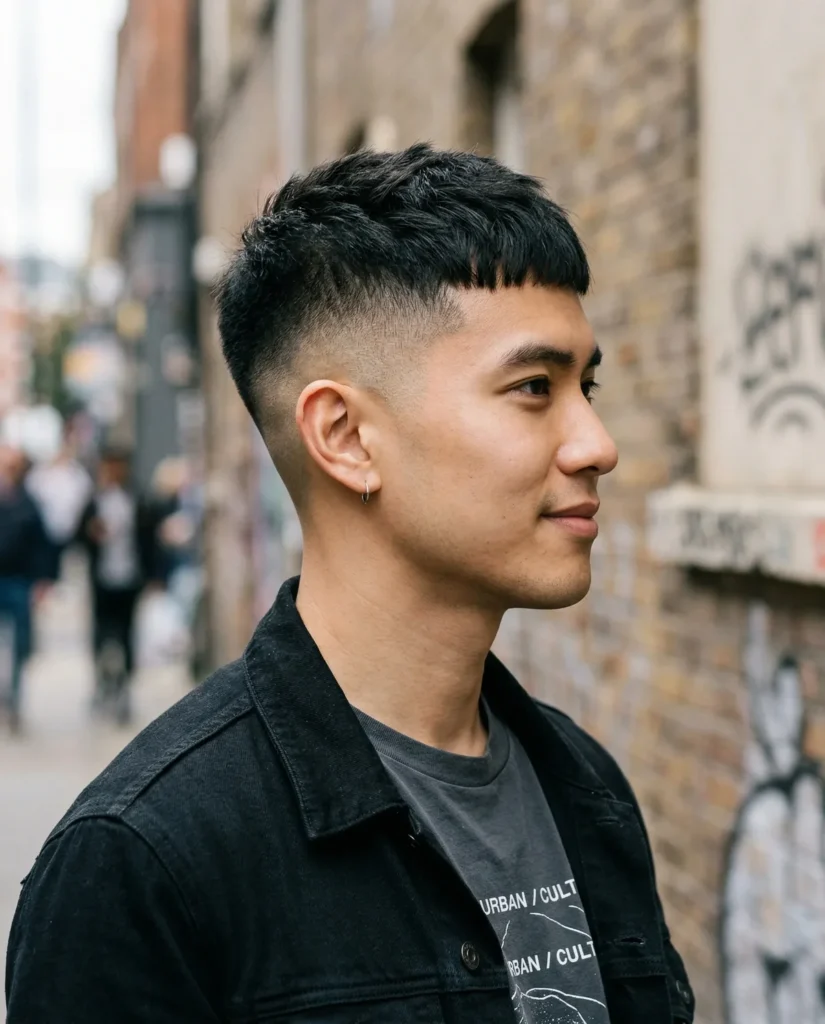
The Edgar crop is the geometric version. A very precise, blunt fringe line cuts straight across the forehead, sharper than the French crop, and more deliberate. The top is still textured and choppy, but the strong geometric fringe is unmistakably intentional. Maintenance is mandatory; the sharp fringe line softens fast without a trim every two to three weeks.
Tell your barber, “Textured Edgar crop. Blunt fringe, geometric, not soft. Sharp horizontal line across the forehead. Heavy point-cutting on the top behind the fringe. Skin or mid-fade.”
For the full Edgar guide, our Edgar haircut page covers every variation.
Medium-Length Textured Crop
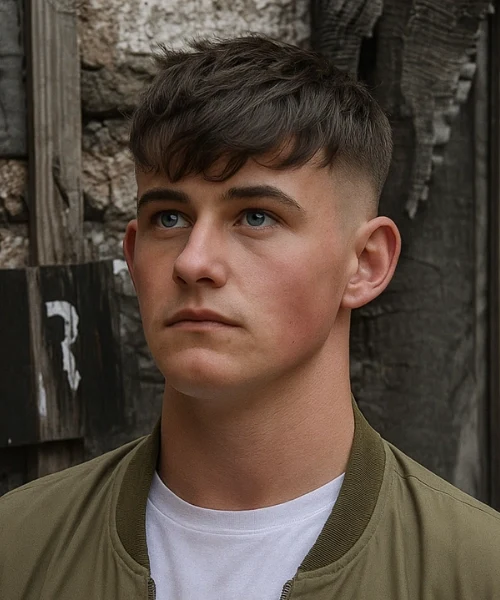
More length on top, two and a half to three and a half inches rather than the standard one and a half to two. The extra length creates more movement, more styling versatility, and significantly more grow-out forgiveness. This is also the natural destination of the short textured crop at weeks five and six when the fringe starts sitting on the eyes; instead of booking a trim immediately, let it grow into the medium-length version, which is a full style in its own right.
Tell your barber: “Medium-length textured crop.” Keep two and a half to three inches on top of more than the standard short version. Heavy point-cutting for texture throughout.”
Maintenance: Every 5-6 weeks the extra length forgives the grow-out phase.
Textured Crop for Boys and Teens
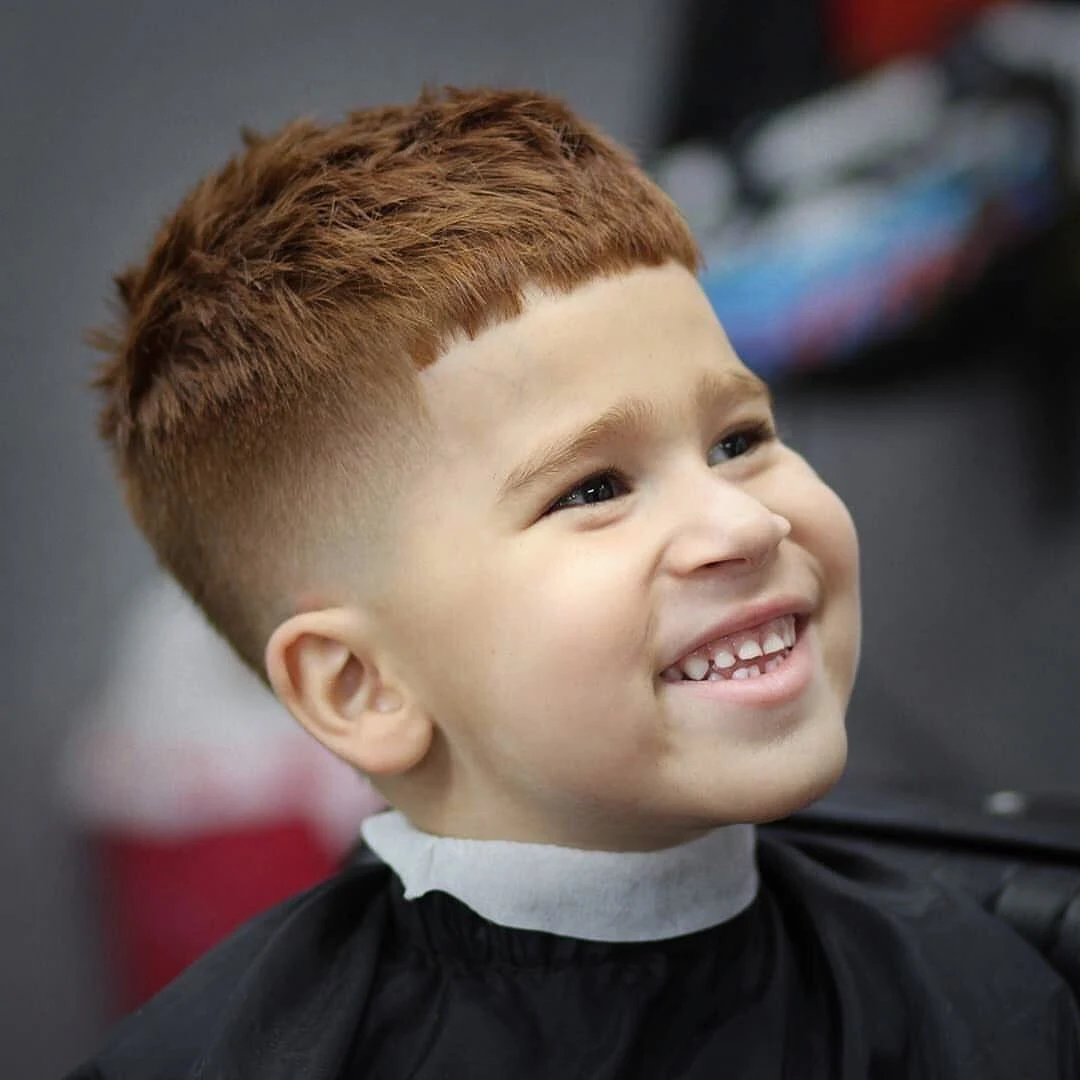
The textured crop is one of the most requested haircuts for boys aged ten to eighteen. The school-safe version is a classic textured crop with a low taper, number 2 at the lowest passes, every school dress code, and requires minimal morning effort.
For boys ten to thirteen, classic with low taper. School-safe everywhere.
For teens fourteen to eighteen, classic with mid fade or skin fade, depending on school policy.
Tell your barber (for boys): “Textured crop for a [age]-year-old. Low to mid taper. Two inches on top point-cut for texture. School-appropriate.”
For the full guides: our teen boy haircuts page and boys’ haircuts hub.
Conservative Textured Crop
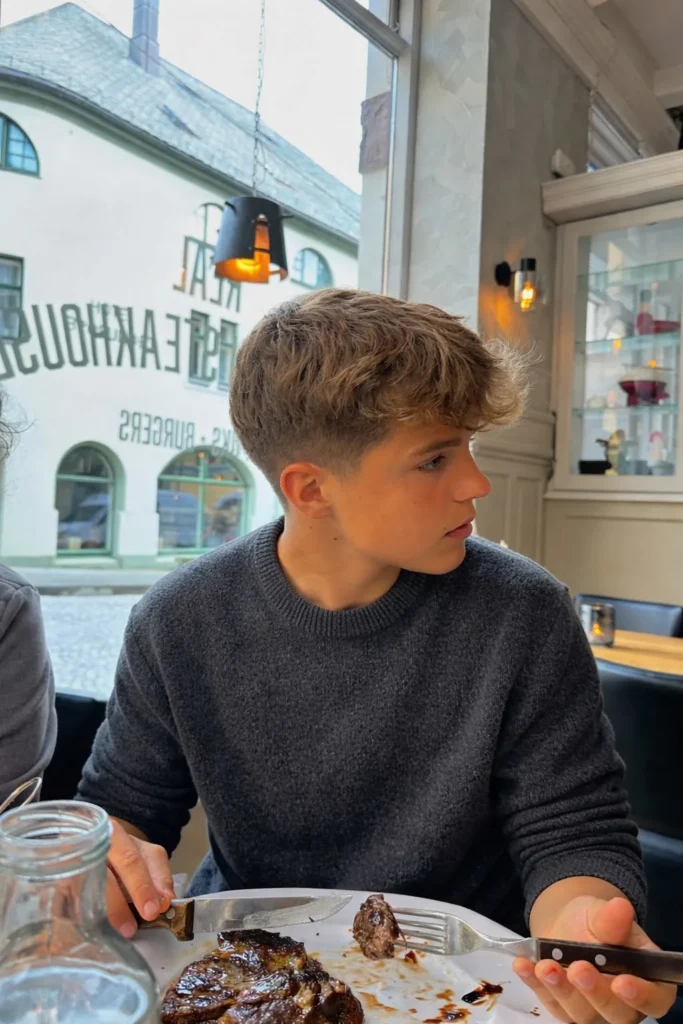
Low taper, number 2 at the lowest, no skin visible anywhere. The texture on top is lighter, less aggressive point-cutting, and more natural separation. The fringe sits forward at mid-forehead. This version passes every professional environment and school dress code without any discussion.
Tell your barber, “Conservative textured crop. Low taper number 2, no skin. Light texture on top, not too choppy. Office- and school-appropriate.”
School safe: Yes, universally.
Office safe: Yes everywhere.
Maintenance: Every 5-6 weeks.
Textured Crop for Thin or Thinning Hair: The Complete Guide
Three separate keywords—textured crop for thin hair, textured crop for thinning hair, and textured crop haircut for thinning hair—combined produce 230 monthly searches. These men have a specific concern: does this cut work on hair that lacks density, and will it make the situation look worse rather than better?
Why the Textured Crop Works on Thin Hair
Point-cutting creates a volume illusion. The irregular endpoints catch light differently from every angle, and strands at different lengths create the visual impression of more density than actually exists because the eye reads variation in length as variation in volume.
A blunt cut maximizes the sparse appearance of thin hair. Every strand ending at the same point makes it easy for the eye to count individual hairs and measure the gaps between them. Point-cut ends break up that regularity and create the impression of more going on in the hair than there actually is.
What to Avoid on Thin Hair
A long, heavy fringe on thin hair creates the opposite problem: the weight of even thin hair in a longer fringe emphasizes the sparseness by hanging flat rather than having the natural body that thicker hair provides.
A skin fade on thin hair at the sides makes the scalp visible during the grow-out phase because the stubble growing back through the skin section looks patchy rather than a clean shadow.
Heavy pomade or shine products on thin hair add visible weight that makes individual strands clump together, increasing the apparent gap between them and reducing the illusion of density.
Best Textured Crop for Thinning Hair
The French crop fringe is the most effective version for thinning hair. The solid horizontal line at the forehead draws the eye forward and down away from the hairline above, where thinning is most visible. This is the practical advantage of the French crop’s blunter fringe beyond pure aesthetics.
The low taper rather than skin fade keeps visible hair at the sides during the grow-out phase, preventing the patchy appearance of skin regrowth on fine hair.
Matte clay at the roots rather than pomade anywhere adds grip and lift without the weight that shine products add. For very fine hair, a texture powder at the roots before any clay builds temporary thickness that helps the top section hold its position longer.
Does a Textured Crop Make an Older Man Look Younger?
This Quora question deserves an honest answer rather than a generic reassurance.
Yes, when the version is chosen correctly. The textured crop’s forward fringe covers some forehead, the point-cut top adds dimension that reads as youthful without looking forced, and the overall clean structure looks deliberately maintained rather than simply present.
The version that risks looking counterproductive is a heavy, long fringe on an older face combined with an aggressive high skin fade. The contrast between the long fringe and the very short sides can read as trying to replicate a teenage haircut rather than adapting the style appropriately. A shorter fringe, softer layering, and a low or mid taper rather than a skin fade produce a result that reads as current without calling attention to itself.
The short answer: textured crop, yes, with the right version. Conservative textured crop low taper for professional and formal contexts. The classic mid-fade version for casual contexts. Avoid the high skin fade and the aggressive Edgar-style blunt fringe.
Textured Crop by Hair Type Complete Matching Guide
| Hair Type | Best Version | Key Technique | Daily Effort |
|---|---|---|---|
| Straight | Classic or French | Heavy point-cutting is essential. | Medium (3-5 min) |
| Wavy | Messy or medium length | Enhance natural movement. | Low (2 min) |
| Curly | Curly crop | Cut dry always | Very low (scrunch) |
| Thick | Skin fade version | Internal bulk removal | Medium (3-4 min) |
| Thin/Fine | French crop | Volume illusion fringe | Medium (3-4 min) |
Textured Crop on Straight Hair
The most effort-intensive. The barber’s technique does the heavy lifting without aggressive point-cutting; straight hair sits flat, and the textured crop loses its entire character within an hour of styling. The product was applied back to front on dry hair, then fingers separated individual pieces. The whole process is three to five minutes maximum.
Textured Crop on Curly Hair
The easiest. The curl pattern provides texture, separation, and dimension automatically. The dry-cut rule is the only mandatory instruction; it states it before the barber touches the top section.
Textured Crop on Thick Hair
Thick hair needs internal bulk removal rather than surface-only cutting. The barber removes weight from inside the mid-section of the top using point-cutting and internal layering, not thinning scissors, which creates surface frizz on thick hair. For styling, a moisture pre-styler on damp hair before blow-drying prevents the poofy clumping that clay alone produces on thick hair.
Textured Crop by Face Shape
Oval face: The most flexible face shape. All textured crop versions work. The classic and French crop versions look particularly strong on balanced oval proportions.
Round face: The textured crop adds height when volume is directed upward and forward, adding vertical proportion to round faces. The fringe should not hang too heavily across the forehead; a slightly shorter fringe with more crown height balances round proportions better.
Square face: The softer texture versions of the messy crop, medium length, and conservative low taper complement square faces by avoiding the additional angularity that harder edges create. The textured crop’s natural softness is the correct choice over the Edgar or French crop versions for strong square jawlines.
Oblong face: The textured crop works best at shorter top lengths on oblong faces. Avoid adding significant height with a tall textured top that would elongate an already long face. The side-swept version adds some width and suits oblong proportions well.
Heart face: The fuller fringe versions of the French crop are classic with forward-falling fringe that adds horizontal width at the forehead and balances the narrower chin. The fringe is particularly effective for heart face shapes.
Diamond face: A medium-length textured crop that avoids adding excessive width at the cheekbone area. The forward fringe helps balance the visual weight of prominent cheekbones.
Transitioning from a Side Part to a Textured Crop
Reddit asks this specifically. The transition is genuinely awkward for a few weeks, and knowing why makes it significantly more manageable.
Why the Transition Feels Awkward
Hair has directional memory. When hair has been combed consistently to one side for months or years, the hair shaft develops a preferred direction. The follicle itself trains the hair to grow in that swept direction.
A textured crop requires the fringe to fall forward. For the first two to three weeks after cutting, the hair continues to want to sweep sideways; the directional memory overrides the new cut. The product helps push it forward, but the hair fights back as it dries.
This is not the barber’s fault, and it is not a permanent problem. The memory resets within three to five washes as the hair grows and new growth emerges in the forward direction without historical training.
The Week-by-Week Transition Guide
Weeks one and two: The fringe wants to go sideways. Apply matte clay from the back forward, press the fringe forward with the palm of your hand, and hold for ten seconds while it sets. The product has enough grip to keep it forward through the day even against the directional memory. Expect some relapse by evening; this is normal.
Weeks three and four: The new direction is beginning to take hold. The fringe sits forward for longer periods without active product assistance. Book a trim at this point rather than earlier; the barber can see the natural direction the hair is moving and cut accordingly.
Weeks five and six: The transition is complete. The hair sits forward without significant product assistance. The textured crop is now behaving as intended.
What to Tell the Barber for the Transition Cut
“I am transitioning from a side part to a textured crop. I understand the fringe will probably not sit perfectly forward for two to three weeks while the directional memory resets. Please cut with the forward direction in mind and go slightly shorter on the fringe than you normally would; this gives the new direction the best chance of establishing.”
How to Ask Your Barber for a Textured Crop
The Four Variables Cover All of Them
Fade type and height are two separate pieces of information. “Mid fade,” “skin fade,” and “low taper” are not interchangeable; specify both. “Low skin fade” and “mid taper” describe completely different haircuts.
Fringe position: “just above the brow” versus “mid-forehead” changes the proportions of the entire cut. A photo eliminates this ambiguity.
Length on top: state in inches. “Two inches on top” tells the barber exactly what to leave. “Keep it short” does not.
Texture technique: tell them you want point-cutting for separation and movement. “Just trim it” will not produce the choppy, layered result.
Universal Textured Crop Script
“Textured crop [low taper / mid fade / skin fade] on the sides. Keep two inches on top—I want heavy point-cutting for texture and separation, not blunt cutting. Fringe at eyebrow level. Cut the top section dry if possible.”
Scripts Per Variation
Classic mid fade: “Classic textured crop. Mid fade. Two inches on top point-cut. Eyebrow fringe.”
French crop: “French crop fringe blunter line, more structured at the front. Heavy texture in the crown behind the fringe. Low to mid fade.”
Thin hair: “French crop fringe to cover the hairline. No skin fade, low taper only. Point-cut the top but leave more weight than usual.”
High fade: “Textured crop high fade. Shorter fringe than normal; the high fade needs proportionally shorter fringe. Heavy texture in the crown.”
Conservative office: “Conservative textured crop. Low taper. Number 2 at the lowest no skin. Light texture on top. Office appropriate.”
What Is the 3-Hair Rule?
The 3-Hair Rule is a barbershop assessment principle that states: if you can count fewer than three visible hairs in any given section of a haircut, that section will look too thin or sparse to read as intentional styling.
It applies most directly to the fringe section on men with thinning hair; if the fringe has fewer than three visible strands per centimeter of width, the result reads as receding rather than styled. The French crop’s blunter, heavier fringe addresses this by concentrating the available strands into a more defined mass rather than spreading them across a wide, piecey fringe that exposes the gaps.
For the sides, the 3-Hair Rule advises against skin fades on men with fine hair at the temples; the skin section during grow-out shows individual hairs rather than a shadow, drawing attention to thinning rather than concealing it.
Two Photos: Front and Side
The front photo shows the fringe length, fringe style, and top texture. The side photo shows the fade height, where the taper starts, and how the transition from sides to top looks in profile. Without the side photo, the fade height is left entirely to the barber’s interpretation.
How to Style a Textured Crop at Home
The Critical Direction: Back to Front
Apply the product to the back of the head first. Work forward through the crown. Reach the fringe last with the smallest amount of product remaining on your hands.
This sequence matters because the fringe is the section most people focus on, and over-applying product to the fringe makes it sit flat and heavy rather than forward and natural. The fringe needs weight and direction, not texture. The crown needs texture and separation.
Reversing this sequence starting at the fringe and working back consistently produces results that feel almost right but slightly heavy at the front.
Step-by-Step Styling Guide
Start with hair dried to approximately eighty percent damp but not dripping. This is the window where the product absorbs and the hair is still shapeable.
Apply a small amount of matte clay or texture product to the back sections first. Work it through with fingers, not a comb. Combs smooth the hair rather than building separation.
Work the product forward through the crown, creating visible separation between strands with fingertip pressure rather than palm-spreading. Each section should look deliberately placed.
Let a minimal amount reach the fringe of whatever remains on your hands after working through the crown. Press the fringe forward with your palm and let it set.
Do not check the mirror until the product is fully dry. The temptation to adjust while styling disrupts the separation building in the crown.
Products by Hair Type: Honest Assessment
Budget ($5-12):
Gatsby Wax Fiber ($6) is a reliable matte hold for all hair types. Available everywhere. Any clay texture powder from a drugstore for thin hair roots.
Mid-range ($12-20):
American Crew Fiber ($14) is versatile, has a medium hold, and works on most hair types. BluMaan Wax Fiber ($18) is excellent for medium and grow-out phase styling, with more movement than firm clay.
Premium ($20+):
Moroccanoil Texture Clay ($24) has a strong hold, a genuine matte finish, and works across all hair types, including thick. Reuzel Matte Clay ($20) is a professional-grade hold, a barbershop favorite.
For thin hair specifically: A clay texture powder at the roots before any product. This adds temporary lift and grip to fine strands without adding weight. Then a light matte clay over the top for separation. Never pomade on thin hair; the shine and weight increase the visual gap between strands.
The Grow-Out Phase Product Trick
At weeks four and five, when the fringe starts to grow past eyebrow level and the sides begin softening, one product change extends the life of the style by one to two weeks. Switch from a firm clay to a lighter product such as a wax fiber or texture cream. The lighter hold allows more movement, and when hair is moving, grow-out looks intentional rather than neglected.
School Safety and Professional Guide
School Safety Per Version
| Version | School Safe |
|---|---|
| Conservative low taper (number 2+) | Yes, universally |
| Classic mid fade (number 1.5) | Usually yes, check policy. |
| Skin fade version | Check depends on school. |
| With a shaved design | Usually no |
| High-fade version | Check depends on school. |
Office Safety
The side-swept textured crop is the most professional-reading version; the directional styling makes it look deliberate and controlled rather than casually styled. The conservative low-taper version passes every office environment.
For full age-specific guidance: our boys’ haircuts hub and teen boy haircuts guide.
How Long Does a Textured Crop Last?
The Fringe Goes First
Here is what most guides skip: the fringe is what goes awkward first, not the sides. On a short textured crop at weeks four and five, the fringe starts sitting on or past the eyebrow line and lying flat in a way that changes the entire proportional balance of the cut. The sides may still look clean, but the fringe is telling you the cut needs attention.
This is the booking cue. Not “the fade is getting soft. “Not the sides look grown out.” When the fringe starts sitting on the eyes or lying flat rather than forward, that is the four-week mark and the trim is due.
Maintenance Table by Version
| Version | Fringe Gets Awkward | Fade Softens | Full Trim Needed |
|---|---|---|---|
| Skin fade | Week 2 | Weeks 2-3 | Every 2-3 weeks |
| Mid fade | Weeks 3-4 | Week 4 | Every 3-4 weeks |
| Low taper | Week 5 | Weeks 5-6 | Every 4-5 weeks |
Annual Cost by Version
| Version | Visits Per Year | Annual Cost (US, $30/cut) |
|---|---|---|
| Conservative low taper | 9-10 | $270-300 |
| Classic mid fade | 12-15 | $360-450 |
| Skin fade | 17-26 | $510-780 |
Browse More Related Guides
For the fringe-focused version of this style, our textured fringe haircut guide covers the point-cutting technique in full depth alongside twenty fringe variations.
For the professional side treatments: our low taper fade page for the conservative version and our mid taper fade guide for the standard mid-level.
For the curved alternative at the sides, our drop fade guide covers the contoured variation.
For the sharper fringe version, our Edgar haircut page covers the geometric fringe family.
For curly hair: our curly hairstyles for men guide covers types 2A through 4C.
Not sure which version suits your face shape? Our teen haircut finder quiz takes sixty seconds.
Frequently Asked Questions
What is a textured crop hairstyle?
A textured crop is a short men’s haircut with shorter faded or tapered sides and a slightly longer top, typically one and a half to two inches, cut using the point-cutting technique to create natural-looking separation and movement. The fringe falls forward at eyebrow level. The defining characteristic is the texture on top: choppy, separated pieces that look lived-in rather than combed. It is the most requested men’s haircut of 2026.
What is the Gen Z haircut?
The textured crop is the primary Gen Z haircut of 2026, alongside the wolf cut and curtain bangs. It leads the category in barbershop request frequency and search volume. What makes it specifically Gen Z is the philosophy of natural texture prioritized over structured styling, effortless finish over precision, and authenticity over over-groomed perfection.
How to ask a barber for a textured crop?
Cover four variables: “Textured crop [low taper / mid fade / skin fade] on the sides.” Keep two inches on top. I want heavy point-cutting for texture and separation, not blunt cutting. Fringe at eyebrow level. “Add the hair type instruction if relevant and bring a front photo and a side photo. Always specify point-cutting specifically; without that instruction, some barbers will blunt-cut the top, and the textured result will not appear.
What is the hottest haircut for boys in 2026?
The textured crop is the most requested haircut for boys aged ten to eighteen in 2026, particularly the classic mid fade version and the messy textured crop. The low taper version with two inches on top is school-safe in virtually every environment. The textured fringe haircut is the close second, particularly popular among teens twelve to eighteen who want a more distinctive look.
What is the 3-Hair Rule?
The 3-Hair Rule is a barber’s assessment principle stating that if you can count fewer than three visible hairs in any section of a haircut, that section will appear too sparse to look intentional. It applies particularly to the fringe section on men with thinning hair; fewer than three visible strands per centimeter of fringe width reads as receding rather than styled. It also advises against skin fades on very fine hair at the temples, where the grow-out appears patchy rather than a clean shadow.
How to ask a barber for texture?
Say: “Please use point-cutting on the top; hold the scissors vertically and cut upward into the hair rather than straight across. “I want separation and movement in the top section, not a blunt edge. “This one instruction is the difference between a textured crop that moves naturally and one that sits flat and rigid regardless of how much product you use.
What are the hair trends for 2026?
The textured crop leads men’s hair trends in 2026 alongside the wolf cut, modern mullet, curtain bangs, and blowout taper. The unifying trend across all of them is natural texture over structured styling hair that looks effortlessly maintained rather than heavily styled. The textured crop is the most requested of these because it works across every hair type and most face shapes without requiring the longer grow-out commitment of the wolf cut or mullet.
What is the best haircut for men?
The best haircut depends on face shape, hair type, lifestyle, and maintenance tolerance. For the widest range of men with the most versatility across settings, the textured crop with a low or mid taper is the most broadly recommended choice in 2026; it suits every face shape with the right variation, works on every hair type, is office-appropriate in its conservative version, and is school-safe in its standard version. For men who want maximum visual impact rather than versatility, the mid- or high-skin fade delivers stronger contrast.
Does a textured crop make an older man look younger?
Yes, with the right version. A conservative textured crop with a low taper, a French crop fringe to cover the hairline, and a matte product reads as current and maintained without looking like an attempt to replicate a teenager’s haircut. The version most likely to look counterproductive is an aggressive high skin fade with a long heavy fringe; the contrast reads as an attempt at a young style rather than a version of the style adapted for the wearer.
Textured crop for thin or thinning hair—does it work?
Yes, specifically the French crop version. The blunt horizontal fringe line draws the eye forward and down rather than allowing the thinning hairline above to show. A low taper rather than skin fade keeps some visible hair coverage at the sides during grow-out. Matte clay or texture powder at the roots rather than pomade anywhere adds lift and grip without the weight that accelerates the sparse appearance. Avoid long, heavy fringes and skin fades on thin hair.
How long does a textured crop last?
Three to five weeks depending on fade type. Skin fades need attention every two to three weeks. Mids last four to five weeks. Low tapers last five to six weeks. The fringe is usually what goes awkward first once it starts sitting on or past the eyebrow line and lying flat rather than forward; the cut needs a trim. Switching to a lighter product at the four-week mark extends the life by one to two weeks.
What is the difference between a textured crop and a French crop?
The fringe. The textured crop fringe falls in loose, piecey sections, soft, organic, and moving independently. The French crop fringe cuts straight across the forehead in a defined horizontal line, blunt, heavy, and deliberate. The rest of the cut is similar: point-cut top, short faded or tapered sides. The French crop reads sharper. The textured crop reads more relaxed. The French crop’s blunt fringe is particularly effective at minimizing the appearance of a receding hairline.
How to transition from side part to textured crop?
Expect two to three weeks of awkwardness as the hair’s directional memory resets. Apply matte clay from back to front and press the fringe forward during weeks one and two. The hair will continue wanting to go sideways, but the product overrides the direction for the day. Book a trim at week four rather than immediately; the barber can work with the direction the new growth is taking. By weeks five and six the transition is complete, and the fringe sits forward without significant assistance.
The textured crop is the most requested haircut of 2026 for one reason: it solves the problem of looking deliberately styled without the effort that usually requires.
The technique does the work. Point-cutting creates separation that product alone cannot produce. The fringe sits naturally forward when the barber cuts with that direction in mind. The crown provides the texture, while the fringe provides the weight, not the other way around.
Pick the version matched to your hair type and face shape from this guide. Tell the barber to point-cut specifically. Apply the product back to front. Let the fringe last.
For the fringe-focused related style, our textured fringe guide covers the technique in further depth. For boys and teens, our boys’ haircuts hub covers every age from seven to eighteen.