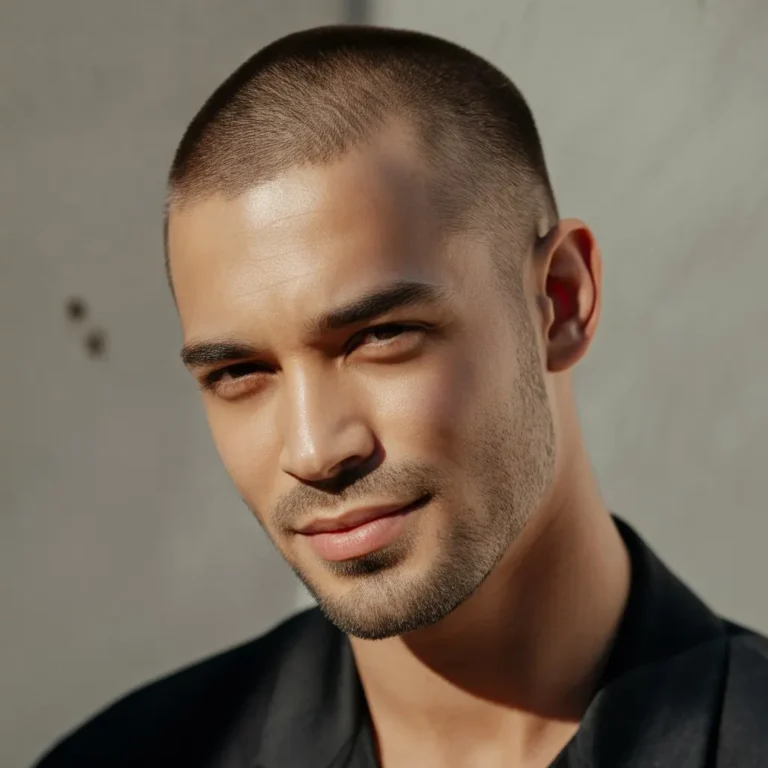
Two Block Haircut 2026: 20 Styles, the Korean Origin Explained, and Exactly What to Tell Any Barber
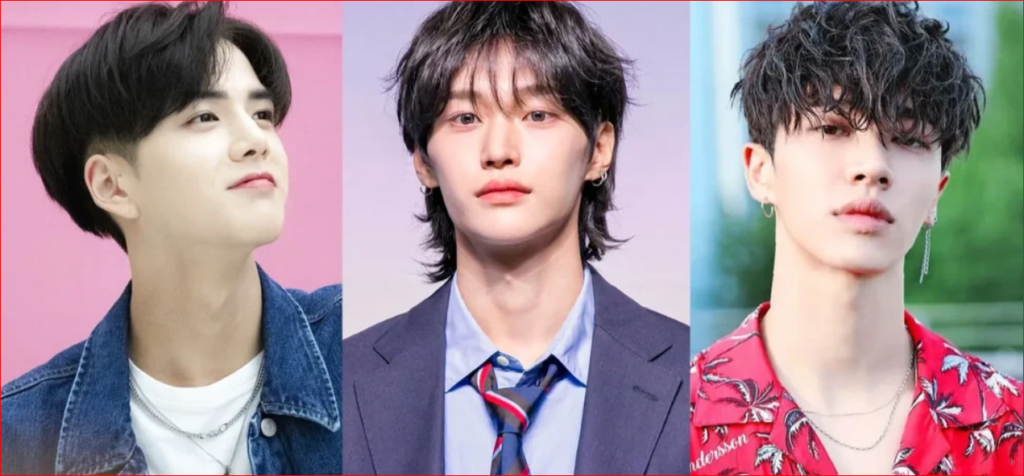
The two-block haircut started in Seoul.
K-pop idols wore it. K-drama actors wore it. Korean stylists spent a decade refining the shape until it became one of the most requested men’s haircuts globally. In 2026 it pulls over 22,000 monthly searches in the United States alone. That number does not include the searches in Japanese, Korean, Tagalog, or Spanish.
The problem is that Korean-cut vocabulary does not always translate cleanly at a non-Korean barbershop. A man walks in, says two blocks, and the barber either looks blank or produces an undercut that is close but not quite right. The disconnect between what was requested and what arrived is the most common two-block complaint online.
This guide covers twenty-two block haircut styles for 2026, the flat hair solution that Reddit keeps asking about, the honest daily styling reality, what to say at any barbershop in any country, and how to grow your hair correctly if it is not long enough yet.
At a Glance
| Need | Best Two-Block Version |
|---|---|
| Most K-pop-inspired | Middle part two block |
| Flat, straight Asian hair | Classic with root-only perm |
| Not Asian hair type | Wavy or textured two-block |
| Professional setting | Two-block low taper |
| School appropriate | Classic or low-taper version |
| Curly hair | Curly two-block cut top dry |
| Maximum contrast | Two blocks with mid fade |
| Boys ages 12 to 18 | Classic or low-taper school rated |
What Is a Two-Block Haircut?
A two-block haircut is a men’s style with a longer top section and short, closely cropped sides and back. The name comes directly from the structure. Two distinct sections, two distinct lengths, with a visible line where they meet. Top block: longer hair that can be styled in multiple directions, fall forward, sweep sideways, or part down the middle. Bottom block: short, clipped, or faded sides and back that keep everything clean.
Unlike a standard fade that blends gradually all the way up, the two blocks create a more deliberate visual contrast between the long top and the short sides. The transition between the two sections is visible rather than completely blended away.
Two Block vs. Undercut, Not the Same
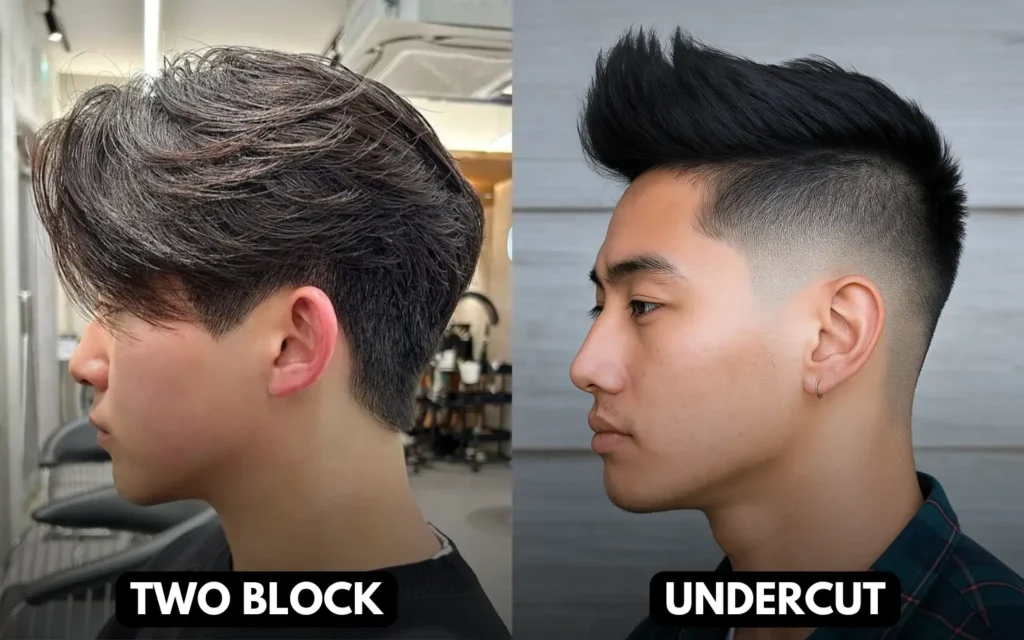
The two blocks and the undercut are confused constantly. They are related but structurally different, and the difference changes both the result and the styling options.
| Two Block | Undercut | |
|---|---|---|
| Transition | Softer, more natural | Hard, disconnected line |
| Aesthetic | Korean, rounded | Western, sharp |
| Wearability | More versatile | More aggressive |
| Top styling | Forward or middle part | Any direction |
| Barber origin | Korean salons | Western barbershops |
The two blocks are the more wearable and accessible version. The softer transition makes it look intentional in most settings rather than extreme.
Is the 2-Block Haircut Still in Style?
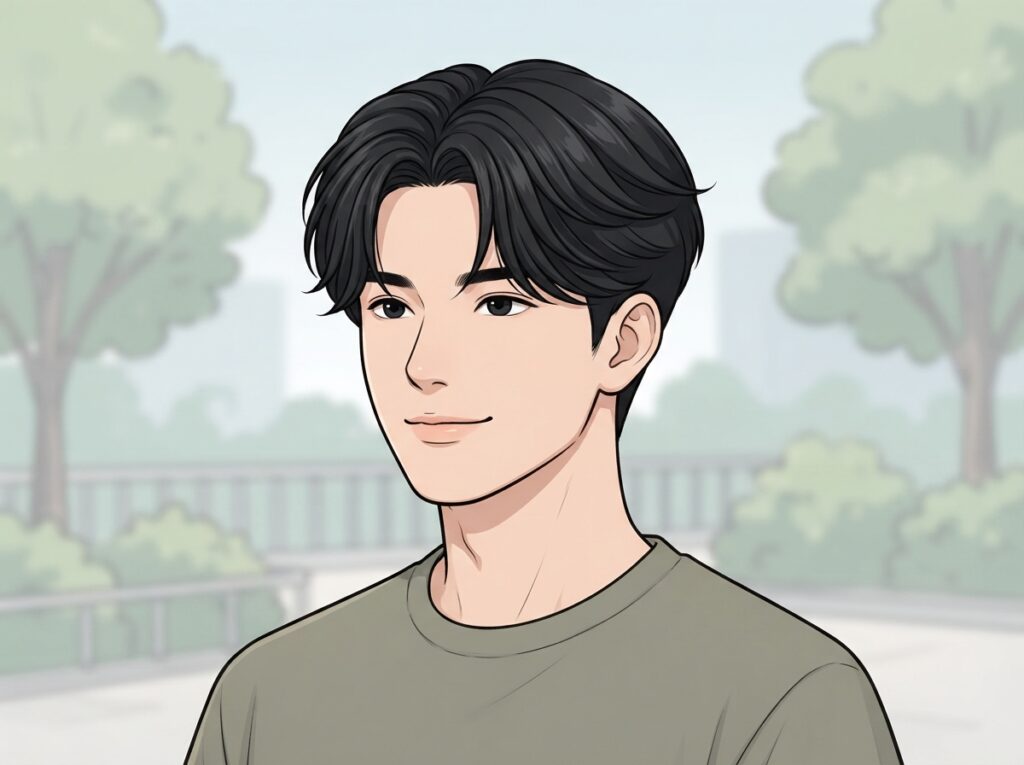
22,200 monthly searches in the US in 2026 confirm that it is. The two blocks are not declining. It is growing, particularly outside Asia, where the K-pop and K-drama cultural exports continue to reach new audiences. Among Gen Z men specifically, the two-block is one of the defining cuts of the decade.
What Is the Gen Z Haircut Called?
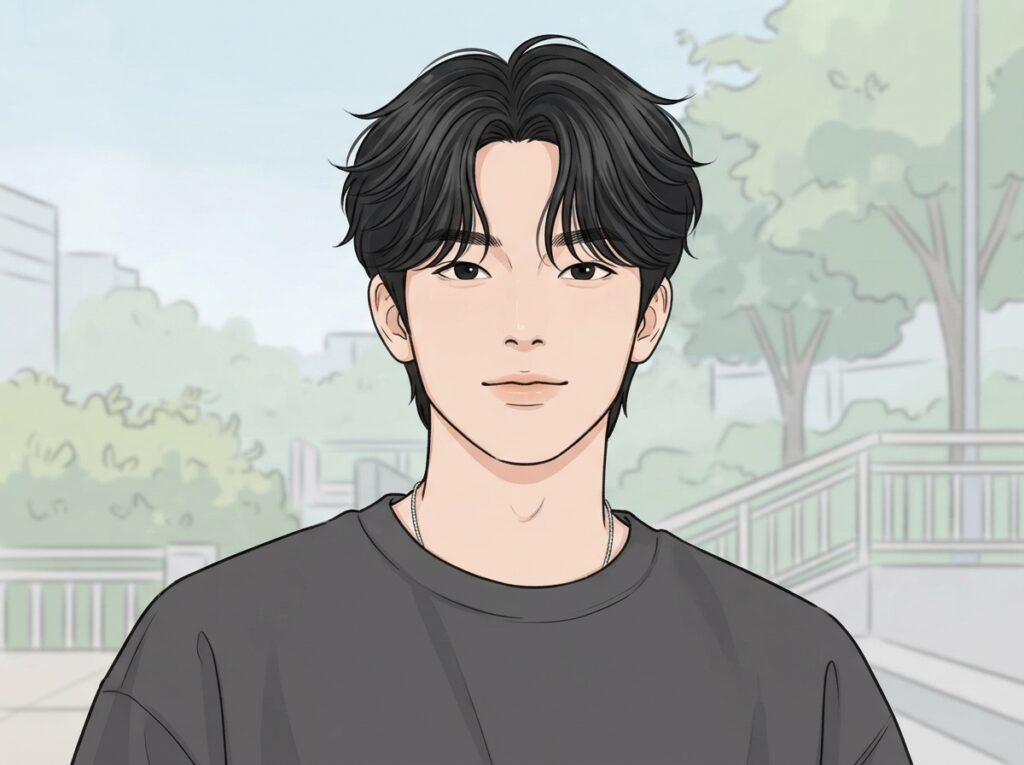
The two-block is one of the defining Gen Z haircuts alongside the textured crop, wolf cut, and curtain bangs. What makes it specifically Gen Z is the philosophy: Korean-influenced softness over Western aggression, natural texture over heavy product, and versatility over commitment to one fixed style.
The Korean Origin of BTS to the Global
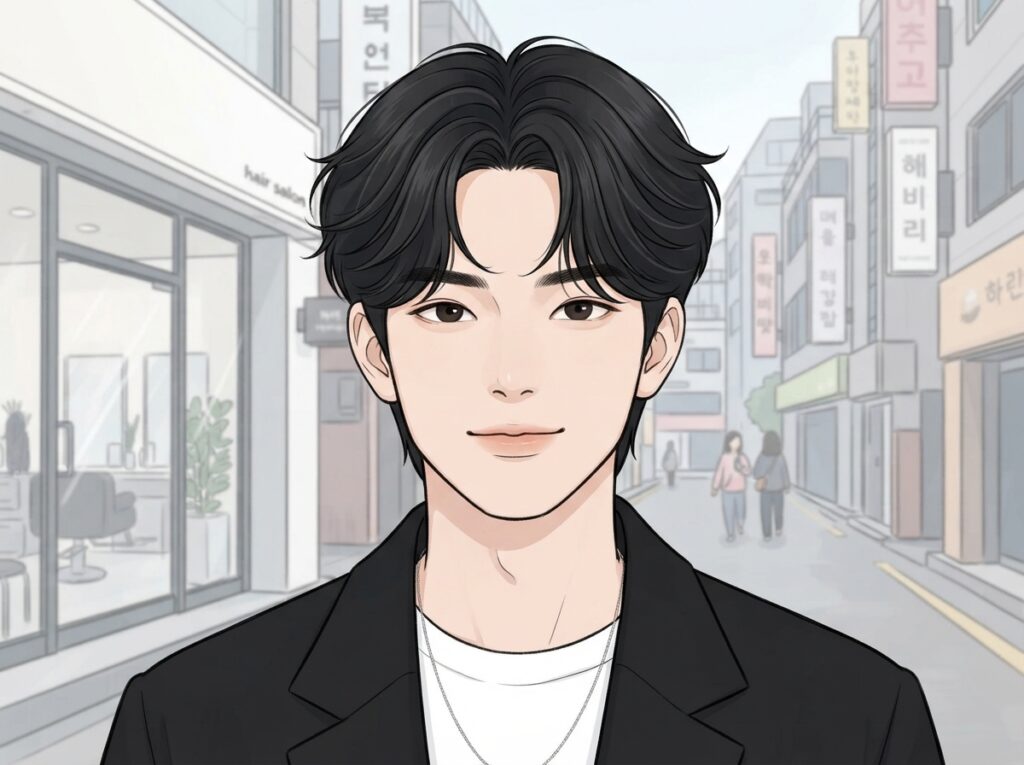
The two-block emerged from South Korean barbershop and salon culture in the early 2010s. K-pop groups BTS, EXO, and BIGBANG brought it to international attention when their idols started wearing variations at live performances and on camera. Hyunjin from Stray Kids popularized the comma hair version. Yeonjun from TXT wore the wolf-style perm variation. Chae Eun-woo made the middle part version famous across multiple markets simultaneously.
By the time the style reached North America and Europe in mainstream form around 2020 to 2022, Korean salons in cities like Los Angeles, London, and Sydney were already reporting it as their most requested men’s cut.
20 Two-Block Haircut Styles for 2026
Classic Korean Two Block
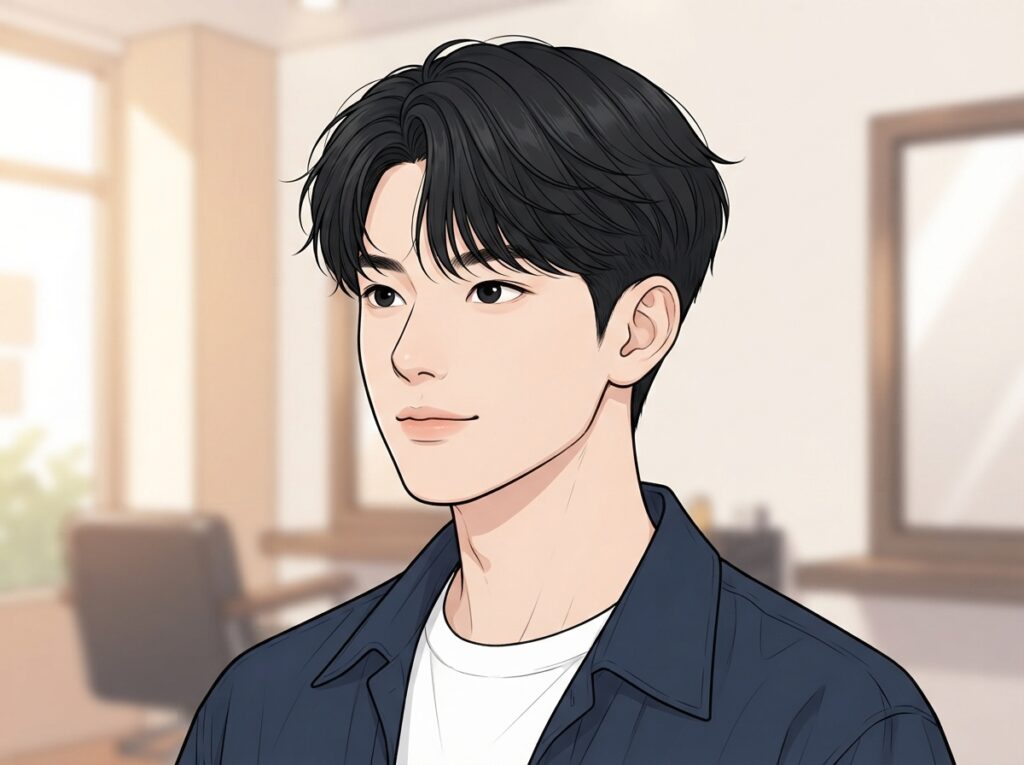
The original. Two to three inches on the top left longer, sides and back clipped closely with a soft transition between the two sections. The top falls forward naturally or can be styled sideways with minimal product. Clean, modern, universally flattering.
Tell your barber, “Two-block haircut.” Keep two and a half inches on top; I want the top section clearly longer than the sides. Clip the sides short but keep a soft transition, not a hard disconnected line. Korean-inspired shape.”
Face shape: Oval and round; the top volume suits both.
Hair type: All best on thick, straight, and wavy.
School safe: Yes, in most settings.
Maintenance: Every 3-4 weeks for sides, every 6-8 weeks for the top.
Style time: 5 minutes matte clay and blow-dry lift at roots.
Two Block Middle Part
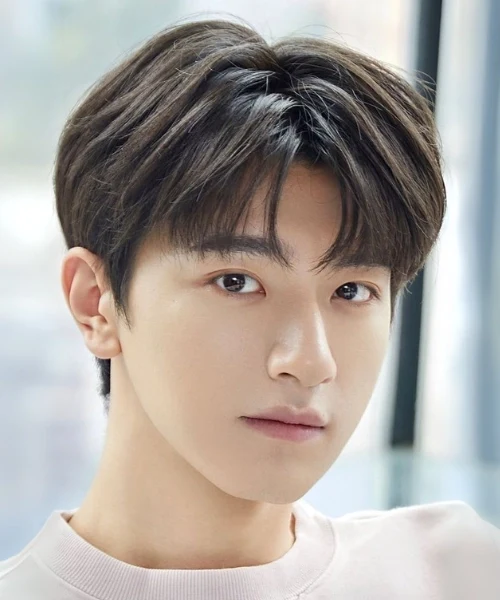
The most K-pop-inspired variation. The center parting divides the top section into two halves that fall symmetrically to each side. The sides stay short in the two-block structure, while the curtain fringe creates the Korean idol aesthetic that drove millions of search results.
Tell your barber, “Two blocks with a center part. Two and a half inches on top, I’ll part it down the middle. Clip the sides soft and short. No hard undercut line.”
Face shape: Oval and oblong; the horizontal middle part adds width that suits both.
Hair type: Straight and slightly wavy straight hair holds the curtain part best.
School safe: Yes.
Maintenance: Every 3-4 weeks.
Style time: 3-5 minutes blow-dry each side outward from the middle part.
Two Block Fade
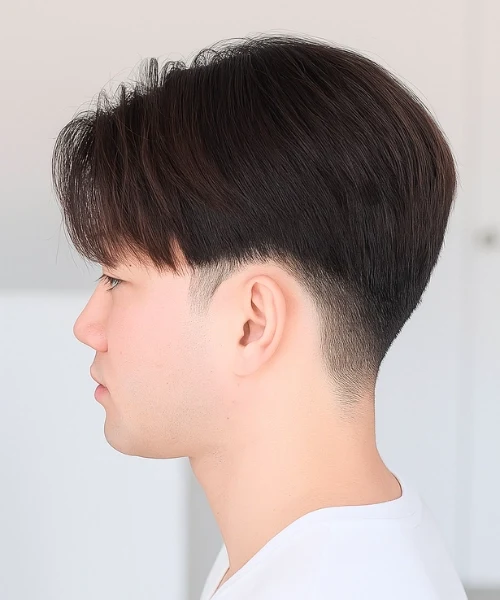
Western barbering technique applied to Korean structure. The sides use a fade rather than a blunt clip, creating a gradual gradient from the short bottom to the long top. The result has more contrast and precision than the classic two-block while keeping the Korean aesthetic on top.
Tell your barber, “Two blocks with a mid fade on the sides. Keep two and a half inches on top for the Korean-inspired top block. Mid fade starting at the temple on the sides.”
Face shape: All.
School safe: Check fade level determines school appropriateness.
For the full mid-fade guide, our mid-taper fade page covers the fade technique.
Two-Block Low Taper
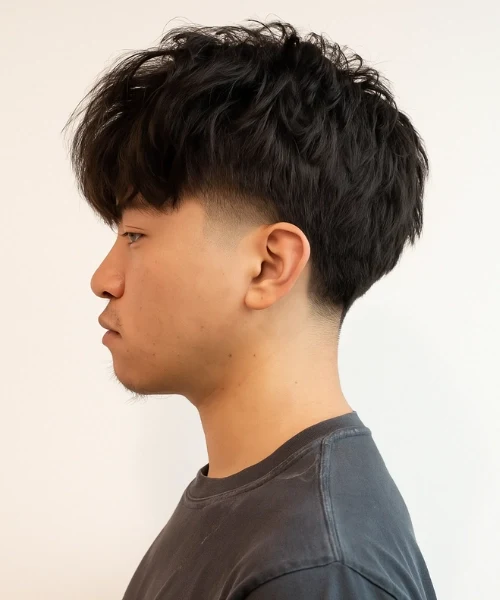
The most conservative and professional version. Low taper on the sides keeps visible hair throughout the gradient with no skin exposure. The two-block structure remains long top, short sides, but the transition is extremely gradual. The version for office environments and school settings.
Tell your barber, “Two blocks with a low taper. Low taper on the sides, no skin. Keep two to three inches on top. Soft transition between the top and sides.”
Office safe: Yes, in every professional environment.
School safe: Yes, universally.
Maintenance: Every 4-5 weeks, most forgiving grow-out.
For the full low taper guide, our low taper fade page covers every conservative variation.
Two-Block Textured Fringe
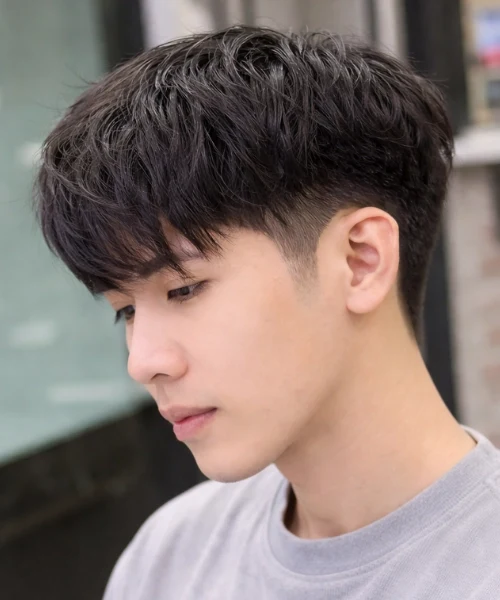
A forward-falling textured fringe on top combined with the two block structures on the sides. The fringe is point-cut for natural separation rather than sitting as a blunt mass. The two block sides provide clean contrast while the fringe adds forward direction and movement.
Tell your barber, “Two blocks with a textured fringe. Keep the fringe at the eyebrow length point-cut for texture and separation. Two block sides soft clip or low taper.”
For the full point-cutting technique, our textured fringe guide covers the fringe method in dedicated depth.
Two-Block Comma Hair
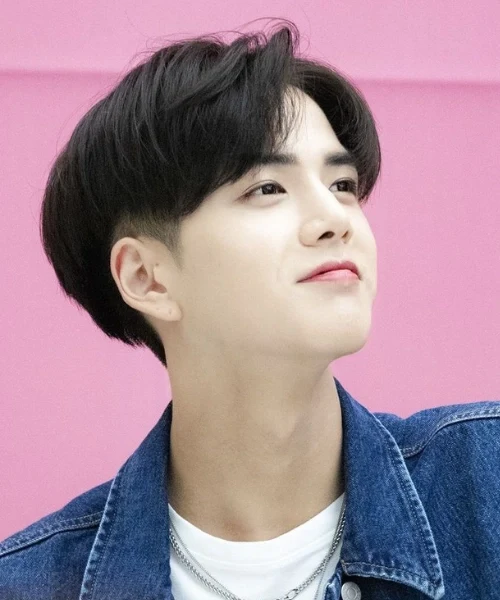
The comma hair variation shapes the fringe into a curved, comma-like fall to one side rather than going straight forward. Hyunjin from Stray Kids popularized this specific version, and it remains one of the most distinctive K-pop-inspired men’s hairstyles globally.
Tell your barber, “Two blocks with comma hair. I want the fringe to curve to one side in a comma shape, not straight forward. Point-cut the fringe. Soft two-block sides.”
Hair type: Straight to slightly wavy; the straight strands hold the comma curve most naturally.
Style time: 5-7 minutes. Blow-dry forward, then curve with a round brush.
Two Blocks with Perm
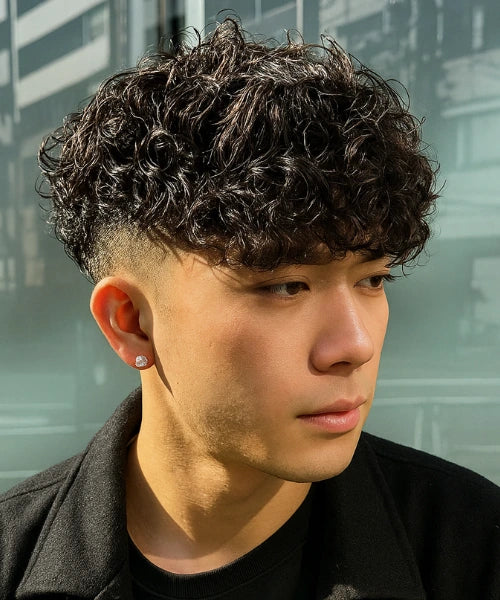
The most popular Korean salon upgrade. A setting perm or down perm applied to the top section adds gentle lift and volume to naturally flat, straight hair. The roots lift away from the scalp and hold their position through the day without the need for constant blow-drying.
The root-only version, where the perm processes only the first two to three centimeters at the roots rather than the entire top section, is the most practical. The ends stay straight enough to style naturally while the roots provide the lift that keeps the top block looking full.
K-pop styling teams run this on almost every idol with silky straight hair. It is the Seoul default for flat-lying straight hair that will not hold volume through a full day.
Tell your barber, “Two blocks with a root-only setting perm. Three to four inches on top. Cut first, perm second, and same appointment if possible. I want the roots to lift but the ends to stay natural.”
How long it lasts: Setting perm holds for three to four months. No special product is needed to maintain daily.
Short Two-Block Haircut

A shorter interpretation where the top section sits at ear length or just below rather than the standard two to three inches. The two-block structure remains, but the overall cut stays closer to the head. More wearable for school and professional environments where significant length draws attention.
Tell your barber, “Short two blocks. Keep the top around an inch and a half to two inches shorter than standard. Soft clip on the sides. Two block structures but compact.”
School safe: Yes, in virtually every setting.
Maintenance: Every 3-4 weeks.
Style time: 2-3 minutes.
Long Two-Block Haircut
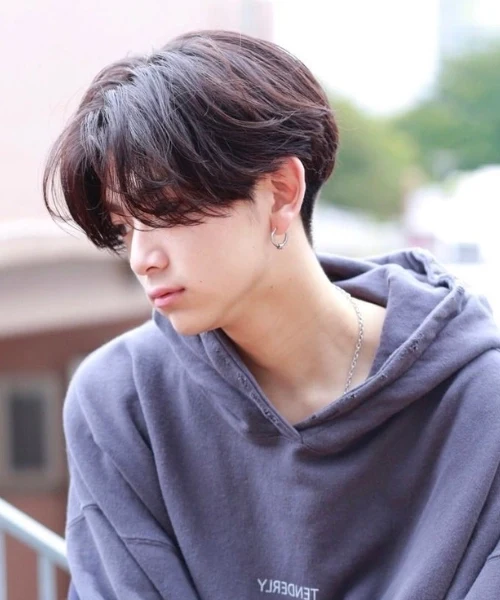
The top section extends to shoulder length or below, while the sides and back remain closely cropped. The contrast between the very long top and the closely clipped sides creates maximum visual impact. This version requires significant length commitment but grows out gracefully at shoulder length; the sides growing out produce a layered look rather than an obviously neglected cut.
Tell your barber, “Long two blocks. Keep the back and sides closely cropped in the two-block structure. Leave the top at its current length; do not trim the top. Only work on the sides.”
Hair type: Works best on thick hair that holds the long top section with natural weight.
Maintenance: Sides every 4 weeks, the top grows freely.
Medium Two-Block Haircut
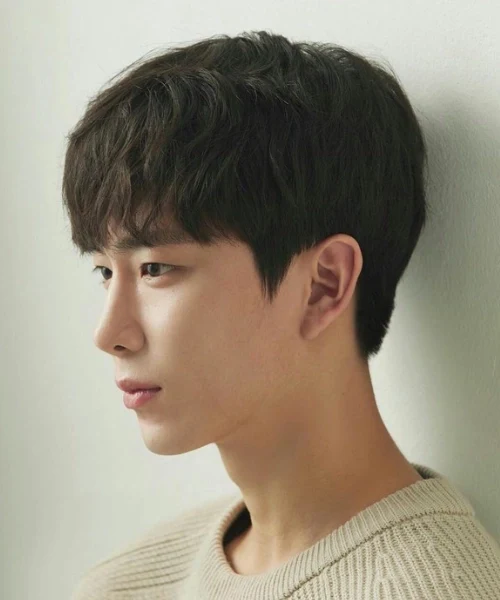
The practical everyday version. The top stays two to three inches longer than the short version and has less commitment than the long version. Most Korean salon clients and K-pop-inspired men outside Asia choose the medium length as their starting point.
Tell your barber, “Medium, two blocks.” Two to two and a half inches on top. Soft clip on the sides. I want the two-block structure but practical for daily life.”
Maintenance: Every 3-4 weeks.
Style time: 4-5 minutes with a blow dryer.
Two-Block Asian Haircut
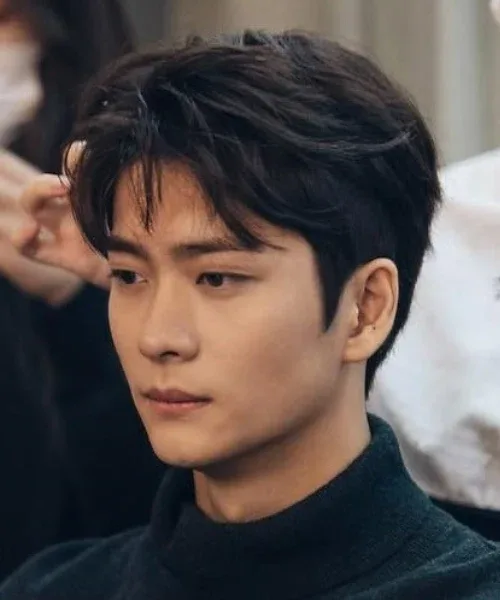
Thick, straight Asian hair is the original two-block canvas. The natural density of the hair holds the top section in position without product. The weight creates the volume, and the texture creates the separation. This version requires the least product and produces the most naturally polished result.
Tell your barber, “Classic two-block for thick, straight Asian hair. ” Three inches on top. Soft clip on the sides, soft transition, not disconnected. If the top falls flat, use point-cutting to remove internal weight.”
Hair type: Thick, straight, the ideal canvas.
Products: Minimal matte clay or texture powder only. The natural hair density does most of the work.
Style time: 3-4 minutes. Blow-dry upward at roots, cool shot.
For the full straight hair guide, our boys’ haircuts for straight hair page covers twenty cuts for this hair type.
Two-Block Straight Hair
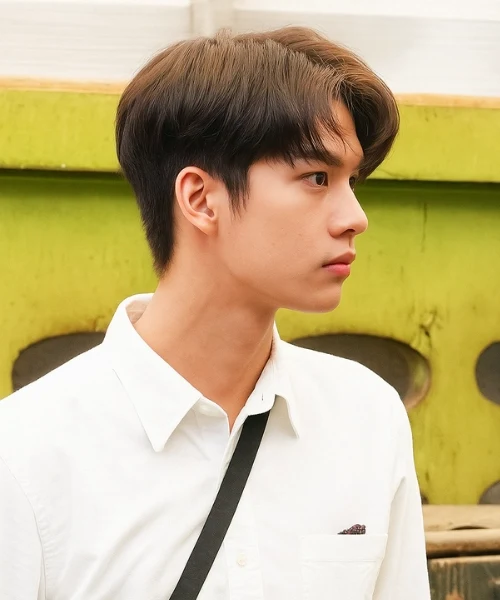
Straight hair across all ethnicities can carry the two blocks. The critical technique is point-cutting on the top section to create separation and movement that straight strands do not produce naturally. Without point-cutting, straight hair two blocks sit flat and look more like an overgrown crop than a deliberate style.
Tell your barber, “Two blocks for straight hair. Point-cut the top heavily. I need the technique to create texture because my hair is straight. Three inches on top. Soft two-block sides.”
Style time: 5-7 minutes for texturizing spray, blow-drying upward, and a cool shot.
Textured Two Block
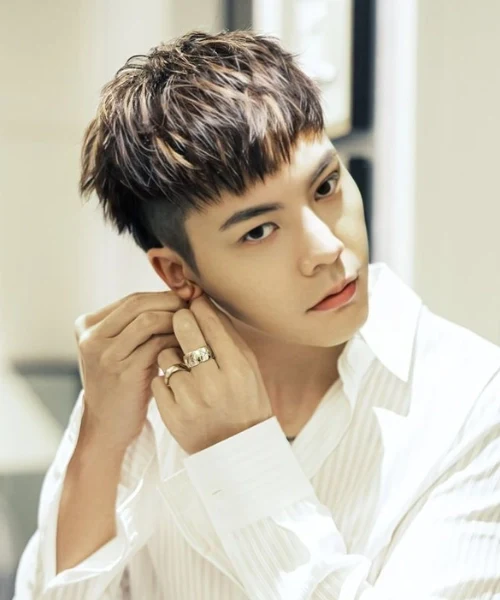
Maximum point-cutting throughout the top section for heavy texture and visible separation. Less smooth than the classic Korean version, more textured and Western-influenced. The sides stay in the two-block structure, while the top has clearly choppy, separated pieces.
Tell your barber, “Textured two blocks. Heavy point-cutting on the top—I want very visible texture and separation. Three inches. Soft two-block sides.”
Style time: 3-4 minutes for matte clay, fingers to separate.
Two-Block Undercut
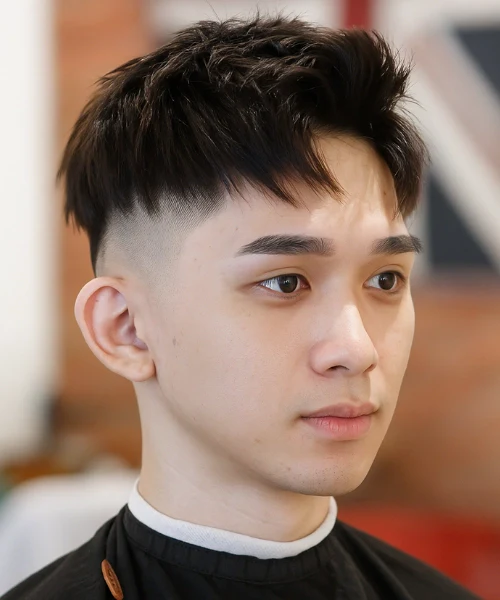
The harder, more Western-influenced version. The transition between the top section and the sides is a deliberate disconnection rather than a soft blend. The line where the two sections meet is visible and intentional. More aggressive than the classic two-block, closer to the traditional Western undercut.
Tell your barber, “Two-block undercut.” I want a clear, visible disconnection between the top and the sides—a defined line, not a soft blend. Three inches on top. Closely clipped sides.”
School safe: Check the hard disconnection occasionally, as it conflicts with school dress codes.
Two-Block Back View
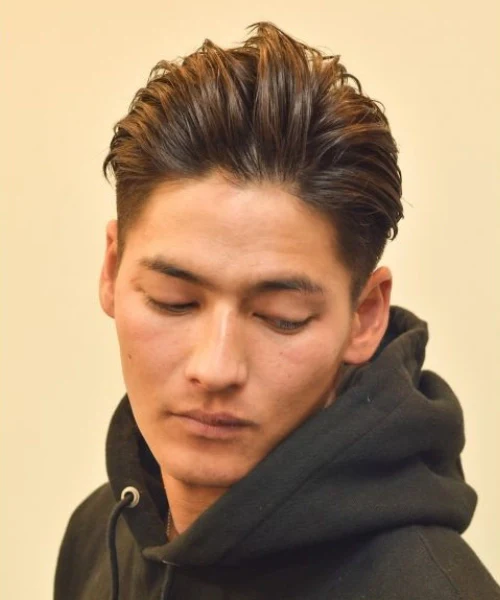
The back of the two-block is as important as the front, but most guides show only front and side views. The neckline and back section determine how the cut sits from behind, and this is where many two-blocks look unfinished.
The back of the two-block should have a clean neckline, either tapered or clipped straight, with the longer top section falling away from the crown clearly. The transition from the closely cropped back to the longer top should be as clean from behind as the sides are from the front.
Tell your barber, “Please check the back transition before finishing. I want the two-block structure to be clean from behind, not just from the front. Clean neckline.”
Two-Block Curly Hair
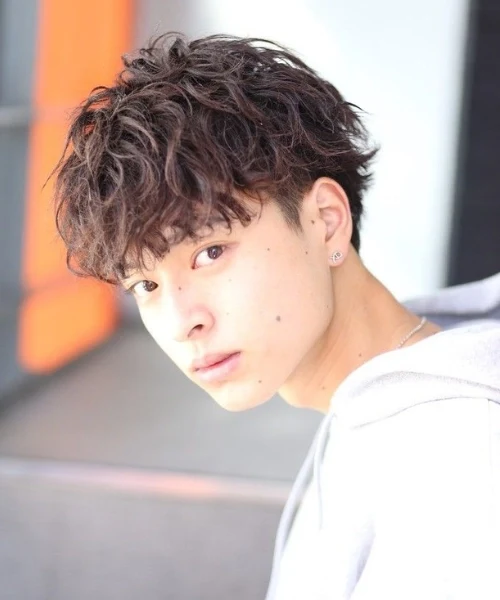
Curly hair produces one of the most effortless two-block results because the natural curl pattern creates volume, separation, and texture automatically. The two-block structure with a long top and short sides looks intentional without the daily styling effort that straight hair requires.
The dry-cut rule applies: curly hair shrinks significantly when wet. Ask the barber to cut the top section dry.
Tell your barber, “Two blocks for curly hair. Please cut the top dry; my curls shrink when wet. Keep three inches on top dry. Soft clip on the sides.”
Style time: Curl cream on damp hair, scrunch, and air dry. Zero daily effort.
For the complete curly guide, our curly hairstyles for men page covers types 2A through 4C.
Two-Block Mullet
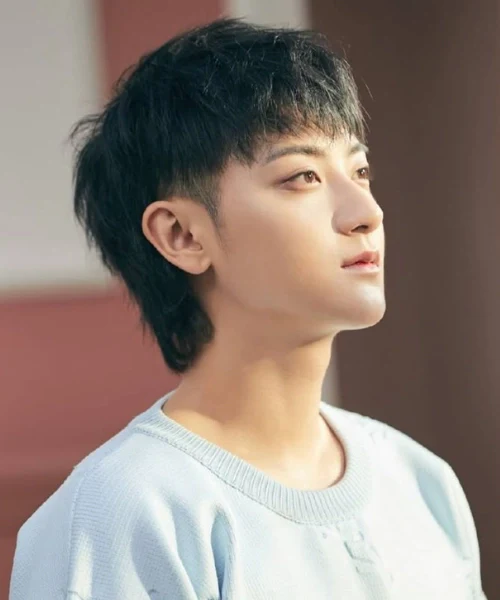
The longer back section of a mullet combined with the two blocks’ clean sides. The front and sides stay in the two-block structure, while the back section grows out to collar length or below. Bold, deliberate, Gen Z coded.
Tell your barber, “Two-block mullet.” Two block structures on the front and sides. Keep the back longer—collar length. Clean neckline.”
For the full mullet guide, our modern mullet page covers the back-length structure.
Two-Block Wolf Cut
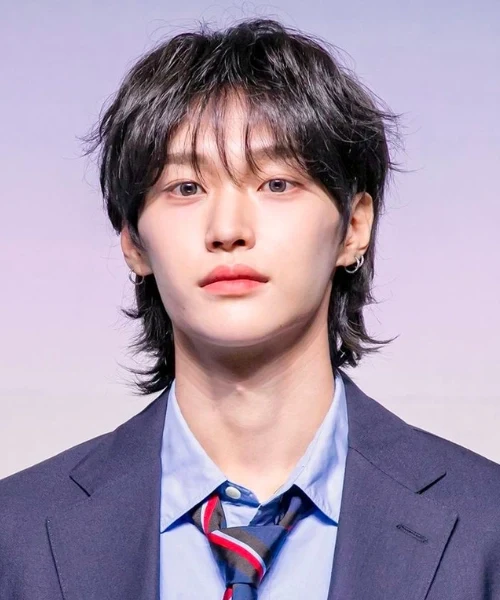
Wolf cut layers on the top section combined with the two block sides. The crown layers create significant volume and texture while the sides stay closely cropped. The result combines the Korean two-block’s clean structure with the wolf cut’s layered, textured top.
Tell your barber, “Two-block wolf cut.” Wolf cut layering on the top short choppy crown layers, longer sides, and back within the top section. Two block sides soft clip.”
For the wolf cut technique, our wolf cut men guide covers twenty variations.
Two Blocks for Boys and Teens
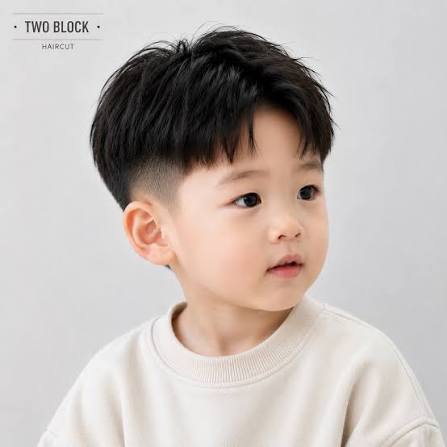
The two-block is one of the most requested haircuts for boys aged twelve to eighteen. The K-pop connection makes it particularly aspirational for this age group. The classic or low-taper version is school-appropriate in most settings.
For boys twelve to fifteen, classic two-block with a soft clip. School-safe in virtually every environment.
For teens sixteen to eighteen, the classic or fade version. School policy is dependent on the fade version.
Tell your barber (for boys): “Two blocks for an [age] year old. Classic version: two inches on top, soft clip on the sides. School-appropriate.”
For the full guides: our teen boy haircuts page and boys’ haircuts hub.
Conservative Two Block
The most restrained interpretation. Minimal length difference between top and sides: one and a half to two inches on top, soft low taper on the sides. The two-block structure is subtle enough to pass every professional and school environment without drawing attention.
Tell your barber, “Conservative, two blocks.” One and a half to two inches on top, I want the two-block structure but subtly. Low taper on the sides. No skin. Office- and school-appropriate.”
School safe: Yes, yes, universally.
Office safe: Yes, in every professional environment.
Maintenance: Every 5-6 weeks.
The Flat Hair Problem: Reddit’s Most Common Two-Block Complaint
Reddit asks this directly: “Asian hair looks too flat and straight; can’t do two blocks.”
This is a real problem, and it has real solutions. Most style guides skip it entirely.
Why Flat Straight Hair Struggles
Thick, straight hair has natural weight that pulls the top section downward. Without curl or wave to create lift from inside the strands, the top block collapses against the scalp within hours of styling. The two block photographs are perfectly fresh and then disappoint by lunchtime, which is exactly what Reddit complained about.
The problem is not the haircut. The problem is the hair’s natural behavior without the right intervention.
Solution 1: Point-Cutting Technique
The barber holds scissors vertically and cuts upward into the top section rather than straight across. This removes internal weight from the mid-section of the top block without shortening the surface length. The result is a top section that no longer holds its own weight flat against the scalp.
Tell the barber, “Please point-cut the top heavily; I need the internal weight removed to stop the top from falling flat.”
Solution 2: Down Perm or Setting Perm
The Seoul default for flat-lying straight hair. K-pop styling teams run this on almost every idol with silky straight hair. A root-only setting perm processes only the first two to three centimeters at the scalp—the perm adds a gentle lift at the roots so the top does not collapse by lunch, while the ends stay straight enough to drape naturally.
The setting perm holds for three to four months and requires no special daily maintenance.
Tell the barber, “Two blocks with a setting perm at the roots only. Three to four inches on top. Cut first, perm second, same appointment.”
Solution 3: Daily Blow-Dry Technique
Apply a lightweight styling cream or sea salt spray to damp roots. Aim the blow dryer upward at the roots, not downward, which presses the hair flat. Lift the roots away from the scalp with the dryer for sixty seconds. Finish with a cool shot to lock the lift.
Total time: four to five minutes. This works on straight hair without any chemical process.
Solution 4: Products
Texture powder applied to dry roots is the fastest single fix. It adds grip and temporary thickness to the hair shaft that allows flat strands to hold their position against gravity. Apply to the roots before any other product. Add a light matte clay after for hold.
Avoid pomade and any shine products on flat, straight hair; they add weight and accelerate the collapse.
Is It Weird to Have a Two Block If You’re Not Asian?
Quora asks this question twice. The answer is no, and the evidence is in the search data.
The Honest Answer
The two-block haircut has gone global. Two block haircut American, two block haircut Filipino, and two block haircut Western—these are all growing search terms. Non-Asian men in the US, UK, Australia, and Europe are requesting it at barbershops regularly, driving those 22,000 monthly searches. The cut did not stay Korean. It spread through the same channels every cultural export travels: music, television, social media, and individual stylists who learned and shared the technique.
What Changes Per Hair Type
The version of the two blocks that works best changes depending on hair type, not ethnicity.
Thick, straight Asian hair holds the classic two-block shape most naturally and requires the least product. Western wavy hair produces an excellent two-block because the natural wave adds texture and volume to the top block. Western curly hair produces arguably the best two-block result of all the curls, creating automatic texture, lift, and separation. Western fine or straight hair benefits from the point-cutting technique or the root-only setting perm, the same as any straight-haired man regardless of background.
Cultural Context
One honest paragraph on this: the two-block came from Korean culture, and Korean stylists developed its most refined variations. Global adoption of a well-designed haircut is not the same as mockery of it. The Korean salon industry actively exports these techniques, trains stylists internationally, and welcomes the global request for their styles. The cut’s global spread is a mark of its quality and adaptability.
Is the Two Block Sustainable? The Honest Styling Reality
Reddit asks the questions nobody else answers: “Is the two-block with the mid part sustainable? Does it require constant styling? Is it only suitable indoors? Do they only look good at the time of the photo?”
Here are the honest answers.
Does It Require Constant Styling?
For straight hair, yes, approximately five to seven minutes of daily blow-drying is needed to lift the roots and hold the top block in position. Without this, flat, straight hair collapses within a couple of hours.
For wavy and curly hair, no. Natural texture creates the lift and separation automatically. Sea salt spray on damp hair and air drying produces a result that holds through the day without touching it.
Is It Only Suitable Indoors?
No. A properly set two-block with a cool shot finish holds through normal daily activity, including commuting, working, and social situations. Wind and significant humidity are the enemies of any hairstyle that relies on lift. Light flexible hairspray after styling provides protection without rigidity.
Do They Only Look Good in Photos?
Partially. A fresh two blocks on the day of the cut or within the first week looks its absolute best and photographs exceptionally well. Weeks three and four into the grow-out phase, they look good but clearly grown. Months without a trim produce a result that no longer reads as two blocks. This is true of essentially all haircuts; they are at their best fresh.
The Two-Block Grow-Out Advantage
The two-block is one of the best-growing-out haircuts available. At weeks four to five, the sides have softened, but the top still has its length and shape; it looks like a slightly grown-out two-block rather than an obviously neglected one. At weeks seven to eight, the sides growing in naturally produce a longer layered look. At week fourteen or beyond, it has transitioned into a natural layered medium-length style.
Compare this to a skin fade: by day fourteen the skin section is visibly growing back patchy. The two blocks at week fourteen still look like a deliberate hairstyle.
Two Blocks by Face Shape
Round Face: The Best Match
The two block adds vertical proportion to round faces through the height of the top block above the closely cropped sides. The combination of a tall top and tight sides elongates round proportions more effectively than most other haircuts.
Oval Face: The Most Flexible
Oval faces suit every two-block variation. The balanced proportions work with any top length and any transition style. The middle part version and the classic version both look particularly strong on oval proportions.
Heart Face: A Good Match
The fringe or middle part variations of the two blocks provide coverage at the forehead, which balances the wider upper face of a heart shape. The comma hair and textured fringe versions suit heart faces particularly well.
Square Face Approached With Care
The two block works on square faces with softer styling. Avoid very hard, disconnected transitions that can emphasize the jaw angularity. The classic soft-transition two-block with a middle part or textured fringe suits square faces better than the undercut variation.
Oblong Face Short to Medium Top
On oblong faces the two block works best when the top section stays at medium length rather than very long. Very long top sections add height that elongates an already long face. Keep the top at two to two and a half inches and avoid significant crown volume.
How to Ask for a Two-Block at Any Barbershop
The Problem at Non-Korean Barbershops
Korean-cut vocabulary does not always translate at a non-Korean barbershop. A barber trained in Western techniques knows undercuts, fades, and tapers. The term “two block” may produce a blank look or a close-enough approximation that misses the soft transition and Korean aesthetic.
The solution is to describe the structure rather than name the style.
Universal Two-Block Script
“Two block haircuts. Keep two to three inches on top. I want the top section clearly longer than the sides and back. Clip the sides short but keep a soft transition rather than a hard, disconnected line. I want a Korean-inspired shape rather than a Western undercut. The difference is the softness of the transition.”
That description covers the three elements a barber needs: the top length, the side treatment, and crucially the soft transition that distinguishes the two blocks from the undercut.
Scripts Per Variation
Classic: “Two blocks. Two and a half inches on top. Soft clip on the sides. Korean aesthetic.”
Middle part: “Two blocks with a center part. Two and a half inches on top parted down the middle. Soft clip on the sides.”
With fade: “Two blocks with a mid fade. Two and a half inches on top. Mid fade on the sides starting at the temple.”
Conservative: “Two blocks, conservative version. One and a half inches on top. Low taper—no skin. Soft transition.”
With perm: “Two blocks with a root-only setting perm. Three inches on top. Cut first, perm second. I want root lift without curl in the ends.”
What If the Barber Does Not Know the Name?
“You can call it a Korean undercut or a disconnected taper, but the key difference from a regular undercut is the softness of the transition. I want the sides and top to have a visible contrast but a soft blend, not a hard cut line. Bring two photos, one front view and one side view.”
How Long Does a Two-Block Last?
The sides need attention every three to four weeks. The top section can go six to eight weeks between trims because the two blocks rely on the top being longer than the sides, and the top grows slowly relative to how quickly the sides need refreshing. If a perm was added, the perm itself lasts three to four months before a refresh is needed.
How to Grow Your Hair for Two Blocks
Quora asks, “I have short hair. My goal is two blocks. How should I trim my hair so it does not look bad before it is long enough?”
This is a real concern, and the grow-out phase is genuinely awkward without the right approach.
The Honest Timeline
The top section needs two to three inches to produce a proper two-block. From a standard shortcut of half an inch, reaching that length takes approximately three to five months depending on the individual’s hair growth rate.
Months one and two: the top is growing but still too short for a two-block. It looks like a slightly long shortcut.
Month three: the top is approaching an inch and a half. A proto-two block shape is possible; ask the barber to clip the sides while leaving the top entirely alone.
Months four to five: two to three inches on top is achievable. The first proper two-block cut is possible.
What to Tell the Barber During Grow-Out
“I am growing my hair for a two-block haircut. Please only trim the sides and neckline. Leave the top section completely untouched. My goal is two and a half to three inches on top.”
This instruction prevents the most common grow-out mistake: barbers instinctively tidy the top section when it looks uneven during the awkward phase.
Products During the Awkward Phase
Sea salt spray adds texture and body to the growing top section that makes the awkward length look deliberate rather than neglected. Light matte clay pressed through damp hair before drying holds the growing strands in the forward direction that the eventual two blocks will need. A headband during exercise keeps the growing fringe off the face without disrupting the growth direction.
Two Block School Safety Guide
| Version | School Safe |
|---|---|
| Classic two-block, soft clip | Yes, most settings |
| Two-block low taper | Yes, universally. |
| Two blocks with fade | Check school policy. |
| Two blocks with a hard undercut line | Check school dependency. |
| Two blocks with design | Usually not permitted |
For the full school safety guides: our boys’ haircuts hub covers every age from seven to eighteen. The teen boy haircuts guide covers the full teen range with school ratings.
Browse More Related Guides
For the fringe version of the two-block top section, our textured fringe guide covers the fringe technique with point-cutting explained.
For the layered top version, our wolf-cut men’s guide covers the layering technique across twenty variations.
For fade alternatives on the sides: our low taper fade page, mid taper fade guide, and drop fade page.
For curly hair: our curly hairstyles for men guide covers types 2A through 4C.
Not sure which version suits your face shape? Our teen haircut finder quiz takes sixty seconds.
Frequently Asked Questions
What is a 2-block haircut?
A two-block haircut is a men’s style with two clearly distinct sections: a longer top block and short, closely cropped sides and back. The name comes from this two-section structure. The top can be styled in multiple ways, including a center part, forward fringe, or comma hair variation. The sides are clipped or faded short with a softer transition than a Western undercut. It originated in South Korean barbershop and salon culture and spread globally through K-pop and K-drama influence.
What do I tell my barber for a two-block?
Say: “Two-block haircut.” Keep two and a half to three inches on top; the top section should be clearly longer than the sides. Clip the sides short but keep a soft transition, not a hard disconnected line. Korean-inspired shape rather than a Western undercut. “If the barber does not know the name, describe it as a Korean undercut with a soft transition rather than a hard line. Always bring a front photo and a side photo.
How long does a 2-block last?
The sides need a trim every three to four weeks. The top section can go six to eight weeks without trimming because the two blocks require the top to be longer than the sides, and the top grows slowly relative to how quickly the sides need refreshing. A root-only setting perm, if added, lasts three to four months before a refresh is needed.
Is the 2-block still in style?
Yes. Over 22,000 monthly searches in the US alone in September 2026 confirm it. The two-block is growing globally, not declining. It remains one of the most requested cuts at Korean salons worldwide and is increasingly common at mainstream barbershops outside Asia.
What is the Gen Z haircut called?
The two-block is one of the defining Gen Z men’s haircuts of 2026, alongside the textured crop, wolf cut, and curtain bangs. It represents the Gen Z philosophy of Korean-influenced softness over Western aggression, natural texture over heavy product, and versatility over commitment to one fixed style.
Is a 2-block just an undercut?
No. The two blocks and the undercut share the same basic structure—longer top, shorter sides—but differ significantly in execution. The two blocks use a softer, more natural transition between the top and sides. The undercut uses a hard disconnected line. The two-block has a rounded, Korean aesthetic. The undercut has a sharper, Western aesthetic. The two blocks are the more wearable and versatile of the two.
What face shape suits a 2-block haircut?
Round faces benefit most from the two-block because the top volume adds vertical length to round proportions. Oval faces suit all versions equally. Heart faces benefit from the fringe or middle part variations that balance the forehead. Square faces suit the softer transition versions. Oblong faces suit shorter top lengths that avoid adding extra height.
Which hairstyle attracts girls?
Studies on physical attractiveness consistently show that clean, well-maintained, intentional haircuts rate positively. The two blocks specifically signal cultural awareness, grooming investment, and a modern approach to personal style. The freshness of the cut matters; a fresh two-block read is deliberately styled and maintained.
How to cut a 2-block haircut?
The barber creates a horizontal parting from temple to temple across the top of the head. Everything below this line is closely clipped or faded. The section above this line is left at the desired top length and point-cut for texture and movement. The transition between the two sections uses a soft blend rather than a hard, disconnected line for the Korean two-block aesthetic.
Is it weird to have a two block if you’re not Asian?
No. The two-block has gone global. Non-Asian men across the US, UK, Australia, and Europe request it regularly. The cut adapts to different hair types; wavy and curly hair types produce excellent two-block results with natural texture. The Korean origin is the cut’s strength, not a restriction on who can wear it.
How do I grow my hair for a two-block?
From a shortcut, reaching two to three inches on top takes three to five months. Tell the barber at every appointment, “I am growing for a two-block-only trim of the sides and neckline; leave the top completely alone.” Use sea salt spray during the awkward phase to add texture that makes the growing length look deliberate. The true two-block shape becomes possible around month four to five.
Is the two-block sustainable for daily styling?
Straight hair requires five to seven minutes daily with a blow-dryer to maintain the top block lift. Wavy and curly hair does not have a natural texture that creates the lift automatically with minimal product. Wind and humidity are the main enemies. Light flexible hairspray after styling extends the hold through outdoor conditions.
Can flat Asian hair do a two-block?
Yes—with the right technique. Point-cutting removes internal weight from the top section so it holds its position against gravity. A root-only setting perm adds gentle lift at the roots for three to four months without affecting the ends. Daily: texturizing spray and blow-drying upward at the roots with a cool shot to lock the lift. The flat hair problem is solvable. It is one of the two most common block concerns, and it has four specific solutions.
Is a two-block school appropriate?
The classic two-block with a soft clip and the low-taper version are school-appropriate in virtually every setting. The version with a hard undercut line or a skin fade may need a school policy check. Any version with a shaved design is usually not permitted by school dress codes.
The two-block haircut started in Seoul. It spread through music and television and social media until it became one of the most searched men’s haircuts in the US in 2026. The challenge was never the cut. The challenge was always the translation of getting the right result at a barbershop that learned its vocabulary from a different tradition.
The structure is two sections. Long top, short sides, soft transition. The fringe goes where you decide. The sides stay consistent. The grow-out is one of the most graceful of any men’s haircut currently in rotation.
Pick the version matched to your hair type from this guide. Use the universal script rather than the name if your barber looks uncertain. Bring two photos. Tell them a soft transition, not a hard line.
For the fringe technique, our textured fringe guide covers the point-cutting method. For boys and teens, our boys’ haircuts hub covers every age from seven to eighteen.