Mid Taper Fade: Complete 2026 Guide with 20 Styles, Barber Scripts, and the Five Variables Every Barber Needs
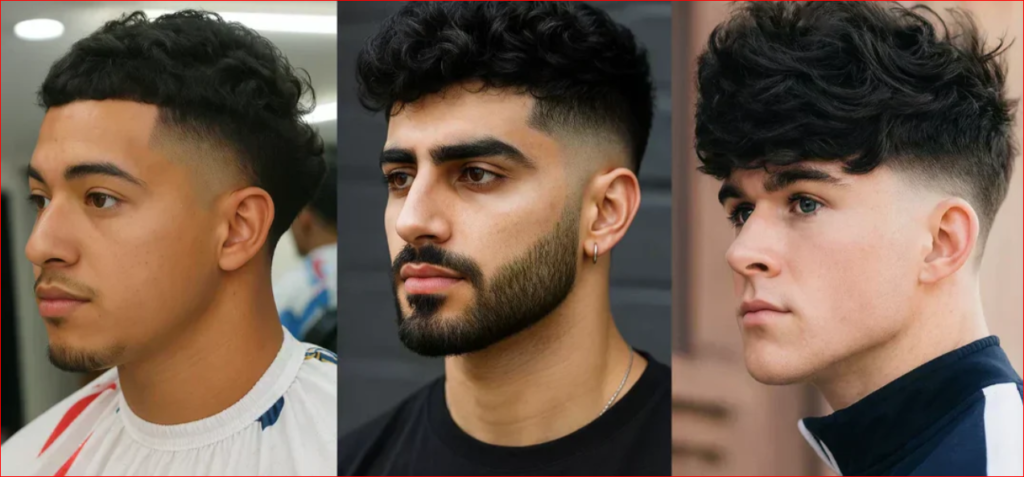
Walk into any barbershop and say, “Give me a taper.” This is what most barbers reach for.
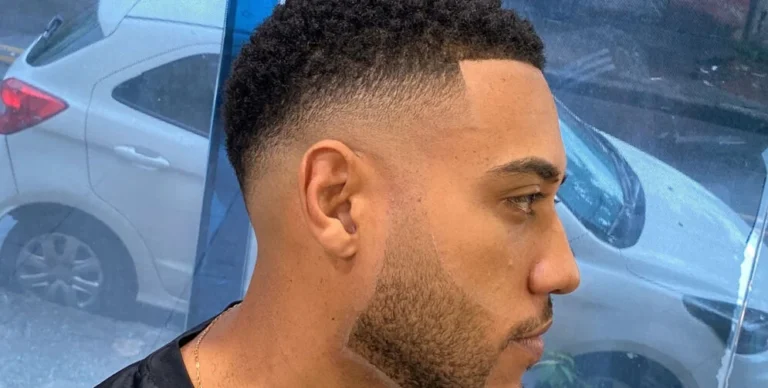
The mid taper fade is the default recommendation, not because barbers are lazy, but because it is genuinely the most balanced, versatile, and universally flattering fade level that exists. It starts at the temple, blends gradually downward, and leaves enough contrast to look deliberately styled without being aggressive enough to conflict with any setting.
It looks professional on Monday. It looks sharp on Friday night. It grows out over four to five weeks rather than going patchy in two. That combination is why it is the most requested haircut in barbershops across the US and UK right now.
Stuck between mid-fade vs. mid-taper and not sure which to ask for? You are not alone. This is one of the most common questions in barbershop waiting rooms and Reddit threads. The answer and the exact words to say to your barber are in this guide.
Build Your Perfect Mid Taper
Answer 7 quick questions. Get your exact mid taper version, bottom guard, top style, maintenance plan, and barber-ready script.
| Situation | Best Mid-Taper Version |
|---|---|
| First time getting a taper | Classic mid-taper balanced starting point |
| Straight hair | Mid taper with textured top |
| Curly hair | Mid taper with curls cut dry |
| Office professional | Conservative mid-taper, number 2 guard |
| School-safe | Standard mid taper, no skin |
| Bold weekend | Mid-skin fade or mid-taper with design |
| Beard combination | Mid taper blended into beard |
| Boys ages 10-18 | Mid taper, school-appropriate version |
What Is a Mid-Taper Fade?
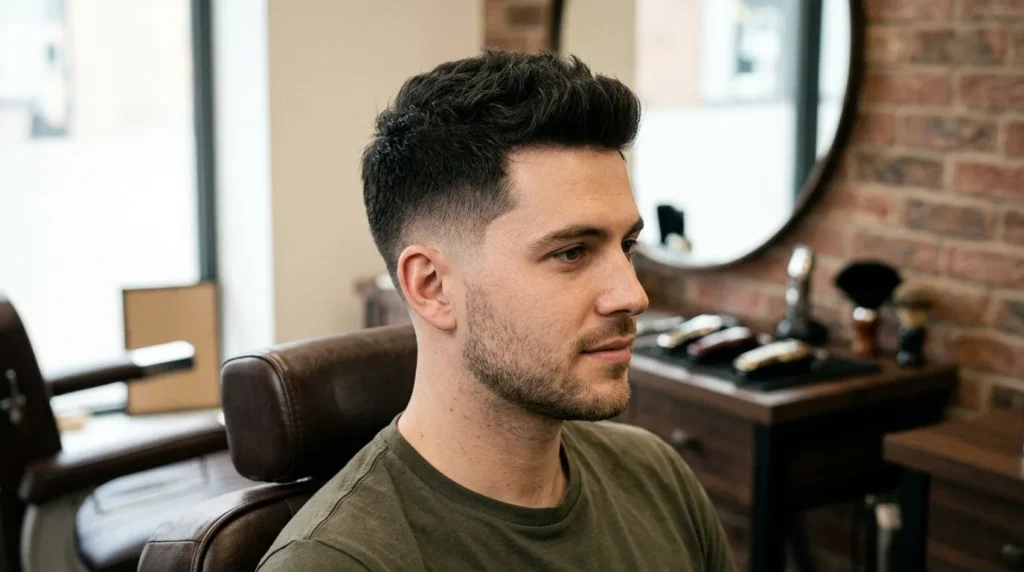
A mid taper fade is a haircut where the hair gradually shortens starting at the temple, approximately one and a half to two inches above the ear, and blends smoothly downward toward the neckline and sideburns. The word “mid” describes where the fade starts vertically on the head, not how dramatic the contrast is.
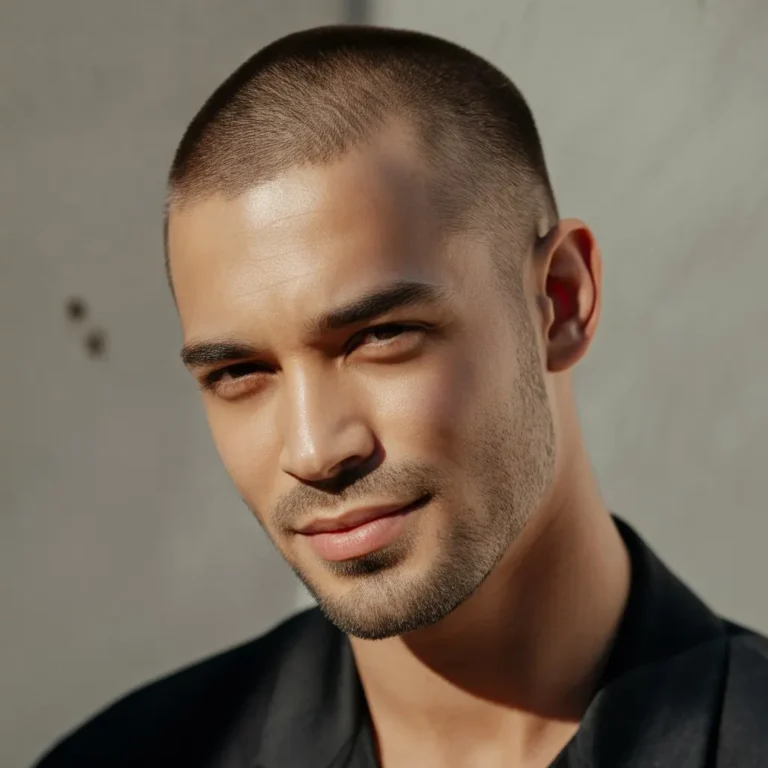
Unlike a skin fade that goes all the way to a bare scalp, a traditional mid taper keeps visible hair throughout the gradient. The blend transitions from the shorter sections near the neckline upward to the longer hair on top, creating a clean, polished silhouette without the severity of a high fade or the subtlety of a low taper.
The Five Variables That Define Every Mid-Taper Fade
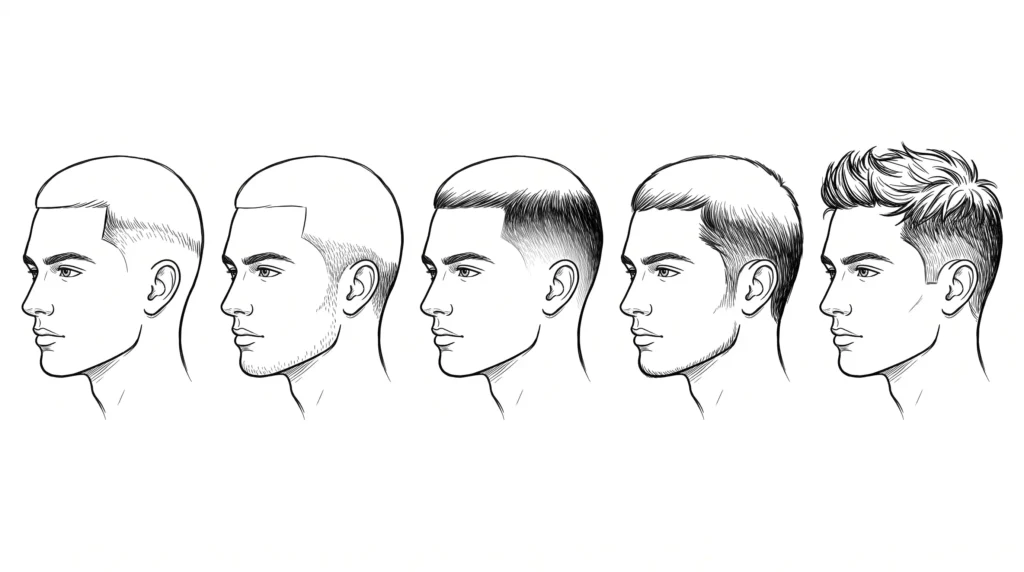
Every guide explains “where the fade starts.” Almost none explain the full picture. The mid taper has five variables; understanding all five is the difference between getting what you pictured and getting something close-but-not-it.
Variable 1: Where it starts. Mid means the temple roughly one and a half to two inches above the ear. This is the anchor point. Everything else adjusts around it.
Variable 2: How short it goes at the bottom. The lowest section can be a number 1 (3 mm), a 1.5 (4.5 mm), or go all the way to the skin. A traditional mid taper uses a number 1 or 1.5. A mid-skin fade uses a 0 or 0.5.
Variable 3: How smooth the blend is. The gradient between guard sizes can be very gradual, nearly invisible, or more stepped with slightly visible transitions. Most mid-tapers aim for invisible blending.
Variable 4: How fast it grows out. Shorter at the bottom means faster visible grow-out. A mid taper using a number 1.5 at the lowest looks clean for four to five weeks. A mid-skin fade looks clean for two to three.
Variable 5: Which top style it pairs with. The mid taper is the base. The top can be anything textured—crop, blowout, curtain bangs, quiff, long flow, or a simple natural length. The fade works with every top style.
Mid Taper vs. Mid Fade The Terminology Battle
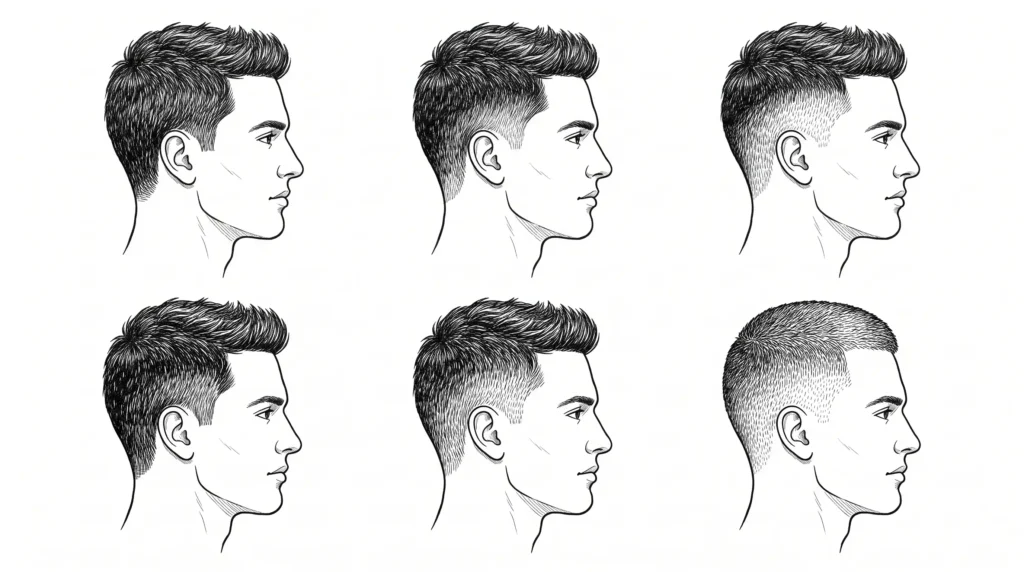
Reddit asks this regularly: “Anybody else hate when people call a taper a ‘taper fade’???” The frustration is real and the confusion is widespread.
| Mid-Taper | Mid Fade | |
|---|---|---|
| Bottom section | Keeps visible hair | Can go to bare skin |
| Contrast level | Moderate | Moderate to sharp |
| Grow-out | 4-5 weeks | 3-4 weeks |
| Setting | Professional + casual | Mainly casual |
| Feel | Polished, natural | Sharp, deliberate |
A taper keeps some visible length throughout the gradient. A fade can go to skin. In practice most barbers use these terms interchangeably, which is why Reddit is frustrated. When you sit down, what matters is specifying the guard number at the bottom, not the exact terminology.
Low vs. Mid vs. High Taper: The Level Comparison
The level determines where the fade starts, not how dramatic it looks.
Low taper: Starts just above the ear. The most conservative option. Reads as a clean professional haircut from across the room rather than as a visible fade.
Mid taper: Starts at the temple. The Goldilocks option has more presence than a low fade and less drama than a high fade. This is what most barbers default to.
High taper: Starts near the crown. The most dramatic contrast. Very modern, very visible. More frequent maintenance required.
What Does a 3:2:1 Fade Look like?
The 3:2:1 refers to guard numbers across the three zones of the fade. Guard 3 (9mm) at the top of the fade zone where the hair is longest. Guard 2 (6mm) in the middle section. Guard 1 (3 mm) at the lowest point near the natural hairline. The barber blends between these three points to create an invisible transition. On a mid taper, this gradient runs from temple level down to the neckline and sideburn area.
20 Mid-Taper Fade Styles for 2026
Classic Mid-Taper Fade
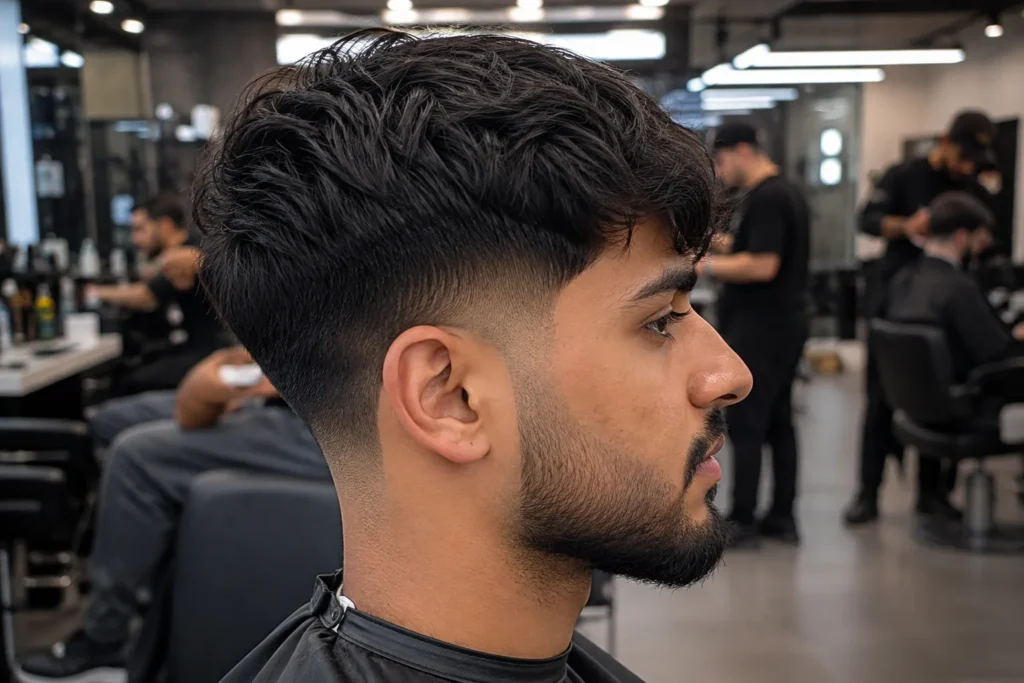
The default. Temple start, number 1.5 at the lowest blending to 3 at the top of the fade zone, two to three inches on top styled naturally or slightly forward. This is what most men get when they say “a taper” without specifying further. It works in every setting, suits every face shape, and grows out cleanly for four to five weeks.
Tell your barber, “Classic mid-taper fade.” Start at the temple about an inch and a half above the ear. Number 1.5 at the lowest, blending to 3. Keep two and a half inches on top. Even blend all the way around.”
Face shape: All universally flattering.
Hair type: All.
School safe: Yes.
Guard numbers: 1.5 at lowest, blend to 3.
Maintenance: Every 4-5 weeks.
Style time: Under 2 minutes.
Mid-Taper Fade on Straight Hair
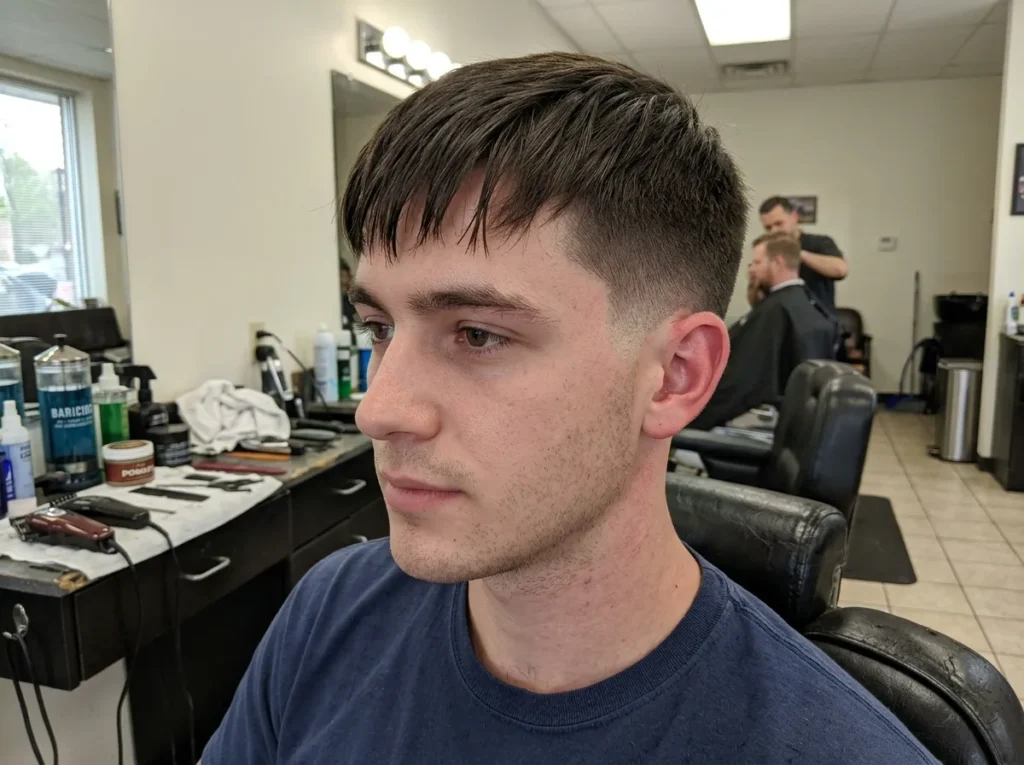
Straight hair is the most common hair type paired with a mid taper. The clean lines of the fade stay crisp longer on straight hair because the strands lie consistent and flat. The top needs texture through point-cutting or natural movement. Straight hair’s lack of natural volume means the top style choice matters more here than on wavy or curly hair.
Tell your barber, “Mid taper fade for straight hair. Temple start. Number 1.5 at the lowest, blend to 3. Two inches on top point-cut for texture. Cut the top dry so we can see where it falls.”
Face shape: All particularly strong on oval and oblong.
School safe: Yes.
Style time: 90 seconds — light clay forward.
Maintenance: Every 4-5 weeks.
For twenty cuts designed specifically for straight hair, our boys’ haircuts for straight hair guide covers every option with barber scripts.
Mid-Taper Fade with Middle Part
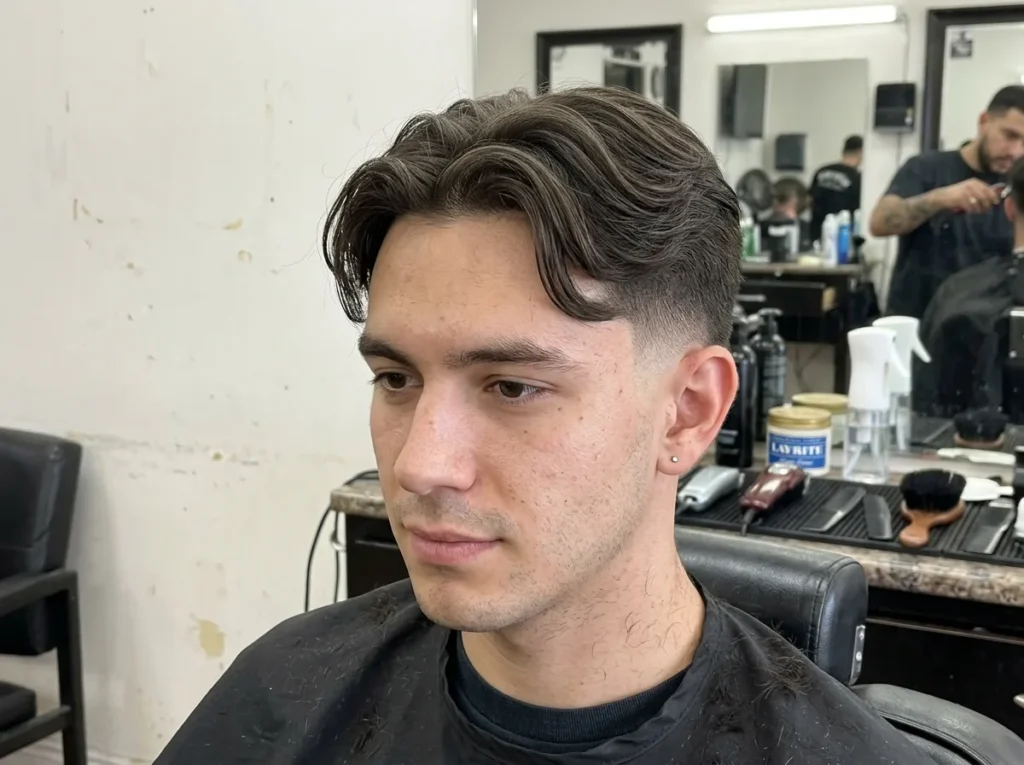
Center parting with the hair falling to both sides, the curtain bang version of the mid taper. The middle part emphasizes the symmetry of the face and works well on oval and oblong proportions. The mid taper keeps the sides clean, while the parted top adds direction and movement.
Tell your barber, “Mid taper fade with a center part. Temple start. Number 1.5 to 3 blend. Three inches on top, I want to style a center part with the hair falling to each side.”
Face shape: Oval and oblong.
Hair type: Straight and wavy.
School safe: Yes.
Maintenance: Every 4-5 weeks.
Style time: 2 minutes light cream, fingers to part.
Mid-Taper Fade Short Hair
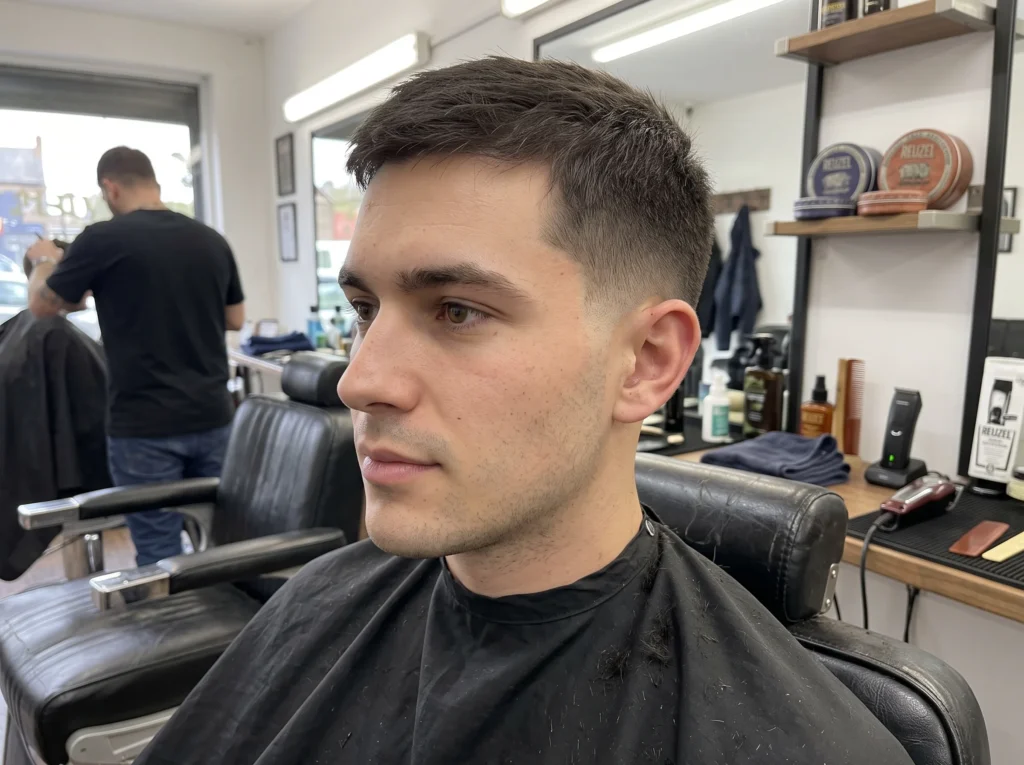
Short top around one and a half inches with a clean mid taper on the sides. The total cut stays close to the head. Low-maintenance version of the mid taper that requires almost no daily styling and works for active men who want to look deliberate without spending time on their hair.
Tell your barber, “Mid taper fade. Short top: keep it to an inch and a half. Temple start. Number 1.5 at the lowest, blend to 3.”
School safe: Yes, universally.
Maintenance: Every 4 weeks.
Style time: Zero.
Mid-Taper Fade with Textured Top
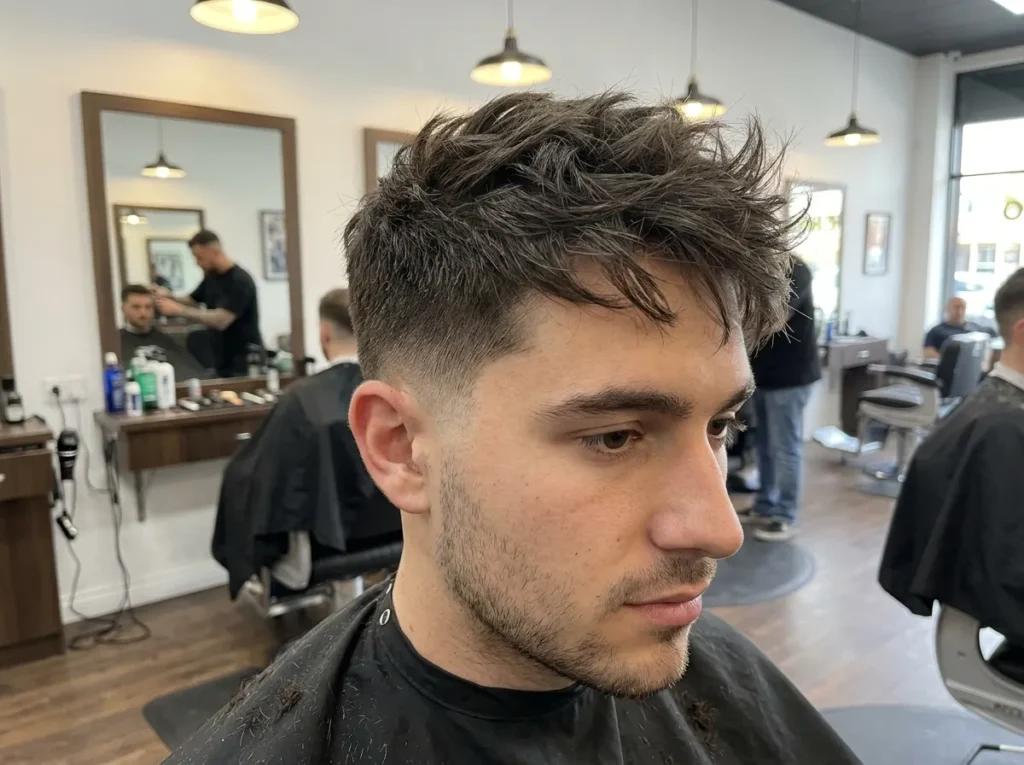
The most requested combination. Mid taper on the sides with two to three inches of point-cut textured hair on top. The texture creates movement and separation that makes the fade look more intentional. This is what most people are actually asking for when they reference photos of mid-taper fades without specifying the top style.
Tell your barber, “Mid taper fade with textured top. Temple start. Number 1.5 to 3 blend. Two and a half inches on top point-cut for texture. Cut the top dry.”
Face shape: Round and oval.
Hair type: All best on wavy and straight.
School safe: Yes.
Maintenance: Every 4-5 weeks.
Style time: 90 seconds.
Mid-Taper Fade on Curly Hair
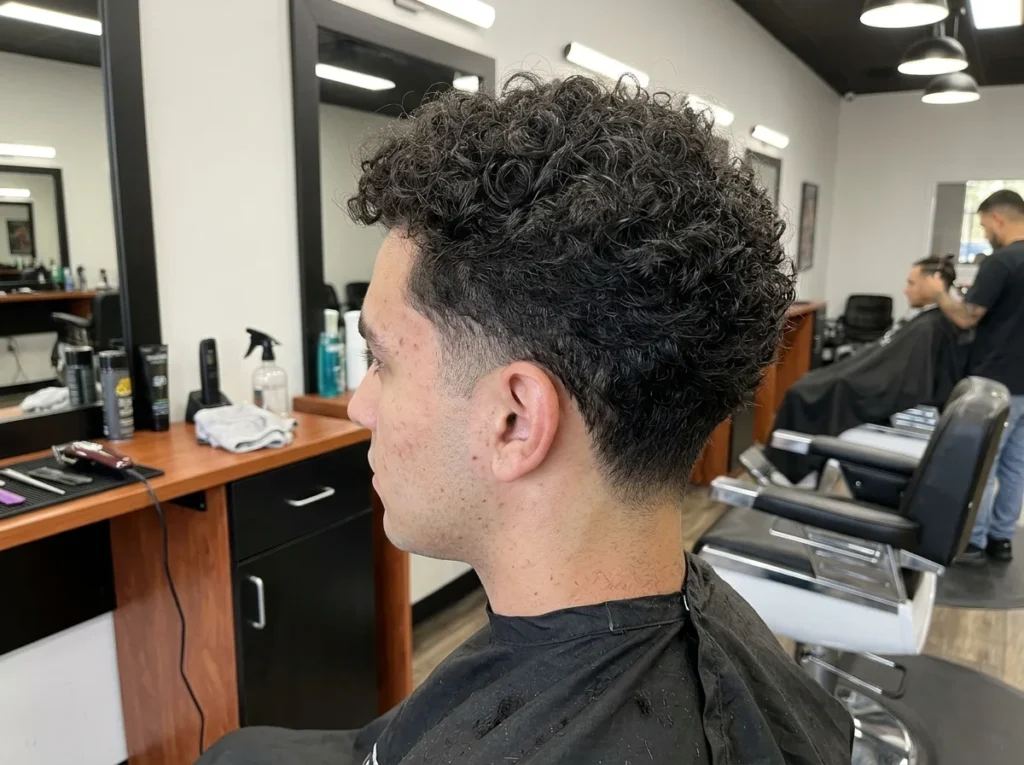
Curly hair produces some of the strongest mid-taper results because the curl volume on top creates natural contrast with the faded sides without requiring any product. The critical rule: always ask the barber to cut the top section dry. Curly hair shrinks between thirty and fifty percent when dry; a barber cutting wet cuts significantly shorter than intended.
Tell your barber, “Mid taper fade for curly hair. Temple starts. Number 1 at the lowest. Please cut the top dry; my curls shrink significantly when wet. Leave at least two and a half inches on top.”
Face shape: Oval and round.
Maintenance: Every 3-4 weeks.
Style time: Curl cream, scrunch, air dry.
For the complete curly guide, our curly hairstyles for men page covers types 2A through 4C with barber instructions.
Mid-Low Taper Fade
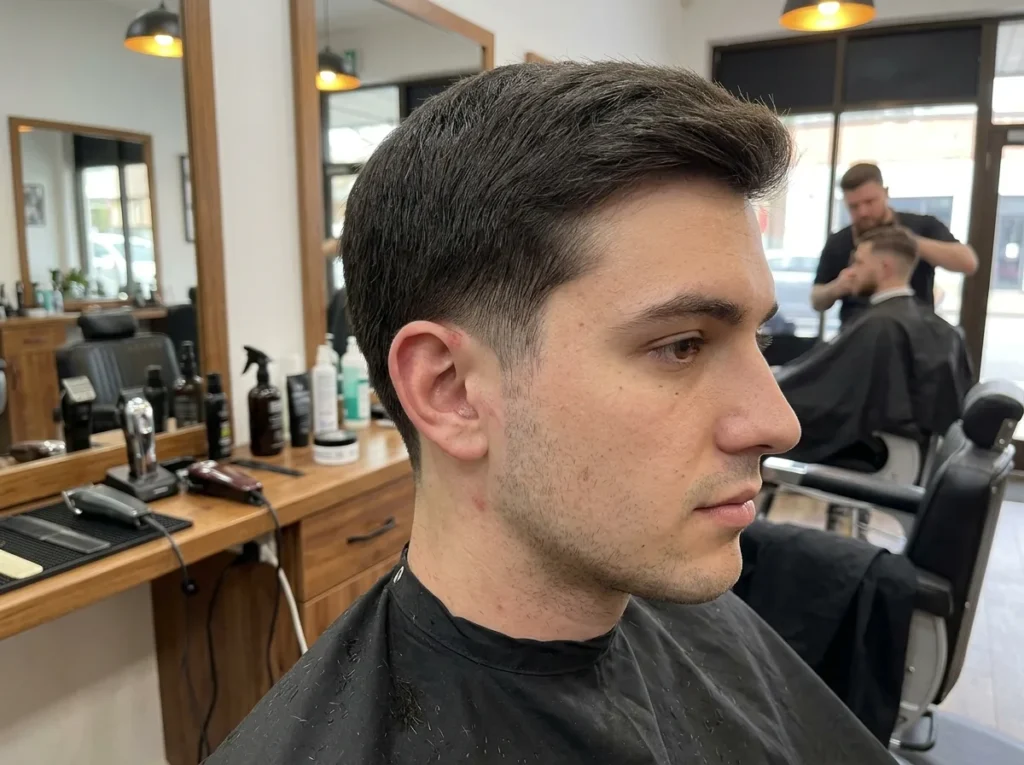
Between mid and low is the transition zone. The fade starts slightly below the temple, creating something more subtle than a standard mid taper but with more presence than a low taper. A good starting point for men who want to go more conservative than the standard mid fade without going all the way to low.
Tell your barber, “Mid-low taper. Start the taper between the ear and the temple just slightly above ear level. Number 1.5 at the lowest, very gradual blend.”
School safe: Yes, universally.
Maintenance: Every 5 weeks.
Office safe: Yes, excellent for professional environments.
Mid-Taper Fade with Design
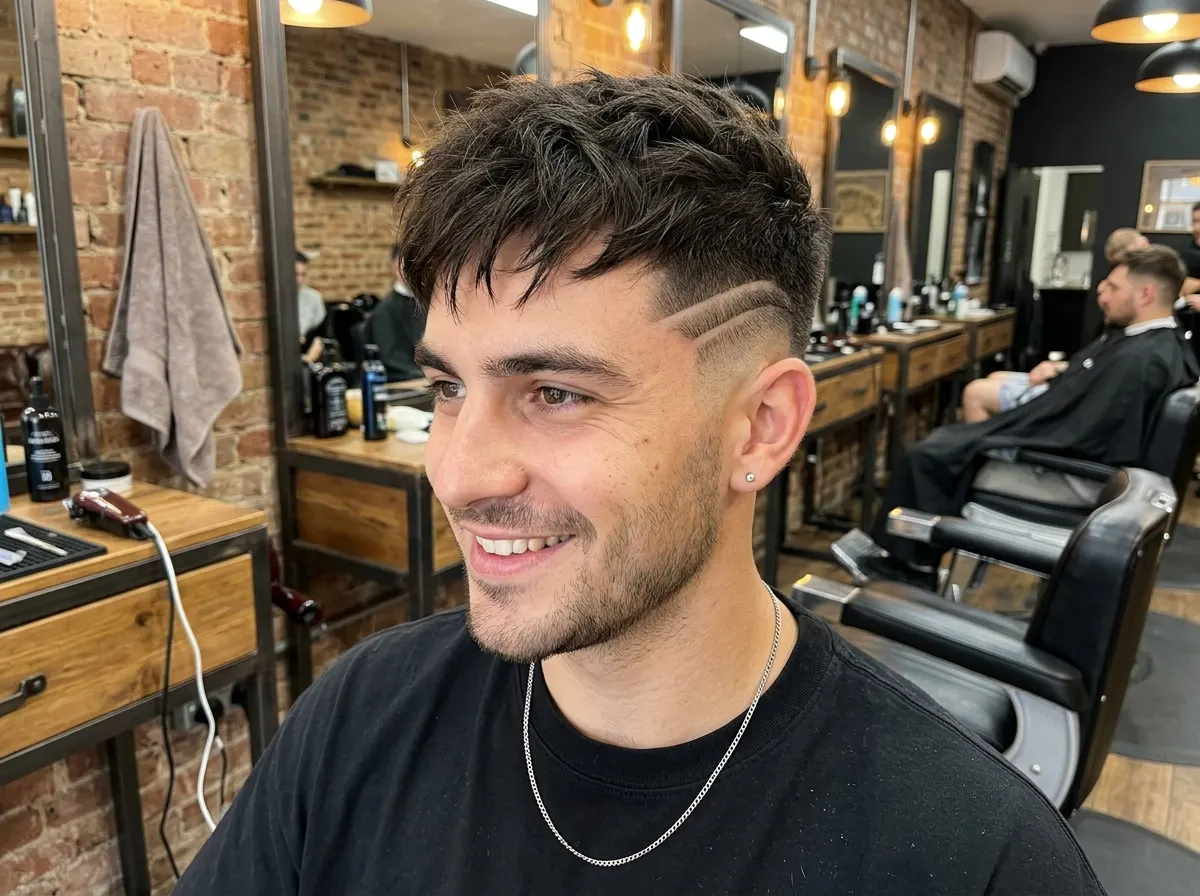
Shaved designs or graphics added into the taper zone. The mid taper provides the base structure, and the design adds a personalized element. Most commonly a shaved line at the temple or a geometric pattern near the neckline.
School safe rating: Caution-shaved designs are the most commonly flagged element in school dress codes. The mid taper itself is safe. The design may not be.
Tell your barber, “Mid taper fade with a design. I want [describe the specific design] at the temple. Start the taper at temple level. Number 1.5 blend.”
Maintenance: Every 2-3 weeks designs grow out faster and need more frequent sharpening.
Mid-Taper Fade with Fringe

A forward-falling fringe on top paired with a mid taper on the sides. The fringe creates horizontal interest at the forehead, while the mid taper keeps everything clean below. Works well on oblong and heart face shapes where the fringe adds width.
Tell your barber, “Mid taper fade with fringe. Temple start. Number 1.5 to 3. Keep two and a half inches on top. I want the hair to fall forward as a fringe. Point-cut the fringe for texture.”
Face shape: Oblong, heart, and large foreheads.
For the full textured fringe guide, our textured fringe haircut page covers every variation with point-cutting explained.
Mid-Taper Drop Fade
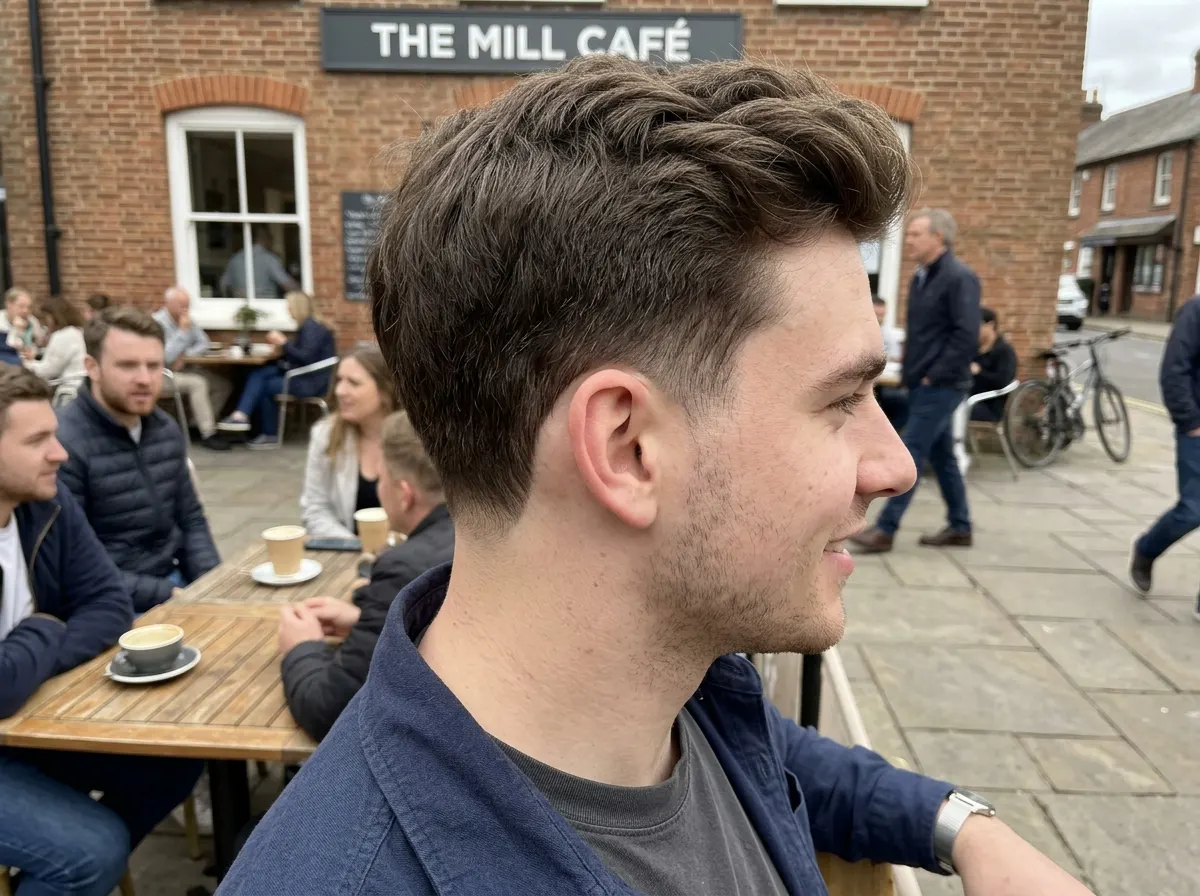
The drop fade follows a curved line behind the ear rather than a straight horizontal line. On a mid taper, this creates a more relaxed, organic silhouette; the fade line dips behind the ear, producing a curved shape that suits medium-length styles.
Tell your barber, “Mid taper with a drop. The fade line should curve down behind the ear rather than going straight across. Temple start. Number 1.5 at the lowest.”
For the full drop fade technique, our drop fade haircut guide covers the curved technique in detail.
Mid-Taper Skin Fade

The mid taper is taken to bare skin at the bottom. The taper still starts at the temple, but the lowest section goes all the way to a 0 or 0.5 guard near-skin or skin. This creates significantly more contrast than a standard mid taper while keeping the starting point at mid-head rather than high.
Tell your barber, “Mid-skin fade.” The temple starts at the same height as a standard mid-taper. Take it down to the skin at the bottom. Number 0.5 at the lowest, blend to 3 at the top of the fade zone.”
School safe: Check skin fades occasionally, which conflicts with conservative school policies.
Maintenance: Every 2-3 weeks the skin section grows visibly fast.
Afro Mid Taper Fade

Type 4 coils and tight curls with a mid taper. The curls or afro on top create substantial natural volume that contrasts dramatically with the tapered sides. The edge-up at the hairline and the clean line-up at the forehead and temples turn the mid taper into a complete, sharply defined look.
Tell your barber, “Afro mid taper fade. Temple start. Number 1 at the lowest. Two to three inches on top, I want the afro shape and volume. Clean edge-up at the forehead and temples.”
Style time: 2 minutes Afro pick for lift, edge-up to freshen between full cuts.
Maintenance: Every 3-4 weeks.
For the curved fade that suits Afro textures particularly well, our burst fade guide covers the rounded technique.
Mid-Taper Fade with Beard

The mid-taper blended into a beard. The barber fades the sideburn into the beard rather than cutting a hard line; the transition from fade to facial hair is seamless. This version is particularly popular among men in their late twenties to forties who have an established beard and want the haircut to complement rather than contrast with it.
Tell your barber, “Mid taper fade blending into my beard. I want a smooth transition at the sideburns, no hard line. Number 1.5 blends up from the beard level.”
Maintenance: Every 3-4 weeks, the beard and fade grow at matching rates.
Mid-Taper Fade Blowout

The blowout taper volume at the crown combined with a mid taper on the sides. The mid taper is the cleaner, more conservative base for a blowout compared to a high fade; the result is a style that works in professional settings as well as casual ones.
Tell your barber, “Mid taper blowout. Temple start. Number 1.5 at the lowest, blend to 3. Keep three inches on top and leave weight at the upper sides for the blowout shape.”
For the complete blowout guide, our blowout taper haircut page covers every variation with honest blow-dry guidance.
Mid-Taper Fade with Long Hair

Longer top three to five inches, combined with a mid taper on the sides. The contrast between the tapered sides and the flowing top is the defining element. The mid taper is the correct fade level for longer hair because a high fade creates too dramatic a contrast with significant length above.
Tell your barber, “Mid taper fade with longer top. Temple start. Number 1.5 at the lowest. Keep [X] inches on top; do not touch the top length. Sides only.”
For the full long-on-top strategy, including the grow-out phase, our boys’ haircuts long on top guide covers every variation.
Mid-Taper Fade with Quiff
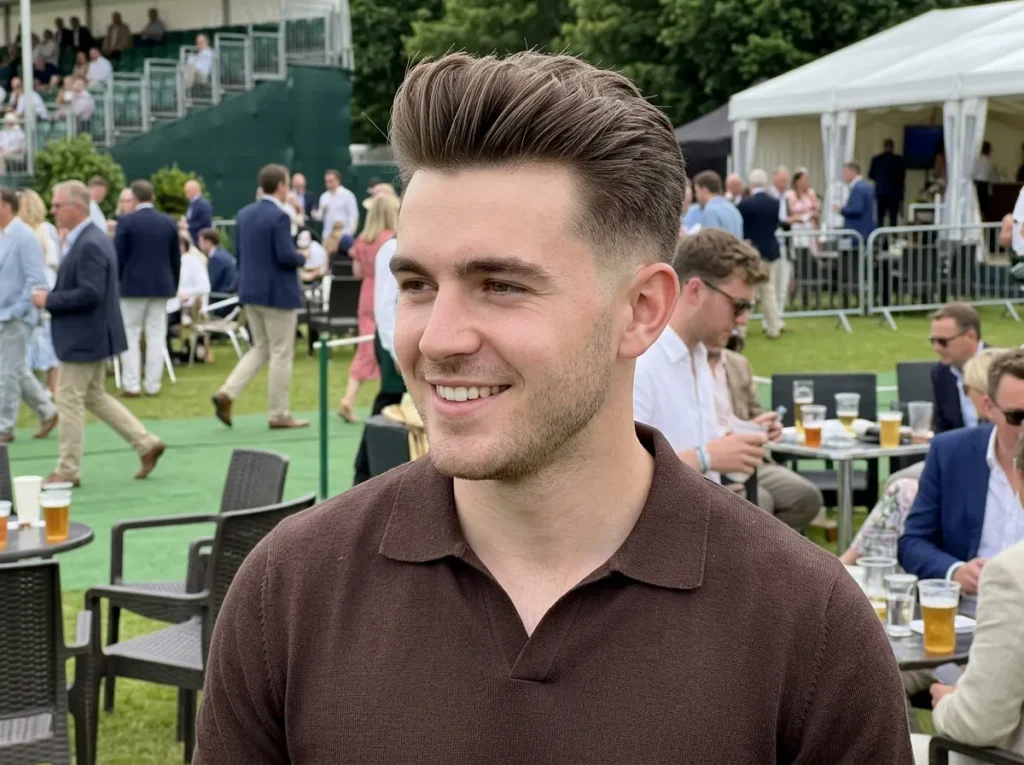
Volume pushed upward and forward at the crown above a mid taper. The quiff adds height that suits round face shapes particularly well. The mid taper keeps the sides controlled, while the quiff creates the vertical proportion that round faces benefit from.
Tell your barber, “Mid taper fade with a quiff. Temple start. Three inches on top, I want to style it upward at the front. Medium hold clay or pomade.”
Face shape: Round and heart-shaped; the height adds length.
Style time: 3-4 minutes on blow dryer and clay.
Mid-Taper Fade Side Part

A clean side part on top with a mid taper on the sides. The most office-appropriate version of the mid taper is structured, deliberate, and suitable for formal environments. The side part defines a direction for the hair flow, while the mid taper keeps everything below the temple tidy.
Tell your barber, “Mid taper fade with a side part. Temple start. Number 1.5 to 3 blend. Two and a half inches on top, clean hard part on the left.”
Office safe: Yes, the most professional-looking version.
Maintenance: Every 4-5 weeks.
Style time: 2 minutes damp comb, light pomade.
Mid-Taper Burst Fade
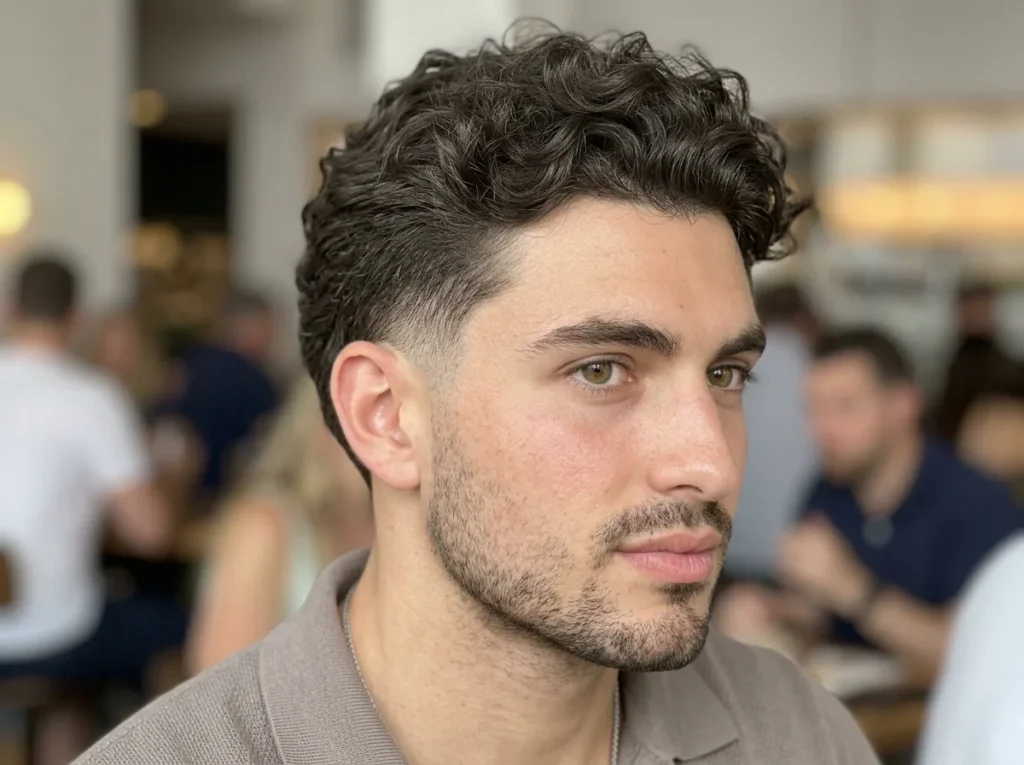
The burst fade follows a curved line around the ear rather than a straight horizontal line. Combined with a mid taper starting point, the curved fade creates a more organic silhouette that suits curly and wavy hair particularly well. The curved line mirrors the natural shape of the ear and the curl cluster above it.
Tell your barber, “Mid taper burst fade. Start at temple level but let the fade curve around the ear in a semicircle rather than going straight across. Number 1 at the lowest.”
For the full burst fade technique, our burst fade guide covers the curved method with photos and barber scripts.
Mid-Taper Fade for Boys and Teens
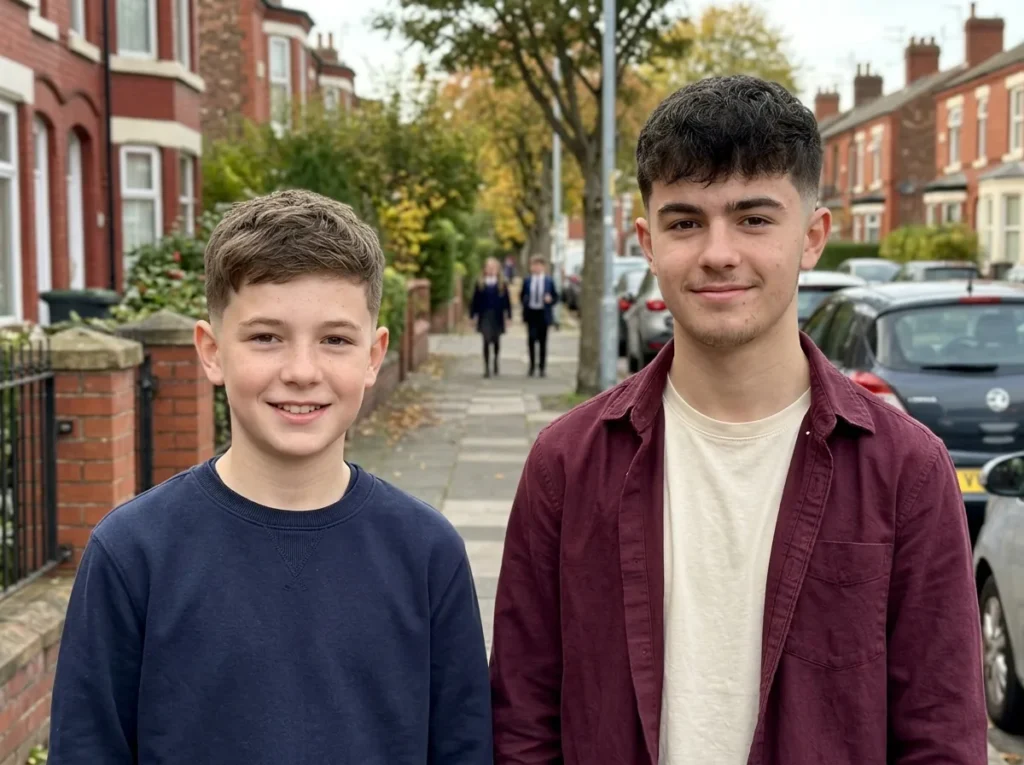
The mid taper fade is the most requested haircut for boys aged ten to eighteen in 2026. Most come in with a specific reference photo already; they know the name, and they know what they want. The considerations are school safety, maintenance reality, and choosing the correct bottom guard level for the school environment.
For boys ten to thirteen, standard mid taper with a number 1.5 at the lowest. School-safe in every setting.
For teens fourteen to eighteen, the standard or slightly bolder mid taper with a number 1 at the lowest. Still school-safe in most settings with a standard guard level.
Tell your barber (for boys): “Mid taper fade for an [age]-year-old. Temple start. Number 1.5 at the lowest, not skin. School-appropriate.”
For full age-specific guides: our teen boy haircuts page covers ages thirteen to eighteen. Our boys’ haircut hub covers every age from seven to twelve with school safety ratings.
Conservative Mid-Taper

The most restrained version. Number 2 or 3 at the lowest point—no skin visible anywhere. The blend is exceptionally gradual. This is what the Kinsman barbershop in New York would call simply “a “taper”—structured, clean, and professional. Passes every office dress code and every school policy without any discussion.
Tell your barber, “Conservative mid taper. Temple start. Number 2 at the lowest, no skin at all. Very gradual blend. Keep it professional and office-appropriate.”
Maintenance: Every 5-6 weeks the most forgiving grow-out of any version on this list.
Office safe: Yes, in every environment.
School safe: Yes, universally.
Mid-Taper Fade by Hair Type Complete Matching Guide
| Hair Type | Best Version | Guard at Lowest | Key Barber Instruction |
|---|---|---|---|
| Straight | Classic/textured top | 1.5 | “Cut top dry.” |
| Wavy | Textured top or middle part | 1.5 | “Leave natural wave.” |
| Curly | Mid taper + curls | 1 | “Cut top dry curls shrink.” |
| Thick | Textured top + point-cut | 2 | “Point-cut, not thinners” |
| Fine/Thin | Conservative mid | 2-3 | “No skin, keep coverage.” |
Mid-Taper Fade on Straight Hair

Straight hair holds clean lines longer and grows out more gradually than curly or wavy hair, making the mid taper one of the strongest choices for this hair type. The fade stays crisp because the strands lie consistent and flat rather than growing in unpredictable directions.
The challenge is the top. Straight hair has no natural texture or volume. The top style choice matters more on straight hair than on any other type, and point-cutting is the technique that creates the movement that straight hair cannot produce on its own.
For twenty cuts specifically designed for straight hair, our boys’ haircuts for straight hair guide covers every option.
Mid-Taper Fade on Curly Hair

The dry-cut rule applies every time without exception. Curly hair shrinks significantly when dry. A barber who cuts curly hair wet produces a result that is shorter than requested once the curls contract as they dry.
The mid taper is an excellent base for curly hair because the temple-level start creates visible contrast with the curl volume above it. The natural curl pattern provides texture and dimension without any product or styling effort.
For dedicated curly guidance, our curly hairstyles for men guide covers every curl type from 2A through 4C.
Mid-Taper Fade on Thick Hair
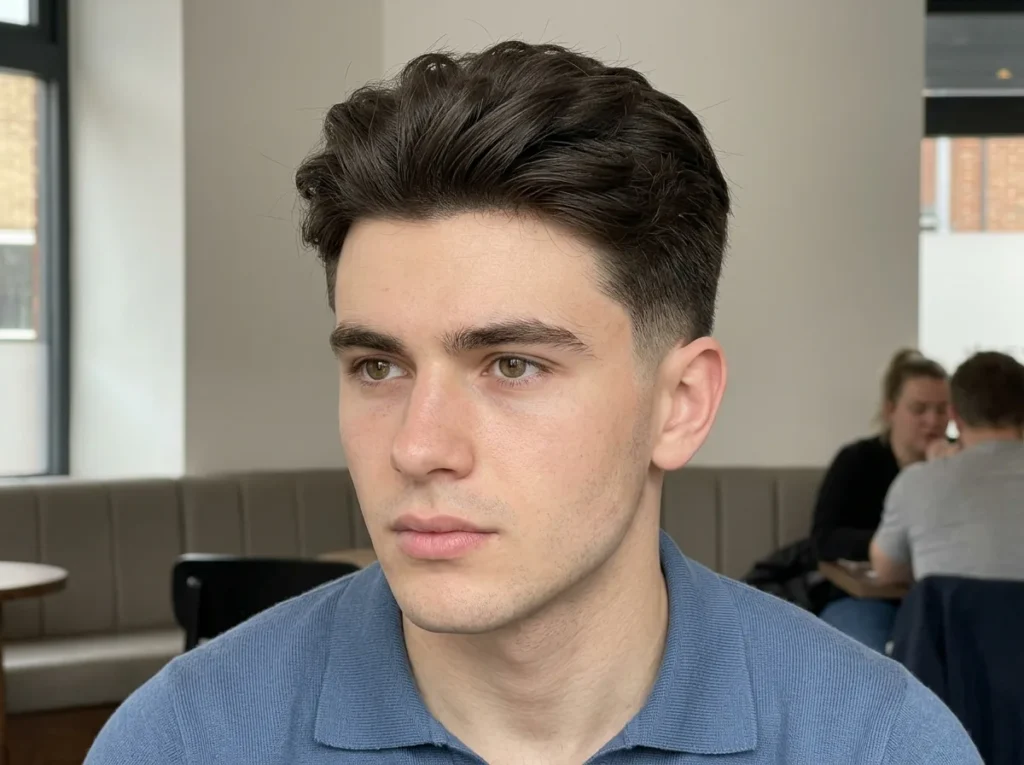
Thick hair needs internal point-cutting on the top section rather than thinning scissors. Thinning scissors create surface frizz by cutting strands at inconsistent lengths. Point-cutting removes bulk from inside the mid-section of the hair without changing the surface shape, the correct technique for thick hair at any age.
Tell your barber specifically, “My hair is thick; please point-cut the top rather than use thinning scissors.”
Mid-Taper Fade on Wavy Hair

Wavy hair has the natural advantage of a mid taper fade. The wave adds movement and texture to the top without product or heat styling, making the whole cut look more intentional with less morning effort. The mid taper on wavy hair also grows out more gracefully than on straight hair because the wave disguises the early grow-out phase.
Mid-Taper Fade for Fine Hair

Fine hair benefits from keeping the lowest guard at a number 2 or 3, avoiding skin exposure that would emphasize the hair’s lack of density at the sides. A conservative mid taper with a gradual blend creates the appearance of more hair by maintaining visible length throughout the gradient.
Mid-Taper Fade by Face Shape
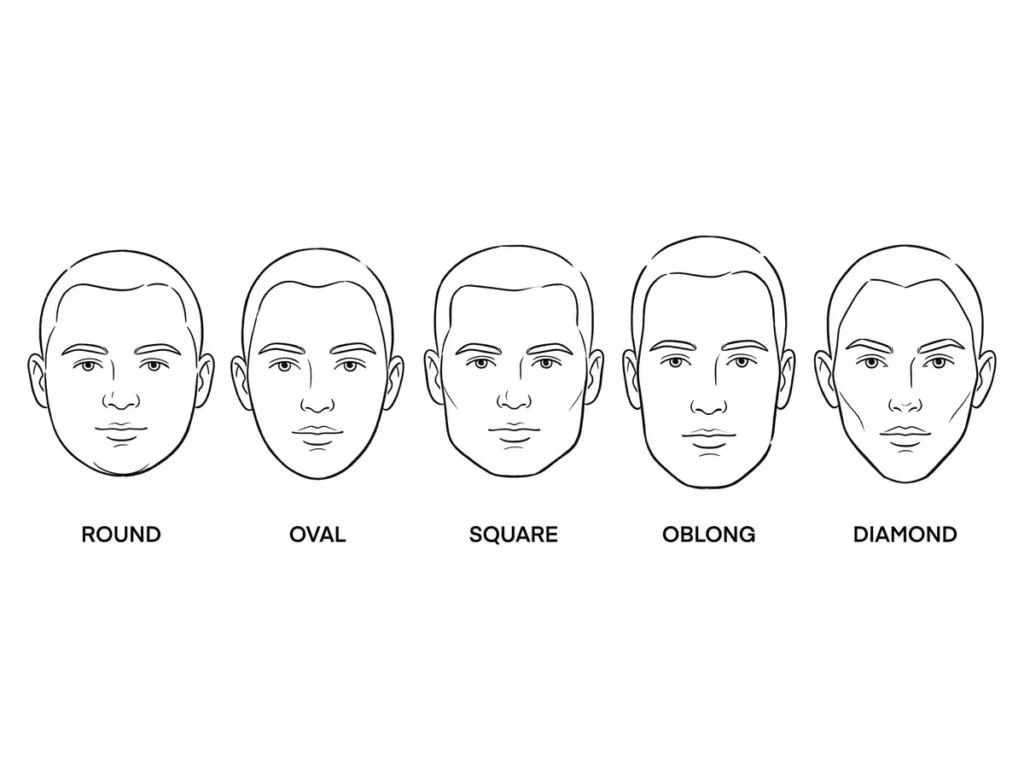
Is a mid-fade attractive? The honest answer is that every fade is attractive when it is matched to the correct face shape. The mid taper is the most universally flattering fade level precisely because its moderate contrast suits more face shapes than either the low or high fade.
Round face: The mid taper adds height through contrast; the tight sides make the face appear longer. Combine with a textured top or quiff for additional vertical proportion.
Oval face: The most flexible face shape. All mid-taper versions work. The classic and textured top versions both look particularly clean on oval proportions.
Square face: The mid taper is one of the best fades for square faces because it softens the strong jaw without emphasizing it further. Avoid very high fades with sharp lines that can make a square jaw look harsher.
Oblong face: A mid-low taper or conservative mid keeps width at the sides rather than adding height. Avoid high fades that add vertical length to an already long face.
Diamond face: The mid taper balances the angular cheekbones and narrower jaw. A fringe combination suits diamond faces particularly well.
Mid Taper vs. Low Taper vs. High Taper: Which Is Right for You?
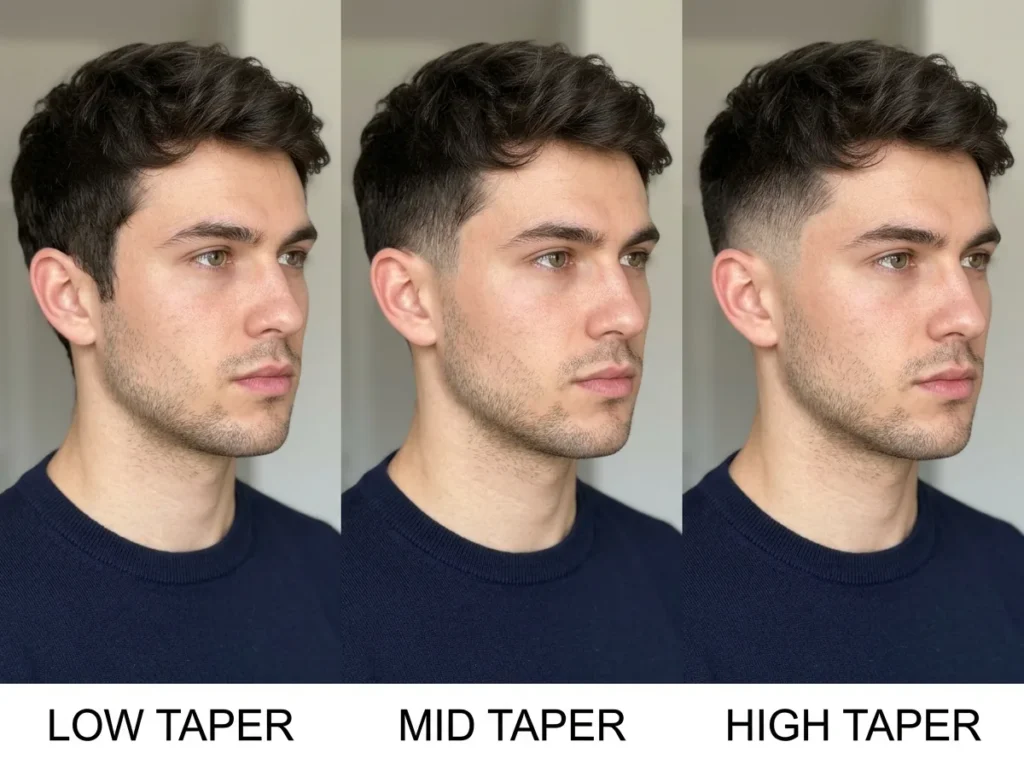
Which is better, a mid or low taper? The answer depends on three things: your lifestyle, your maintenance tolerance, and your face shape.
Choose mid taper if:
You want the balanced, professional-but-modern look. You can visit the barbershop every four to five weeks. You work in an environment where something slightly bolder than a conservative taper is acceptable. This is the correct starting point for most men.
Choose low taper if:
You work in a very conservative professional environment. You want a maximum time between trims of five to six weeks. You prefer something that reads as a clean haircut rather than a visible fade.
Choose a high taper if:
You want bold, high-contrast visual impact. You are in a casual or creative environment. You are comfortable with two- to three-week maintenance cycles. You want maximum contrast between the sides and the top.
| Low Taper | Mid-Taper | High Taper | |
|---|---|---|---|
| Starts at | Ear | Temple | Crown |
| Boldness | Subtle | Balanced | Strong |
| Office safe | Always | Yes. | Check |
| School safe | Always | Yes. | Check |
| Lasts sharp | 5-6 weeks | 4-5 weeks | 2-3 weeks |
| Annual visits | 8-9 | 10-12 | 17-25 |
| Annual cost | $200-225 | $250-300 | $425-625 |
The Grow-Out Comparison
The grow-out is the most overlooked factor in choosing a fade level. A high taper creates dramatic contrast from day one as the sides grow; the hard line where the short section meets the longer upper section becomes visible within two weeks. A mid taper grows out gradually because the contrast is more moderate. By week three a mid-taper still looks intentional. By week three a high fade looks like it needs a touch-up.
Annual Cost by Level
| Level | Trims Per Year | Annual Cost (US, $30/cut) |
|---|---|---|
| Low taper | 8-9 | $240-270 |
| Mid taper | 10-12 | $300-360 |
| High taper | 17-25 | $510-750 |
The mid taper costs about $60-90 more per year than a low taper and about $150-390 less than a high fade. For most men the mid taper sits at the right cost-to-look ratio.
Mid-Taper Fade by Setting Office, School, Casual
Mid-Taper Fade for the Office

The conservative mid-taper Style 20 above is the version for formal professional environments. Number 2 is at the lowest, with a very gradual blend and no skin visible anywhere. The exact words: “Conservative mid taper, nothing dramatic, office-appropriate.”
The mid taper is significantly more office-safe than a high fade because the moderate contrast from a temple start reads as a deliberate, structured haircut rather than an aggressive barbershop style. Most corporate environments that would hesitate at a high skin fade have no issue with a standard mid taper.
Mid-Taper Fade for School
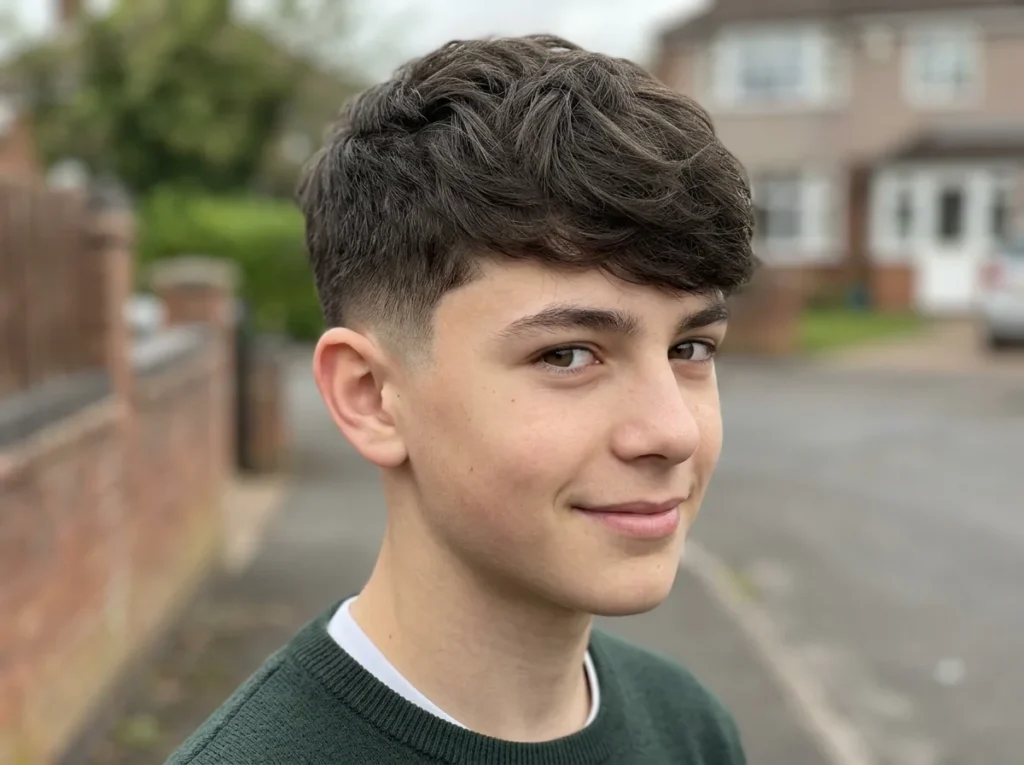
The mid taper passes every school dress code in standard versions. The guard level is the only variable to watch; a number 1.5 at the lowest is safe everywhere. Skin-level fades occasionally conflict with more conservative school policies.
Tell your barber for a school-appropriate version: “Mid taper. School-appropriate. Number 1.5 at the lowest no skin. Clean blend.”
For boys specifically: our boys’ haircut hub covers school safety ratings for every age from seven to eighteen. The teen boy haircuts guide covers the full teen range with per-style ratings.
Mid-Taper Fade for Casual and Weekend
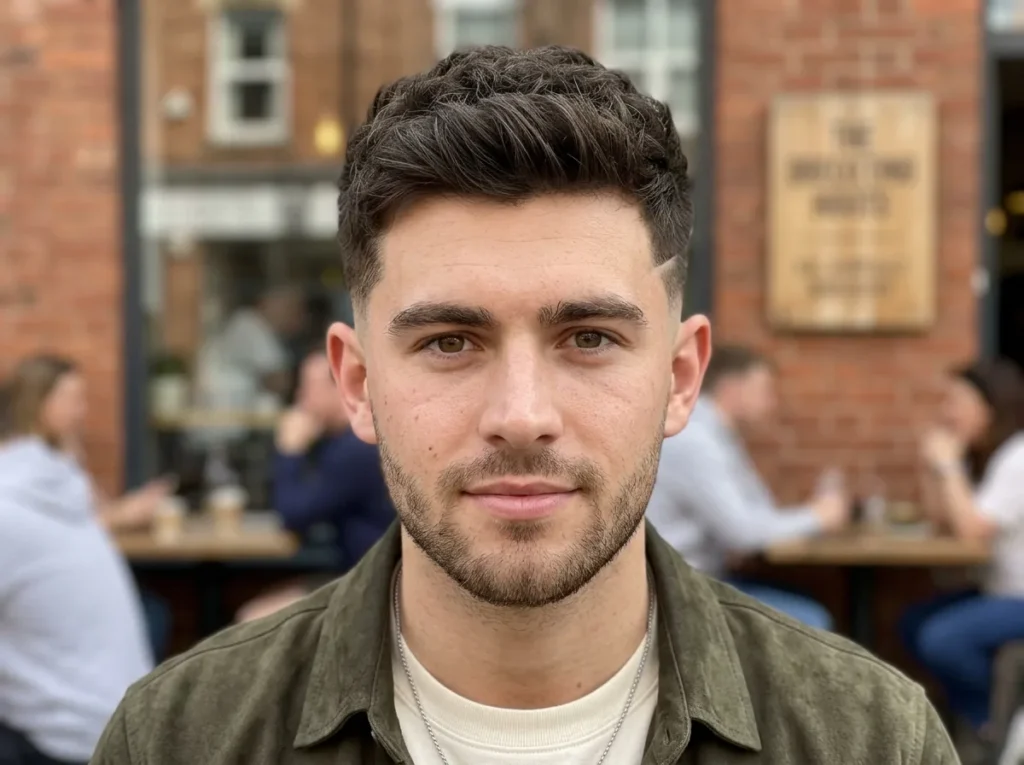
The bolder versions of the mid taper with design, mid skin fade, and mid taper with burst fade suit casual environments where school and office policies do not apply. The mid taper provides a clean, structured base that can be taken in a more creative direction through design elements or a lower bottom guard without conflicting with professional requirements on weekdays.
How to Ask for a Mid-Taper Fade Complete Barber Scripts
Can any barber do a taper? Yes, tapering is a foundational barbershop skill. The question is whether they execute the blend smoothly and whether they understand which of the five variables you need adjusted. Bringing a photo and specifying the guard numbers removes most of the interpretation.
The Five-Variable Script
“Mid taper fade. Start the taper at the temple about an inch and a half above the ear. Number 1.5 at the lowest, blending to 3 at the top of the fade zone. Keep [X] inches on top. Even blend all the way around.”
This script covers all five variables: where it starts, how short it goes, how smooth the blend is, and which top length you want. The grow-out variable is handled by the guard number choice.
Scripts Per Setting
Office: “Conservative mid taper. Temple start. Number 2 at the lowest no skin. Very gradual blend. Office-appropriate.”
School: “Mid taper. School-appropriate. Temple start. Number 1.5 at the lowest, not skin. Clean blend.”
Casual standard: “Mid taper fade. Temple start. Number 1.5. Blend smooth. [X] inches on top.”
First time: “This is my first taper. Mid-level temple start. Please go slowly and show me the guard before you start. Standard version.”
With curly hair: “Mid taper for curly hair. Temple start. Number 1. Please cut the top dry; my curls shrink significantly when wet.”
The 3:2:1 Fade: What It Looks Like
Guard 3 (9 mm) at the upper section of the fade zone, just below where the taper transitions to full top length. Guard 2 (6mm) in the middle of the gradient. Guard 1 (3 mm) at the lowest point near the natural hairline. The barber blends between these three points using the clipper-over-comb technique and upward strokes to eliminate any visible line between guard sizes. The result is a smooth continuous gradient from long on top to short at the bottom with no visible steps.
Can Any Barber Do a Taper?
Yes. Every barber is trained in tapering. The skill varies; some barbers produce invisible blends, others leave slightly visible transitions between guard sizes. Asking to see photos of tapers they have cut on similar hair types before sitting down tells you in thirty seconds whether they are confident in the specific technique.
Two Photos, Always Two
The front photo shows the top style and any fringe direction. The side photo shows exactly where the taper starts and how high it travels. A single front photo leaves all the side and back interpretation to the barber. Two photos remove ninety percent of the ambiguity.
Is Mid-Fade Haram in Islam?
This question appears directly in Google’s People Also Ask and is searched regularly by Muslim men across the US, UK, Middle East, and South Asia. The answer deserves a respectful and honest response.
What Scholars Say About Fades
The Islamic prohibition most relevant to haircuts is qaza, the prohibition against cutting some parts of the head short while leaving others long in a patchy, irregular way that creates an uneven appearance. Most classical scholars identify this specific patchiness as the prohibited practice, not fades or tapers as a category.
The majority position among contemporary Islamic scholars who engage with men’s grooming questions is that a gradual fade, one that creates a smooth, blended transition rather than abrupt bare patches next to full-length hair, does not constitute qaza and is therefore permissible.
Mid Taper vs. Qaza: The Distinction
Qaza creates patch sections shaved or cut very short next to full-length hair without any blending. A mid taper creates a gradient, a smooth, progressive transition from longer to shorter with no visible patches at any point.
The standard mid taper using a number 1.5 at the lowest keeps visible hair throughout the gradient. There is no point where bare skin sits directly next to full-length hair without blending. Most scholars who address this specific question consider this gradual version permissible.
The Conservative-Friendly Version
If you want the most clearly permissible version, request the conservative mid-taper Style 20 using a number 2 or 3 at the lowest point with a very gradual blend. No skin visible anywhere. This version aligns with the most cautious scholarly position while still producing a clean, professional result.
The version most likely to draw scholarly scrutiny is a skin fade that leaves bare scalp directly adjacent to full-length hair. The mid taper avoids this entirely.
How Long Will a Mid-Taper Last?
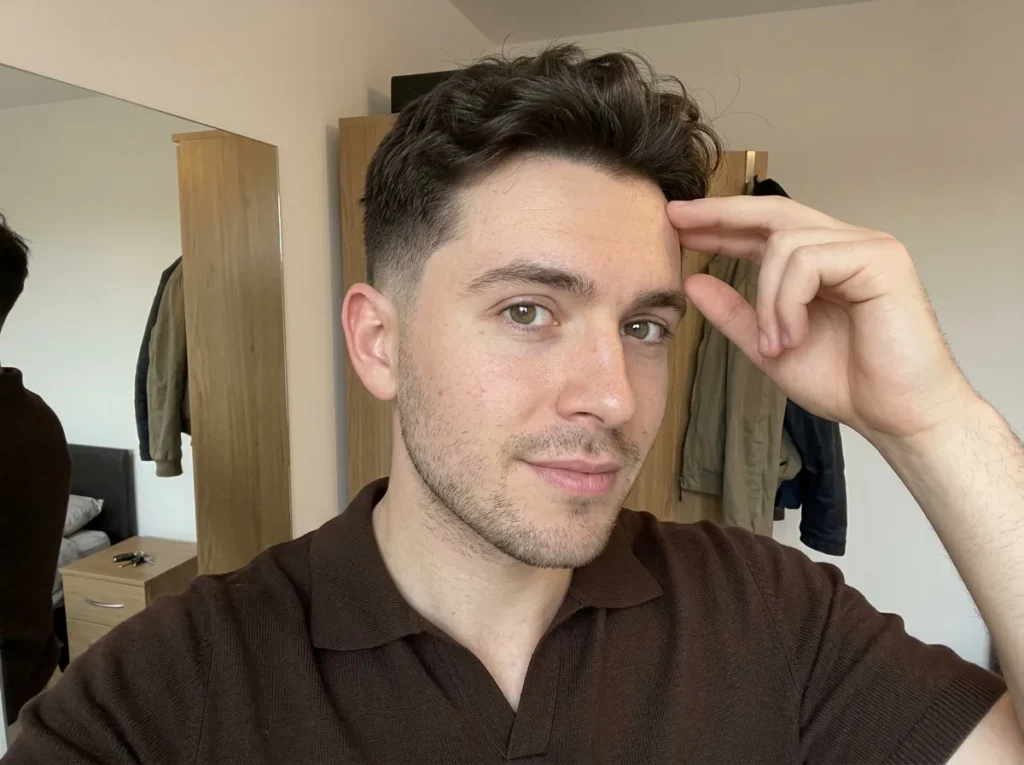
The mid-taper lasts four to five weeks before the grow-out becomes visibly noticeable for most versions. The exception is the mid-skin fade; the skin section grows back visibly within two to three weeks because the contrast at the hairline reappears as the hair regrows.
Maintenance Table by Version
| Version | Looks Sharp | Grows Out Visibly | Trim Frequency |
|---|---|---|---|
| Conservative mid | Weeks 1-4 | Week 5 gradually | Every 5-6 weeks |
| Standard mid taper | Weeks 1-3 | Week 4 gradually | Every 4-5 weeks |
| Mid-skin fade | Days 1-14 | Day 15-18 | Every 2-3 weeks |
| Mid taper with design | Days 1-10 | Day 12 | Every 2-3 weeks |
The Edge-Up Between Cuts
Professional barbers recommend edge-ups between full haircut appointments. An edge-up takes five to ten minutes and refreshes only the hairline and the clean line at the forehead and temples. It does not affect the fade itself. Between a full mid-taper appointment at week four and an edge-up at week two, the hairline is kept sharp and the clean appearance of the cut is extended without cutting it shorter.
Ask your barber specifically: “Can I book an edge-up between full appointments? Just the hairline, not the full fade.” Most barbershops offer this at a reduced price compared to a full cut.
Annual Cost by Version
| Version | Trims Per Year | Annual Cost (US, $30/cut) |
|---|---|---|
| Conservative mid | 8-9 | $240-270 |
| Standard mid taper | 10-12 | $300-360 |
| Mid-skin fade | 17-25 | $510-750 |
| With edge-ups added | Variable | Add $10-15 per edge-up. |
Browse More Fade and Taper Guides
For one level down in contrast, our low taper fade guide covers the conservative version with full guard number breakdowns.
For the full comparison between every fade level, our taper vs. fade guide explains the difference between every variation with exact terminology.
For the volume combination, our blowout taper haircut guide covers the blowout on every hair type with honest blow-dry guidance.
For curved fade variants, our burst fade guide covers the rounded technique, and our drop fade page covers the curved-behind-the-ear version.
For fringe combinations: our textured fringe haircut guide covers twenty fringe variations with the point-cutting technique explained.
For boys and teens: our boys’ haircuts hub covers ages seven to eighteen. The teen boy haircuts guide covers the full teen range.
Not sure which version suits your face shape and hair type? Our teen haircut finder quiz takes sixty seconds.
Frequently Asked Questions
What is a mid taper fade?
A mid taper fade is a haircut where the hair gradually shortens starting at the temple, approximately one and a half to two inches above the ear, and blends smoothly downward to the neckline and sideburns. The word “mid” describes where the fade starts vertically on the head. A traditional mid taper keeps visible hair throughout the gradient rather than going to bare skin.
Which is better, a mid or low taper?
Neither is objectively better; they suit different situations. The low taper is more conservative, lasts five to six weeks, and suits very professional environments or anyone who prefers minimal contrast. The mid taper is more balanced, lasts four to five weeks, and suits both professional and casual settings. For most men who want a taper without going extreme, the mid taper is the right starting point.
How do I ask for a mid taper?
Say: “Mid taper fade. Start at the temple about an inch and a half above the ear. Number 1.5 at the lowest, blending to 3. Keep [X] inches on top.” Bring a front photo and a side photo. Specify the guard number at the lowest point rather than just saying “mid taper”; this removes the main source of barber misinterpretation.
Is mid-fade haram in Islam?
Most contemporary Islamic scholars consider gradual fades permissible because they create a smooth blend rather than the patchy unevenness described in the prohibition against qaza. The standard mid taper using a number 1.5 at the lowest with visible hair throughout the gradient and no bare skin directly adjacent to full-length hair aligns with the majority permissible position. The conservative mid taper with a number 2 guard is the most clearly permissible version.
Is a mid-fade attractive?
Yes, the mid taper fade is the most consistently well-received fade level across all face shapes and hair types. The moderate contrast is flattering without being aggressive. Round faces benefit from the vertical lines it adds. Oval faces suit it universally. Square faces benefit from the softened appearance it creates at the jaw. The specific version that matches the top style to your face shape for the strongest result.
What is a no. 1 haircut?
A number one guard cuts hair to three millimeters, the tightest fade level before bare skin. On a mid taper fade, it is used at the lowest section of the gradient, near the natural hairline. Higher guard numbers mean longer hair; number two is six millimeters, number three nine millimeters, and number four twelve millimeters.
What is a #1 fade?
A number one fade uses a number one guard at the lowest point, three millimeters, just above skin level. It creates stronger contrast than a number 1.5 or 2 fade. On a mid taper it produces a bolder version of the standard cut while still keeping some visible hair at the bottom.
What is the most attractive fade?
The most attractive fade is the one matched to the individual’s face shape and hair type. The mid taper is the most universally flattering because its moderate starting position and gradual blend suit the widest range of face shapes. Round faces benefit from the vertical contrast. Oval faces suit almost every version. Square faces look best with a moderate rather than aggressive fade level.
Can any barber do a taper?
Yes. Tapering is foundational barbershop training. The quality of the blend varies between barbers; some produce invisible gradients, others leave slightly visible transitions. Ask to see photos of tapers they have done on similar hair types before sitting. A barber confident in the technique will show you immediately.
How long will a mid-taper last?
A standard mid taper lasts four to five weeks before the grow-out becomes noticeably visible. A conservative mid-taper lasts five to six weeks. A mid-skin fade needs a touch-up every two to three weeks because the skin section grows back visibly faster. A mid taper with a design needs refreshing every two to three weeks to keep the lines crisp.
What does a 3:2:1 fade look like?
The numbers refer to guard sizes across the three zones of the fade. Guard 3 (9 mm) at the top of the fade zone, guard 2 (6 mm) in the middle, and guard 1 (3 mm) at the lowest section. The barber blends between these three points to create an invisible gradient. On a mid taper, this runs from temple level down to the neckline with no visible steps between guard sizes.
What is the difference between a mid taper and a mid fade?
A mid taper keeps visible hair throughout the gradient; the shortest section is a number 1 or 1.5, not bare skin. A mid fade can go to skin at the bottom, creating stronger contrast. Both start at the temple. In practice many barbers use the terms interchangeably to specify the guard number at the lowest point to ensure you get the version you want.
Is a mid-taper fade school appropriate?
Yes, in all standard versions. The mid taper using a number 1.5 or higher at the lowest guard level passes every school dress code. The elements that occasionally get flagged are skin-level fades where the scalp is bare and shaved designs added into the fade zone. A standard mid taper without either of these is universally school-appropriate.
Does a mid taper fade work on straight hair?
Yes, straight hair is one of the best canvases for a mid taper. The clean lines stay crisp longer because straight strands lie consistent and flat. The key instruction: ask the barber to cut the top section dry. Straight hair lays differently when wet versus dry, and the final shape is more predictable when cut at its natural fall.
The mid taper fade is the default recommendation for a reason. Not because it is generic, but because it is the version that works for the widest range of men, in the widest range of settings, with the least maintenance overhead and the cleanest grow-out.
Pick the version from this guide that matches your hair type and face shape. Save the five-variable script. Specify the guard number at the lowest point before the barber picks up the clippers. Bring two photos.
That combination produces the same result every time, which is what the most requested haircut in barbershops right now deserves.
For the conservative version one level down, our low taper fade guide covers every variation in full depth. For boys and teens, our boys’ haircuts hub covers every age from seven to eighteen with school safety ratings.