High Taper Fade 2026: 20 Styles, Honest Maintenance Reality, and Everything Your Barber Needs to Know
Some barbershops started hearing a new question in 2026: are high fades going out of style?
The honest answer is this. Some men who got high fades because everyone else was getting them have started asking for softer cuts. The softening trend is real. But in barbershops across Texas, California, New York, and London, the high taper fade is still one of the most requested cuts every single week. The conversation is real. The conclusion that high fades are finished is wrong.
What has changed is the stakes. When a cut is this common, the version you choose and the barber who executes it matter more than they used to. A high taper fade done right looks exceptional. A high taper fade done wrong looks like someone dragged a clipper across the side of your head at a height that does not suit your skull shape.
This guide covers twenty high taper fade styles for 2026, the honest annual cost that no other guide publishes, the cultural history that most style guides skip, barber scripts in English and Spanish, and exactly what to do when your high taper does not look quite right.
At a Glance — Quick Picks
| Need | Best High-Taper Version |
|---|---|
| Maximum impact | High taper skin fade |
| Black barbershop style | High taper for the lineup |
| Curly hair natural contrast | High taper curly cut dry |
| Straight hair | Classic high-taper skin |
| Bold weekend look | High taper with design |
| School-appropriate | High taper, no skin number 2 |
| Office check first | Classic high taper no design |
| Boys ages 12-18 | Conservative high taper, no skin |
What Is a High Taper Fade?
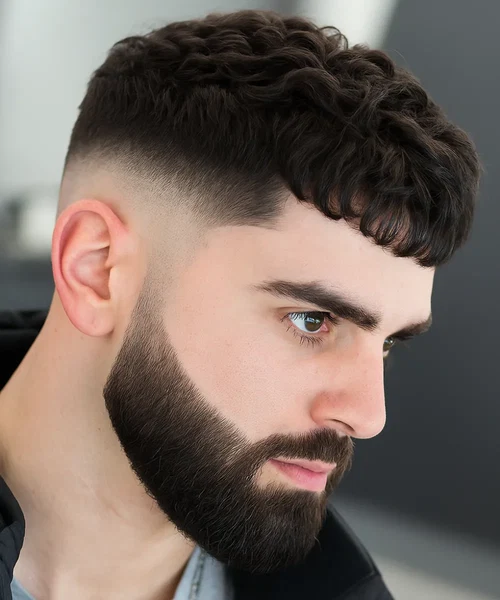
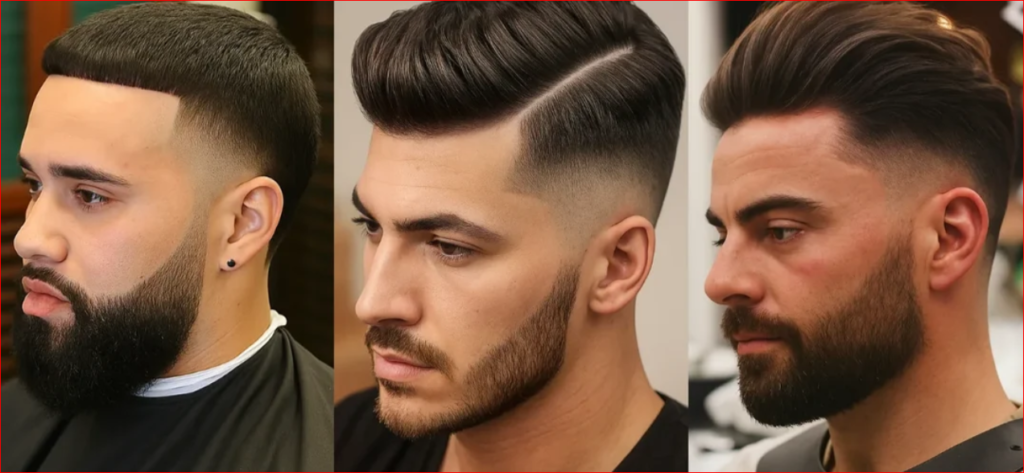
A high taper fade is a haircut where the hair gradually shortens starting well above the ear, approximately two to three inches above the ear, near or at the temple area, and blends downward to the sides and back. The word “high” refers to where the fade starts on the head, not how dramatic the contrast is.
The higher the starting point, the more of the side of the head becomes part of the faded section, and the stronger the contrast between the full-length top and the closely cut sides. This is the most bold and visually impactful of the three standard taper fade levels.
High Taper vs. High Fade The Actual Difference
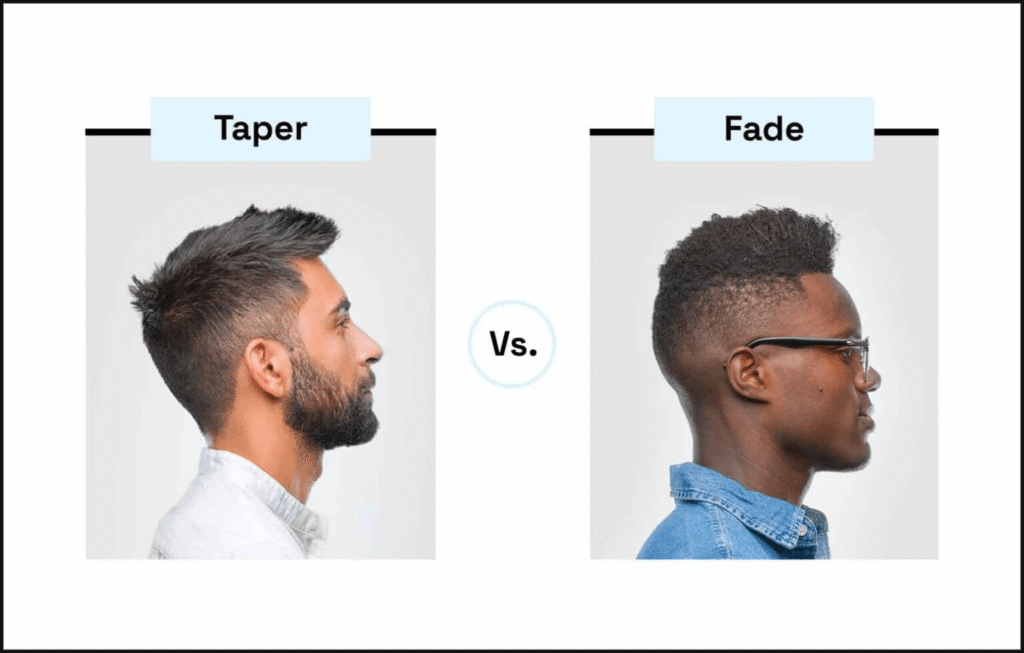
A high taper keeps some visible hair throughout the gradient; the shortest section is a number 1 or 1.5 guard, not bare skin. A high fade goes all the way to skin or a 0.5 guard at the lowest point.
In practice most people use these terms interchangeably, and most barbers understand both. What matters is specifying the guard number at the lowest point that tells the barber exactly how close you want it, regardless of whether you say taper or fade.
Is a High or Low Taper Better?
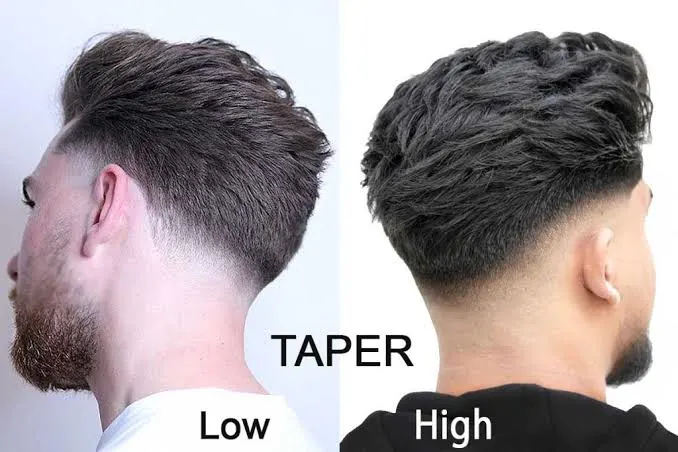
Neither is objectively better. They serve different people in different environments.
Choose a high taper if you want the boldest possible contrast, your face shape benefits from significant vertical contrast at the sides, you are in a casual or creative environment, and you are comfortable visiting the barbershop every two to three weeks.
Choose a low taper if you prefer a conservative look, you work in a formal professional environment, or you want five to six weeks between trims. There is no wrong answer, only the wrong version for your specific situation.
What Are the Three Types of Tapers?
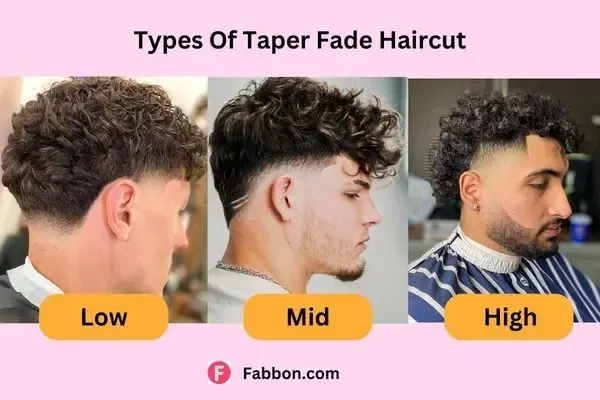
The three standard taper types describe where on the head the fade begins.
Low taper: The fade starts just above the ear. The most conservative and subtle of the three. Grows out over five to six weeks without a visible hard line. Works in every professional and school environment.
Mid taper: The fade starts at the temple approximately one and a half to two inches above the ear. The balanced option. More presence than a low taper, less extreme than a high taper. Lasts three to four weeks.
High taper: The fade starts well above the temple, near or toward the crown. Maximum contrast. The boldest and most visually striking option. Needs a touch-up every two to three weeks.
What Is a 3-Fade Haircut?
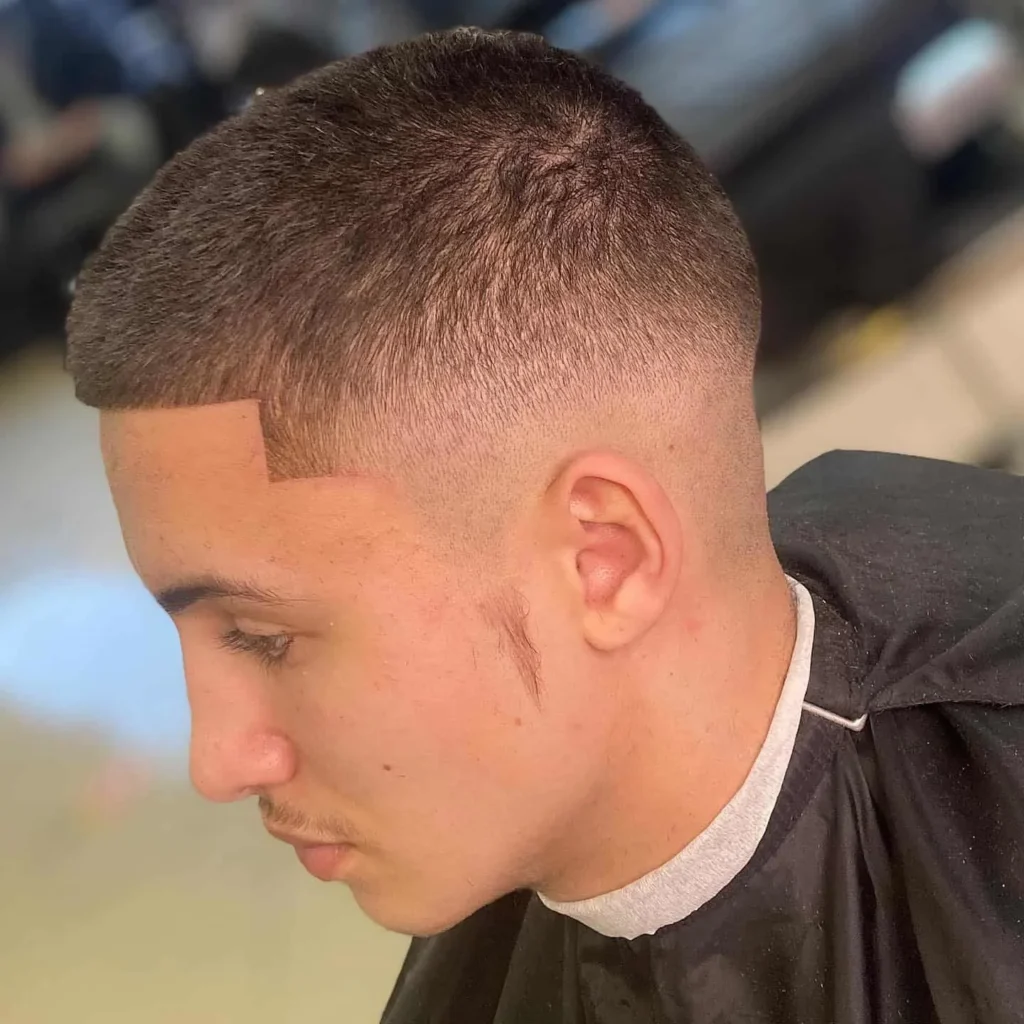
A 3 fade haircut refers to using a number 3 guard, which cuts hair to nine millimeters as the starting guard at the top of the fade zone. The barber begins blending from this length downward, transitioning to a 2, then a 1, then to skin or near-skin at the bottom. On a high taper fade, the number 3 guard sits at the top of the visible fade area, and everything below it transitions shorter.
Are High Fades Going Out of Style in 2026?
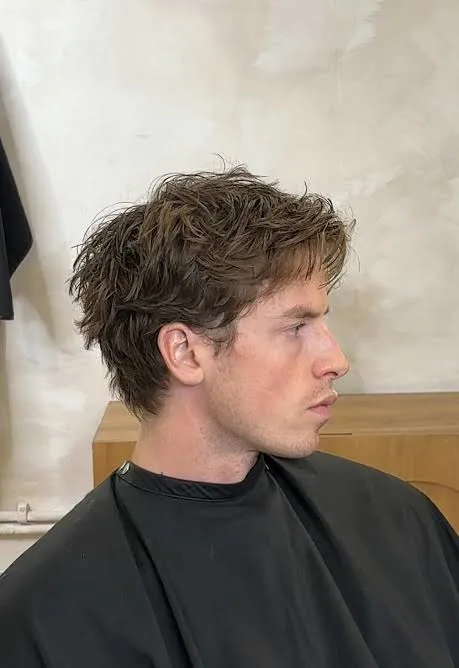
The trend toward softer fades is real. Men who chose high fades because they were dominant in social media are exploring alternatives in 2026: the wolf cut, the textured crop, and the curtain fringe. Modern Cuts Barbershop reported this shift in September 2026.
The high taper fade remains one of the most requested cuts in the US, UK, and globally. The shift is not away from the cut but toward choosing it deliberately rather than by default. Men who suit the high taper the right face shape, the right hair type, and the right lifestyle tolerance for maintenance still look exceptional in it. That is the correct framing for this cut in 2026.
20 High Taper Fade Styles for 2026
Classic High Taper Fade
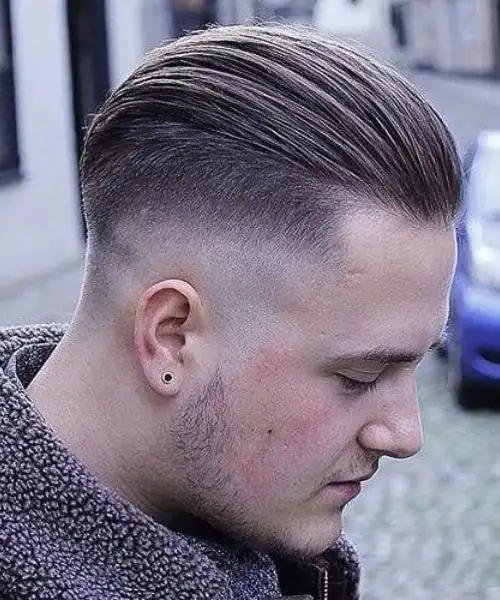
The standard version. The fade starts above the temple and blends down the sides and back to a number 1 or 1.5 at the lowest section. The top is left at whatever length suits the individual. This is the most requested high taper version, high enough to make a statement and controlled enough to read as deliberate rather than extreme.
Tell your barber, “High taper fade. Start well above the temple, about two to three inches above the ear. Number 1.5 at the lowest, blending to 3 at the top of the fade zone. Keep [X] inches on top. Check from behind for symmetry before blending.”
Face shape: Oval and round; the vertical contrast suits both.
Hair type: All.
School safe: Check depends on school policy.
Guard numbers: 1.5 at lowest, blend to 3.
Maintenance: Every 2-3 weeks.
High-Taper Fade Skin
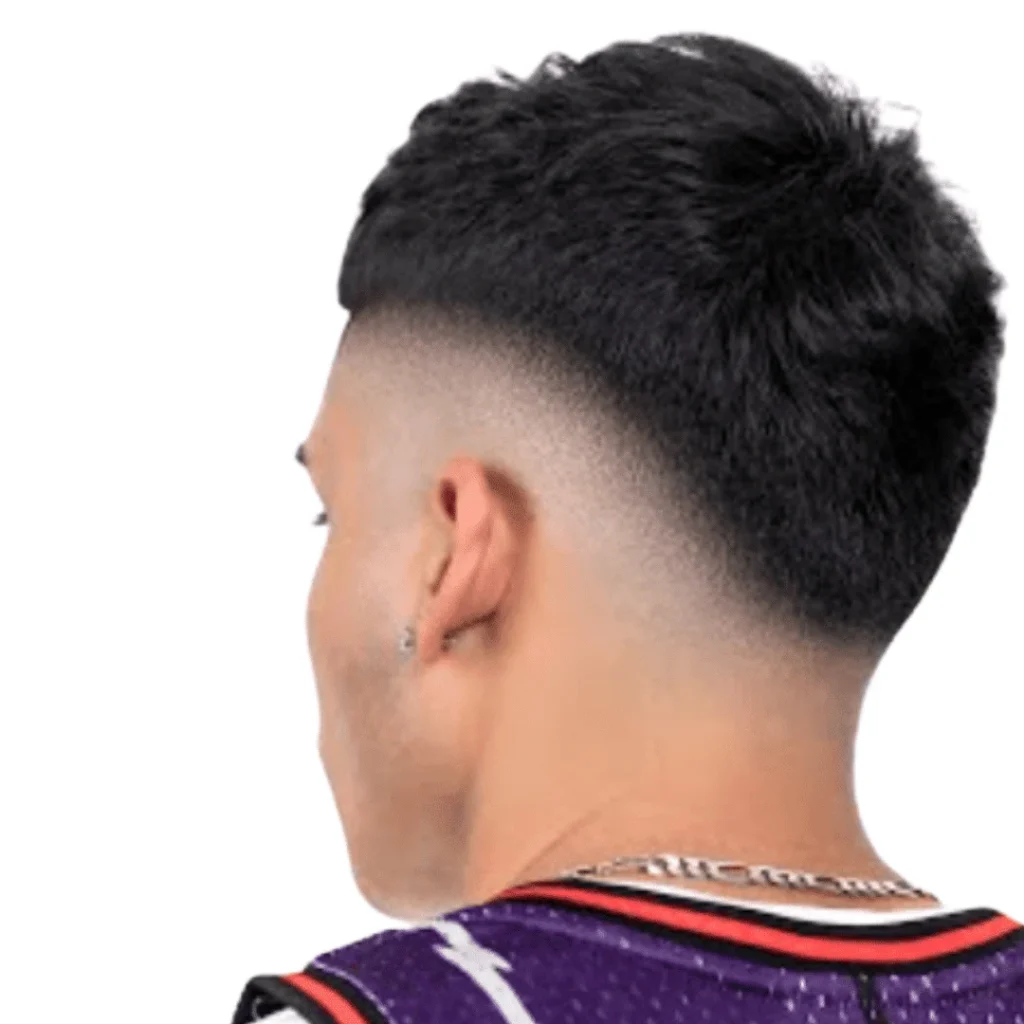
Maximum contrast. The fade goes to bare skin or a 0.5 guard at the lowest section. The definition between the skin sides and the full top is the sharpest possible. Requires the most frequent maintenance; the skin section regrows visibly within ten to fourteen days.
Tell your barber, “High taper skin fade. Start above the temple. Take the lowest section to skin zero guard. Blend from skin upward. Check symmetry from directly behind before blending the gradient.”
School safe: Check skin fades frequently, which conflicts with conservative dress codes.
Maintenance: Every 10-14 days.
Guard numbers: 0-0.5 at lowest, blend to 3.
High Taper Fade with Textured Top
The most requested combination in 2026. High taper on the sides with a point-cut textured top two to three inches, choppy, separated, and naturally moving. The strong contrast from the high taper emphasizes the textured top above.
Tell your barber, “High taper fade with textured top. Start above the temple. Number 1 at the lowest. Two and a half inches on top — point-cut for texture. Cut the top dry.”
Face shape: Oval and round.
School safe: Check high fade level needs policy verification.
Maintenance: Every 2-3 weeks.
Style time: 90 seconds light clay.
For the full textured fringe technique, our textured fringe guide covers point-cutting in dedicated depth.
High Taper Fade on Straight Hair
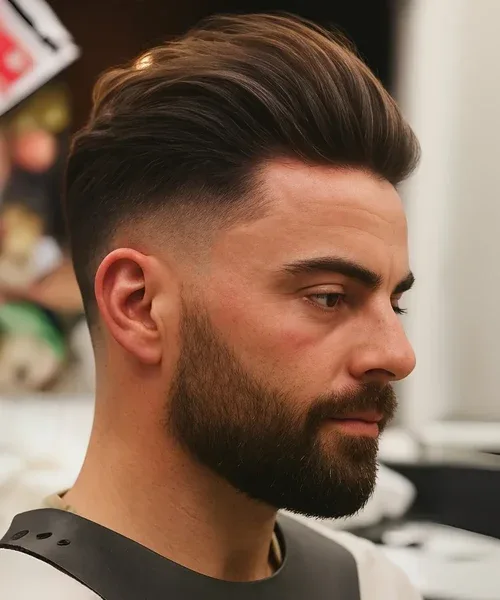
Straight hair makes every detail of the high taper visible, both the precision of a well-executed blend and any inconsistency in a poorly executed one. The cleanest high tapers on the planet are on thick, straight hair because the strands lie flat and the fade line reads as crisp and deliberate from every angle.
Tell your barber, “High taper for straight hair. Skin at the lowest zero guard. Start above the temple. Cut the top section dry. The straight hair will show everything; please take extra care with the blend symmetry.”
Maintenance: Every 2-3 weeks, straight hair shows skin-fade regrowth, particularly clearly.
For the full straight hair guide, our boys’ haircuts for straight hair page covers twenty cuts.
High-Taper Fade Curly Hair
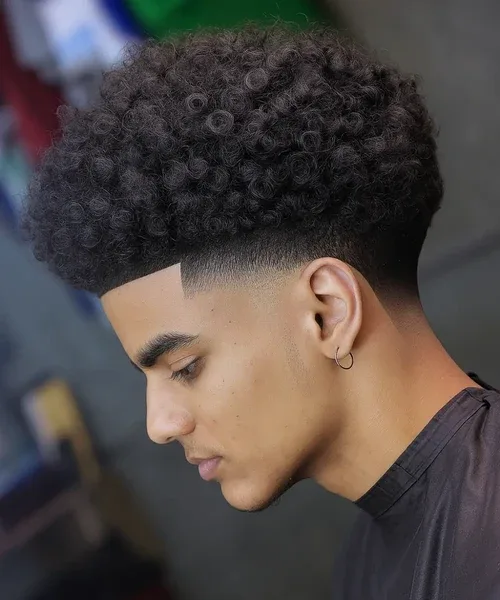
Curly hair produces one of the most visually dramatic high-taper results because the natural curl volume above creates intense contrast with the closely faded sides. The high starting point of the taper means the contrast zone is large; the curls have a significant platform of faded sides beneath them.
The dry-cut rule is mandatory: curly hair shrinks between thirty and fifty percent when dry. A barber who cuts the top section wet will produce results significantly shorter than intended.
Tell your barber, “High taper for curly hair. Start above the temple. Number 0.5 to skin at the lowest. Please cut the top section dry; my curls shrink when wet. Keep at least two and a half inches on top for the curls to form.”
Maintenance: Every 2-3 weeks.
Style time: Curl cream on damp hair, scrunch, and air dry.
For the complete curly guide, our curly hairstyles for men page covers types 2A through 4C.
High-Taper Fro
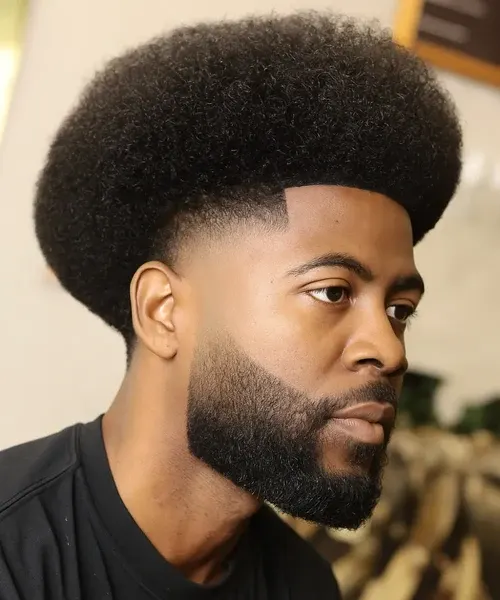
The high taper with a natural afro on top. The tightly faded sides create maximum contrast with the full Afro volume above. The edge-up at the forehead and temples and the sharp line at the hairline turn the high taper into a complete, sharply defined look.
This is one of the most requested styles in Black barbershops and has been for decades. The combination of the high taper’s precision and the afro’s natural volume is a visual statement that photography and video capture exceptionally well.
Tell your barber, “High taper afro. Start above the temple. Number 0.5 at the lowest. Keep two to three inches on top; I want the afro volume. Clean edge-up at the forehead and temples. Check symmetry from behind.”
Style time: 2-3 minutes for Afro pick for lift.
Maintenance: Every 2-3 weeks.
High-Top Taper Fade
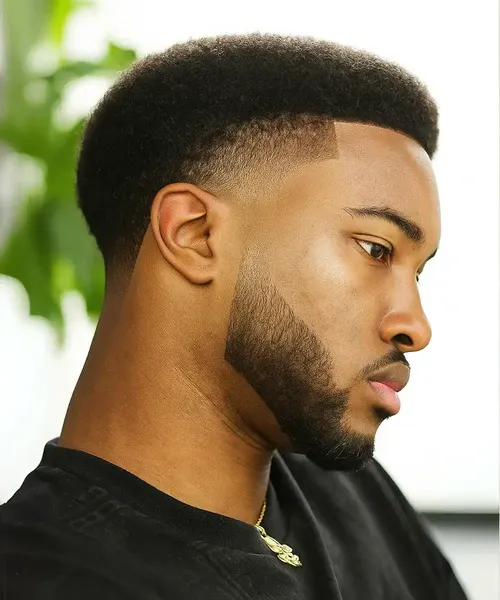
The high taper fade with a flat top or box fade structure on top. The angular, geometric flat top above and the high taper fade on the sides create one of the most structured, deliberate-looking haircuts available. This was a signature style in the late 1980s and early 1990s and has returned in updated form in 2026.
Tell your barber, “High top taper fade. Keep the top flat and even—a box top structure. High taper on the sides, starting above the temple. Number 0.5 at the lowest. Clean edges on the top perimeter.”
Hair type: Works best on thick, natural hair that holds the flat top shape.
Maintenance: Every 2 weeks, the flat-top structure requires regular maintenance.
High Taper Fade with Design
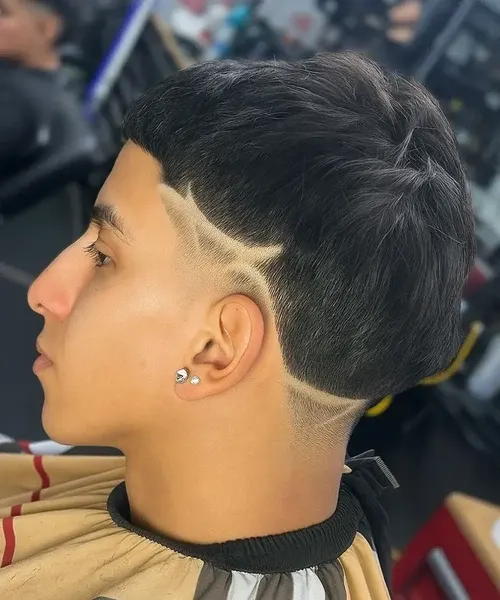
Razor art in the high taper zone. Lines, geometric patterns, lightning bolts, team monograms, or tribal-inspired motifs etched into the faded section. The high taper provides a large canvas for design work; the significantly faded area creates space for detailed razor art that mid- or low tapers cannot accommodate.
Tell your barber, “High taper with design. Take it to skin. Start above the temple. I want [describe design] at [temple/side/above ear]. Show me your design portfolio before we start.”
School safe: Usually no shaved designs are the most commonly flagged element in school dress codes.
Event version: This is the style for a special event, not the daily commuter version.
Maintenance: Every 2 weeks designs grow out within fourteen days.
High-Taper Fade Wavy Hair
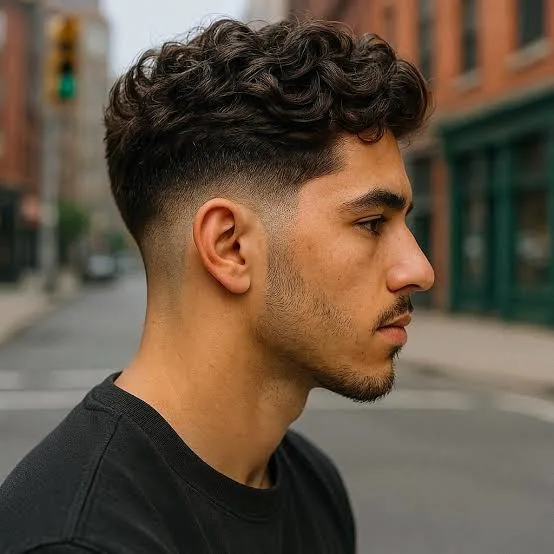
Wavy hair adds natural movement and texture to the top that the high taper’s strong contrast below emphasises. The natural wave creates volume without product effort, and the strong contrast of the high taper makes the wavy top look more voluminous than it actually is.
Tell your barber, “High taper for wavy hair. Start above the temple. Number 1 at the lowest. Leave enough length on top for the wave to form two and a half inches minimum.”
Style time: Sea salt spray, scrunch, air dry.
Maintenance: Every 2-3 weeks.
High-Taper Fade Fluffy Hair
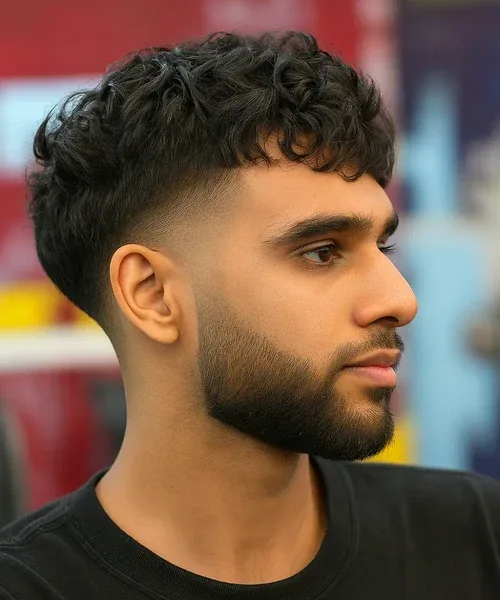
Blowout volume at the crown combined with a high taper on the sides. The high taper creates a dramatic contrast base, while the blown-out, fluffy top adds volume and height. This is one of the boldest-looking combinations on this list: maximum height and maximum contrast.
Tell your barber, “High taper fade with blowout volume on top. Start above the temple. Number 1 at the lowest. Keep three inches on top and leave weight for the blowout shape.”
Products: Thickening mousse before blow-drying upward. Matte clay after.
Style time: 5-7 minutes blow-dry upward at roots.
For the full blowout technique, our blowout taper guide covers the styling technique.
High-Taper Fade Black Hair
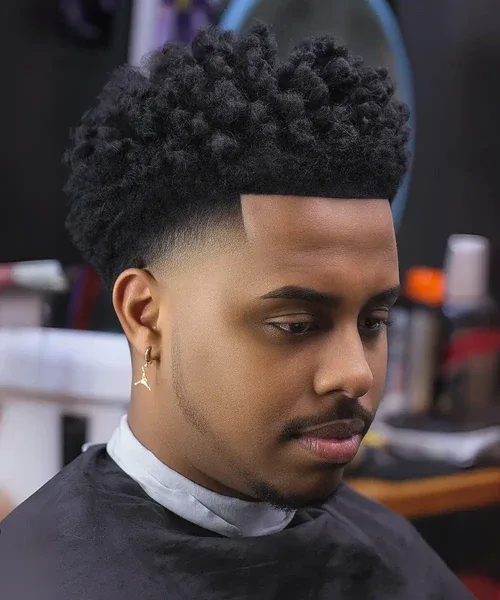
The high taper fade on type 3 and type 4 coily hair. The combination of a sharp edge-up at the hairline, a high taper on the sides creating strong contrast, and the natural coil texture on top is the cornerstone of contemporary Black barbershop style.
Barber artistry is at an all-time high in 2026, and Black men are leading the charge with designs, line work, and precision blending that turns a high taper into a statement piece.
Tell your barber, “High taper. Start above the temple. Skin at the lowest zero guard. Sharp edge-up at the forehead and temples. Check symmetry from behind. Add a [design] in the temple area.”
Maintenance: Every 10-14 days coily hair at the skin section regrows visibly fast.
Asian High Taper Fade
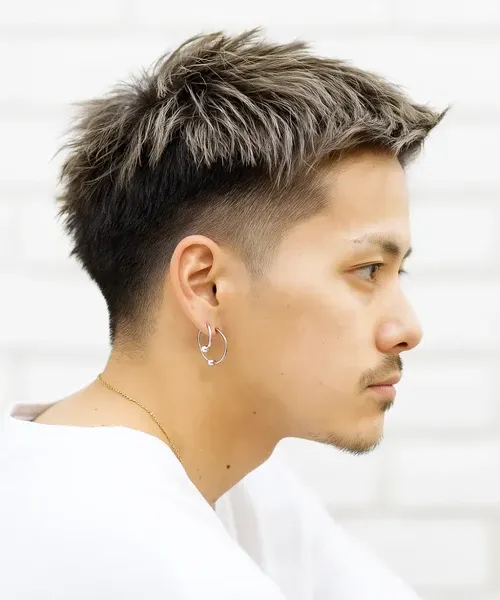
Thick, straight Asian hair produces a specific result with the high taper; the natural weight and density of thick strands create a strong contrast with the faded sides that photographs particularly well. The straight hair also makes the fade gradient more precise and consistent.
Tell your barber, “High taper for thick Asian hair. Start above the temple. Skin at the lowest, or number 0.5. The top is thick; please check the top length is accurate before cutting shorter.”
Maintenance: Every 2-3 weeks.
High-Taper Buzz Cut
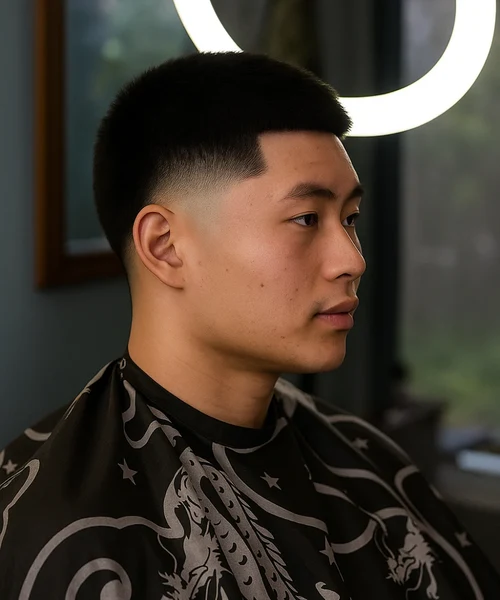
A buzz cut length on top of number 2 or 3, approximately six to nine millimeters, with a high taper fade on the sides. The uniformly short top and the high taper sides create a military-adjacent look with significantly more contrast than a standard buzz cut.
Tell your barber, “High taper buzz cut. Number 2 on top overall. High taper starting above the temple. Number 1 at the lowest.”
School safe: Usually yes, the buzz top keeps the overall look conservative.
Maintenance: Every 2 weeks.
For the full buzz cut guide, our buzz cut page covers every guard number.
High Taper Fade with Line-Up
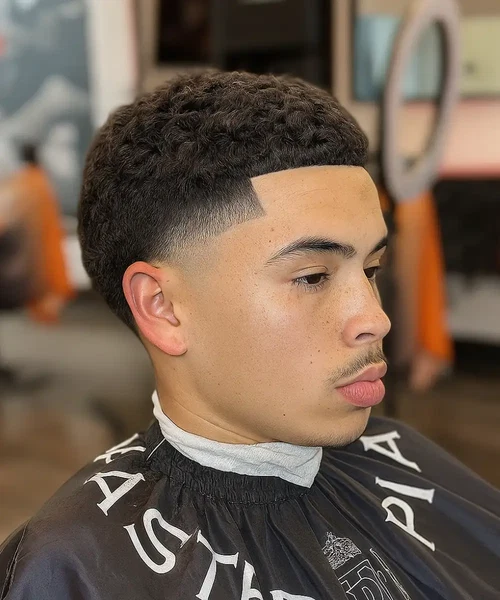
The edge-up or line-up adds a clean, razor-sharp line at the forehead and temples. Combined with a high taper fade, the line-up creates a complete, polished look; the high taper handles the sides and back, while the line-up defines the front perimeter. This is one of the most frequently requested additions to a high taper in Black barbershop culture.
Tell your barber, “High taper with line-up. Standard high taper. Sharp line at the forehead straight across. Temple lines cleaned up. I want the front perimeter defined.”
Maintenance: Every 10-14 days line-ups grow out faster than the fade itself.
High Taper Fade with Fringe
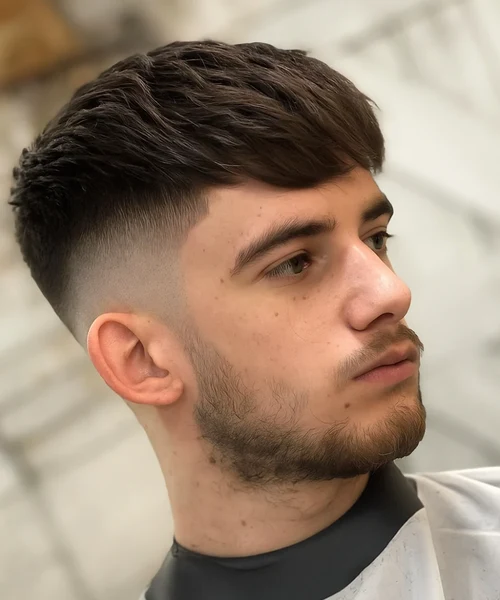
A forward-falling textured fringe combined with a high taper base. The high taper’s strong side contrast creates a significant visual contrast with the fringe falling forward. The fringe adds horizontal interest at the forehead, while the high taper provides the bold sides.
Tell your barber, “High taper with fringe. Start above the temple. Number 1 at the lowest. Fringe at eyebrow length point-cut for texture. Check the fade symmetry before blending.”
School safe: Check the combination of high taper and fringe needs policy verification.
For the full fringe guide, our textured fringe haircut page covers the point-cutting technique.
Mid- to High-Taper
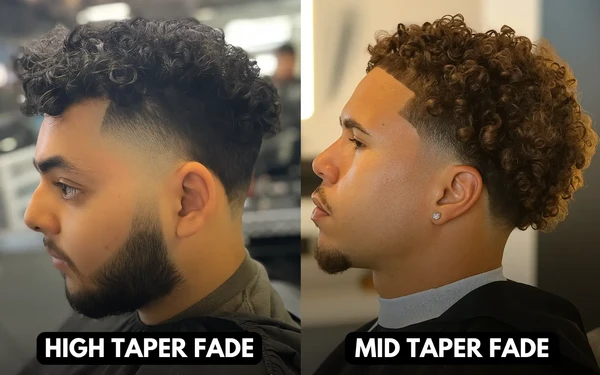
The transition version for men stepping up from a mid taper to a high taper. The fade starts slightly above the temple, higher than a standard mid taper but not as extreme as a full high taper. A good starting point for men who want more impact than the mid taper without committing fully to the high.
Tell your barber, “Mid-to-high taper. Start between the temple and the crown, higher than a standard mid fade but not at the very top. Number 1 at the lowest.”
For the full mid-taper guide, our mid-taper fade page covers the starting version.
High Taper Fade in the Back
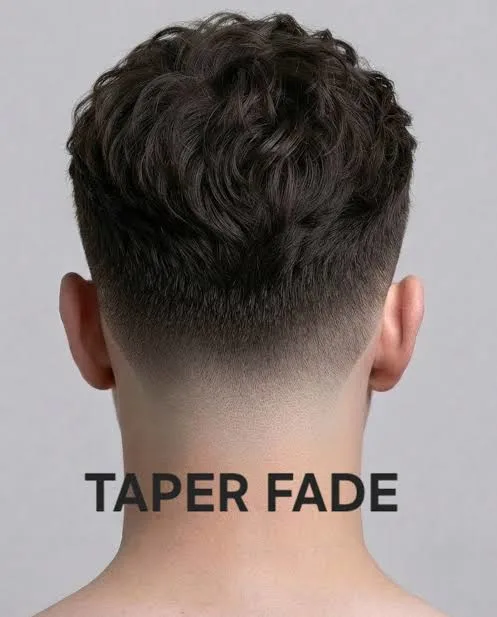
The focus on the back section, specifically the high taper at the neckline and lower back, creates a clean arc that is most visible from behind. This version is requested specifically by men who want the high contrast visible from the back view rather than primarily from the sides.
Tell your barber, “High taper focused on the back. I want the fade to start high at the back as well, not just the sides. Clean arc at the neckline. Check from directly behind before finishing.”
High Taper, No Fade
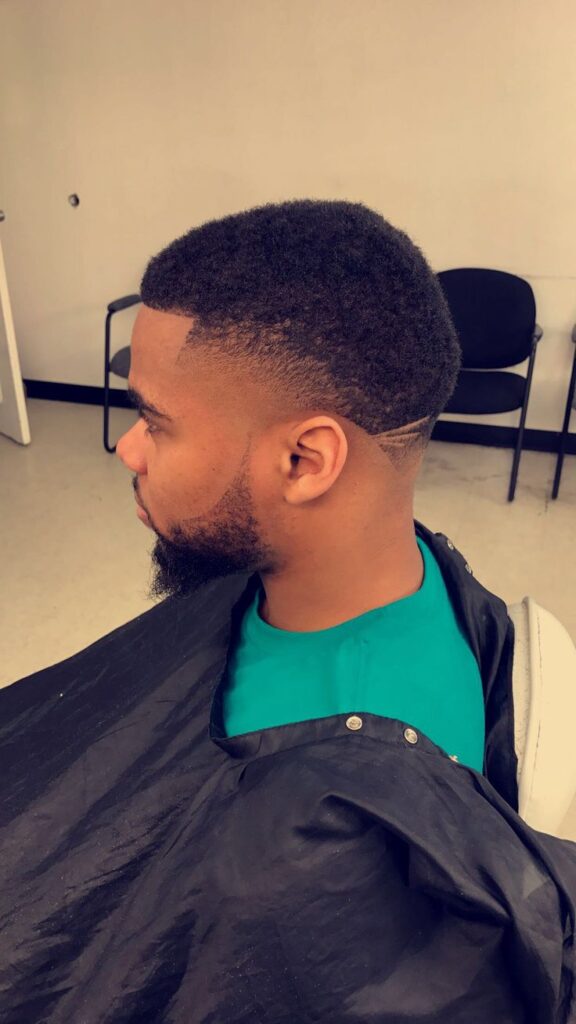
A high taper starting point with the blend kept above skin level throughout the lowest section stays at a number 2 or higher, keeping some visible hair everywhere. This produces the high starting position of the taper without going to skin, creating a more conservative result that passes most school and professional environments.
Tell your barber, “High taper, no skin. Start above the temple. Number 2 at the lowest, I do not want it going to skin. Gradual blend. School and work appropriate.”
School safe: Usually yes, number 2 at the lowest passes most dress codes.
Office safe: Yes, in most professional environments.
Maintenance: Every 3-4 weeks the non-skin version grows out more gradually.
High Taper Fade for Boys and Teens
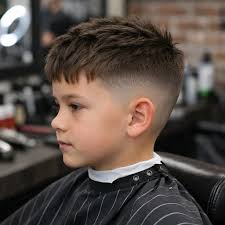
The high taper fade is requested regularly by boys aged twelve to eighteen. For this age group, the high taper no skin version style 18 above is the most school-appropriate starting point.
For boys twelve to fifteen, high taper no skin, number 2 at the lowest. Check school policy before going to skin level.
For teens sixteen to eighteen, the classic high taper or high taper skin is broadly chosen. School policy varies; check before committing to skin level.
Tell your barber (for boys): “High taper for a [age]-year-old. High taper start but keep it at number 2 at the lowest school appropriate. No skin.”
For full teen guides: our teen boy haircuts page and boys’ haircuts hub.
Conservative High Taper
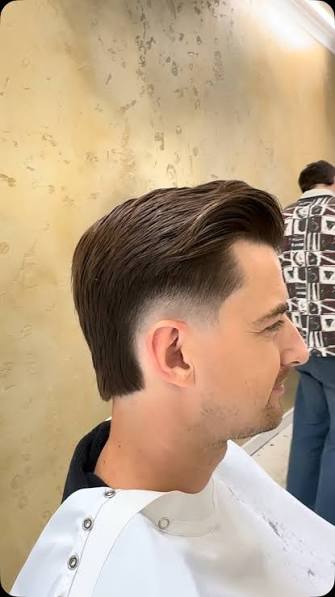
The version that keeps the high starting position without the skin contrast. Number 2 or higher at the lowest. The fade begins above the temple but blends very gradually. This reads as a structured, deliberate haircut in most professional settings while still providing the visual interest of a high starting position.
Tell your barber, “Conservative high taper. Start above the temple’s high position. Number 2 at the lowest is no skin. Very gradual blend. Office-appropriate. No design.”
School safe: Usually yes.
Office safe: Yes, in most environments.
Maintenance: Every 3-4 weeks.
High-Taper Fade Cultural History and Why It Matters
The high taper fade is not just a haircut. For significant portions of its audience it is a cultural statement with roots that predate social media by decades.
Black Barbershop Roots: 1980s and 1990s
The fade evolved from military haircuts of the mid-twentieth century before becoming a cornerstone of hip-hop culture in the 1980s and 1990s. Professional barber Christian Charon describes it as having been “combined with line-ups, designs, and flattops,” turning what was a clean functional cut into a visual statement tied to identity and community.
By 1988, according to GQ, sixty-three percent of Black men wore some fade variation. The Men’s Health 1995 Barber Survey found that taper fades had become the most requested men’s haircut in America. The high taper specifically was the dominant version in barbershop culture. Through the height of this period, the contrast was a deliberate choice, a statement of precision and care that had cultural meaning beyond aesthetics.
Latino Barbershop Culture
For Mexican and Latino communities, the taper fade is not simply about looking sharp. It represents identity, belonging, and pride passed down through generations in barbershops that function as cultural gathering spaces rather than simply service providers.
The high taper adapted across different communities, picking up design elements, line work variations, and styling preferences specific to each. What emerged is a family of related styles united by the high starting position and the precision of the blend, each with community-specific variations.
Military Origins
The practical origins of the fade are in military grooming requirements; the gradual shortening of the sides and back provided the clean appearance mandated by military regulations while maintaining some length and personality. The civilian barbershop adopted and refined this technique through the 1950s, 1960s, and 1970s before hip-hop culture transformed it into a form of self-expression in the 1980s.
Is It Okay to Have a Taper Fade in the Middle East?
Yes, in most contexts. The relevant Islamic concern is qaza, the prohibition against patchy, irregular, unevenness in hair length. A high taper fade with a smooth gradient does not constitute qaza. The majority position among contemporary scholars is that gradual fades are permissible. See the dedicated section below for the full answer.
Is a Taper Fade Haram in Islam?
The relevant Islamic prohibition is qaza cutting some sections very short while leaving others long in a patchy, irregular way. A gradual high taper fade creates a smooth gradient rather than patchy irregularity. The majority position among contemporary Islamic scholars who engage with men’s grooming is that gradual fades with smooth blending are permissible and do not constitute qaza.
The high taper skin fade where the bare scalp sits directly next to full-length hair without blending is more contested. The smooth gradient of a number 1 to 2 high taper is the version most consistently considered permissible under the majority scholarly position.
The Conservative Version
The high taper no-fade style 18 using a number 2 at the lowest, with no bare skin and a very gradual blend, is the most clearly permissible version under the cautious majority position. It provides the high taper’s visual character without the bare skin contrast that some scholars flag.
High Taper Fade by Hair Type Complete Matching Guide
| Hair Type | Best Version | Guard at Lowest | Key Instruction |
|---|---|---|---|
| Straight | Classic or skin | 0.5-1 | “Cut the top section dry.” |
| Wavy | Textured high | 1 | “Leave natural wave.” |
| Curly/coily | High taper for | 0.5 | “Cut top section dry curls shrink.” |
| Thick/Asian | Classic skin | 1 | “Extra care around contour” |
| Fine | No-skin version | 2 | “No skin coverage” |
High Taper on Straight Hair
The cleanest high tapers in existence are on thick, straight hair. The consistent flat strands make the fade gradient read as precise and sharp; every millimeter of the barber’s blend is visible and intentional. The demanding side: every imperfection in the blend is equally visible. This is the version that makes a skilled barber look exceptional and a rushed barber look obvious.
For the full straight hair guide, our boys’ haircuts for straight hair page covers twenty cuts.
High Taper on Curly Hair
The dry-cut rule applies without exception. State it before the barber touches the top. Everything else adjusts from there.
The high taper’s large contrast zone, the significant faded area created by the high starting position, creates one of the most dramatic visual combinations with curly hair volume above. The curl mass looks bigger and more impressive against the tightly faded sides.
For the complete curly guide, our curly hairstyles for men page covers types 2A through 4C.
High Taper on Asian or Thick Hair
Thick, heavy hair requires careful attention to the contour of the skull around the curve of the head as the barber works from the sides toward the back. The density of thick hair means the clipper lever setting may need adjustment around the contour to maintain a smooth, even blend.
High Taper on Wavy Hair
Wavy hair benefits from the high taper because the significant faded area below creates strong contrast that makes the natural wave volume on top look more substantial. The wave adds texture and movement without product, and the strong contrast of the high taper emphasizes it.
High Taper on Fine Hair
The no-skin version is the correct choice for fine hair. Skin-level fades on fine hair make the skin section show more prominently during grow-out; the stubble that appears as the hair regrows looks patchy rather than a clean solid shadow. The number 2 high taper maintains the strong starting position without the skin exposure issue.
High Taper Fade by Face Shape
Which fade is most attractive? Are high fades attractive? The answer depends on face shape more than any other factor.
Round face: The high taper is the strongest possible match for a round face. The high starting position and the strong vertical contrast add significant length to the visual proportions of the face. A round face with a high taper looks more oval. A round face with a low taper still looks round.
Oval face: The most flexible face shape. All high taper versions work. The classic and textured top versions look particularly strong on oval proportions.
Square face: A high taper with a softening top style textured crop, curtain fringe, or side part balances the strong jaw. The high taper adds vertical contrast, but the top style needs to avoid further emphasizing the angularity. Avoid very flat tops or very geometric styles above a high taper on a square face.
Oblong face: The high taper can over-elongate an already long face. A mid taper is the better choice for oblong proportions. If a high taper is desired, keep the top style at medium length rather than adding a tall quiff or pompadour.
Diamond face: The high taper suits diamond faces when combined with a forward fringe or curtain bang that reduces the visual width of the forehead while the high taper keeps the sides tight.
Is a High or Low Taper Better?
The decision comes down to three factors: face shape, lifestyle, and maintenance tolerance.
Choose a high taper if: Your face is round or oval and benefits from vertical contrast. You work in a creative, casual, or self-employed environment. You can visit the barbershop every two to three weeks without this being a financial or logistical burden. You have thick or naturally textured hair that holds the high contrast well.
Choose low taper if: You work in a conservative corporate environment. You want five to six weeks between visits. Your face is oblong or long, and the additional height would elongate it further. You are getting your first taper and want to start at the most conservative level.
Comparison Table of All Three Levels
| Low Taper | Mid-Taper | High Taper | |
|---|---|---|---|
| Starts at | Just above the ear | Temple | Above the temple |
| Boldness | Subtle | Balanced | Maximum |
| School safe | Always | Usually | Check |
| Office safe | Always | Yes. | Check |
| Lasts sharp | 5-6 weeks | 3-4 weeks | 2-3 weeks |
| Annual visits | 8-9 | 12-15 | 17-26 |
| Annual cost | $225-250 | $300-375 | $425-650 |
Will a High Taper Last the Same as a Mid-Skin Fade?
Reddit asks this directly, and the answer matters for planning. A high taper taken to the skin and a mid-skin fade produce similar regrowth timelines; both need attention every ten to fourteen days because the skin section grows back visibly fast regardless of where the fade starts vertically.
A high taper not taken to skin the number 1.5 version lasts about the same as a mid fade at the same guard level: three to four weeks. The height of the starting point matters less than the guard number at the lowest section when predicting grow-out.
The Honest Maintenance Reality
The high taper fade is the most expensive haircut on this site to maintain annually. Before committing, the numbers are worth seeing clearly.
Maintenance Table by Version
| Version | Looks Sharp | Grows Out Visibly | Trim Frequency |
|---|---|---|---|
| High taper, no skin | Weeks 1-2 | Week 3 | Every 3-4 weeks |
| High-taper skin | Days 1-10 | Day 12 | Every 2 weeks |
| High taper with design | Days 1-7 | Day 10 | Every 2 weeks |
Annual Cost: The Real Number
| Version | Visits Per Year | Annual Cost (US, $30/cut) |
|---|---|---|
| High taper, no skin | 12-17 | $360-510 |
| High-taper skin | 26-30 | $780-900 |
| High taper with design | 26-30 | $780-900 |
The high taper skin fade costs roughly three times the annual investment of a low taper and significantly more than a mid taper. That calculation is worth making before choosing the version—not to discourage the cut but to make the commitment a genuine choice rather than a surprise.
Is a High Taper Worth the Cost?
For the right person, yes. The high taper delivers visual impact that no other fade level produces. It frames the face from every angle. It photographs well in any lighting. For the communities where it has cultural significance, Black barbershop culture and Latino barbershop culture are more than a visual choice.
The cases where it is not worth it: if visiting the barbershop every two weeks is financially difficult, if the work environment requires a more conservative appearance, or if the face shape genuinely does not benefit from the vertical contrast the high taper creates.
How to Ask for High-Taper Fade English and Spanish Scripts
The Universal High-Taper Script
“High taper fade. Start well above the temple, about two to three inches above the ear. Number [X] at the lowest. Blend gradually upward. Keep [X] inches on top. Please check from directly behind before blending to confirm the symmetry.”
Scripts Per Version
Classic high taper: “High taper fade. Above temple start. Number 1.5 at the lowest, blending to 3. Standard version.”
Skin version: “High taper skin fade. Take the lowest section to skin zero guard. Start above the temple. Check symmetry from behind before blending.”
With design: “High taper to skin. Add a [describe design] at the temple zone. Can I see your design portfolio first?”
Conservative: “High taper, no skin. Start above the temple. Number 2 at the lowest has no bare skin. Work and school appropriate.”
En Español Para la Barbería
Classic: “Quiero un taper fade bien alto. Que empiece bien arriba del templo dos o tres pulgadas arriba de la oreja. Número uno y medio abajo, bien mezclado para arriba. Chéca que quede parejo de los dos lados antes de mezclar.”
Skin fade: “Taper fade alto a la piel. Cero abajo. Que empiece bien arriba. Chéca la simetría desde atrás antes de mezclar.”
With design: “Taper alto con diseño en el templo. A la piel. Quiero [describe design]. Me muestras tu portafolio primero?”
How Can I Improve on My High Taper?
Three things that improve any high taper result.
First tell the barber to check symmetry from directly behind before blending. This is the most common source of imperfect high tapers. The arc needs to match on both sides of the head when viewed from behind. A barber who checks before committing to the blend eliminates ninety percent of asymmetry problems.
The second book is an edge-up between full trim appointments rather than waiting for the whole fade to grow out. An edge-up refreshes only the hairline and line-up in five to ten minutes, extending the sharp appearance by a week without resetting the full maintenance clock.
Third, bring a front photo and a back photo to every appointment. The back photo shows the barber exactly where you want the high starting point to sit and how the arc looked at its best.
Is a Fade or Taper Better?
Is a fade or taper better? Is it better to be tapered or straight? These questions get asked regularly, and the answer depends entirely on what you mean.
A taper never reaches bare skin; some hair is always visible at every point in the gradient. A fade can go all the way to skin. The term “taper fade” combines both the gradual blending technique of a taper with the closeness of a fade.
For professional environments where bare skin at the sides might raise eyebrows, taper. For maximum contrast and visual sharpness, fade. The high taper fade combines the high starting position of a taper with the gradient that can go to skin; it is the boldest expression of both techniques simultaneously.
What Is the Difference Between a Taper and a Taper Fade?
A taper describes the technique of gradual shortening without reaching the skin. A taper fade describes a gradient that blends more tightly, often reaching skin or near-skin at the lowest section. Most modern usage treats “taper” and “taper fade” as interchangeable, which is why specifying the guard number at the lowest section matters more than the terminology.
High Taper Fade School Safety Guide
Which High Tapers Pass School Policy
| Version | School Safe |
|---|---|
| High taper, no skin (number 2+) | Usually yes. |
| Classic high taper (number 1.5) | Check school policy. |
| High-taper skin (to zero) | Check school dependency |
| High taper with design | Usually no |
School-Safe High Taper Script
“High taper, no skin. Start above the temple. Number 2 at the lowest—no bare skin. School-appropriate.”
For boys specifically: our boys haircuts hub covers every age from seven to eighteen. Our teen boy haircuts guide covers the full teen range with per-style school safety.
Browse More Fade Guides
For the full comparison between every fade level, our taper vs. fade guide explains every variation with exact terminology.
One level down, our mid taper fade guide covers the balanced mid level. For the conservative version, our low taper fade page covers the subtle option.
For the curved fade alternative, our drop fade page and burst fade guide cover the non-straight-line versions.
For the volume combination, our blowout taper guide covers every blowout variation.
For boys and teens: our teen boy haircuts page and boys haircuts hub.
Not sure which fade level suits your face shape? Our teen haircut finder quiz takes sixty seconds.
Frequently Asked Questions
Is a high taper fade a thing?
Yes, it is one of the most requested haircuts in barbershops across the US, UK, and globally. A high taper fade starts the fade well above the ear, near or above the temple, creating strong contrast between the faded sides and the full top. It is the boldest of the three standard taper fade levels and has roots in Black barbershop culture dating to the 1980s.
Is a high or low taper better?
Neither is objectively better; they serve different people. A high taper delivers maximum visual impact and suits round and oval face shapes particularly well. A low taper is more conservative, lasts longer between trims, and suits every professional environment. Choose based on your face shape, lifestyle, and maintenance tolerance, not on which looks better in general.
Is a taper fade haram?
The majority position among contemporary Islamic scholars is that a gradual taper fade with a smooth blend throughout rather than patchy bare spots does not constitute qaza and is permissible. The high taper with a smooth gradient from a number 1.5 upward is the version most consistently considered permissible. The high taper skin fade where the bare scalp sits directly next to full-length hair is more debated among scholars who engage specifically with this question.
What are the three types of tapers?
The three standard types describe where on the head the fade begins. Low taper starts just above the ear, the most conservative. Mid taper starts at the temple, balanced contrast. High taper starts well above the temple, with maximum contrast. Each creates a progressively bolder visual impact and progressively shorter maintenance cycle.
Which fade is most attractive?
The most attractive fade is the one matched to the face shape. Round faces benefit enormously from the high taper; the vertical contrast adds length to round proportions. Oval faces suit all fade levels. Square and oblong faces generally look better with mid- or low tapers. The high taper is most attractive on the face shapes that benefit from its strong vertical lines.
What is a 3 fade haircut?
A 3 fade refers to using a number 3 guard nine millimeters as the starting guard at the top of the fade zone. The blend transitions from number 3 downward through 2, then 1, then to skin at the bottom. On a high taper fade, the number 3 sits at the highest visible fade point, and everything below it transitions shorter.
Is a fade or taper better?
A taper keeps visible hair throughout the gradient, never bare skin. A fade can go all the way to skin. For professional and conservative environments, a taper. For maximum contrast and visual sharpness, a fade. The high taper fade combines both: the high starting position of a taper with a gradient that reaches skin at the lowest section.
What is the 3:2:1 rule for haircuts?
The 3:2:1 rule describes the three clipper guard sizes across the three zones of a fade. Guard 3 at the top of the fade zone. Guard 2 in the middle. Guard 1 at the lowest section near the hairline. The barber blends invisibly between these three points. On a high taper fade, this gradient runs from well above the ear downward to the neckline.
Are high fades attractive?
Yes, on the right face shape and with the right execution. Round and oval faces benefit from the vertical contrast a high fade creates. Square and oblong faces do better with mid- or low fades. A well-executed high fade on the correct face shape with the right hair type looks exceptionally sharp. A high fade on the wrong face shape or executed poorly looks out of place.
How long does a high taper fade last?
A high taper taken to skin needs a touch-up every ten to fourteen days because the skin section regrows visibly fast. A high taper kept at number 1.5 without skin lasts three to four weeks. A high taper with a design needs refreshing every two weeks to keep the lines crisp.
Will a high taper fade last the same time as a mid-skin fade before needing a recut?
Yes, approximately. Both need attention every ten to fourteen days because both versions go to skin at the lowest section. The vertical starting position of the fade matters less than the guard level at the bottom. A high taper to skin and a mid-skin fade both reach bare scalp and both grow back at the same rate.
Is a high taper fade school appropriate?
The high taper no-skin version number 2 at the lowest passes most school dress codes. The classic high taper at number 1.5 needs a policy check. Skin fades and designs are the most commonly flagged elements in school dress codes. The high taper is not specifically banned in any US school district, but the skin-level version may conflict with individual school policies.
How can I improve on my high taper?
Three improvements that make the biggest difference. First tell the barber to check symmetry from directly behind before blending. The second book is an edge-up between full appointments rather than waiting for the whole fade to grow out. Third, bring a front photo and a back photo to every appointment so the barber can see the exact starting height and arc that produced the best result.
Is it okay to have a taper fade in the Middle East?
Yes, in most contexts. The Islamic concern about haircuts is qaza irregular, patchy, unevenness between very short and very long sections. A gradual taper fade with smooth blending does not fit the classical description of qaza. The majority of contemporary scholars who address modern men’s grooming consider gradual fades permissible. The conservative high-taper no-skin version is the most clearly permissible approach for men who want to be cautious.
The high taper fade is not going out of style. What has changed is who is getting it and why.
The men who wore it because everyone else was wearing it are exploring alternatives. The men who wear it because it genuinely suits their face shape, their hair type, their lifestyle, and in many cases their cultural identity are still in the chair every two weeks.
That is the correct version of this cut. Specific to the person wearing it. Maintained consistently. Executed by a barber who has done it before. Chosen with full awareness of the annual cost and the maintenance commitment.
For the full comparison between every fade level, our taper vs. fade guide covers every option. For boys and teens, our boys’ haircuts hub covers every age with school safety ratings.