Mid Fade Haircut 2026: 20 Styles, the Most Popular Cut in Barbershops, and Exactly What to Tell Your Barber
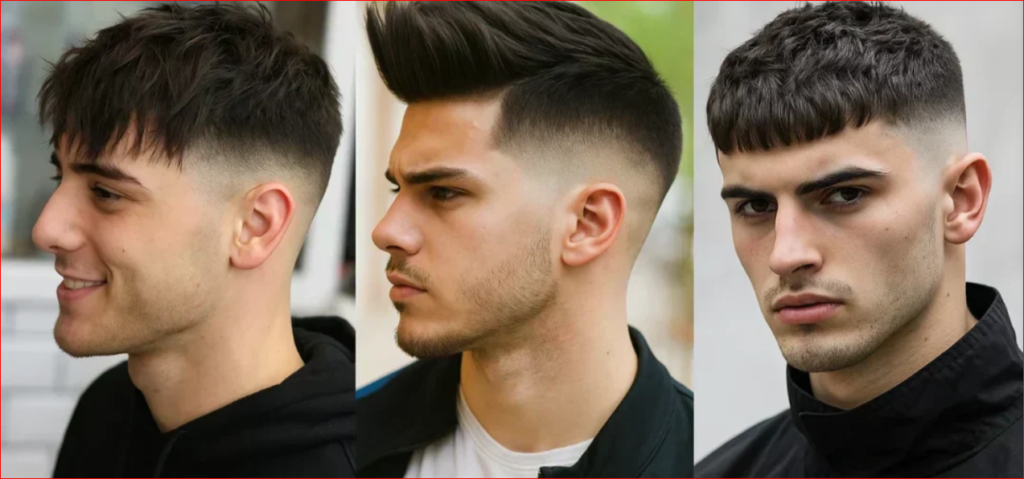
A barber on Reddit was asked what haircut they do the most. The answer: “Mine is mid fades, all day every day.”
Hundreds of replies followed. Most said the same thing.
The mid fade is not the most popular barbershop cut by accident. It sits in the exact middle of the fade spectrum, with more presence than a low taper and less extreme than a high skin fade. It starts at the temple, blends down the sides and back, and works with every hair type, face shape, and top style combination in existence.
From a crew cut for a twelve-year-old to a pompadour for a forty-year-old, a comb over for Monday and a textured crop for the weekend, the mid fade is under all of it.
This guide covers twenty mid-fade styles for 2026, the mid-skin-fade-dedicated section for every guide, the 3:2:1 rule explained, the seven basic haircuts, and exact barber scripts for every version.
At a Glance — Quick Picks
| Need | Best Mid-Fade Version |
|---|---|
| Most popular 2026 | Classic mid fade |
| Maximum contrast | Mid-skin fade |
| Office professional | Mid-fade side part or comb over |
| Curly hair | Mid-fade curls cut dry |
| School-safe | Conservative mid number 2, no skin |
| Short hair | Mid-fade buzz or textured crop |
| Boys ages 10-18 | Classic middle school rated |
| First fade ever | Classic, midmost balanced entry |
What Is a Mid Fade Haircut?
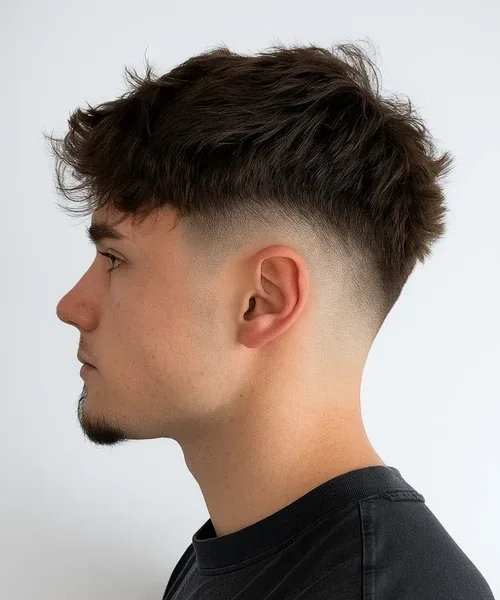
A mid fade haircut is a style where the hair gradually shortens starting at the temple, approximately one and a half to two inches above the ear, and blends down the sides and back. The word “mid” refers to where the fade starts on the head, not how dramatic the contrast is.
The appeal is the balance. A low fade starts lower and reads as subtle. A high fade starts near the crown and reads as aggressive. The mid fade starts at the temple halfway up the head and creates a result that is clearly modern without being extreme. Professional on Monday, sharp on Friday, suitable for almost every environment between.
Mid Fade vs. Low Fade vs. High Fade: The Level Comparison
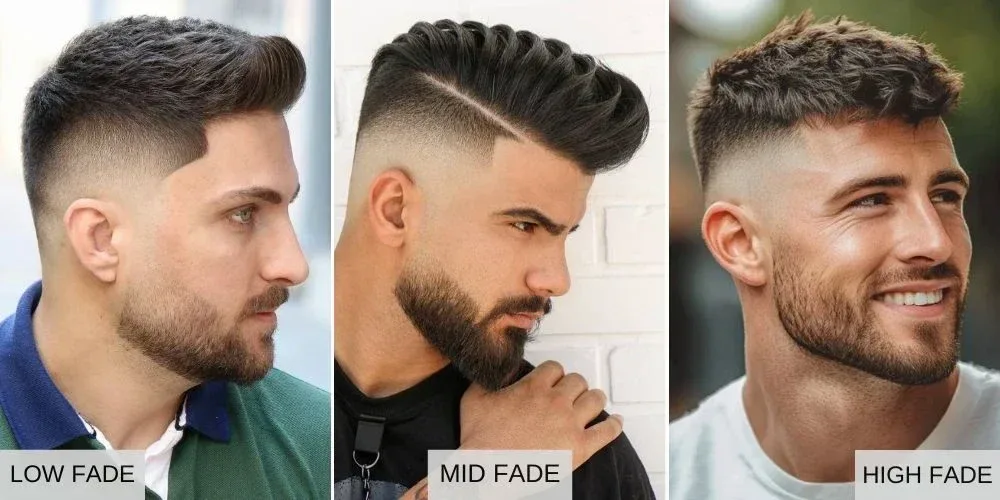
Should you get a low or mid fade? The answer depends on what you want the haircut to say and how often you are prepared to maintain it.
| Low Fade | Mid Fade | High Fade | |
|---|---|---|---|
| Starts at | Just above the ear | Temple | Near crown |
| Contrast | Subtle | Balanced | Bold |
| Office safe | Always | Yes. | Check |
| School safe | Always | Yes. | Check |
| Lasts | 5-6 weeks | 3-4 weeks | 2-3 weeks |
| Annual cost | $200-250 | $300-375 | $450-750 |
| Best for | Conservative settings | Most men | Bold, casual |
Mid Fade vs. Taper: The Actual Difference
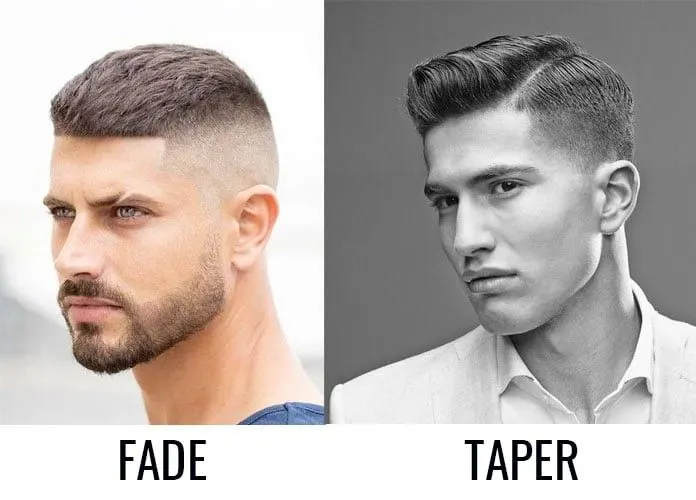
What is better, a mid fade or a taper? These terms describe different things, and the distinction matters at the barbershop.
A taper focuses on the sideburns and neckline only; the sides keep their natural length, and only the very edges are trimmed shorter. The shortest point on a taper is still visible hair, not skin.
A mid fade takes the sides shorter from temple level downward. It can go to visible short hair or all the way to bare skin. The contrast between the faded sides and the top is stronger and more visible than any taper.
For a subtle, traditional look, taper. For a modern, more defined contrast mid fade.
What Is a Mid-Skin Fade?
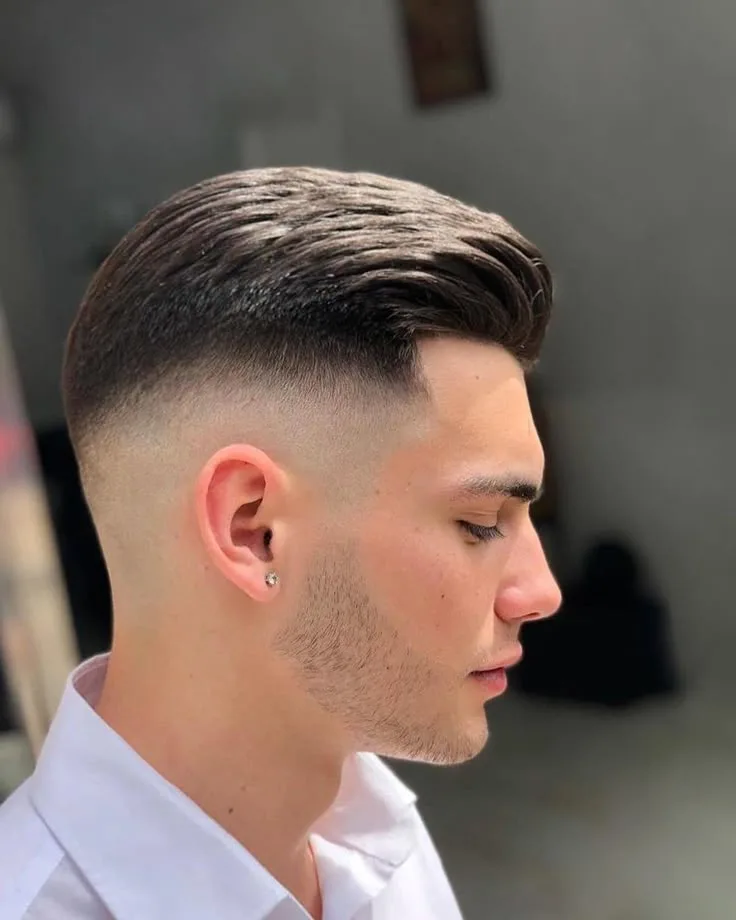
The mid skin fade is the version of the mid fade where the lowest section goes to bare skin with a zero or 0.5 guard, creating no visible hair at the bottom of the fade zone. The blend runs from bare skin at the neckline and lower sides upward to the top length.
The mid-skin fade has 6,600 monthly searches, the highest searched variation of the mid-fade. It creates the most dramatic contrast of any mid-fade version and requires the most frequent maintenance, every ten to fourteen days, rather than three to four weeks.
What Is a Mid Bald Fade?
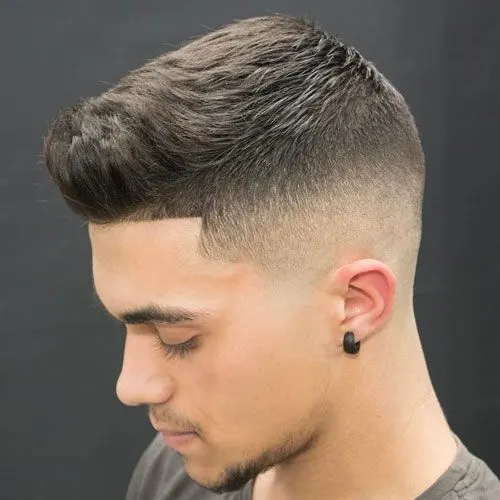
The mid bald fade is a regional name for the mid skin fade. In the US, going to bare skin is called a skin fade. In the UK, Caribbean countries, and parts of Africa, the same result is called a bald fade. Both terms describe the same technique: the fade taken to the bare scalp at the lowest section starting at temple level.
Is Mid Fade Popular?
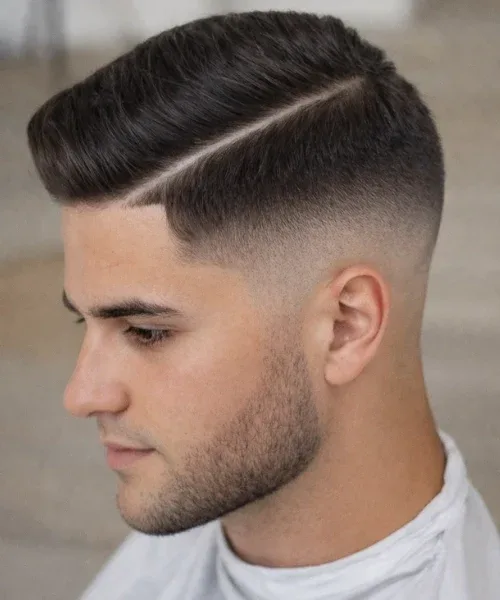
The Reddit barber thread answers this definitively. The mid fade is the most performed cut in barbershops across the US. It is the default recommendation when someone says “just give me a fade” without specifying a level. The mid fade’s versatility working with every top style and every hair type is why barbers reach for it automatically.
20 Mid-Fade Haircut Styles for 2026
Classic Mid Fade
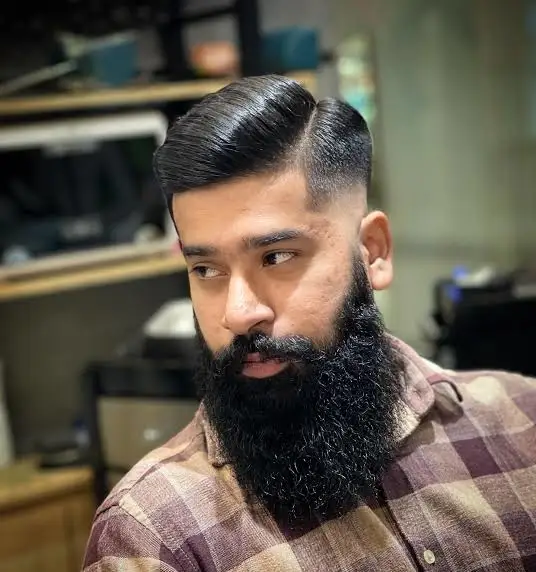
The standard. The fade starts at the temple and blends down the sides and back to a number 1 or 1.5 at the lowest section. The top is left at whatever length suits the individual. This is the version barbers produce when asked for “a mid fade” without further specification. Works in every setting and suits every face shape.
Tell your barber, “Classic mid fade. The temple starts about an inch and a half above the ear. Number 1.5 at the lowest, blending to 3 at the top of the fade zone. Keep [X] inches on top.”
Face shape: All the most universally flattering fade levels.
Hair type: All.
School safe: Yes, in most settings.
Guard numbers: 1.5 at lowest, blend to 3.
Maintenance: Every 3-4 weeks.
Style time: Depends on top zero to 3 minutes.
Mid-Skin Fade
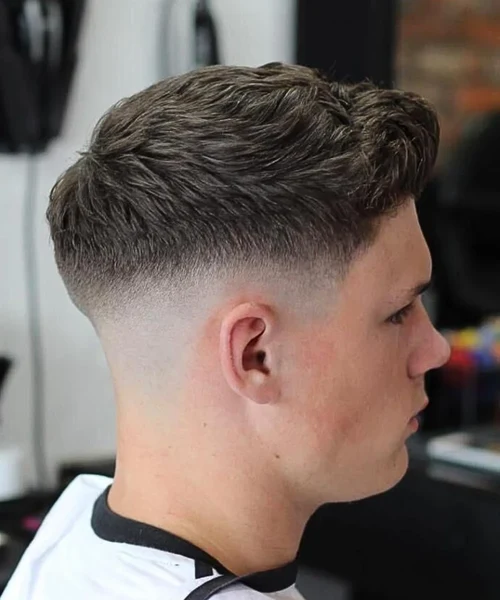
The boldest version. The fade starts at the temple and goes to bare skin at the lowest section. Maximum contrast between the skin-level sides and whatever top style sits above. This is the version most people picture when they see the words “mid fade” on social media.
Tell your barber, “Mid-skin fade.” Temple start. Take the lowest section to skin zero guard. Blend gradually from skin up to a 3 at the top of the fade zone.”
School safe: Check bare skin fades occasionally conflict with school dress codes.
Maintenance: Every 10-14 days the skin section regrows fast.
Mid Bald Fade
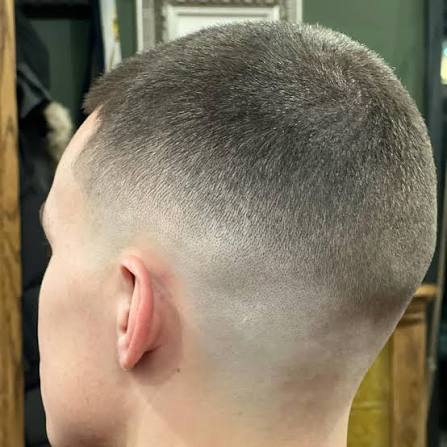
The UK and Caribbean term for the mid-skin fade. Same technique, same result, different name. If your barber is unfamiliar with one term, the other usually lands.
Tell your barber, “Mid bald fade. Take it to skin. Temple start.”
Note: The term “bald” refers to the skin section, not the wearer’s natural hair. Tell your barber either “skin fade” or “bald fade,” depending on which they recognize; both produce identical results.
Textured Mid-Fade
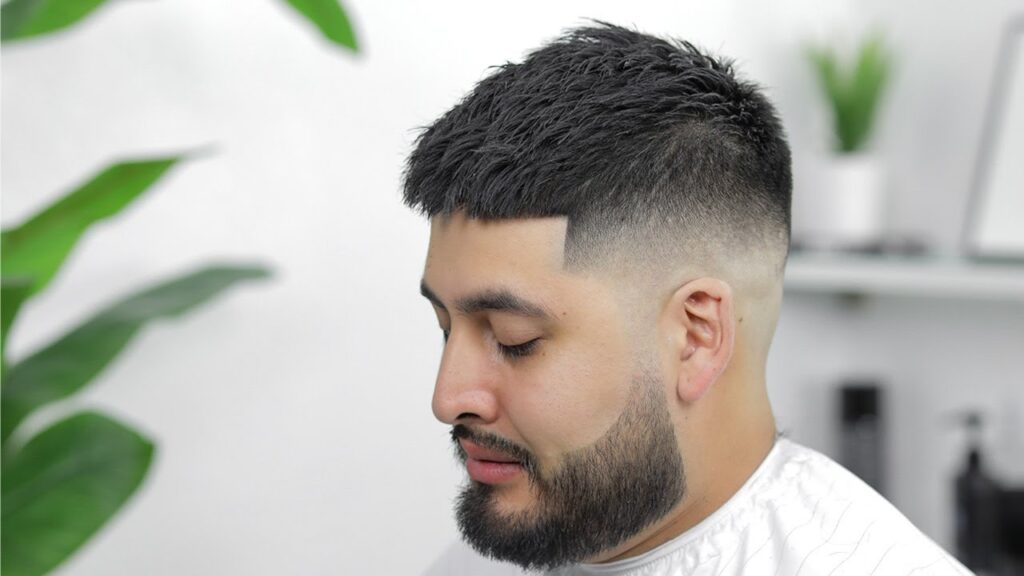
The most versatile 2026 combination. Mid fade on the sides with a point-cut textured top—choppy, separated, naturally moving. The texture comes from the cutting technique rather than daily product use.
Tell your barber, “Mid fade with textured top. Temple start. Number 1.5 at the lowest. Two inches on top—point-cut for texture. Cut the top dry.”
Face shape: Oval and round.
Hair type: All—best on straight and wavy.
School safe: Yes.
Maintenance: Every 3-4 weeks.
Style time: 90 seconds.
For the full textured fringe technique, our textured fringe guide covers point-cutting in depth.
Mid Fade with Textured Top
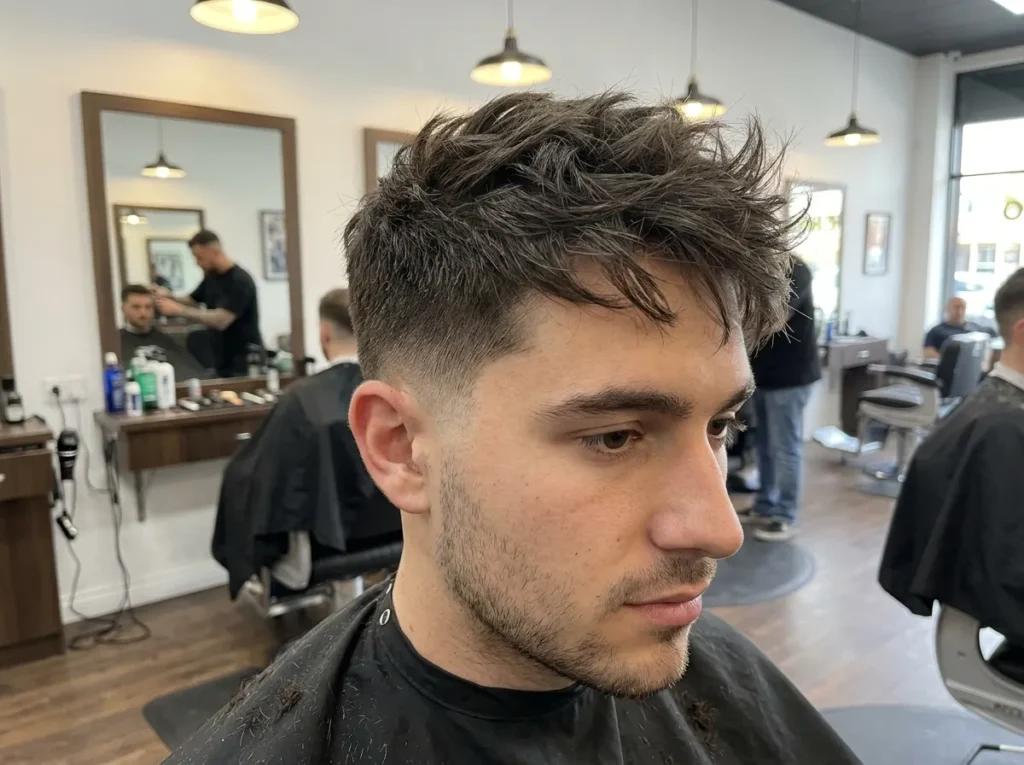
Slightly different from the textured mid fade, this version keeps more length on top (two and a half to three inches) while the texture is added through point-cutting. The top has more volume and movement than the tighter textured mid fade.
Tell your barber, “Mid fade. Two and a half inches on top, heavily point-cut for texture and separation. Temple start. Number 1 at the lowest. Cut the top dry.”
School safe: Yes.
Maintenance: Every 4 weeks.
Mid-Fade Straight Hair
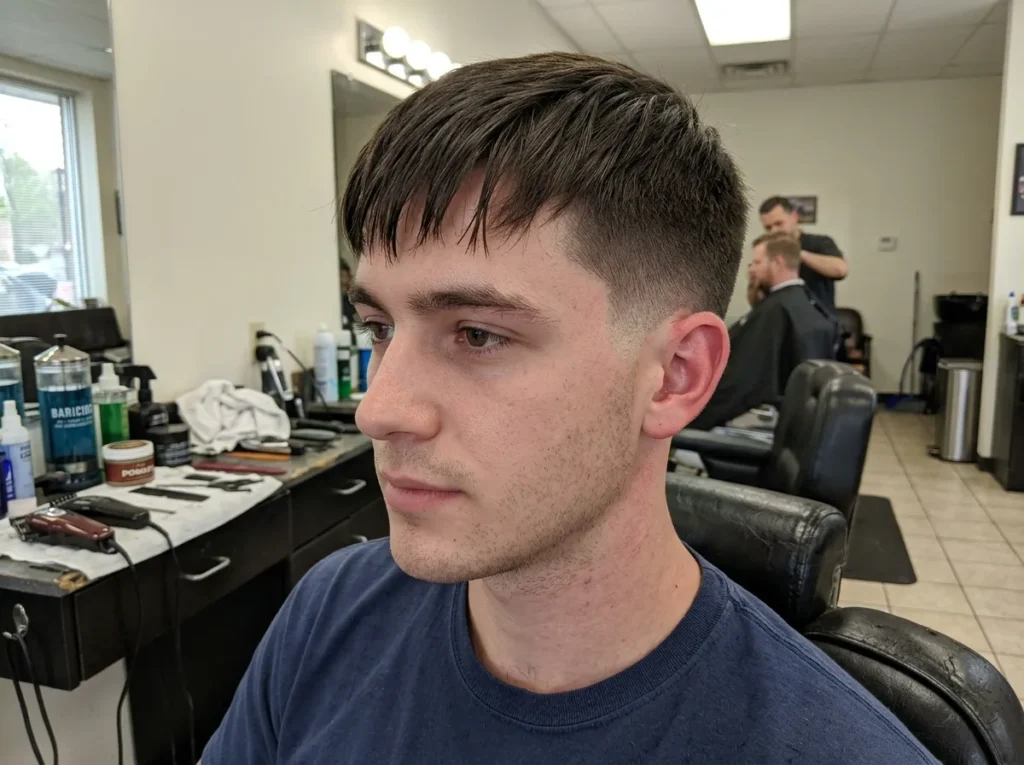
Straight hair holds clean lines and consistent color, making the mid-fade gradient exceptionally sharp on this hair type. Every detail of the barber’s blending is visible, which is both the advantage and the challenge. A well-executed mid fade on straight hair looks particularly precise.
Tell your barber, “Mid fade for straight hair. Temple start. Number 1.5 at the lowest. Cut the top dry straight; hair loses length when wet, and the dry fall is the actual look.”
Maintenance: Every 4 weeks straight hair shows grow-out clearly.
For the full straight hair guide, our boys’ haircuts for straight hair page covers twenty cuts.
Mid-Fade Curly Hair
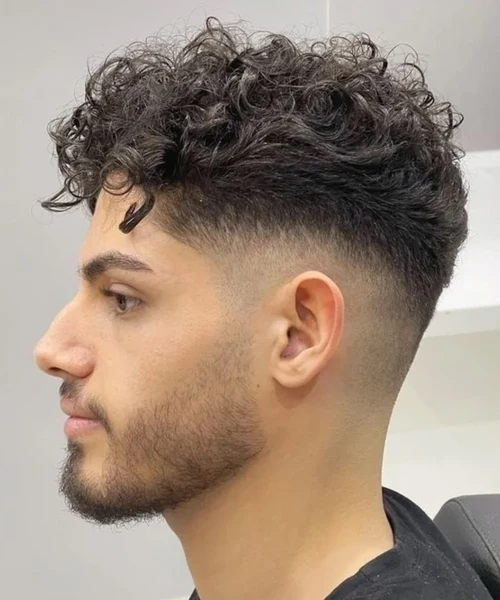
Curly hair produces the strongest mid-fade contrast because the natural curl volume on top creates a dramatic visual difference with the faded sides. The dry-cut rule is mandatory: curly hair shrinks between thirty and fifty percent when wet. A barber who cuts the top wet will produce results significantly shorter than intended.
Tell your barber, “Mid fade for curly hair. Temple starts. Number 1 at the lowest. Please cut the top section dry; my curls shrink when wet. Keep at least two and a half inches on top for the curl pattern to form.”
Style time: Curl cream on damp hair, scrunch, and air dry.
Maintenance: Every 3 weeks curly hair at the fade zone grows visibly faster.
For the complete curly guide, our curly hairstyles for men page covers types 2A through 4C.
Mid-Fade with Hard Part
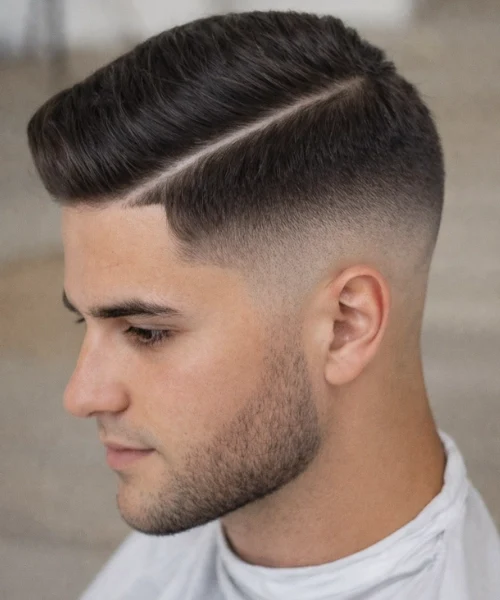
A shaved line that creates a defined boundary between the top section and the fade zone. The hard part is etched into the hair using a razor or clipper, giving the mid fade a graphic, structured element that suits office environments and formal settings.
Tell your barber, “Mid fade with a hard part. Temple start. Number 1.5 at the lowest. Hard part on the left shaved line separating the top from the fade zone.”
Office safe: Yes, the most deliberate-looking version of the mid fade.
School safe: Yes.
Maintenance: Every 2-3 weeks the hard part grows out faster than the fade.
Mid-Fade Comb Over
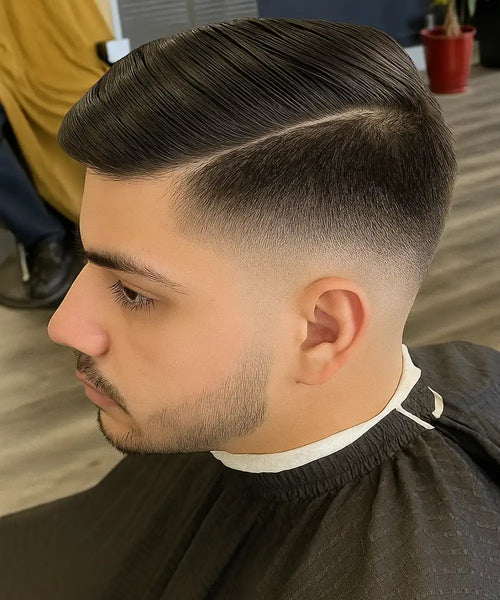
A side-parted, combed-over top with a mid fade on the sides. The comb-over provides clean direction to the top, while the mid-fade adds modern contrast beneath. One of the most office-appropriate mid fade combinations structured, deliberate, and always suitable.
Tell your barber, “Mid fade comb over. Temple start. Number 1.5 at the lowest. Side part on the left or whichever side the hair falls naturally. Two and a half to three inches on top.”
Office safe: Yes, universally.
Style time: 2 minutes damp comb, light pomade.
Maintenance: Every 3-4 weeks.
Mid-Fade Buzz Cut
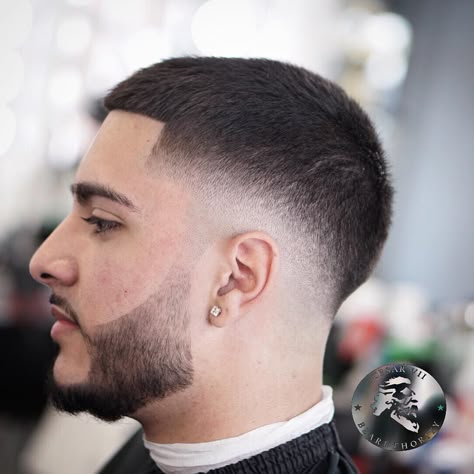
Short, uniform top with a mid fade on the sides. Zero daily styling. Maximum efficiency. For men who want a clean, deliberate look without any morning effort, the mid fade buzz cut is the most practical combination on this list.
Tell your barber: “Mid fade buzz cut. Number 2 or 3 on the top uniform. Mid-fade starting at the temple. Number 1.5 at the lowest.”
School safe: Yes, universally.
Maintenance: Every 2-3 weeks, buzz tops and mid fades both show growth quickly.
Style time: Zero.
For the full buzz cut guide, our buzz cut page covers every guard number.
Mid-Fade Side Part
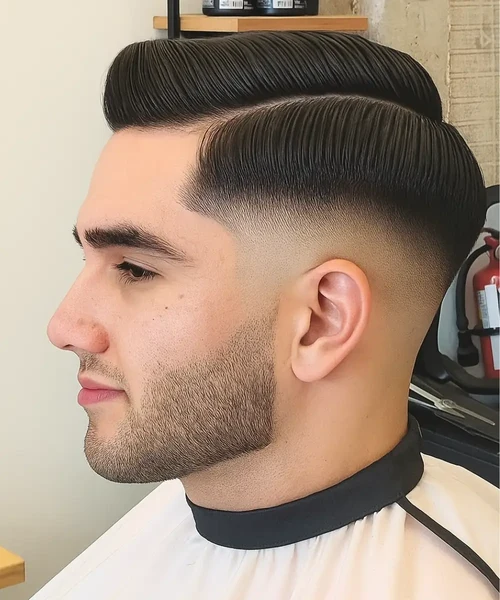
A defined side part on the longer top section with a mid fade providing the contrast on the sides and back. The side part creates deliberate direction; the hair falls consistently to one side. This version suits professional settings particularly well because the structure reads as intentional and controlled.
Tell your barber, “Mid fade with a defined side part. Temple start. Number 1.5 at the lowest. Clean the left part and blow-dry toward the part line. Two and a half inches on top.”
Office safe: Yes everywhere.
Maintenance: Every 3-4 weeks.
Mid-Fade with Design
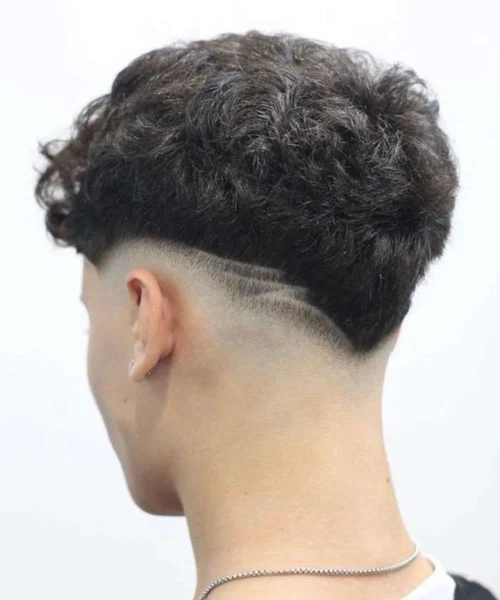
Razor art added into the mid-fade zone lines, geometric shapes, or patterns etched near the temple or above the ear. The mid fade provides the base structure, and the design adds personalization.
Tell your barber, “Mid fade with a design. Temple start. Number 1.5 at the lowest. Add [describe design] in the fade zone near the temple.”
School safe: Usually no shaved designs are the most commonly flagged element in school dress codes.
Maintenance: Every 2 weeks designs fade with regrowth.
Mid Fade Pompadour
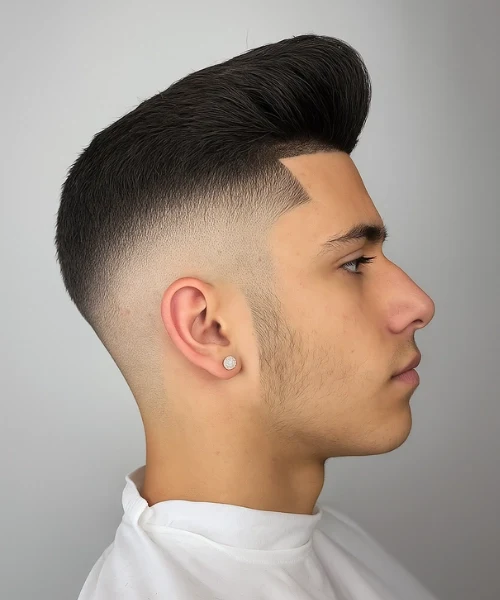
Volume pushed upward and forward at the crown above a mid fade. The pompadour adds height that suits round face shapes, while the mid fade keeps the sides modern and clean. A classic combination that has stayed relevant across every decade since the 1950s.
Tell your barber, “Mid fade pompadour. Temple start. Number 1.5 at the lowest. Keep four to five inches on top; I want enough length to blow back and up for the pompadour shape.”
Face shape: Round and oval; the height adds vertical proportion.
Style time: 5-7 minutes for round brush and pomade.
Mid-Fade Faux Hawk
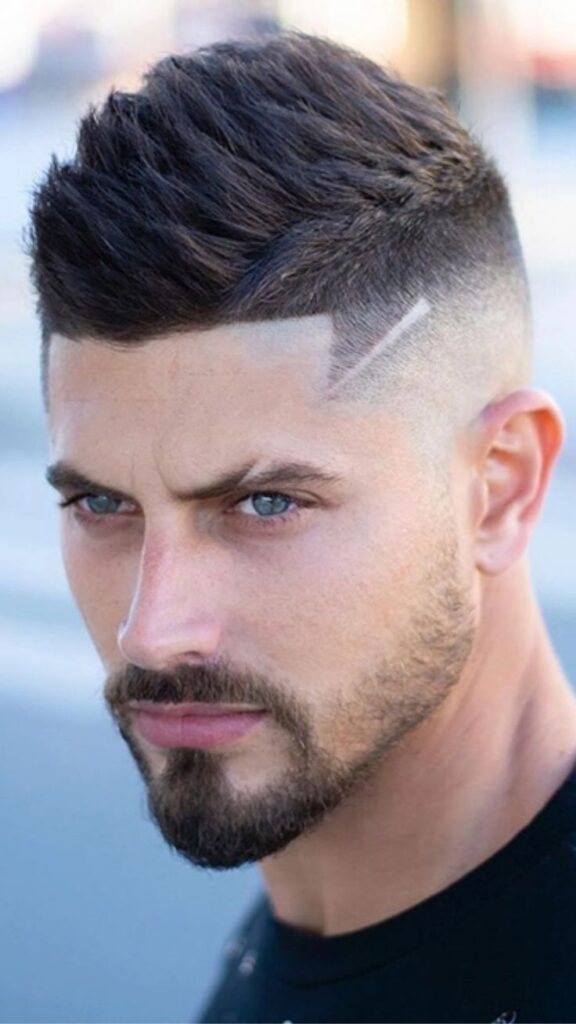
A central ridge of lifted hair running from front to back, with a mid-fade starting at the temple on both sides. Less extreme than a full mohawk, the sides are faded rather than shaved while still creating the bold central silhouette.
Tell your barber: “Mid fade faux hawk. Temple starts. Number 1 at the lowest. Keep two to three inches on top in the center. I want to push it into a central ridge when styled.”
School safe: Check that the combination of mid fade and faux hawk can conflict with conservative schools.
Style time: 3-4 minutes. Matte clay pushed upward.
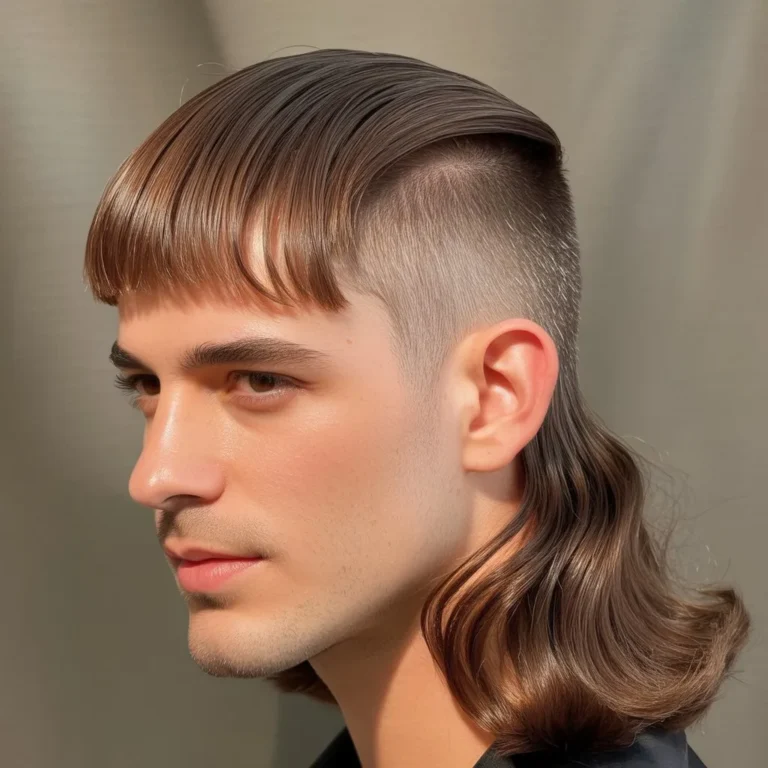
Mid-Fade Mullet
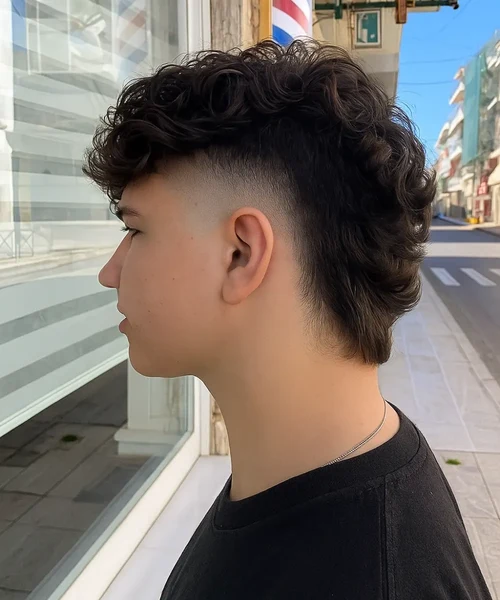
The modern mullet’s clean fade combined with a mid taper start. Short sides, a full textured top, and a longer back with the mid fade providing a clean temple-level contrast that modernizes the mullet structure.
Tell your barber, “Modern mullet with a mid fade. Temple start. Number 1.5 at the lowest. Keep the back at collar length. Textured top point-cut.”
For the full mullet guide, our modern mullet page covers every variation.
Mid-Fade Slick Back
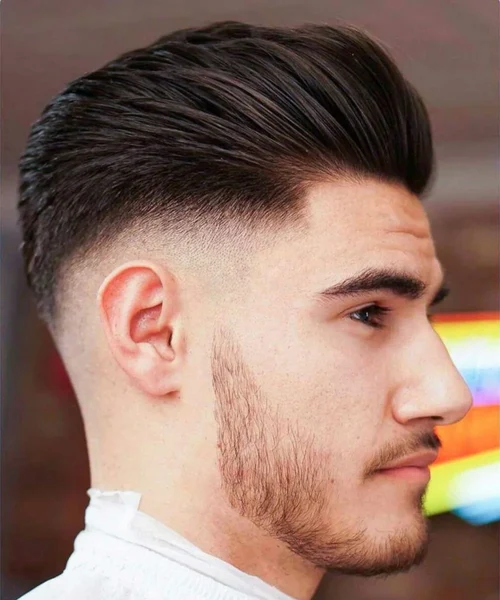
Longer top three to five inches combed straight back above a mid fade. The slick back provides clean, deliberate direction to the top, while the mid fade adds structure to the sides. The pomade shine on the top contrasts cleanly with the faded sides.
Tell your barber, “Mid fade slick back. Temple start. Three to five inches on top is enough to comb straight back. Number 1.5 at the lowest.”
Style time: 3-4 minutes. Brush back with pomade on damp hair.
Office safe: Yes, polished and intentional.
Mid-Fade Drop Fade Combo
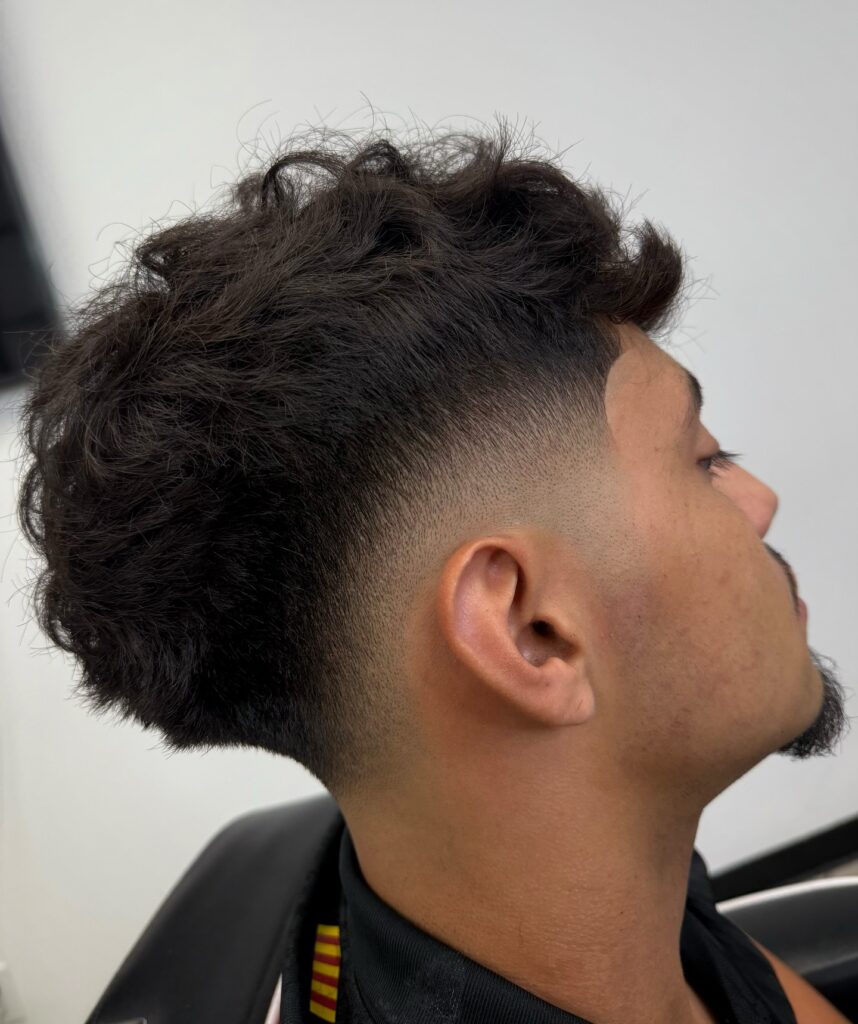
Mid-height start combined with the drop fade’s curved arc behind the ear. The fade starts at the temple (mid level) but curves downward behind the ear rather than staying straight across. This adds the dimensional character of the drop fade to the standard mid-level.
Tell your barber, “Mid fade with a drop. The temple should start, but the fade line should curve downward behind the ear, not straight across. Number 1 at the lowest.”
For the full drop fade guide, our drop fade haircut page covers the curved technique.
Mid-Burst Fade
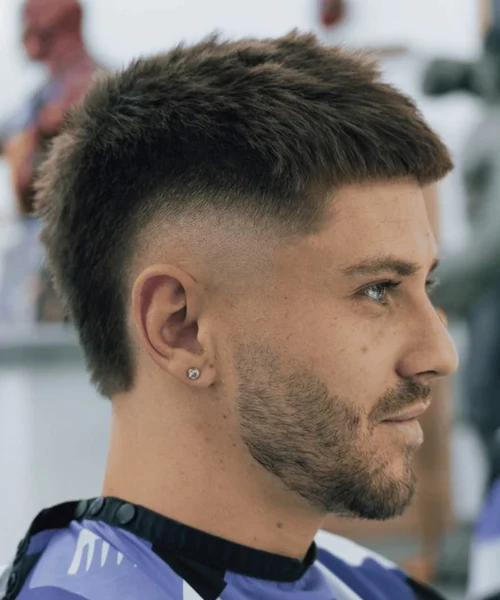
The burst fade’s semicircle arc combined with a mid-level start. The fade radiates outward from around the ear in a curved pattern rather than dropping downward. Mid-burst fades suit mohawks, faux hawks, and mullets particularly well because the outward radiation complements central-ridge top styles.
Tell your barber, “Mid-burst fade.” The fade should arc around the ear in a semicircle, not straight across or dropping down. Temple level start.”
For the full burst fade guide, our burst fade page covers every variation.
Mid-Fade for Boys and Teens
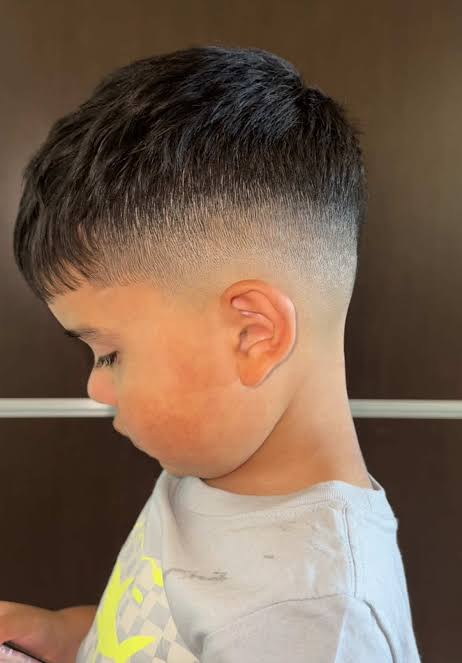
The mid fade is one of the most requested haircuts for boys aged ten to eighteen. The classic mid fade number 1.5 at the lowest, no skin, is school-appropriate in virtually every setting. The mid-skin fade needs a policy check before committing.
For boys ten to thirteen, classic mid fade at number 1.5. School-safe everywhere. Low maintenance. Works on every hair type.
For teens fourteen to eighteen, classic or slightly bolder mid-fade. Mid-skin fade is school-appropriate in most US environments but worth checking specific school policy.
Tell your barber (for boys): “Mid fade for a [age]-year-old. Temple start. Number 1.5 at the lowest not to skin. School-appropriate.”
For the full age-specific guides: our teen boy haircuts page and boys’ haircuts hub.
Conservative Mid-Fade
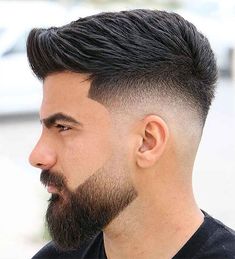
Number 2 or higher at the lowest point. No skin visible anywhere. Extremely gradual blend. This is the version for formal professional environments, conservative school dress codes, and anyone who wants the mid-fade character without any potential policy conflict.
Tell your barber, “Conservative mid fade. Temple start. Number 2 at the lowest is no skin. Very gradual blend. Keep it professional.”
School safe: Yes, universally.
Office safe: Yes, in every environment.
Maintenance: Every 4-5 weeks, most forgiving grow-out.
Mid-Skin Fade: The Complete Guide
The mid-skin fade deserves its own section. With 6,600 monthly searches, it is the highest-searched variation of the mid fade and the version most people imagine when they see mid fade photos online.
What Is a Mid-Skin Fade?
A mid-skin fade takes the fade to the bare scalp at the lowest section. The process: the barber starts at temple level and blends downward, with the guard size progressively decreasing toward the neckline until the clippers are running on bare skin or a 0.5 guard near-skin. The result is sharp, high-contrast, and distinctly modern.
Mid-Skin Fade vs. Mid-Taper
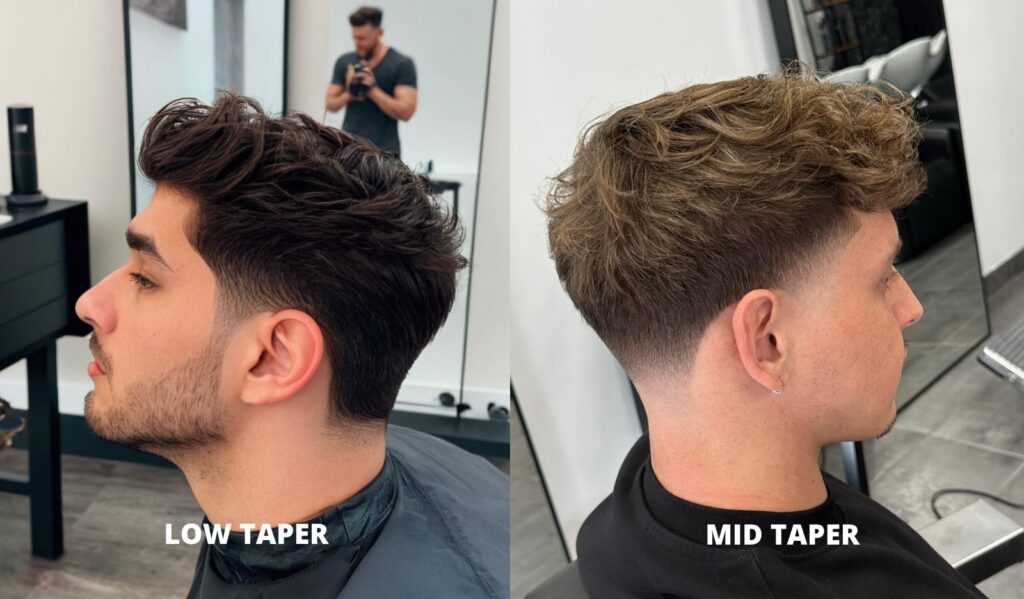
The skin fade goes to bare skin. The taper keeps some visible hair throughout. On a mid-skin fade, someone can see the scalp at the lowest section. On a mid taper, there is always some hair coverage at every point in the gradient.
For professional environments, mid taper is safer. For maximum visual impact in casual settings, mid-skin fade.
Who Should Get a Mid-Skin Fade?
Thick, healthy hair at the sides produces the cleanest mid-skin fade because the contrast between the full fade and the skin is sharp and consistent. The skin section grows back visibly within ten to fourteen days on most hair types; planning regular visits is necessary.
Fine or thin hair at the sides means the skin section may look patchy as it grows back rather than a clean, solid stubble. A number 1 (3 mm) rather than true skin gives a similar effect with more forgiving grow-out.
Mid-Skin Fade Barber Script
“Mid-skin fade. Temple start. Take the lowest section to skin zero guard. Blend gradually upward from skin to a 3 at the top of the fade zone. Check symmetry before blending; I want both sides matching.”
Mid-Fade by Hair Type Complete Matching Guide
| Hair Type | Best Version | Guard at Lowest | Key Instruction |
|---|---|---|---|
| Straight | Classic or skin | 1.5 | “Cut top dry.” |
| Wavy | Textured or classic | 1.5 | “Let the wave show.” |
| Curly | Mid-fade curls | 1 | “Cut the top section dry.” |
| Thick | Mid-skin fade | 1 | “Clean sharp blend” |
| Fine/Thin | Conservative | 2 | “No skin coverage” |
Mid-Fade on Straight Hair
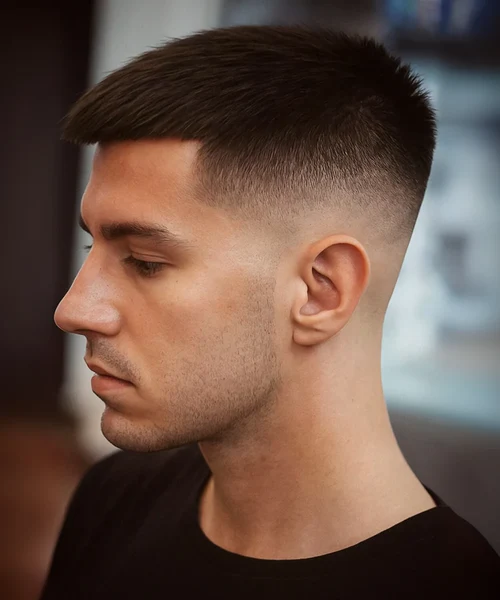
Straight hair is the most precise canvas for a mid fade. The clean, consistent strands make every detail of the barber’s blending visible, both its precision and any imperfection. The top style choice matters most on straight hair because without natural texture, product and technique create all the volume and movement.
For the full straight hair guide, our boys’ haircuts for straight hair page covers twenty cuts.
Mid-Fade on Curly Hair
The dry-cut rule is the single most important instruction for curly hair mid-fades. State it before the barber touches the top. Everything else adjusts from there.
For the complete curly guide, our curly hairstyles for men page covers types 2A through 4C with dedicated styling instructions.
Mid-Fade on Thick Hair
Thick hair holds the mid-fade shape longer than fine hair because the dense strands take longer to grow to a visible length. The mid-skin fade looks particularly clean on thick hair because the density at the top creates strong contrast with the skin section below.
Mid-Fade on Wavy Hair
Wavy hair is one of the most forgiving types for a mid fade. The natural wave adds texture and movement to the top without product, and the wave disguises the early grow-out phase of the fade better than straight hair. The mid fade grows out gradually, and the wavy texture makes it look intentional longer.
Mid-Fade for Fine Hair
Fine hair benefits from keeping a number 2 as the lowest guard. Going to skin on fine hair means the skin section shows more clearly during grow-out, which can look patchy rather than clean. A conservative mid fade with a gradual blend maintains the structure without the high-maintenance skin section.
Mid Fade by Face Shape
What is the most attractive fade? The one matched to the face shape. The mid fade is the most universally flattering fade level precisely because its moderate contrast suits more face shapes than a high fade and more presence than a low taper.
Round face: The mid fade adds vertical proportion through the contrast it creates. A textured top or pompadour above a mid fade elongates round proportions. The mid-level specifically suits round faces better than a high fade, which can over-emphasize the round shape.
Oval face: The most flexible face shape. Every mid-fade version works. The classic, textured, and comb-over versions all look particularly strong on oval proportions.
Square face: The mid fade is one of the strongest fade choices for square faces because the temple-level start creates clean contrast without imposing an extreme line that can emphasize angular features. Softer top styles and textured crop and curtain bangs balance the square jaw well above a mid fade.
Oblong face: A mid fade works better than a high fade on oblong faces because the lower starting point avoids adding vertical height. Keep the top style at medium length rather than adding a tall quiff or pompadour.
Diamond face: The mid fade balances the prominent cheekbones of a diamond face without creating additional width at the sides. A forward fringe or textured crop above the mid fade suits diamond proportions well.
Heart face: A mid fade with a fringe or curtain bang combination suits heart-shaped faces; the fringe covers the wide forehead while the mid fade keeps the sides controlled.
Is Mid-Fade Haram in Islam?
This question appears directly in Google’s People Also Ask for mid-fade searches and reflects genuine concern among Muslim men.
The relevant Islamic prohibition is qaza cutting some sections very short while leaving others long in a patchy, irregular way. The mid fade creates a smooth gradient rather than a patchy contrast. The majority position among contemporary scholars who engage with men’s grooming questions is that gradual fades where the blend is smooth throughout do not constitute qaza and are permissible.
The conservative mid fade using a number 2 at the lowest with no bare skin is the version most consistently considered permissible under the majority scholarly position. The mid-skin fade, where the bare scalp sits next to full-length hair at the top of the fade, is more contested among scholars who engage with this question.
What Are the 7 Basic Haircuts?
The 7 basic haircuts in barbershop tradition are the foundational cuts that every barber learns and every other haircut builds from:
1. Buzz cut uniform clipped length all over, every guard number variation.
2. Crew cut short even tops with tapered sides, the American default for decades.
3. Side Part / Comb Overdefined direction on top with clean sides, from classic to modern.
4. Fade haircut: gradual shortening of the sides and back, the foundation of modern men’s haircuts. The mid fade is the most popular variation.
5. Taper the conservative side trim, focusing on the sideburns and neckline.
6. Undercut the disconnected top with clipped or shaved sides, creating sharp contrast.
7. Textured Crop / Fringe: Choppy forward fringe with layered top, the dominant modern short style.
Where the Mid-Fade Fits
The mid fade is a variation of the fourth basic haircut, the fade, and serves as the foundation for almost every other modern men’s haircut. A buzz cut with a mid fade. A crew cut with a mid fade. A comb over with a mid fade. A textured crop with a mid fade. Every basic haircut becomes more contemporary with a mid fade added to the sides.
The 3:2:1 Rule for Haircuts
The 3:2:1 rule is a barber’s framework for executing a fade, specifically the three guard sizes used across the three zones of the gradient.
What the 3:2:1 Rule Means
Guard 3 is the longest guard used in the fade zone. Applied at the top of the fade zone, just below where the sides transition to the full-length top section. On a mid fade, this is at approximately temple height or just below it.
Guard 2 is the middle guard. Applied in the middle section of the fade gradient. On a mid fade this runs from slightly below temple level toward the midpoint of the sides.
Guard 1 is the shortest guard in the blended zone. Applied at the lowest section of the fade near the natural hairline. On a skin fade, this transitions further to a 0.5 or zero.
The barber blends between these three points using upward clipper strokes—he technique that eliminates visible lines between guard sizes and creates the smooth gradient that defines a well-executed fade.
3:2:1 on a Mid-Fade Exactly
On a mid fade, guard 3 sits just below the top-length transition at temple height. Guard 2 runs through the middle section of the visible fade. Guard 1 sits at the lowest point near the hairline at the neckline and sideburn area. The blending between these three points is where the barber’s skill is most visible; a good blend is invisible.
What Is a Friendly Fade?
A friendly fade is a colloquial term for a conservative fade, one that is subtle enough that colleagues in a professional environment will not notice an aggressive haircut. The term comes from the concept of a haircut that is “work-friendly” or “office-friendly.” A number 2 or 3 at the lowest, a very gradual blend, no skin visible. The conservative mid fade is the most common type of friendly fade.
How to Ask for a Mid-Fade Complete Barber Scripts
The Universal Mid-Fade Script
“Mid fade. The temple starts about an inch and a half above the ear. Number 1.5 at the lowest, blending to 3. Keep [X] inches on top.”
That script covers every piece of information a barber needs. Where the fade starts, the guard at the lowest point, and the top length. Adding the specific top style after gives the barber the complete picture.
Scripts Per Version
Classic mid fade: “Mid fade. Temple start. Number 1.5 at the lowest, blending to 3. Standard version.”
Mid-skin fade: “Mid-skin fade. Temple start. Zero guard at the lowest takes it to skin. Blend from skin up to a 3.”
Conservative: “Conservative mid fade. Number 2 at the lowest is no skin. Very gradual blend. Office-appropriate.”
With textured top: “Mid fade with textured top. Number 1.5. Cut the top dry two and a half inches, point-cut for texture.”
For a boy: “Mid fade for an [age]-year-old. Number 1.5 not to skin. School-appropriate.”
What Is a No. 1. Haircut?
A number one guard cuts hair to three millimeters, the tightest fade level before bare skin. On a mid fade it is used at the lowest section of the gradient near the natural hairline. Number two is six millimeters, and number three is nine millimeters.
2 on Top Mid Fade Explained
“2 on top mid fade” means a number 2 guard on the top section of the hair combined with a mid fade on the sides. The top stays at six millimeters, very short, almost a buzz cut length, while the mid fade provides the standard temple-level gradient on the sides. A clean, low-maintenance combination.
Two Photos, Always Two
The front photo shows the top style and fade height from the front. The side photo shows the exact level where the fade starts and how the transition looks from the side. A single front photo leaves the entire side profile to the barber’s interpretation.
Mid-Fade for Boys and School Safety
The mid fade is the most requested haircut for boys aged ten to eighteen. The classic version number 1.5 at the lowest, no skin—is school-appropriate in virtually every setting in the US and UK.
Best Mid-Fade for Boys
For boys ten to thirteen: classic mid fade with a number 1.5 at the lowest. School-safe everywhere. Grows out over four to five weeks. Zero morning effort required.
For teens fourteen to eighteen: classic or textured mid fade. The mid-skin fade is broadly school-appropriate but worth checking specific school policy before committing.
School Safety Per Version
| Version | School Safe |
|---|---|
| Conservative mid (number 2, no skin) | Yes, universally. |
| Classic mid fade (number 1.5) | Usually yes, check policy. |
| Mid-skin fade (to bare skin) | Check school-dependent |
| Mid fade with design | Usually no |
| Mid-burst or drop combo | Usually yes. |
School-Safe Mid-Fade Script
“Mid fade. School-appropriate. Number 1.5 at the lowest no skin. Clean standard version.”
For the full age-specific guides: our teen boy haircuts page covers thirteen to eighteen. Our boys’ haircut hub covers ages seven to twelve with school safety ratings.
How Long Does a Mid-Fade Last?
Maintenance Table by Version
| Version | Looks Sharp | Grows Out | Trim Frequency |
|---|---|---|---|
| Conservative mid | Weeks 1-4 | Week 5 gradually | Every 4-5 weeks |
| Classic mid fade | Weeks 1-3 | Week 4 gradually | Every 3-4 weeks |
| Mid-skin fade | Days 1-10 | Day 12-14 | Every 10-14 days |
| Mid fade with design | Days 1-7 | Day 10 | Every 2 weeks |
Annual Cost by Version
| Version | Trims Per Year | Annual Cost (US, $30/cut) |
|---|---|---|
| Conservative mid | 9-10 | $270-300 |
| Classic mid fade | 12-15 | $360-450 |
| Mid-skin fade | 26-36 | $780-1080 |
The mid-skin fade costs three to four times the annual investment of a conservative mid-fade. That calculation is worth making before choosing the skin version; the look is sharper, but the commitment is significantly higher.
Browse More Fade Guides
For the full comparison between every fade type, our taper vs. fade guide covers the complete spectrum with exact terminology.
For one level down, our low taper fade guide covers the conservative version in full depth.
For the taper version at the same height, our mid taper fade page covers the mid taper specifically where the blend stays above skin level throughout.
For curved alternatives: our drop fade haircut page covers the curved arc version, and our burst fade guide covers the semicircle variation.
For style combinations: our blowout taper guide and textured fringe page cover the top-style combinations that pair with any mid fade.
For boys and teens: our boys’ haircuts hub and teen boy haircuts guide cover every age with school safety ratings.
Not sure which version suits your face shape? Our teen haircut finder quiz takes sixty seconds.
Frequently Asked Questions
What is a mid fade haircut?
A mid fade haircut is a style where the hair gradually shortens starting at the temple, approximately one and a half to two inches above the ear, and blends down the sides and back. The word “mid” describes where the fade starts on the head. The mid fade sits between the low fade, which starts just above the ear, and the high fade, which starts near the crown. It is the most commonly requested fade in barbershops because it balances modern contrast with professional versatility.
Is mid-fade haram in Islam?
Most contemporary Islamic scholars consider gradual mid fades permissible because they create a smooth blend rather than the patchy irregularity described in the prohibition against qaza. The conservative mid fade using a number 2 at the lowest, with no bare skin, is the version most consistently considered permissible. The mid-skin fade, where the bare scalp sits directly next to full-length hair, is more debated among scholars who engage specifically with this question.
What’s better, mid-fade or taper?
They serve different purposes. A taper focuses only on the sideburns and neckline with visible hair throughout, making it more conservative, longer-lasting, and subtle. A mid fade creates a more visible gradient starting at the temple with stronger contrast and is more modern but needs more frequent maintenance. For a traditional professional look, taper. For a clearly modern haircut, a mid fade.
Should I get a low or mid fade?
Choose low if you want a subtle, conservative look that suits formal professional environments and lasts five to six weeks. Choose mid if you want more visible contrast, suit most professional and casual settings, and are comfortable visiting the barber every three to four weeks. The mid fade is the right starting point for most men getting their first proper fade.
What are the 7 basic haircuts?
The seven foundational barbershop cuts are the buzz cut, the crew cut, the side part or comb over, the fade haircut, the taper, the undercut, and the textured crop or fringe. The mid fade is a variation of the fade, the fourth basic cut, and serves as the foundation for almost every other modern men’s haircut combination.
What is the most attractive fade?
The most attractive fade is the one matched to the face shape and hair type. The mid fade is considered the most universally flattering because its moderate starting position suits more face shapes than a high fade and provides more presence than a low taper. Round faces benefit from the vertical contrast it adds. Oval faces suit all versions. Square faces benefit from the balanced structure at temple height.
What is a no. 1 haircut?
A number one guard cuts hair to three millimeters, the tightest fade level before bare skin. On a mid fade it is used at the lowest section of the gradient near the natural hairline. Higher guards mean longer hair; number two is six millimeters, number three is nine millimeters, and number four is twelve millimeters.
Which type of fade is better?
The best fade type depends on face shape, hair type, and how often you can visit the barbershop. The mid fade suits the widest range of men, versatile enough for professional and casual settings, and strong enough to read as deliberate. The low taper is better for conservative environments. The high skin fade is better for maximum visual impact in casual settings.
What is a drop fade?
A drop fade is a variation where the fade line curves downward behind the ear rather than staying straight horizontal. The curved arc follows the natural contour of the skull. It can be executed at low, mid, or high levels; a mid drop fade starts at the temple and curves downward behind the ear. For the full guide, our drop fade haircut page covers every variation.
Is mid fade popular?
Yes, definitively. A Reddit thread asking barbers what they do most received “mid fades, all day every day” as the dominant answer. It is the most performed haircut in barbershops across the US and UK. The mid fade’s versatility working with every hair type, face shape, and top style is why it became the default recommendation when someone asks for “just a fade.”
Are high fades attractive?
High fades are considered attractive in casual and creative environments where bold, high-contrast styles are appropriate. They are less universally flattering than mid fades because the aggressive contrast and crown-level start can emphasize certain face shapes negatively. For round faces, a high fade adds length. For oblong faces, it can elongate further. The mid fade is generally considered more broadly attractive because it suits more face shapes in more settings.
How should a mid-fade look?
A correctly executed mid fade should have a gradient that begins at approximately temple height and blends smoothly down the sides and back. The blend should be invisible, with no visible lines between guard sizes. The lowest point should match whichever guard was specified, stubble at a number 1.5, or skin at a zero. The fade on both sides should be symmetric when viewed from behind.
What is the 3:2:1 rule for haircuts?
The 3:2:1 rule describes the three clipper guard sizes used across the three zones of a fade. Guard 3 at the top of the fade zone. Guard 2 in the middle section. Guard 1 at the lowest section near the hairline. The barber blends invisibly between these three points using upward clipper strokes. On a mid fade, this gradient runs from temple level downward to the neckline.
What face shape suits a high fade?
A high fade suits oval and round face shapes best. Oval faces are flexible enough to wear any fade level. Round faces benefit from the vertical lines and height contrast that a high fade creates. Square and oblong faces generally look better with a mid or low fade; the high fade can emphasize square angles and elongate oblong faces further.
The mid fade is the most performed haircut in barbershops because it earns that position. It is the balance point of the fade spectrum—enough contrast to look modern and deliberate, controlled enough to work everywhere from the boardroom to the weekend.
Pick the version from this guide that matches your hair type and face shape. Save the barber script. Choose the guard number at the lowest point that matches your maintenance tolerance. Bring two photos.
That combination gets you the result that made the mid fade the most requested cut in barbershops all day every day.
For the complete fade level comparison, our taper vs. fade guide covers every option. For boys and teens, our boys’ haircuts hub covers every age with school safety ratings.