Little Boy Haircuts 2026: 20 Cute and Easy Styles for Ages 2-6
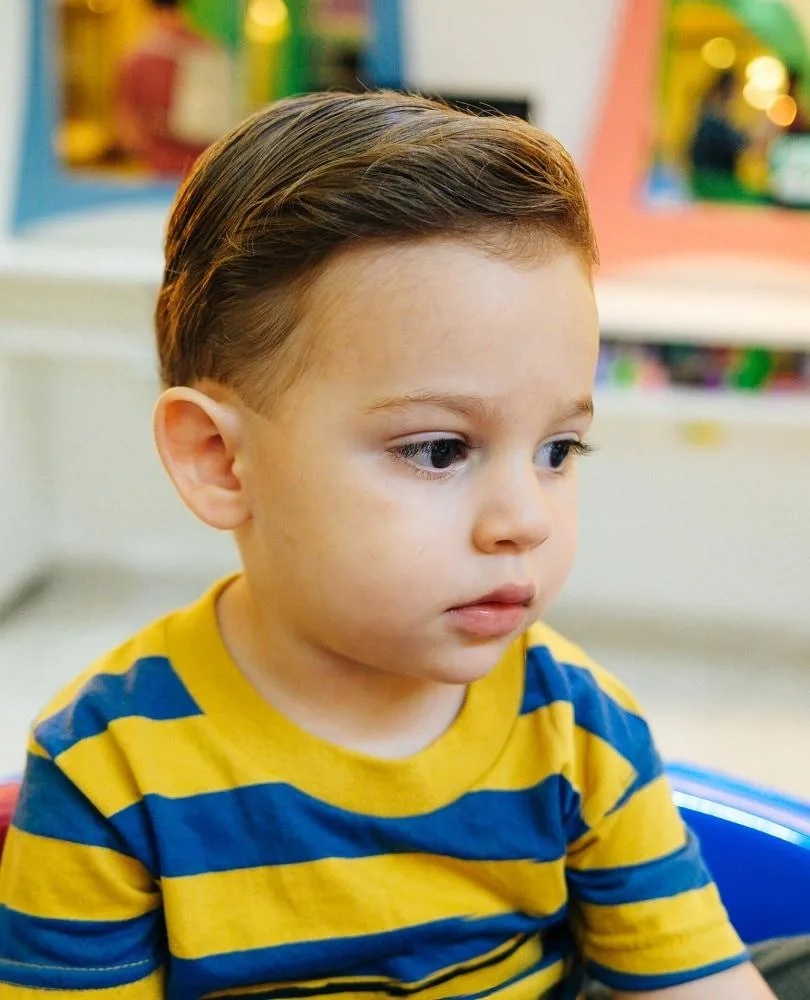
A mum walked in last October with her three-year-old son on her hip. She had been putting this off for six months. His hair was curling past his collar, getting matted at the back, and falling into his eyes every morning.
He started crying before she had even sat him in the chair.
I asked him his name. He told me. I showed him the electric clippers and let him touch them while they were off. I told him exactly what was going to happen. I asked the mom to sit directly in front of him so he could see her face the whole time. I used scissors first and only brought the clippers in for the last two minutes when he had settled.
He left with a crew cut and a lollipop. He was pointing at his head in the mirror before we had taken the cape off.
That is the whole challenge of a little boy’s haircut. Not which style. Not how to ask the barber. The challenge is the two minutes between sitting him down and the first snip, when everything can go well or everything can fall apart.
This guide covers twenty cuts for boys aged two to six. Every style includes how long he needs to sit still, a barber script you can use directly, and the fastest version of each cut for the days when sitting still is not going to happen.
At a Glance — Quick Picks
| Situation | Best Cut |
|---|---|
| Fastest cut (under 8 min) | Buzz Cut |
| Zero sitting anxiety | Crew Cut with Scissors |
| First haircut ever | Scissor Cut — crew or bowl |
| Curly hair: keep the curls | Curly Crop Fade |
| Fine or thin hair | French Crop |
| School photo ready | Side Part with Low Taper |
| He genuinely hates haircuts | Buzz Cut — done fastest |
| Long hair, Mum loves | Shaggy Layers |
| Most popular 2026 | Textured Crop |
When Should You Cut Your Little Boy’s Hair for the First Time?
This is the question every parent of a baby boy searches for before anything else. There is no universal answer. Hair growth varies enormously between children. Some boys need a first trim at nine months. Others arrive at their second birthday with barely enough hair to comb.
The question is not about age. It is about readiness signals.
Signs He Is Ready for a First Cut
Hair falling past the eyebrows and into his eyes consistently. Hair at the collar that is getting tangled or matted. Sections that have grown noticeably longer than others and are starting to look uneven. Heat rash or irritation at the neck where the hair is long and thick. Any of these signals mean the hair is ready regardless of age.
If you are holding off for sentimental reasons and none of these apply, that is completely valid. There is no medical reason to cut a baby boy’s hair at any particular age.
How Old Is Old Enough?
Most barbershops are comfortable cutting a child’s hair from around twelve months. Before that the scalp is still soft and the head movements are less predictable. Kids’ salons often take younger children because their chairs and techniques are specifically designed for infants.
The most common age for a first proper haircut is between twelve and eighteen months for boys who have grown hair quickly and between two and three years for slower growers.
First Time at Home or Salon?
For a first cut where you are trimming half an inch of overgrown fringe or tidying around the ears, home cutting is perfectly reasonable at ages two to three. The result does not need to be precise. It needs to be less than what was there before.
For anything more structured, a crew cut, a taper, or any kind of fade, a barber is the better choice from age three onwards. The technique matters, and a trained barber will produce a result that grows out properly, which home cutting rarely does.
Short and Easy Haircuts for Little Boys
Shortcuts are the most reliable choice at ages two to six for one reason above all others. They are faster. A crew cut takes eight to ten minutes. A buzz cut takes five. A fade cut takes fifteen to twenty. At two years old, five minutes is achievable. Twenty minutes is ambitious.
Crew Cut
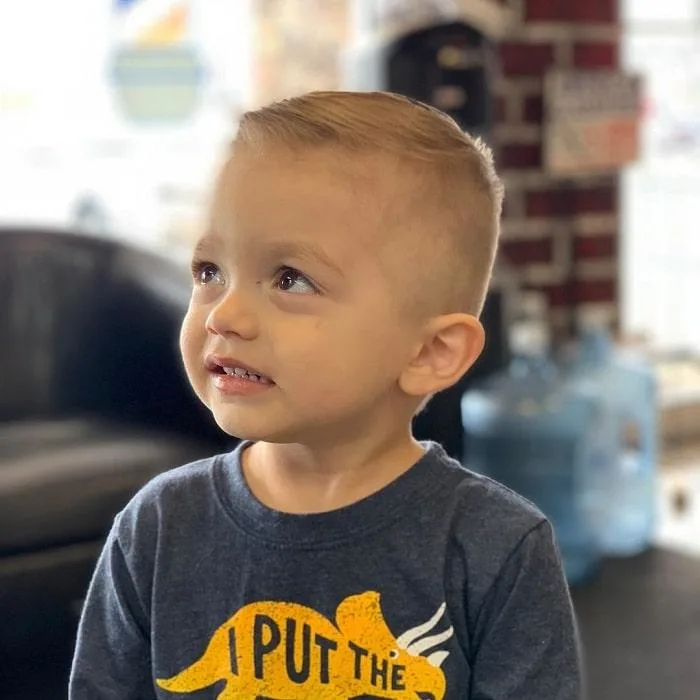
Short even top, clean taper on the sides and back. The most reliable cut for active boys at any age from two to twelve. It looks intentional without being extreme. It survives swimming, sandpits, nap time, and rough towel drying without losing its shape.
Chair time: 8-10 minutes.
Tell your barber: “Crew cut. Number two on the sides and an inch and a half on top. Clean neckline. Please go slowly and let him see what you’re doing.”
Face shape: All.
Hair type: All.
Maintenance: Every 4-6 weeks.
Style time: Zero.
Buzz Cut
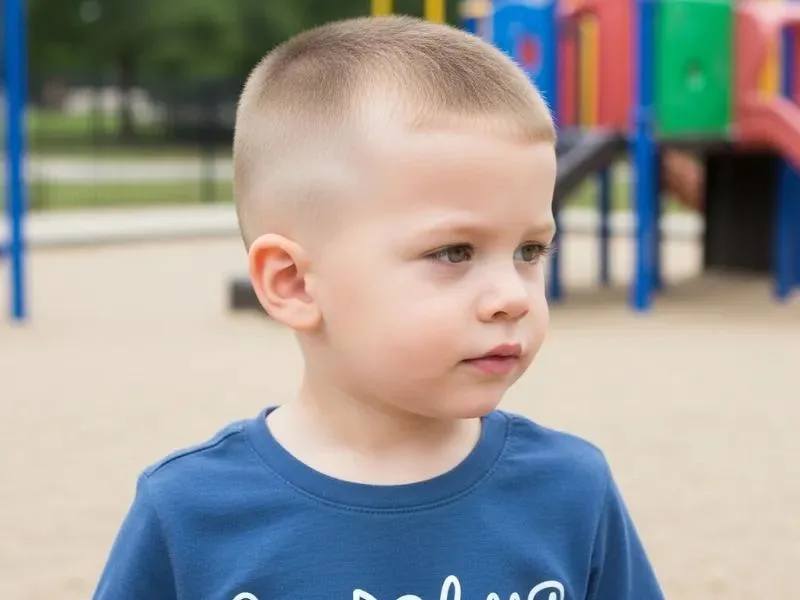
The fastest cut that exists. Number three guard all over, clean neckline. Under five minutes in the chair. For toddlers who will not sit still and summers when you want zero hair maintenance, this is the honest answer.
Chair time: 4-5 minutes.
Tell your barber, “Number three all over. Clean neckline. As quick as possible, please.”
Face shape: All except very narrow.
Maintenance: Every 3-4 weeks.
Style time: Zero.
For full guard number explanations, our buzz cut guide covers every option.
Textured Crop
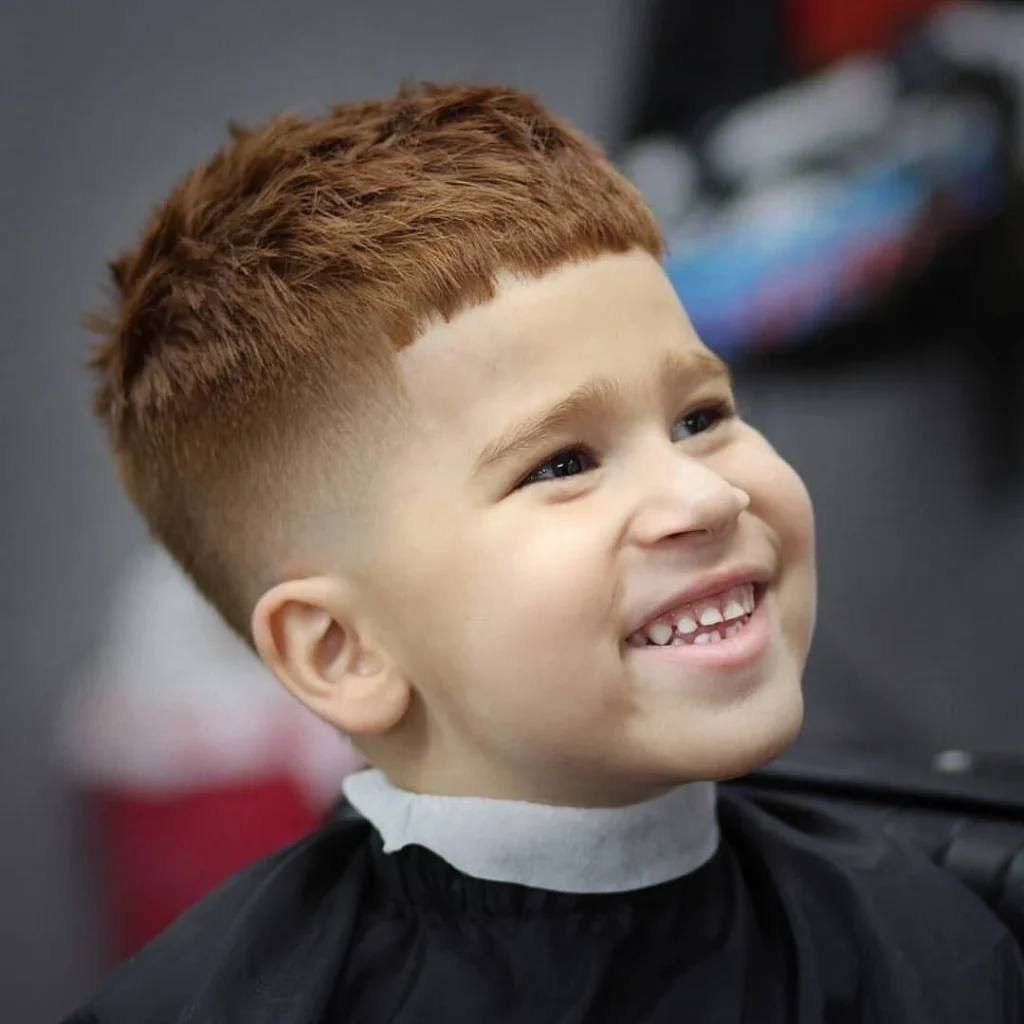
Short choppy layers on top, low taper on the sides. The most requested cut for boys aged four to six in 2026. Works on straight, wavy, and mildly curly hair. Grows out cleanly without a bad week between appointments.
Chair time: 12-15 minutes.
Tell your barber: “Textured crop. Low taper. Two inches on top—point cut for texture. Please work slowly. No thinning scissors.”
Face shape: Round and oval.
Hair type: Straight, wavy, or mildly curly.
Maintenance: Every 4-6 weeks.
Style time: Zero to 90 seconds.
French Crop
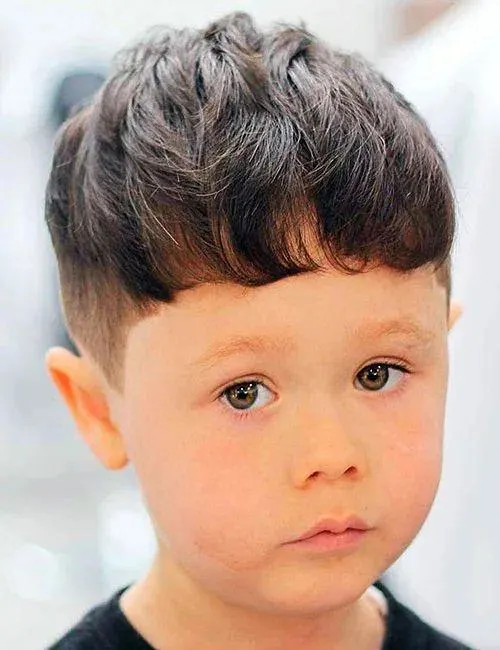
Blunt fringe at mid-forehead, low to mid taper, and short textured top. The single best cut for fine or thin hair at this age because the blunt fringe creates visual density that fine hair lacks naturally. Requires no product. Requires no morning effort.
Chair time: 12-15 minutes.
Tell your barber: “French crop. A blunt, choppy fringe at the mid-forehead. Low taper. Short top—point-cut, not blunt.”
Face shapes: Oblong, heart, and big foreheads.
Hair type: Fine and thin, especially.
Maintenance: Every 5-6 weeks.
Style time: Zero.
Side Part with Low Taper
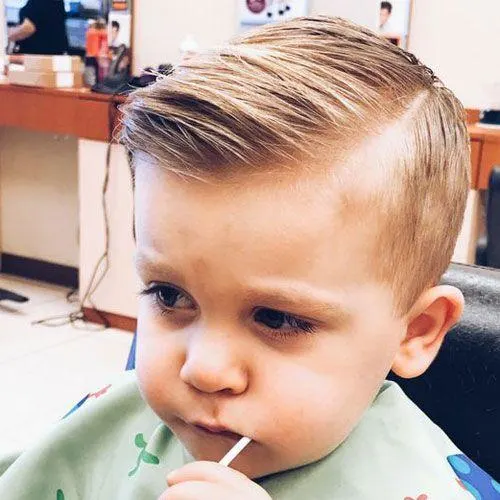
A clean side part holds on to every hair type. The low taper keeps the sides controlled. This is the most school-appropriate and family-photo-ready cut on this list. Looks polished without needing any daily effort.
Chair time: 12-15 minutes.
Tell your barber: “Side part on the left or whichever side his hair naturally falls on. Low taper below the ear. Two inches on top.”
Face shape: Square and oval.
Maintenance: Every 5-6 weeks.
Style time: Under 2 minutes with a damp comb.
Bowl Cut Modern 2026 Version
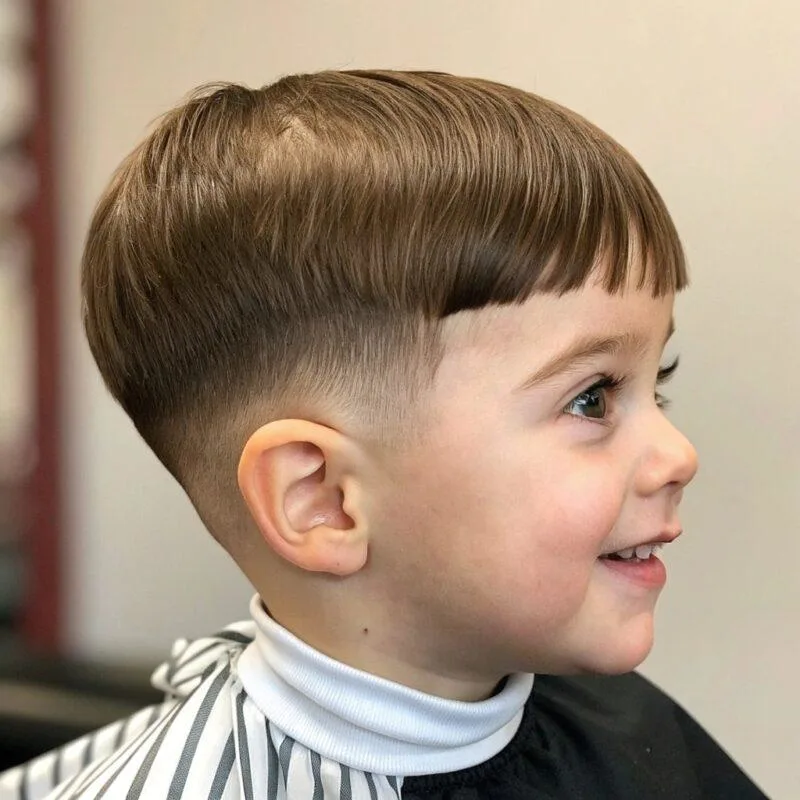
The bowl cut of 2026 is nothing like the harsh version from the nineties. Softer edges, slightly more length variation, natural fringe that does not sit in a perfectly straight line. It works on every hair type and grows out more forgivingly than the original. One of the few cuts that genuinely requires no morning effort at all.
Chair time: 10-12 minutes.
Tell your barber: “Modern bowl cut. Soft edges — not a harsh straight line. Slightly longer at the crown, shorter at the sides. No fades or tapers.”
Face shape: Oval and oblong. Avoid it on very round faces—it adds width.
Maintenance: Every 6-8 weeks.
Style time: Zero.
Scissor Cut No Clippers
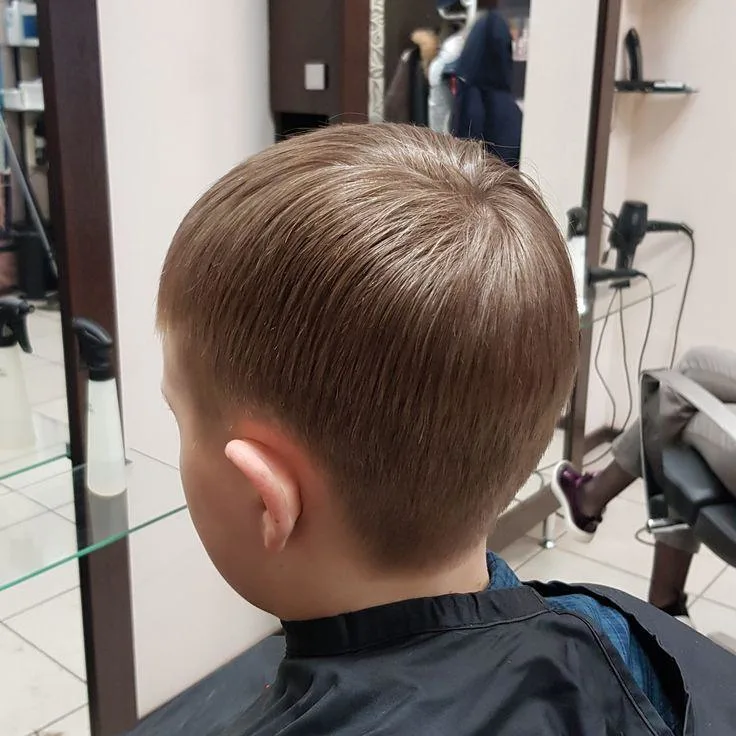
The most important cut on this list for parents of anxious boys. A complete haircut using scissors only, no clippers, no buzzing, and no vibration against the scalp.
The clippers are the reason most toddler haircuts go badly. The buzzing noise, the vibration against the scalp, and particularly the sensation at the neckline set off genuine sensory distress in many young children. Removing the clippers from the equation removes the main trigger.
Almost any short style can be achieved with scissors alone. The result will have softer edges than a clipper finish, but at ages two to four, soft edges are entirely appropriate.
Tell your barber: “Scissors only, please. No clippers at all. Soft around the ears and leave the neckline natural rather than razor-sharp. Crew cut shape short all over.”
Not every barber is comfortable doing this. Ask on the phone before booking. A good children’s barber will say yes immediately.
Medium Length Haircuts for Little Boys
Some mums are not ready to go short. Some boys have hair that parents have been growing intentionally. Medium-length cuts at ages two to six are completely manageable; they just need slightly more chair time and the occasional damp comb in the morning.
Curtain Bangs with Low Taper
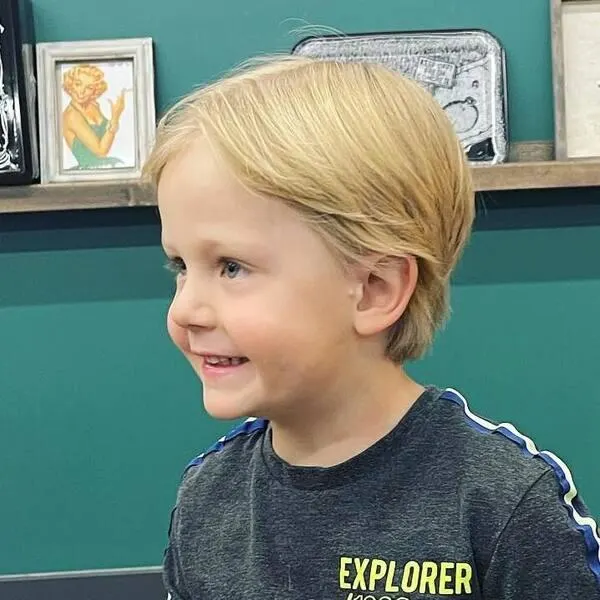
A center-parted fringe falling to both sides. This style has moved down from teenagers to primary school boys in 2026. At ages five to six, it looks current and intentional. At ages two to four it can look slightly grown-up, but some parents love exactly that.
Tell your barber: “Curtain bangs. Center parting. The front falls to both sides. Low taper on the sides. Three inches on top.”
Hair type: Straight and wavy.
Face shape: Oval and oblong.
Maintenance: Every 6-8 weeks.
Chair time: 15-18 minutes.
Shaggy Layers
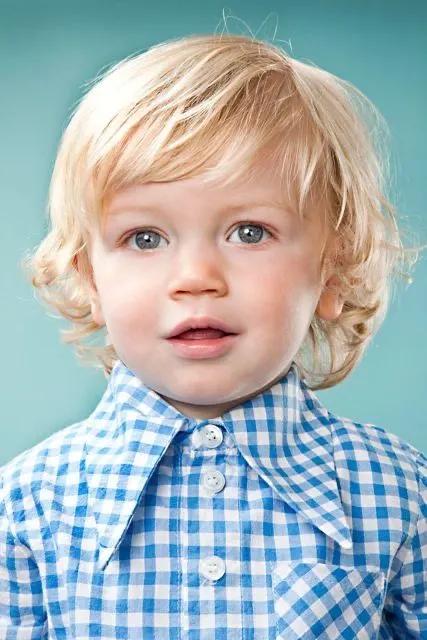
Choppy uneven layers with movement. For mums who want to keep the length but remove the shapelessness. The shag looks deliberately casual rather than grown-out and neglected.
Tell your barber: “Long layers—choppy, not blunt. Remove weight through the midsection. Keep the length. Shape the ends.”
Face shape: Oval and round.
Maintenance: Every 8 weeks.
Style time: Zero — air dry.
Textured Fringe
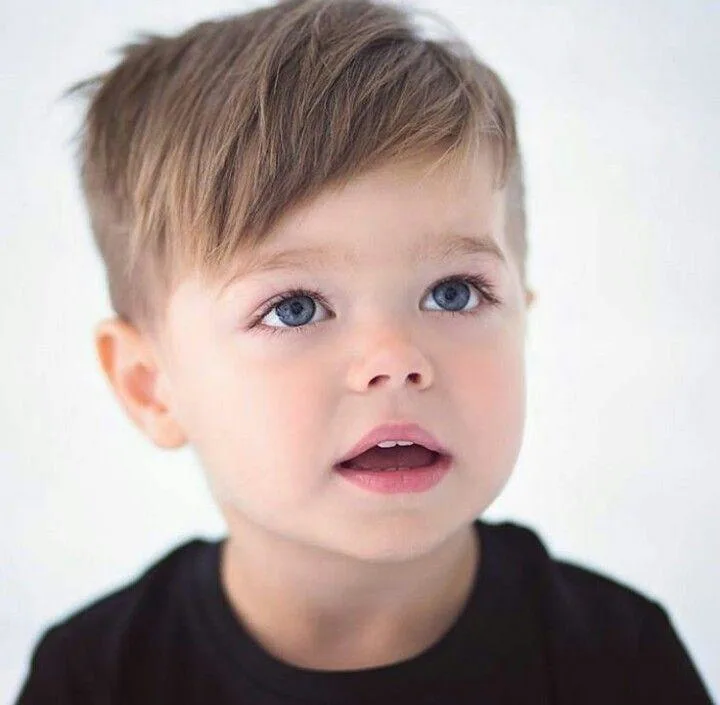
Choppy front pieces falling over the forehead with a clean taper behind. Good for boys with bigger foreheads at this age because the fringe creates natural coverage.
Tell your barber: “Textured fringe with a low taper. Keep the fringe long enough to fall across the forehead—about two inches. Point-cut the fringe choppy, not straight across.”
Face shape: Heart, diamond, and large foreheads.
Maintenance: Every 5-6 weeks.
Side Swept with Natural Taper
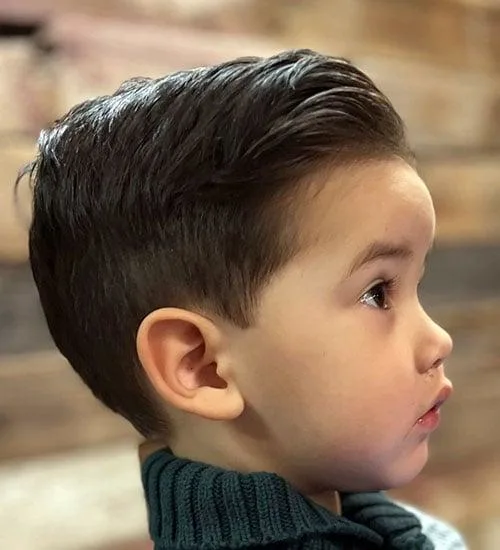
Longer top swept to one side, natural taper underneath. Looks polished for family photos, church, or events. On straight hair it holds all day without product.
Face shape: Square and oblong.
Maintenance: Every 5-6 weeks.
Style time: 2 minutes — a damp brush.
Haircuts for Little Boys with Curly Hair
Curly hair at ages two to six is the most mismanaged hair type in barbershops. Two mistakes happen consistently. The first is cutting curly hair wet, which produces a shorter result than intended because the curls contract as they dry. The second is cutting it too short to form a proper curl pattern, which leaves the hair as frizzy puffiness rather than defined curls.
The rule is the same at any age: keep at least two inches on top and ask the barber to cut the top section dry.
Curly Crop Fade
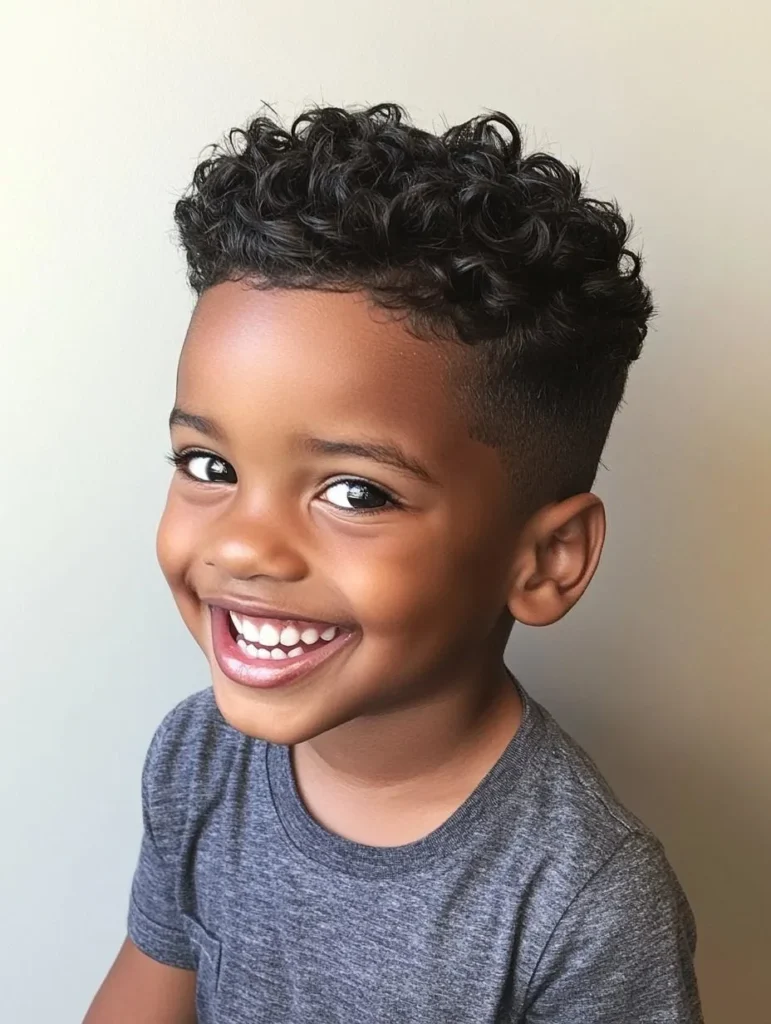
The most requested curly cut for boys aged three to seven. Mid or low fade on the sides. Two to three inches of curls on top with a shaped outline. Clean and defined. Preserves the curls that people stop to comment on.
Tell your barber: “Curly crop. Low or mid fade. Leave at least two and a half inches on top. Please cut the top section dry so we can see the curl pattern. Clean outline.”
Maintenance: Every 4-5 weeks.
Style time: Curl cream on damp hair. Air dry. Done.
Curly Fringe with Low Fade
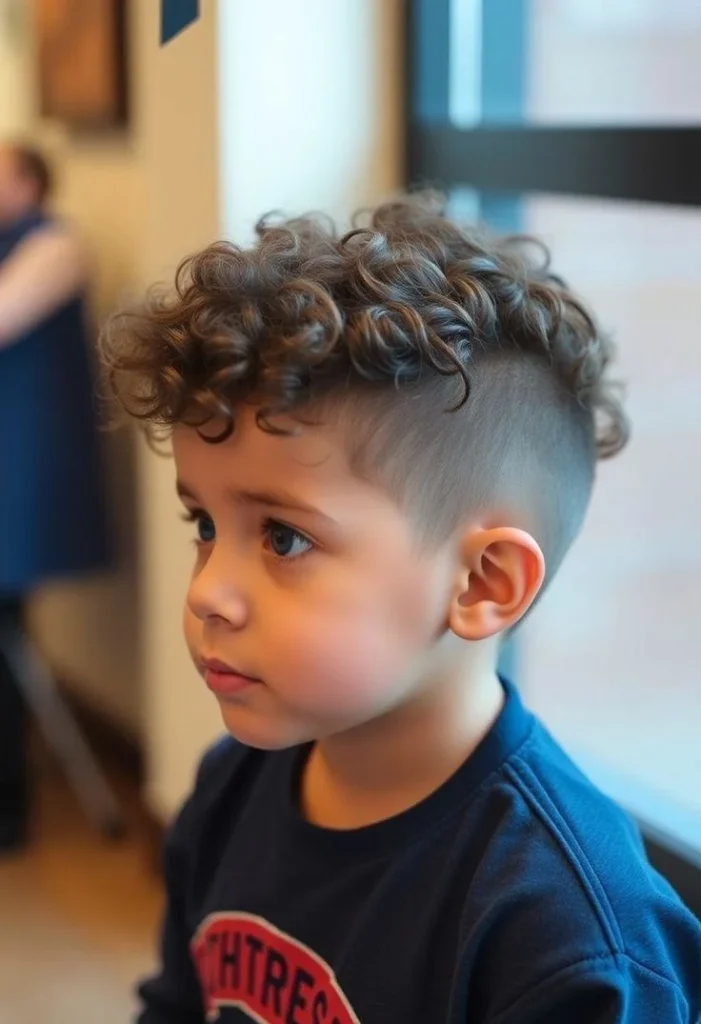
Curls left full on top and falling forward into a soft fringe, with a low fade starting above the ear. Works on type 3 curls where the front section has enough spring to form a natural fringe shape.
Tell your barber: “Curly fringe. Low fade above the ear. Leave the top full; cut it dry.”
Maintenance: Every 4-5 weeks.
Little Afro with Shape-Up
Even length all around for type 4 coils with a clean shape-up at the hairline. The shape-up at the forehead and temples turns even length into something intentional. Clean and bold.
Tell your barber: “Even length all around, about an inch and a half to two inches. Clean shape-up at the forehead and temples. No razor on the neckline for young children; scissors only there.”
Maintenance: Every 3-4 weeks.
How to Care for Curly Hair on a Little Boy
Apply a small amount of curl cream to damp hair after washing. Work it through from ends to roots with fingers. Leave it alone while it is drying—touching curly hair while it is drying creates frizz by breaking up the curl clumps. Wash with a sulfate-free shampoo two to three times per week maximum. Curly hair dries out faster than straight hair, and sulfates strip the natural oils that keep the curl pattern defined.
For older boys with curly hair, our curly hairstyles for men guide covers every curl type from 2A through 4C with dedicated styling instructions.
Trending Little Boy Haircuts in 2026
The 2026 trend for boys at every age has moved away from sharp clipper lines toward softer texture and cuts that grow out well. This is genuinely better news for parents of little boys because softer cuts mean more forgiveness between appointments.
Quick Reference Table:
| Style | Best Age | Hair Type | Daily Effort | Trim Every |
|---|---|---|---|---|
| Buzz cut | 1-8 | Any | Zero | 3-4 weeks |
| Crew cut | 2-8 | Any | Zero | 4-6 weeks |
| Scissor cut | 1-6 | Fine, soft | Zero | 6-8 weeks |
| Textured crop | 4-8 | Straight, Wavy, Curly | Low | 4-6 weeks |
| French crop | 3-7 | Fine | Zero | 5-6 weeks |
| Side part | 3-8 | Straight | Low | 5-6 weeks |
| Bowl cut | 2-6 | Any | Zero | 6-8 weeks |
| Curtain bangs | 5-8 | Straight, Wavy | Medium | 6-8 weeks |
| Shaggy layers | 3-7 | Any | Zero | 8 weeks |
| Curly crop fade | 3-7 | Curly | Low | 4-5 weeks |
The Middle Part Moving Down to Little Boys
The middle part with curtain bangs is the defining boys’ style of 2026. It has now moved from teenagers to primary school boys and increasingly to boys aged five and six. It needs two to three inches of length on top and a two-month growing phase before it sits properly. Worth planning ahead for if you want it for the start of school.
The Textured Crop Still Number One
Three consecutive years as the most requested cut for boys aged four and older. It works because texture comes from the cut itself rather than the product. Grows out cleanly. Requires nothing in the morning.
The Modern Bowl Cut: Softer Version
The 2026 bowl cut is not the harsh geometric shape from the nineties. It is rounder, softer, and more natural at the edges. It genuinely needs no styling and grows out for six to eight weeks before looking untidy. For parents who want minimum barbershop visits, this is the correct choice.
Little Boy Haircuts by Hair Type
Straight Hair
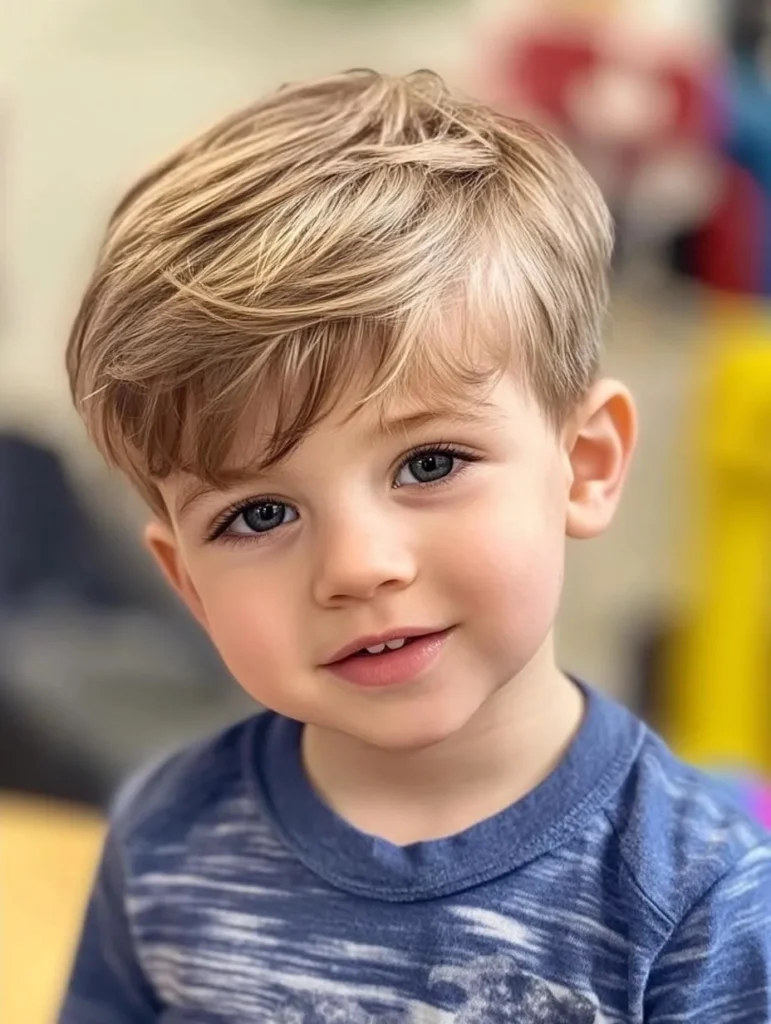
Straight hair at this age holds clean lines and stays where you put it. The French crop, crew cut, side part, and bowl cut all suit straight hair because the strands maintain their direction. The challenge is volume — straight hair has none naturally, so avoid styles that depend on it. For the full guide, see our boys’ haircuts for straight hair page.
Wavy Hair
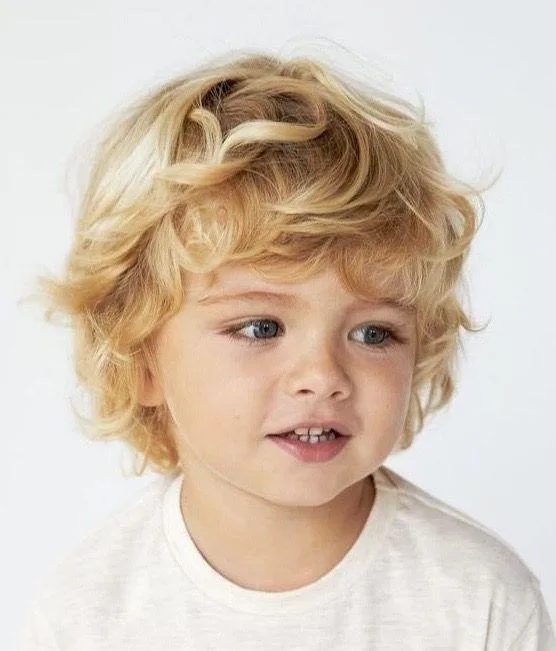
Wavy hair adds natural movement to any cut without product. The textured crop and curtain bangs both look better on wavy hair because the wave adds dimension automatically. Wavy hair also grows out more forgivingly — the natural texture disguises the grow-out phase better than straight hair.
Curly Hair
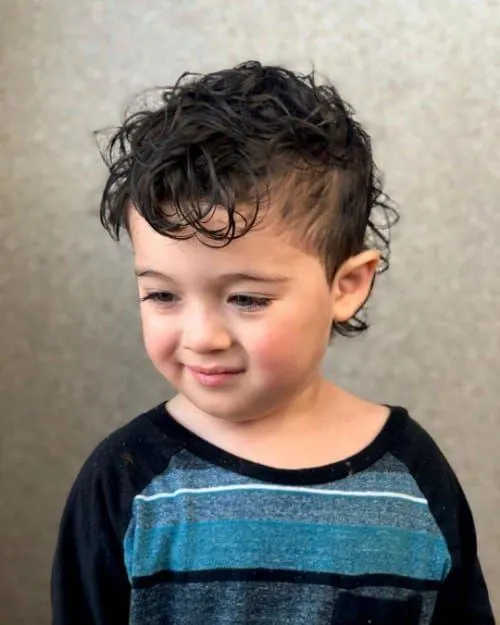
Keep at least two inches on top. Cut the top section dry. Curl cream on damp hair after washing. These three instructions cover most curly hair situations at this age. The burst fade guide covers the curved fade technique that works particularly well on curly hair for boys aged five and older.
Fine or Thin Hair
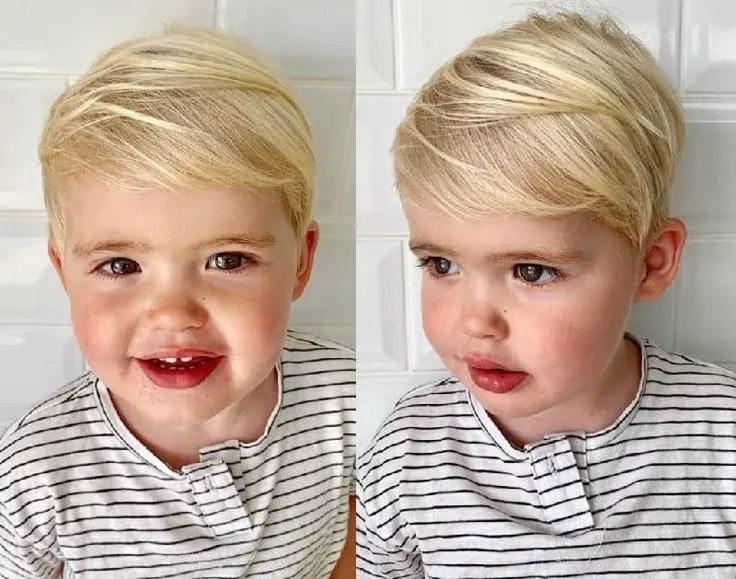
The French crop is the single best cut for fine hair. The blunt fringe creates visual density that fine hair lacks. Keep it short to medium and avoid long styles that expose the scalp. A lightweight volumizing mousse at the roots when blow-drying adds lift without visible product.
Thick Hair
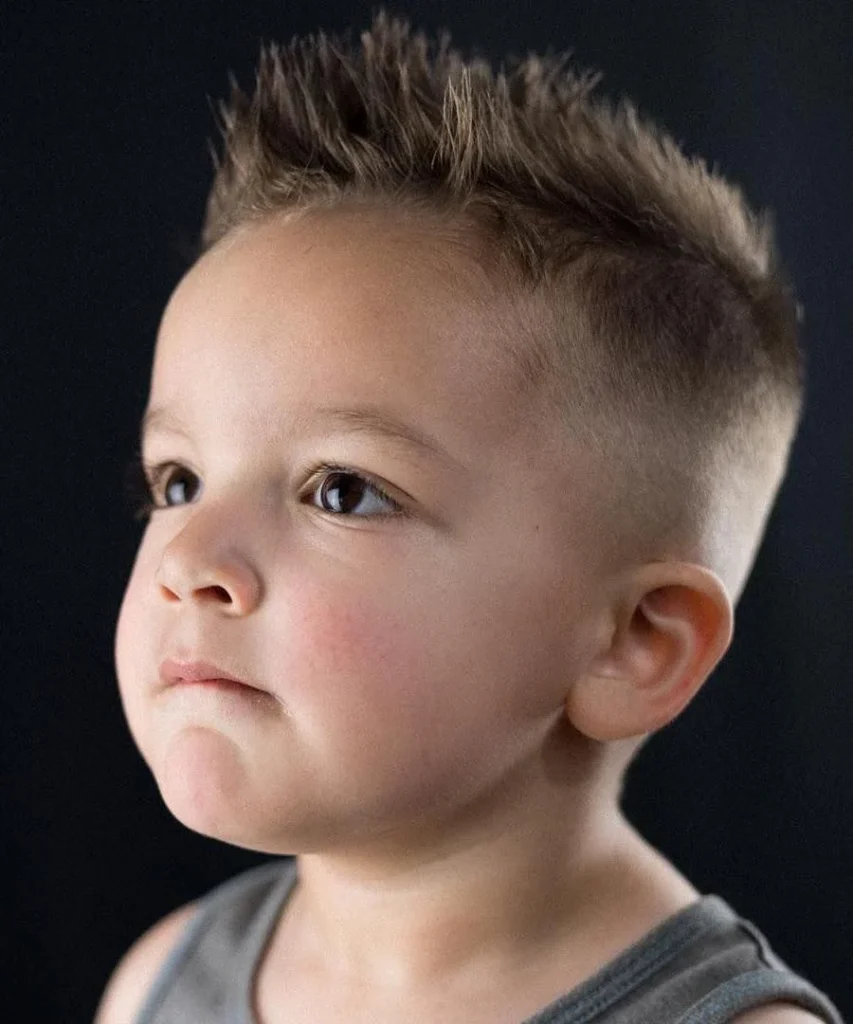
Thick hair needs bulk removed from the inside, not the surface. Internal point-cutting is the correct technique—scissors worked upward into the mid-section, removing weight without touching the surface. Never use thinning scissors on thick hair. Ask your barber specifically for point-cutting.
Little Boy Haircuts by Face Shape
Round face: High on top, tight sides. Textured crop with some crown volume and a crew cut. Avoid the bowl cut, which adds width at the sides.
Oval face: Most cuts work. The textured crop and side part both look particularly good on oval proportions.
Chubby cheeks: Keep the sides tight with a low taper. This adds vertical proportion and avoids the sides adding visual width to an already full face. The crew cut and textured crop are the best options.
Big forehead: French crop at mid-forehead. Textured fringe falling forward. Bowl cut with full fringe. All three create coverage without looking deliberately placed.
If He Hates Haircuts: The Full Parent Guide
The clippers are responsible for most toddler haircut meltdowns. The buzzing vibration against the scalp, the sensation at the sensitive neckline, and the unfamiliar noise in a strange environment combine into a genuinely overwhelming experience for young children. This is not difficult behavior. It is a normal sensory response.
Why Toddlers Hate Haircuts
Young children experience sensory input more intensely than adults. The noise of clippers at close range is loud. The vibration against the scalp is unfamiliar. The sensation at the back of the neck—where the skin is thin and sensitive—is genuinely uncomfortable for many children until they have experienced it enough times to know it passes.
Knowing this changes the approach. The goal shifts from getting through the haircut to making the experience predictable enough that the next one is easier.
Before the Appointment
Visit the barbershop without cutting anything first. Walk in; let him look around, let him see the chair and the equipment, and let him hear the clippers at a distance. Leave without cutting anything. The unfamiliarity of the environment is half the anxiety. One preparatory visit removes it.
Tell him exactly what will happen step by step. Not “we’re going to get your hair cut” but “first the barber will put a cape around your shoulders, then he will spray your hair with water, then he will use scissors on the top, then a buzzy thing on the sides, and then it will be done and we will get a treat.” Predictability is the most effective anxiety reduction tool available.
Choose the quietest possible time. Ask the barbershop when they are least busy. Most say weekday mornings between nine and eleven. Fewer people, less noise, more time for the barber to work slowly.
Feed him before you go. Hungry children have significantly less tolerance for everything. A snack in the car on the way is a legitimate preparation strategy.
During the Cut
Sit directly in front of him where he can see your face throughout. Not across the room. Not beside him. In front, at eye level if possible. Your visible calm is the most reassuring thing in the room.
Bring a phone with something he loves to watch. If he is watching something he enjoys, the sensory input from the barbershop has to compete with something pleasurable rather than dominating his attention entirely.
Ask the barber to use scissors before clippers on the top section. The scissors are quieter. The sensation is gentler. Once he has had a few minutes in the chair with the scissors, the clippers on the sides are almost always more manageable.
Bring a small fidget toy or a familiar object he can hold throughout. Giving the hands something to do reduces the focus on what is happening at the scalp.
The Scissors-Only Option
If clippers are the specific trigger, ask for a scissors-only cut. Almost every short style can be achieved without clippers. The result will have softer edges at the neckline and ears, but at ages two to five this is entirely appropriate.
Exact words to say: “Scissors only, please. No clippers at all. Soft finish around the ears and leave the neckline natural rather than razor-sharp.”
Best styles for scissors-only cuts: crew cut, bowl cut, French crop top section, textured crop top section. All four can be completed with scissors alone in under twelve minutes.
The Lollipop Method
Ask your barbershop in advance whether they allow food during the cut. Most children’s barbershops and many family-friendly regular barbershops say yes. A lollipop in his hand provides physical stimulation that competes with the scalp sensation, and the sucking motion genuinely has a calming effect on young children. It buys approximately five to seven extra minutes of cooperative stillness. That is enough to complete a crew cut.
Home vs Salon for Anxious Boys
If every barbershop visit is a battle and you have basic scissors, a spray bottle, and a steady hand, home cutting at ages two to four is completely reasonable. A straight trim of the fringe, a tidy up around the ears, and a reduction in overall length do not require training. It requires confidence and low expectations of precision.
When he wants a fade, a taper, or any structured cut with blending—go to the barber. Those techniques require proper clippers and training. Home cutting at that point produces uneven results that are worse than doing nothing.
How to Cut a Little Boy’s Hair at Home
For parents who want to manage the length between barbershop visits or for toddlers who cannot sit in a professional chair, a basic home cut is a reasonable option.
Tools You Need
Use rounded-tip hair scissors specifically designed for cutting hair—not kitchen scissors, which create split ends and uneven lines. A spray bottle with water. A wide-tooth comb. A cape or a large towel tucked into his collar. Hair clips if his hair is long enough to section. No clippers for beginners—the technique required to blend properly takes time to learn.
The Easiest Home Cut Step by Step
Sit him in a stable chair at a height you can work at comfortably. Put the cape or towel around his shoulders. Spray the hair until thoroughly damp, not soaking. Comb straight down in all directions from the crown.
For a basic trim, decide the length you want and cut straight across at that point. Start at the back and work toward the front. Keep checking both sides against each other. Clean around the ears by combing outward and cutting the hair that falls below the ear line. Cut straight across at the neckline rather than attempting to blend. A soft straight neckline looks clean and is achievable without training.
The whole process from start to finish should take eight to twelve minutes. Stop when you have achieved something shorter than what was there. Precision comes with practice.
When to Stop Cutting at Home
Once he wants a fade, a textured crop with blending, or any cut that requires clippers—go to the barber. Those results require equipment and technique that home cutting cannot replicate. The gap between a home clipper attempt and a barber’s fade is immediately visible and very difficult to fix.
What to Tell the Barber for a Little Boy Haircut
Bring One Photo
At this age one clear front-facing photo is enough. Little boy cuts are simpler than teen styles, and a good barber needs less reference than you think. Choose a photo where the hair type in the image is similar to your son’s; a textured crop on straight hair looks completely different from one on thick wavy hair.
Universal Script for Little Boys
“[Style name]. Keep it short and manageable. Please go slowly and explain to him what you’re doing before each step. Scissors before clippers if possible.”
That script covers most situations at this age.
Scripts Per Style
Crew cut: “Crew cut. Number two sides. An inch and a half on top. Clean neckline, slowly please.”
Buzz cut: “Number three all over. Clean neckline. As quick as possible.”
Textured crop: “Textured crop. Low taper. Two on top, point-cut. Slowly.”
French crop: “French crop. Choppy blunt fringe mid-forehead. Low taper.”
Bowl cut: “Modern bowl cut. Soft edges. Round shape. No hard lines.”
Curly crop: “Curly crop. Low fade. Two and a half on top. Cut the top dry.”
First Visit Script
“This is his first proper haircut. Please take it slowly, explain what you’re doing before each step, and let him see any equipment before it touches him. Scissors only if possible. Simple crew cut—short all over.”
Kids’ Barbershop vs Regular Barbershop
Under three: a kids’ salon is worth the higher price. The chairs, the distractions, the staff training, and the tolerance for movement are all designed specifically for this age group.
Ages three to five: either works, depending on the specific barbershop. A calm, unhurried regular barbershop with a patient barber is as good as a kids’ salon. A busy chain barbershop on a Saturday afternoon is worse.
Ages five and six: a regular barbershop is fine for most boys. They can sit still for ten to fifteen minutes and communicate what they want. The cut quality is often better than a kids’ salon.
How Often Should a Little Boy Get a Haircut?
Hair growth varies more between ages two and six than at any other stage. Some boys at three are growing hair as fast as teenagers. Others at five are still on the growth rate of a toddler. The table below is a guide, not a rule.
| Age | Typical Growth | Recommended Trim | Signs It Needs Cutting |
|---|---|---|---|
| 2-3 | Fast or slow | Every 6-10 weeks | Hair in eyes, at collar |
| 3-4 | Usually faster | Every 5-8 weeks | Shape gone, getting matted |
| 4-5 | More predictable | Every 4-6 weeks | Fade line gone, fringe past eyebrows |
| 5-6 | More regular | Every 4-6 weeks | Same as older boys |
How Much Does a Little Boy Haircut Cost?
US Barbershop Prices 2026:
Kids’ salon: $12-25
Standard barbershop: $15-30
Many barbershops offer under-5 discounts or free cuts; it’s worth asking when booking.
UK Barbershop Prices 2026:
Kids’ salon: £8-15
Standard barbershop: £10-20
Many UK barbershops have free cuts for under-fives — a courtesy that is worth confirming in advance.
Browse More Boys’ Haircut Guides by Age
Boys Haircuts Hub—All Ages covers every age from toddler to teen with dedicated age navigation.
7-Year-Old Boy Haircuts — the next step up where he starts having stronger opinions.
8-Year-Old Boy Haircuts — styles for the confident primary school boy.
9 Year Old Boy Haircuts — where fade requests start in earnest.
10 Year Old Boy Haircuts — the transition year between child and tween styles.
Short Boys’ Haircuts 2026: twenty-five short cuts across all ages with guard number explanations.
Not sure which style suits him? Our teen haircut finder quiz works for boys five and older in sixty seconds, with a personalized recommendation.
Frequently Asked Questions
What is the best haircut for a 2- to 3-year-old boy?
The crew cut. It is the fastest option — eight to ten minutes in the chair — and grows out cleanly for six to eight weeks. The buzz cut is faster but shorter, which some parents prefer to avoid at this age. Both require zero styling. Both work on every hair type.
When should I cut my baby boy’s hair for the first time?
When his hair is getting in his eyes consistently, reaching his collar, or getting matted at the back. There is no universal age. Some boys need a first trim at twelve months. Others arrive at their third birthday with barely enough hair to comb. Watch the signals, not the calendar.
What are the trending little boy haircuts in 2026?
The textured crop is the most requested for boys aged four and older. The modern bowl cut is growing for ages two to five because it needs zero styling and grows out for eight weeks. The curtain bang has moved down from teenagers to boys aged five and six. All three share the 2026 characteristic — softer edges and cuts that grow out well.
How do I cut my toddler’s hair at home?
Rounded-tip scissors, spray bottle, wide comb. Dampen the hair. Comb straight down. Cut straight across at the length you want. Clean around the ears by cutting what falls below the ear line. Soft straight neckline. Under twelve minutes. Stop before you over-cut. Home cutting works for basic trims — any fade or blend requires a barber.
My son hates haircuts. What do I do?
Visit the barbershop without cutting first. Tell him exactly what will happen step by step. Choose the quietest possible time slot. Bring headphones and a video. Ask for scissors before clippers. Sit directly in front of him throughout. Consider a lollipop—ask the barbershop in advance. Request a scissors-only cut if clippers are the specific trigger.
What is a scissors-only haircut, and which styles work?
A complete haircut using only scissors — no clippers, no buzzing, no vibration against the scalp. Almost any short style can be achieved with scissors. The result has softer edges than a clipper finish, but at ages two to five this is entirely appropriate. Ask: “Scissors only, please. No clippers. Soft around the ears. Leave the neckline natural.”
How often should a 4-year-old boy get a haircut?
Every five to eight weeks for most four-year-olds. Watch the hair rather than the calendar—when the fringe reaches the eyebrows, when the sides grow to match the top, when the shape looks grown-out rather than grown-in, it is time.
What is the fastest haircut for a toddler who won’t sit still?
The buzz cut takes four to five minutes. Number three guard all over, clean neckline. If that is too short, the crew cut takes eight to ten minutes and achieves a more structured result. Both are achievable even with significant movement.
What haircut is best for a little boy with curly hair?
The curly crop fade. Keep at least two and a half inches on top for the curls to form properly. Ask the barber to cut the top section dry curly hair shrinks between thirty and fifty percent when dry, and a barber cutting wet will take off more than intended.
Kids’ barbershop or regular barbershop for under-5s?
Under three: a kids’ salon is worth the higher price. The environment, chairs, and staff training are designed specifically for this age. Ages three to five: either works, depending on the specific shop. Ages five and six: a regular barbershop is fine and often produces a better cut.
How much does a little boy’s haircut cost?
US: $12-25 at a kids’ salon, $15-30 at a regular barbershop. Many barbershops offer under-5 discounts or free cuts. UK: £8-15 at a kids’ salon, £10-20 at a regular barbershop. Many UK barbershops cut under-fives for free — worth asking when booking.
What is a good first haircut for a toddler boy?
A scissors-only crew cut. Short all over, no clippers, soft neckline, and done in under ten minutes. It is the lowest-anxiety option for the child, the most manageable for the barber, and grows out cleanly for six to eight weeks. Tell the barber, “First haircut. Scissors only if possible. Simple crew cut. Slowly, please.”
The lollipop is still on the counter at my barbershop. Not for everyone. Not always needed. But when a three-year-old walks in with his arms crossed and his jaw set, it has saved more haircuts than any styling technique I know.
The right cut matters. The right preparation matters more.
Choose one style from this guide. Show him a photo. Tell him what is going to happen. Let him touch the equipment before it starts. Sit where he can see your face throughout.
By the second haircut it will already be easier. By the fifth it will be routine. That is how this works.
For the full age-by-age guide, our boys’ haircuts hub covers every age from this stage all the way to eighteen. When he is ready for something more structured, the 9-year-old boy haircuts guide covers the shift that happens when fade requests start.