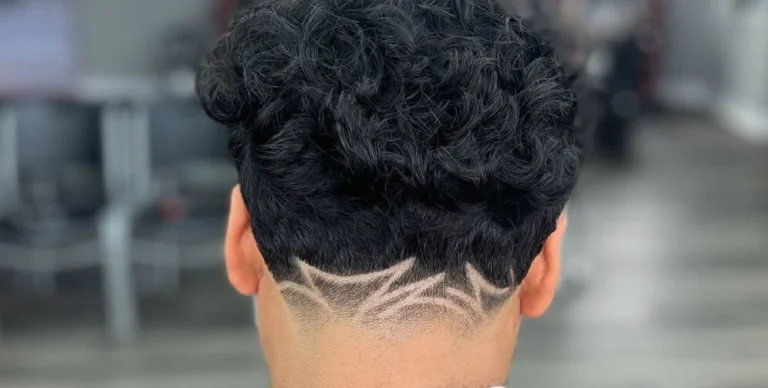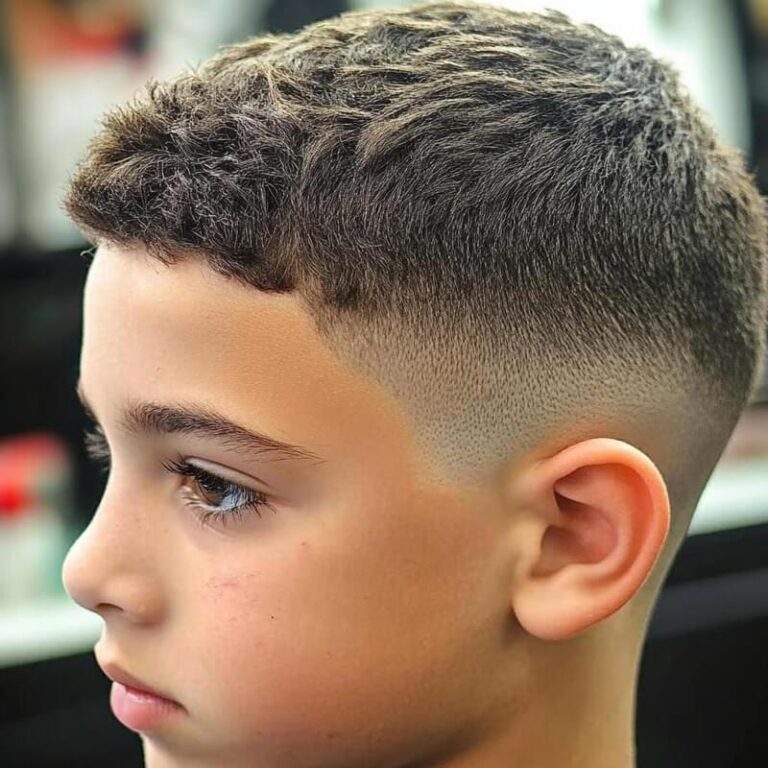
Boys’ Haircuts for Straight Hair 2026: 20 Styles That Actually Work
A fourteen-year-old came in last spring with a screenshot of a blowout taper. The photo was shot on a model with thick, naturally wavy hair that holds volume without any effort. The kid had pin-straight, fine hair that lay completely flat twenty minutes after washing.
I could have cut it exactly as shown. He would have walked out happy. By the time he reached school the next morning, his hair would have been flat against his head with no resemblance to the photo.
Instead, I spent four minutes asking the right questions. We ended up with a textured crop with a mid fade—a cut designed specifically for straight hair that creates movement through the cut itself, not through the texture his hair does not naturally have.
He came back three months later and asked for the same thing.
Straight hair gets sold generic advice. Most haircut guides show you fifty photos without telling you which ones work on your actual hair type. This guide covers twenty cuts that work specifically on straight hair—for boys from age seven to eighteen. Every style includes what to tell your barber, which face shape it suits, whether it passes school dress codes, and how long it stays sharp between trims.
At a Glance: Best Straight Hair Cuts by Need
| Ages 7-10, low maintenance | Textured Crop |
| Ages 11-14, school-safe | French Crop or Side Part |
| Ages 15-18, trending | Two Block or Curtain Bangs |
| Fine, straight hair | French Crop |
| Thick straight hair | Disconnected Undercut |
| Zero styling effort | Crew Cut or Buzz Cut |
| Bold school-safe | Edgar Cut |
| Long straight hair | Bro Flow or Slicked Back |
What Makes Straight Hair Different, and Why Most Haircut Guides Fail It
Straight hair is the easiest hair type to cut well and the easiest to cut badly. It holds clean lines better than any other texture. It responds to the product predictably. It lies exactly where you put it.
That last point is the problem.
The Volume Problem Nobody Talks About
Straight hair has no natural movement. Every photo you see of a blowout taper or a textured wolf cut that looks effortlessly full was shot on hair with natural waves or deliberate roughing. Pull that same cut on genuinely straight, fine hair, and you get a flat, shapeless result by period two.
This is the conversation nobody in the haircut content space will have honestly. The cut is not wrong. The hair type is not wrong. The advice is wrong because it ignores the mismatch between what the style requires and what straight hair naturally provides.
Reddit said it better than any industry publication: “Guys with flat, silky straight hair with zero volume…wtf do y’all do, what hair cuts?” That question has thousands of upvotes because it is the honest version of what straight-haired boys and their parents are actually asking.
The answer is not products. The answer is choosing cuts designed for straight hair in the first place.
What Straight Hair Does Well
Straight hair holds a side part better than any other type. It keeps a blunt fringe exactly where it was cut. It sits clean and precise after a fade. It responds to a blow dryer quickly and consistently. Slick backs stay slick without constant reapplication.
Every cut in this guide takes advantage of at least one of those characteristics.
What to Avoid If Your Son Has Straight Hair
The blowout taper on genuinely straight hair needs five minutes with a blow dryer and volumizing mousse every single morning. Without that effort, it lies flat within an hour. Most boys under fifteen will not do five minutes of blow-drying every day. Factor that in before choosing this cut.
The wolf cut relies on natural thickness and layered movement to work. On fine straight hair it tends to look shapeless rather than intentionally textured. Choose the shag cut or layered long cut instead—both achieve similar length without depending on natural texture to hold the shape.
The messy quiff requires a blow dryer and a light clay. If your son is the type who shakes his hair dry with a towel and considers that a styling routine, this is the wrong cut.
Which Hair Cut Is Best for Straight Hair Boys?
The French crop is the single best shortcut for straight hair boys at any age from seven to fourteen. The blunt fringe creates visual weight at the front—exactly what straight hair lacks naturally. The textured top adds movement through the cut itself. The fade keeps the sides controlled. It requires almost no product and nothing in the morning routine beyond a quick hand through the top.
For teens fifteen and older, the two-block and curtain bangs are the best medium-length options. Both work specifically because straight hair sits smoothly and falls predictably—the qualities these cuts need to look right.
The Top 3 Picks by Age Group
Ages 7-10: Textured crop with mid fade. Works on every straight hair thickness. School-safe. Grows out cleanly. Takes under ninety seconds to style.
Ages 11-14: French crop or side part with low fade. Both create structure through the cut rather than relying on natural texture. Both pass every school dress code.
Ages 15-18: Two block or curtain bangs. Both are designed for straight hair. Both are trending. Both require under three minutes to style.
How to Choose by Face Shape
Round faces need height. The quiff, textured crop with volume at the crown, and blowout taper all add vertical length. Avoid flat side sweeps that add width.
Oval faces suit most cuts on this list. The two block and curtain bangs both work particularly well.
Square faces benefit from softer medium-length cuts. The curtain bangs and side-swept styles balance the jaw without harsh angles.
Oblong faces need width, not height. Curtain bangs and side parts that spread hair horizontally are the correct choice. Avoid tall quiffs.
Heart and diamond faces benefit from a fringe that covers some of the forehead width. The French crop, angular fringe, and curtain bangs all work here.
How to Choose by Thickness
Fine straight hair looks best with a blunt fringe because it creates the illusion of density. The French crop and Edgar’s cut both work on this principle. Avoid long styles that expose the scalp through the strands.
Thick straight hair has the volume problem in reverse—it can become heavy and shapeless without internal layering. The disconnected undercut, textured crop, and shag cut all remove bulk at strategic points without fighting the hair’s natural weight.
Short Boys’ Haircuts for Straight Hair
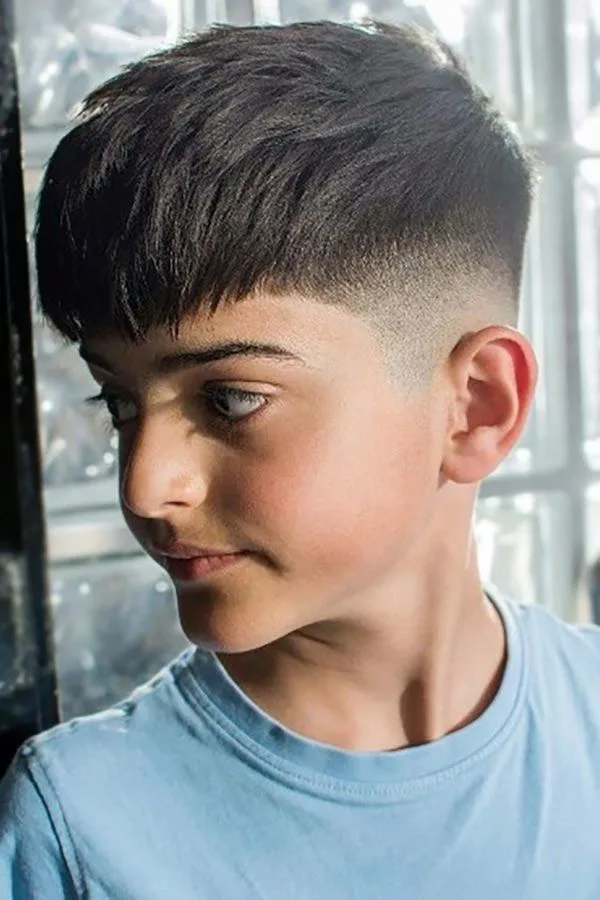
Short cuts perform best on straight hair for one simple reason. They create shape through the cut structure itself rather than relying on natural texture to hold a silhouette. A well-cut short style on straight hair looks intentional at seven in the morning before any product is applied.
Textured Crop with Mid Fade
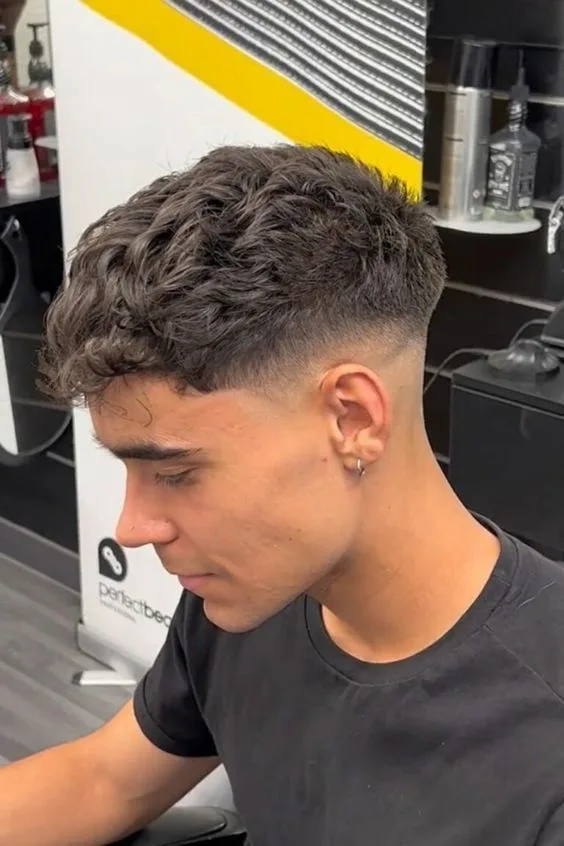
The most requested shortcut in barbershops for straight-haired boys aged eight to sixteen. Short choppy layers on top create movement that straight hair does not produce naturally. The mid fade keeps the sides clean. The forward-falling fringe adds weight at the front.
Why it works on straight hair: Point-cutting creates texture mechanically—the barber builds movement into the cut itself. Straight hair holds those choppy ends exactly as cut, creating definition that stays through the day.
Tell your barber, “Textured crop. Mid fade. Keep two inches on top and point-cut for texture—not blunt. No thinning scissors. Cut the top dry so we can see how it falls.”
Face shape: Round and oval. Adds height on round faces through the choppy volume.
School safe: Yes.
Maintenance: Every 3-4 weeks. The fade grows out before the top.
Style time: Under 90 seconds. Damp hand through top, done.
French Crop
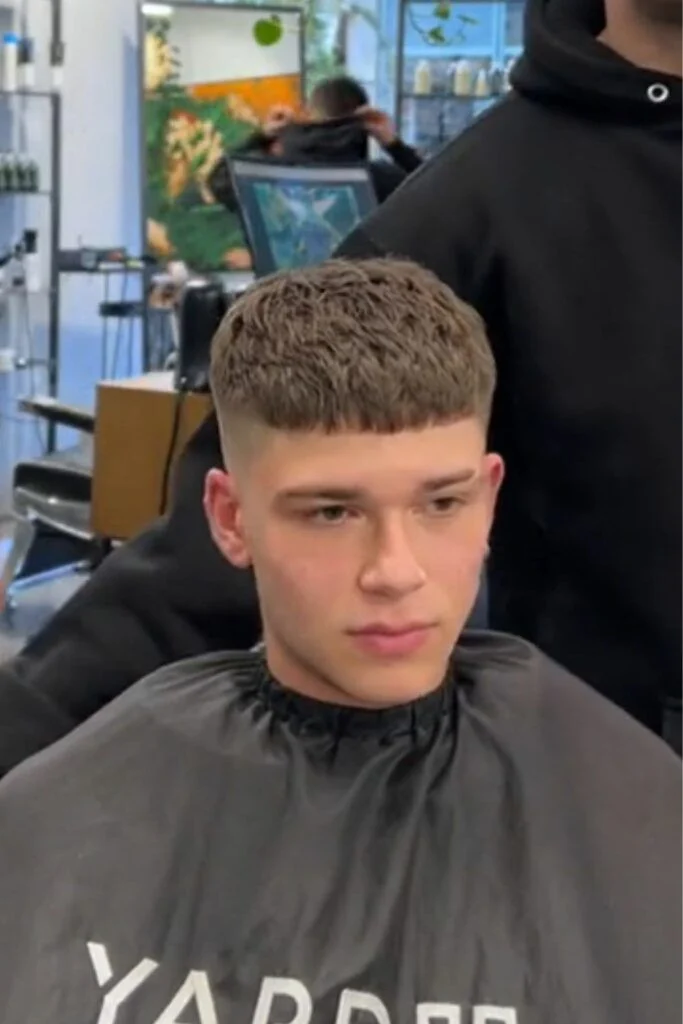
The best cut for fine, straight hair at any age. The blunt fringe sitting at mid-forehead creates visual density that straight hair does not have naturally. The top stays short and textured. The fade or taper keeps the sides controlled.
Why it works on straight hair: The blunt fringe is an optical trick. It creates the appearance of thick hair at the front because the straight strands align into a solid horizontal line. This only works on genuinely straight hair—wavy or curly hair breaks up the blunt line.
Tell your barber, “French crop. Blunt but slightly choppy fringe at mid-forehead. Low to mid fade. Short textured top, point-cut, not blunt.”
Face shape: Oblong, heart, diamond, big foreheads. Creates coverage and visual width.
School safe: Yes, universally.
Maintenance: Every 4-5 weeks.
Style time: Zero. This cut requires no product.
Side Part with Low Fade
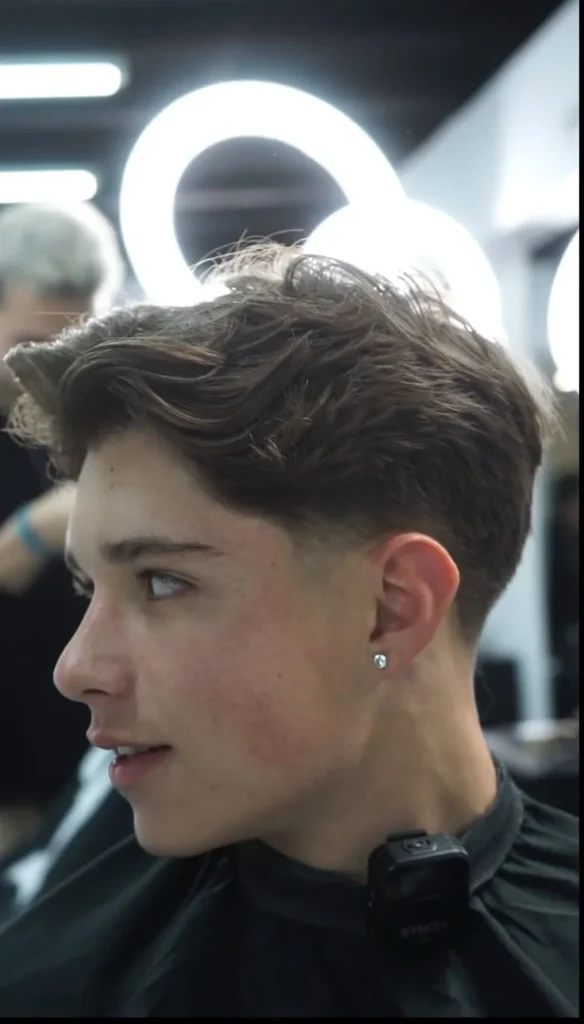
Straight hair holds a side part better than any other hair type. The strands lie flat and stay where you put them. No product fights. No flyaways pushing against the direction. A side part on straight hair looks intentional and polished from the moment you step out of the house.
Tell your barber, “Side part on the left. Low fade below the ear. Keep two and a half inches on top. Clean the razor line at the neckline.”
Face shape: Square and oval.
School safe: Yes. One of the most professional-looking cuts on this list.
Maintenance: Every 4-5 weeks.
Style time: Under 2 minutes. A damp comb is the only tool needed.
Crew Cut
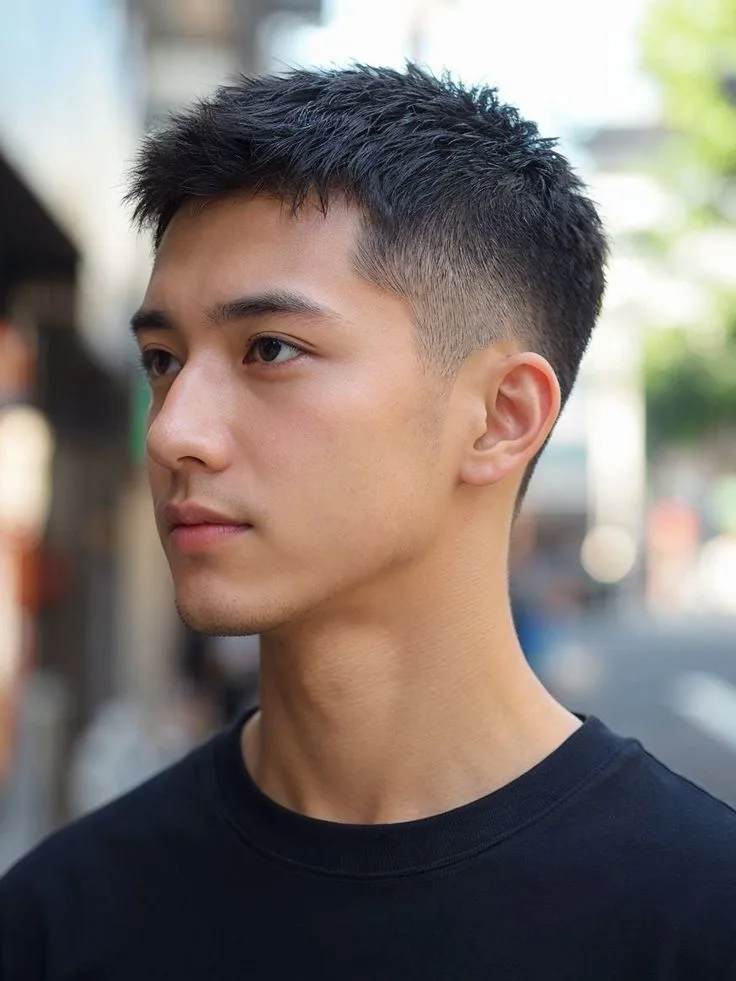
Short, even top with a tight fade on the sides. The crew cut requires almost no styling and works on every straight hair thickness. It grows out cleanly, which makes it the most forgiving option if you want to avoid bad-phase weeks between appointments.
Tell your barber, “Crew cut. Number two on the sides. Keep an inch and a half on top. Clean neckline.”
Face shape: All.
School safe: Yes, universally.
Maintenance: Every 4-5 weeks.
Style time: Zero. Wash and go.
For the full buzz and crew cut breakdown, our buzz cut guide covers every variation with specific barber instructions.
Edgar Cut
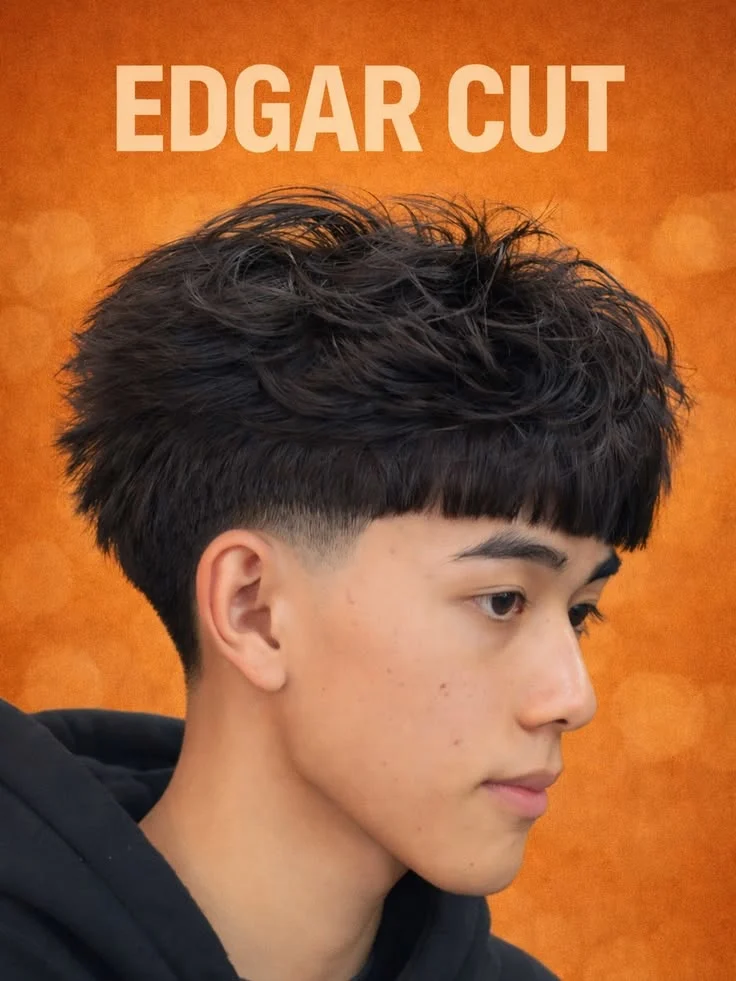
The boldest cut on this list. A straight, blunt fringe with a high skin fade and a sharp top. The Edgar cut works correctly—meaning the fringe stays as a clean, straight line—only on genuinely straight hair. Wavy or curly hair breaks up the blunt edge.
Tell your barber, “Edgar cut. Straight fringe, clean sharp line. High skin fade. Keep it clean at the corners.”
Face shape: Square and oval. Strong jaw lines carry this cut well.
School safe: Check policy. Some schools flag the high skin fade.
Maintenance: Every 3 weeks. The high fade grows out fastest.
Style time: Under 1 minute. Fringe sits naturally.
Buzz Cut with Line-Up
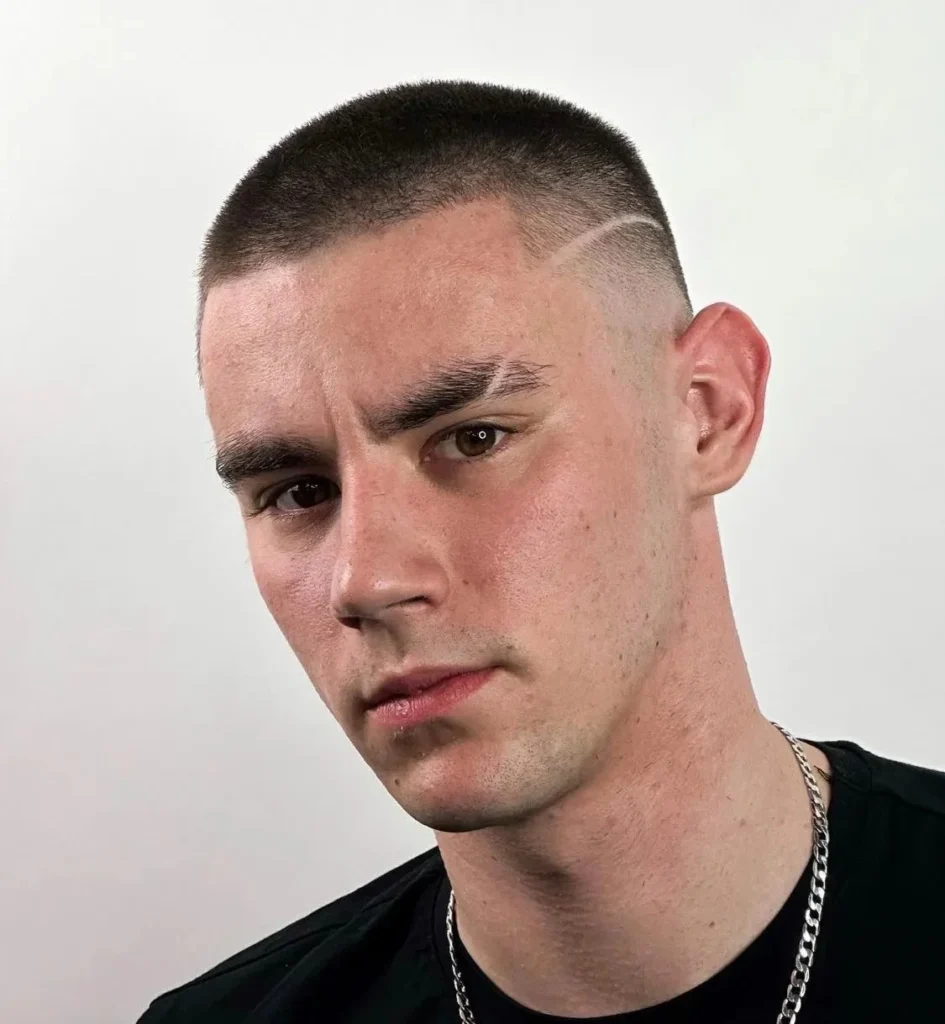
A buzz cut on its own reads as zero effort. A clean line-up at the hairline and temples reads as deliberate. That single addition is what separates the boys who chose this from the boys whose parents chose it.
Tell your barber, “Number three, guard all over. Clean line-up at the forehead and temples. Razor neckline.”
For detailed variations, our buzz cut guide covers every guard number and line-up combination.
Caesar Cut
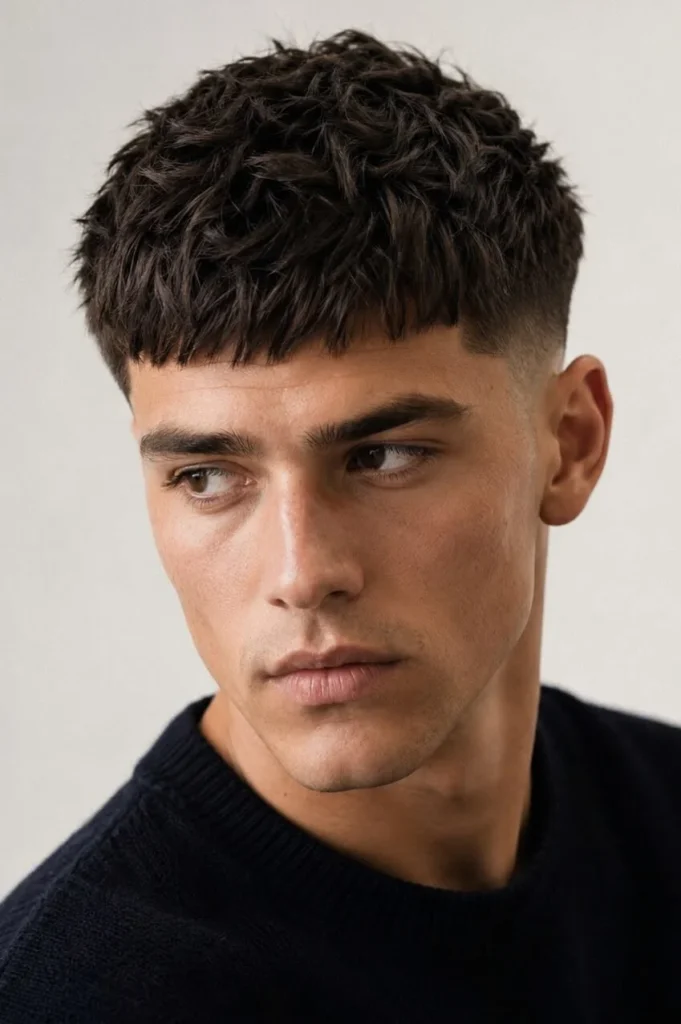
Short, even top with a horizontal fringe brushed forward. The Caesar suits straight hair because the fringe lies flat and holds its position without product. On curly hair the fringe springs upward. On straight hair it stays exactly where the barber puts it.
Tell your barber, “Caesar cut. Low taper on the sides. Keep an inch and a half on top with a forward fringe. Light texture, not blunt all the way.”
See our full Caesar haircut guide for face shape matching and grow-out advice.
Medium Length Haircuts for Boys with Straight Hair
Medium-length cuts require two to five minutes of morning effort but offer styling options that short cuts cannot. You can push hair forward, back, or to the side, or leave it natural. On straight hair, all four of these directions actually hold through the day.
Curtain Bangs with Taper
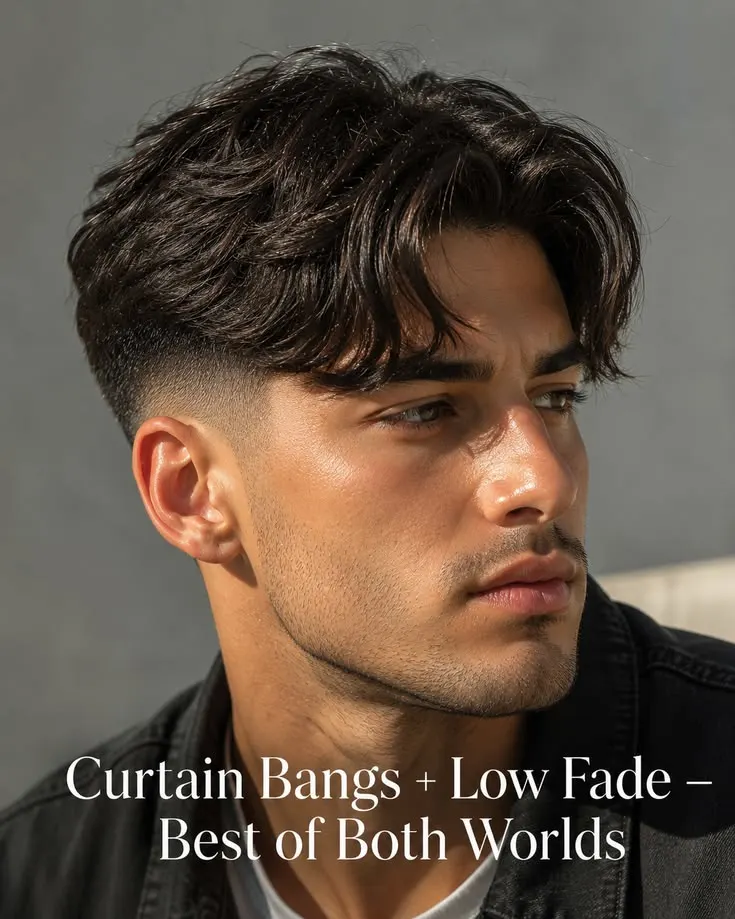
Centre-parted or off-centre fringe falling to both sides. This cut works better on straight hair than on wavy hair because the weight of the straight strands keeps the curtains in place. Wavy hair lifts the sections and disrupts the hanging effect.
Tell your barber, “Curtain bangs. Parting at the center or just off-center. The front falls to both sides. Low taper, not fade, on the sides. Keep three inches on top.”
Face shape: Oval and oblong. The parting creates symmetry that suits most face shapes.
School safe: Yes.
Maintenance: Every 5-6 weeks.
Style time: Under 2 minutes. Blow dry forward, split with fingers.
Two Block

Short sides with a much longer, fuller top that falls forward. This is essentially a cut designed for straight hair. The smooth, flat top section falls naturally and frames the face without any styling effort. Wavy hair makes the top section unpredictable. Straight hair makes it look exactly like the photo.
Tell your barber, “Two block cuts. Very short back and sides, natural finish, not faded. Leave the top significantly longer to fall forward. Soft finish on the top length.”
Face shape: Oval and heart.
School safe: Yes.
Maintenance: Every 5-6 weeks.
Style time: Under 2 minutes. Forward finger-comb, done.
What are Gen Z hairstyles? The two-block is one of the defining Gen Z cuts alongside curtain bangs and the fluffy fringe. What connects them is a preference for natural movement over rigid structure. Straight hair delivers that natural movement better than any other type when the cut is right.
Comma Hair

A soft curved fringe that bends inward at the front. Straight hair holds the comma shape naturally—the smooth strands follow the curve without springing out of it. This is a K-pop-influenced style that has moved into mainstream barbershops in the UK and US.
Tell your barber, “Comma hair. Keep the front long enough to curl inward slightly. Short back and sides. Soft finish at the sides, not faded.”
Face shape: Round and oval. The inward curve softens angular features.
School safe: Yes.
Maintenance: Every 5-6 weeks.
Style time: 3 minutes. Blow dry the front inward.
Side Swept with Fade

The longer top was swept to one side with a clean fade underneath. The transition looks sharpest on straight hair because each strand follows the same direction. Wavy or curly hair creates inconsistency in the sweep direction.
Tell your barber, “Side swept. Low fade. Keep three inches on top. Enough length for the fringe to sweep past the eye on one side.”
Face shape: Square and oblong.
School safe: Yes.
Maintenance: Every 5 weeks.
Style time: Under 2 minutes.
Angular Fringe
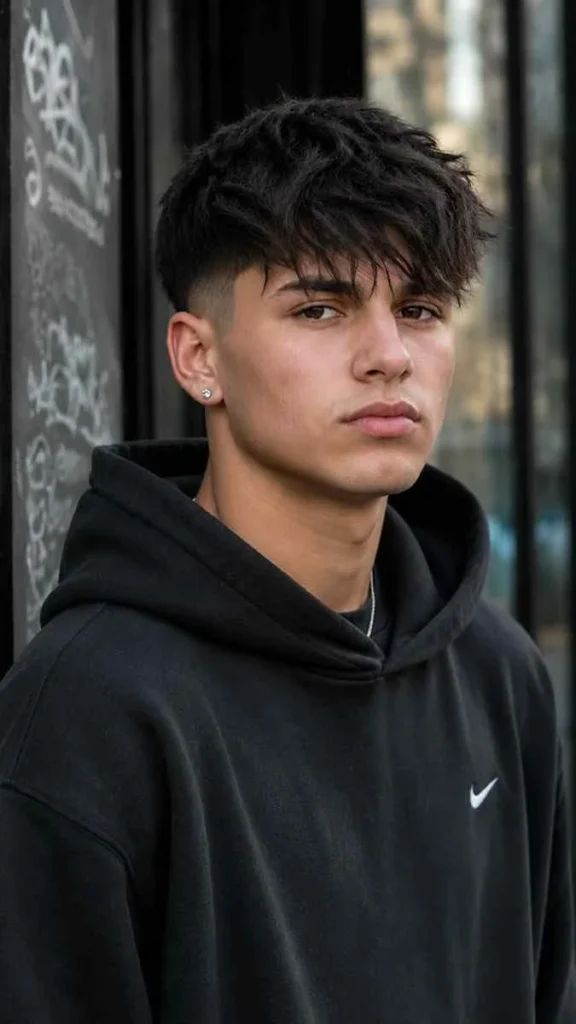
A longer front section cut at an angle, falling across one side of the forehead. Straight hair holds the angle consistently because every strand sits at the same level. On wavy hair the angle loses definition within hours.
Tell your barber, “Angular fringe. Cut the fringe on a diagonal—longer on one side than the other. Low fade on the sides. Keep three inches on top.”
Face shape: Heart and diamond. The angled fringe breaks up wider foreheads.
School safe: Yes.
Maintenance: Every 5-6 weeks.
Style time: Under 2 minutes.
Hard Part with Comb Over
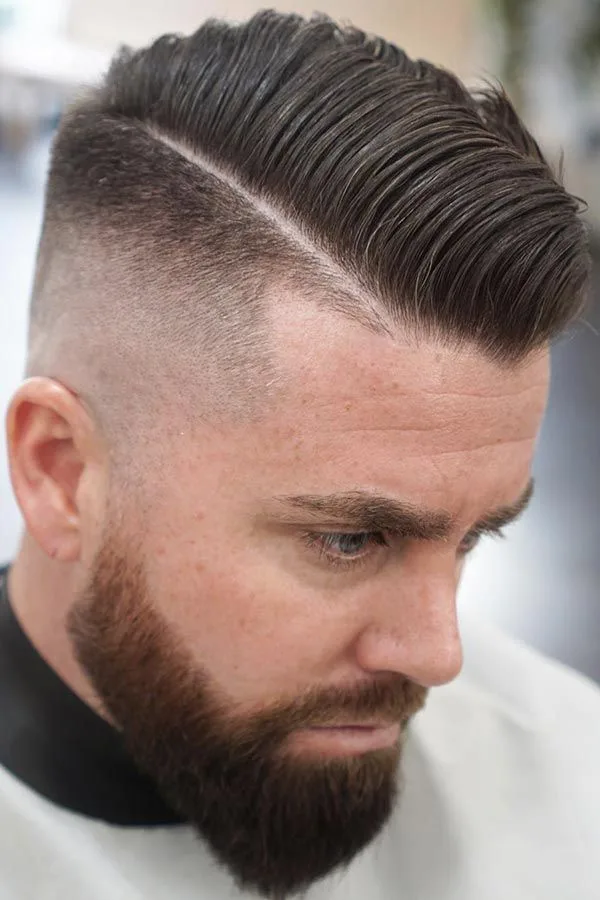
A razor line shaved at the parting creates a defined split between two sections of hair. The top section is swept to one side. Straight hair stays in the direction of the sweep all day without product reinforcement. Wavy hair constantly pushes against the part.
Tell your barber, “Hard part on the left. Mid fade below the part. Keep three inches on top to sweep over. Clean razor neckline.”
Face shape: Oval and square.
School safe: Yes.
Maintenance: Every 3-4 weeks.
Style time: Under 2 minutes.
Long Haircuts for Boys with Straight Hair
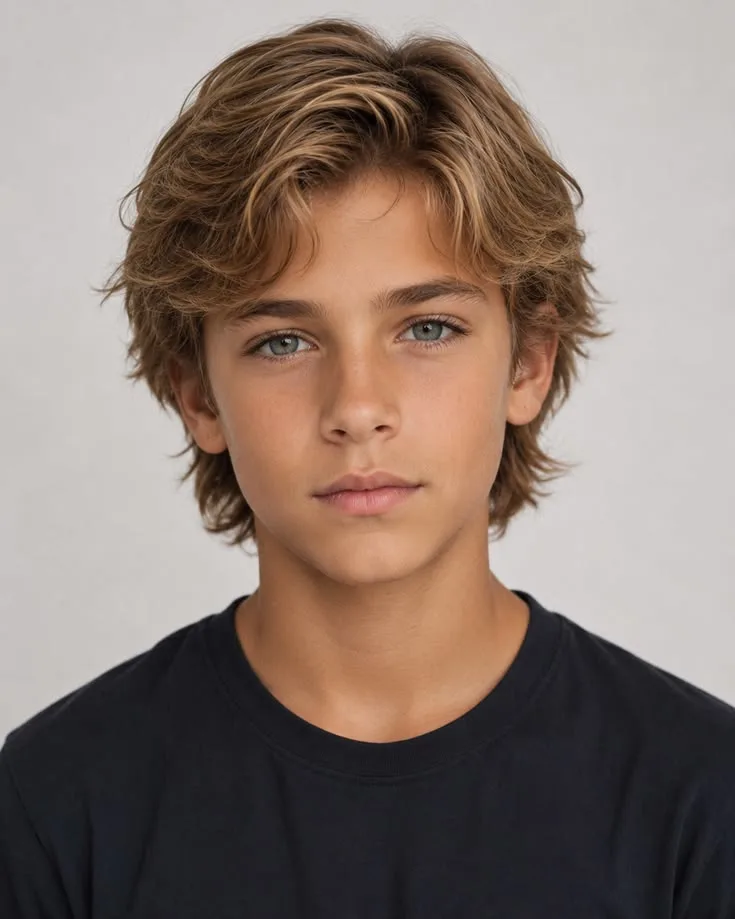
Growing straight hair out is the lowest-maintenance approach to longer styles. It lies flat, grows predictably, and does not need product to stay in a general shape. The challenge is avoiding the flat, shapeless result that comes from length without layering.
Bro Flow

Medium- to long straight hair that bends away from the face as it grows past the ears. The bro flow is arguably the most natural result of simply growing straight hair. No particular cut shape is required—the hair finds its flow at collar length.
Tell your barber, “Keep the length; add long layers from the jaw down to remove some weight. Shape the sides lightly. Leave the front and crown alone.”
Face shape: Oval. The natural fall of straight hair suits balanced proportions.
School safe: Yes, in most settings.
Maintenance: Every 8-10 weeks.
Style time: Zero. Air dry and go.
What are the most attractive haircuts for teenage boys with long straight hair? The bro flow and curtain bangs are the two most consistently well-received long styles. Both let straight hair do what it naturally does—fall cleanly and move predictably.
Ivy League with Length
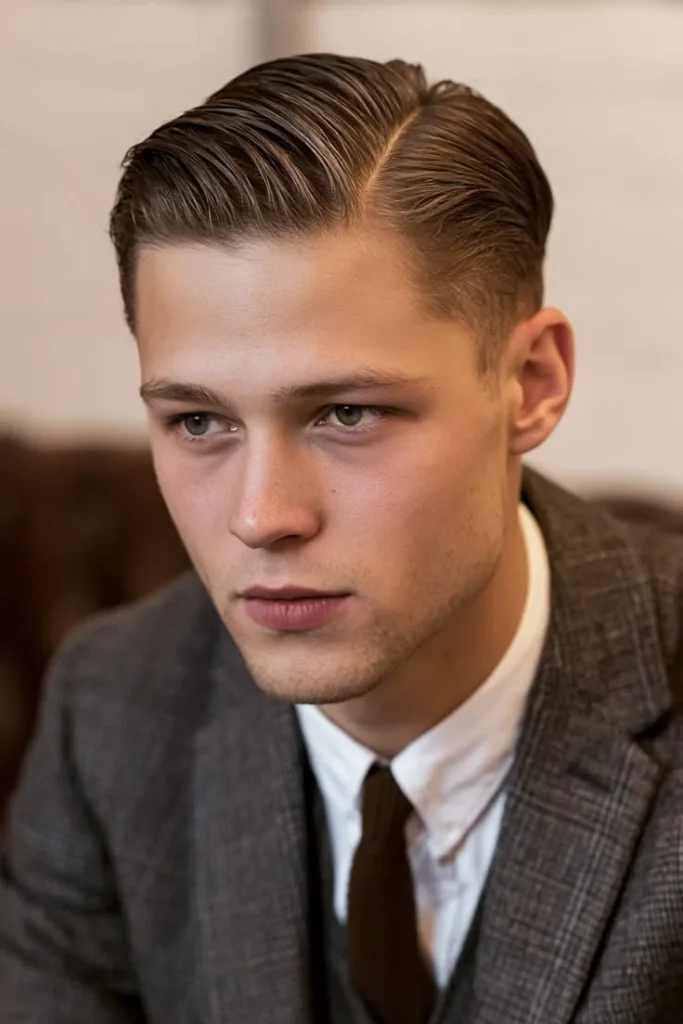
The Ivy League is a longer crew cut with enough top length to brush to one side. On straight hair it holds the side direction without daily product reinforcement. On curly or wavy hair it requires significant effort to stay in place.
Tell your barber, “Ivybarber, “Ivy League cut. Keep two and a half inches on top. Low taper on the sides. Clean neckline.”
Face shape: All.
School safe: Yes. One of the most formal-looking long options.
Maintenance: Every 5-6 weeks.
Style time: Under 2 minutes. A damp comb, done.
Slicked Back Undercut
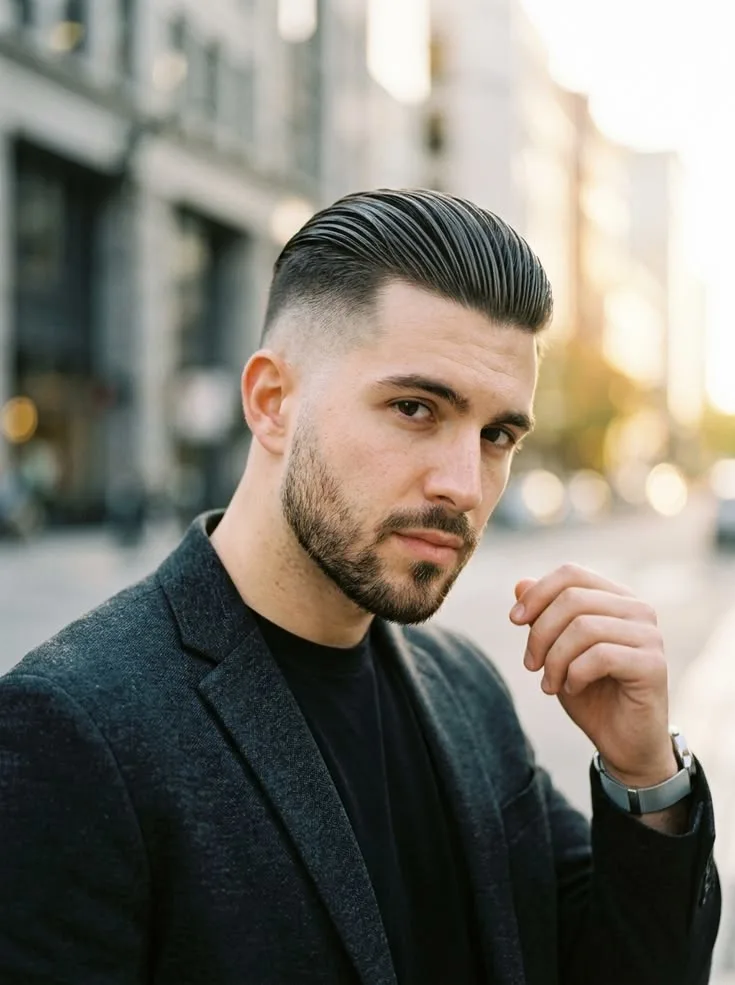
Shaved or faded sides with a long top brushed straight back. Straight hair stays back after the initial blow-dry without constant reapplication. Wavy hair pushes forward within an hour. Curly hair cannot achieve this style without strong gel that creates an unnatural appearance.
Tell your barber, “Slicked back undercut. Skin fade or tight taper on the sides. Leave the top long enough to brush straight back—at least three and a half inches.”
Face shape: Square and oval. Requires a strong jaw line to carry the dramatic contrast.
School safe: Check. Some schools flag the skin fade.
Maintenance: Every 4-5 weeks.
Style time: 4-5 minutes. Requires a blow dryer and pomade.
Trendy Boys’ Straight Hair Cuts in 2026
What are the hair trends for 2026? The dominant direction across all age groups is texture and movement achieved with minimal product. The irony for straight-haired boys is that this trend requires more styling effort from them than from their naturally textured peers. Here is an honest breakdown of which trending cuts work on straight hair and which ones require significant work.
Blowout Taper Honest Assessment
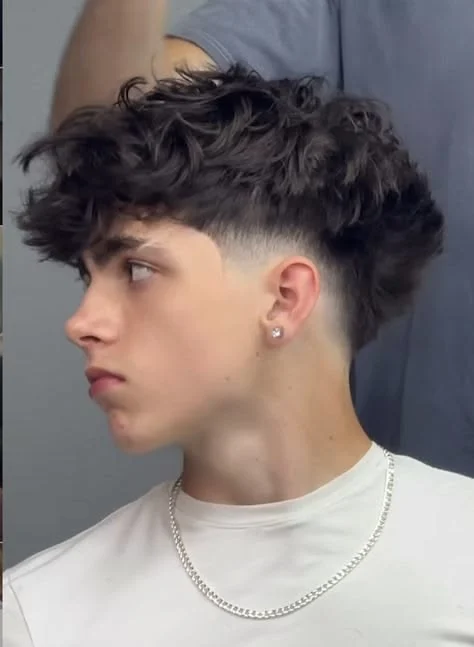
The biggest teen haircut trend of 2026. It looks best on thick, naturally wavy hair where the volume at the back and crown happens without a blow dryer. On straight hair, it requires five minutes with a dryer and volumizing mousse every morning.
Is big hair in for 2026? Yes. The blowout taper is the proof. But big hair on straight hair requires a daily commitment. If your son is willing to blow-dry for five minutes every morning, this is the best trending cut for straight hair. If not, choose the textured crop instead.
Tell your barber, “Blowout taper. Keep the back and top long enough to blow out—at least three inches. Low taper on the sides, not skin.”
Style time: 5 minutes minimum, with a blow dryer.
Fluffy Fringe
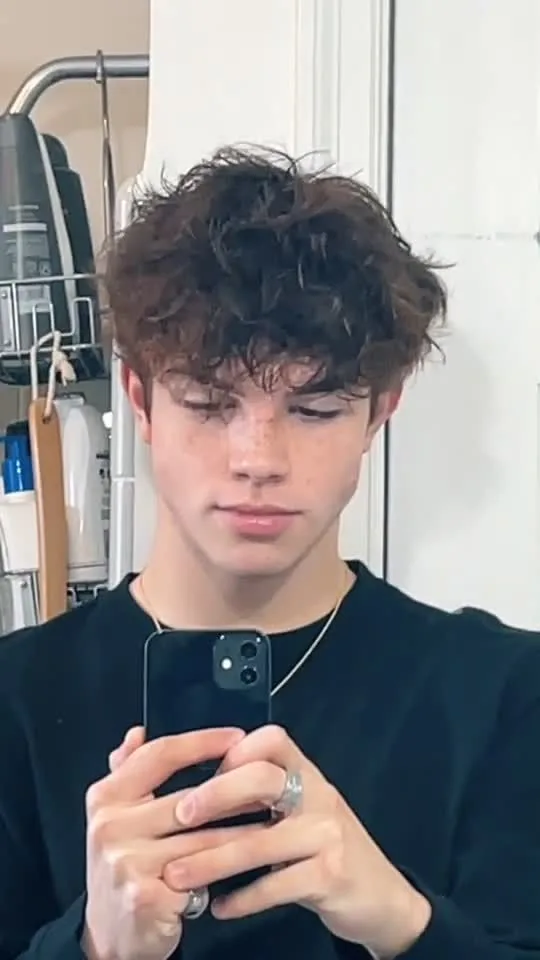
Similar honest assessment. The fluffy fringe on straight hair requires a blow dryer and volumizing product to achieve the airy, lifted look seen in photos. Without it, straight hair lies flat across the forehead as a standard fringe, not the lifted, voluminous version.
This is still a good cut on straight hair. The result just looks different from the textured version—cleaner and more classic rather than voluminous. Both are valid. Just be clear with your son about what the low-effort version looks like before the appointment.
Style time: Without a dryer—under 1 minute, looks like a classic fringe. With the dryer—4 minutes, looks like the photo.
Disconnected Undercut
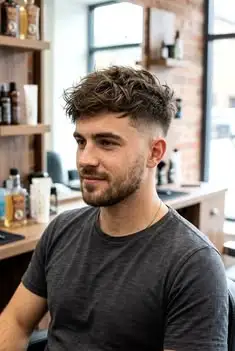
Short clipped sides with a clear separation between the sides and the significantly longer top. Straight hair creates the cleanest version of this cut because the top section stays smooth and defined. Wavy hair makes the top section unpredictable.
Tell your barber: “Disconnected undercut. Very short sides, natural or skin. Clear disconnection between sides and top. Keep the top at three and a half inches for a smooth fall.”
Face shape: Oval and square.
School safe: Check—some schools flag the sharp disconnection.
Maintenance: Every 4 weeks.
Style time: Under 2 minutes.
Executive Contour
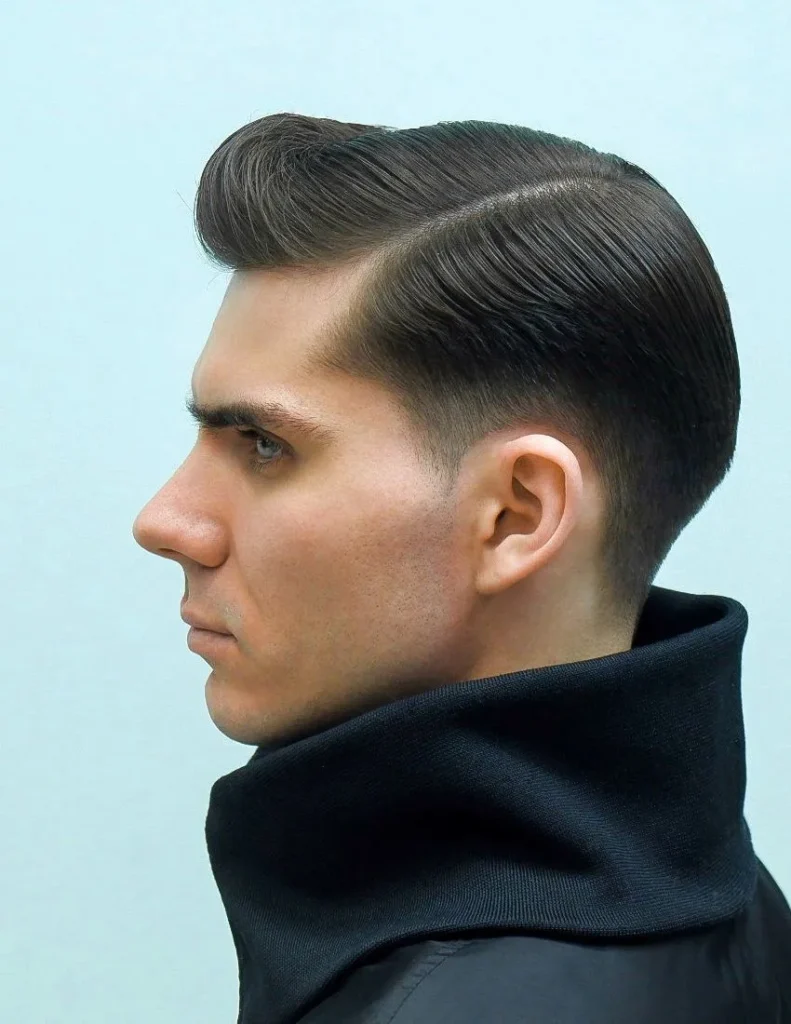
Neatly tapered sides with a slightly longer, combed top. The 2026 version of the classic preppy cut with softer edges and more natural texture. Straight hair holds the polished finish naturally. This is the trending option for boys who want something current that also works in formal settings.
Tell your barber, “Executive contour. Low taper on the sides. Keep two and a half inches on top, and sweep to the side or slightly back. Clean neckline.”
Face shape: All.
School safe: Yes, universally.
Maintenance: Every 5-6 weeks.
Style time: Under 2 minutes.
What Haircut Suits a 12-Year-Old Boy with Straight Hair?
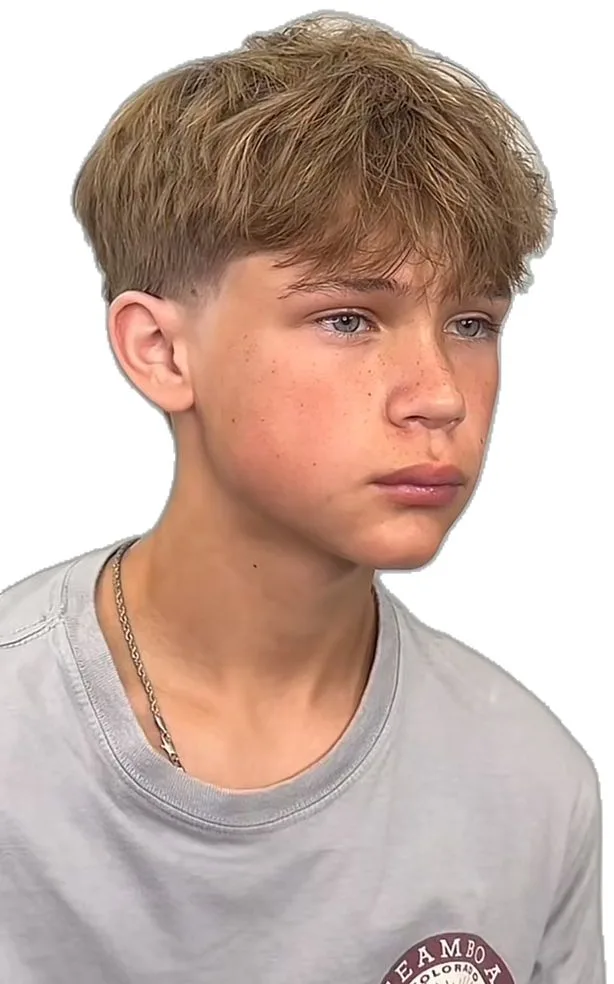
Twelve is the tween sweet spot—old enough to have a genuine opinion about his haircut, young enough that most school policies still apply firmly. The best cuts for twelve-year-olds with straight hair are the ones that look current without requiring a twenty-minute morning routine.
Best 5 Cuts for 12-Year-Olds with Straight Hair
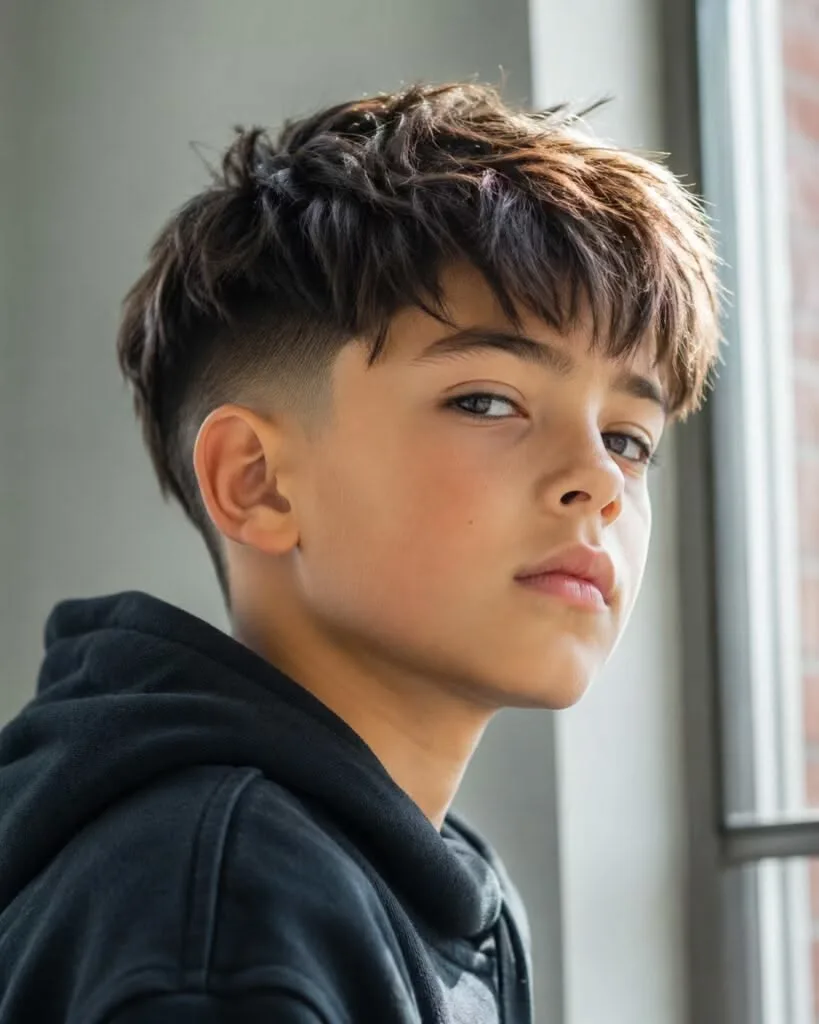
The blowout taper if he will use a blow dryer. The textured crop, if he will not. The curtain bangs for a longer style. The side part of the school environment is more conservative. The French crop is for fine, straight hair where volume is an issue.
School Dress Code at 12
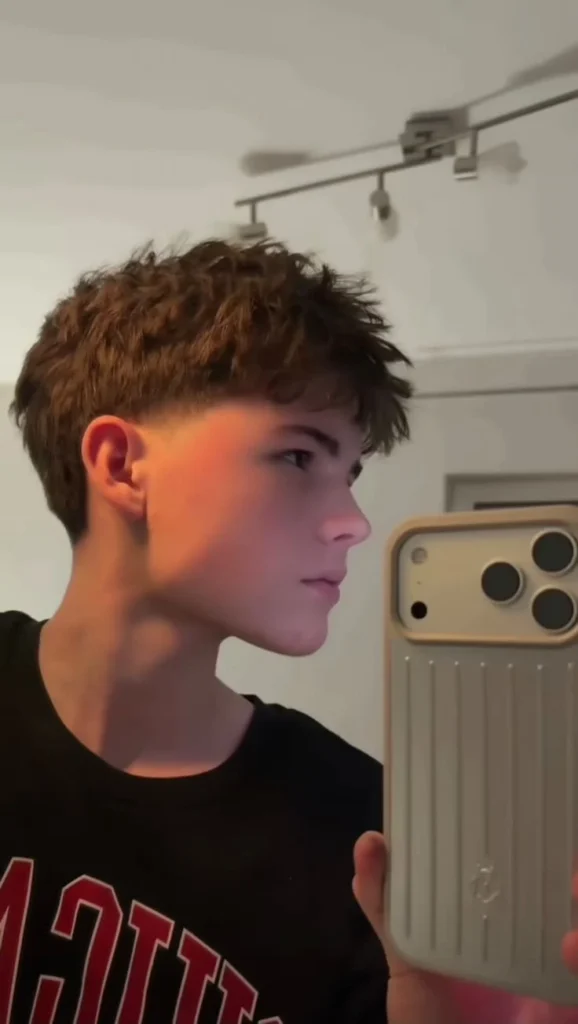
Most middle schools allow everything on this list except the Edgar cut, which sometimes gets flagged for the high skin fade. The disconnected undercut occasionally causes issues depending on the school. Every other cut here passes standard school policies in the US and UK.
For the complete guide to styles at this age, our 12-year-old boy haircut guide covers twenty styles with school safety ratings.
What 12-Year-Olds Want vs. What Parents Want
He wants whatever he saw on TikTok. You want something that grows out cleanly and does not require daily effort. The textured crop satisfies both. It looks current, it requires almost no product, and it grows out well for five to six weeks. It is the most common haircut compromise that genuinely works for both parties.
How to Add Texture and Volume to Straight Boys’ Hair
“I have thick, straight hair, and I’m looking for a haircut that adds texture or volume. Any recommendations?” This is one of the most upvoted hair questions on Reddit for good reason. The answer most people never get told is that the right cut solves this problem better than any product.
The Right Cut Adds Texture
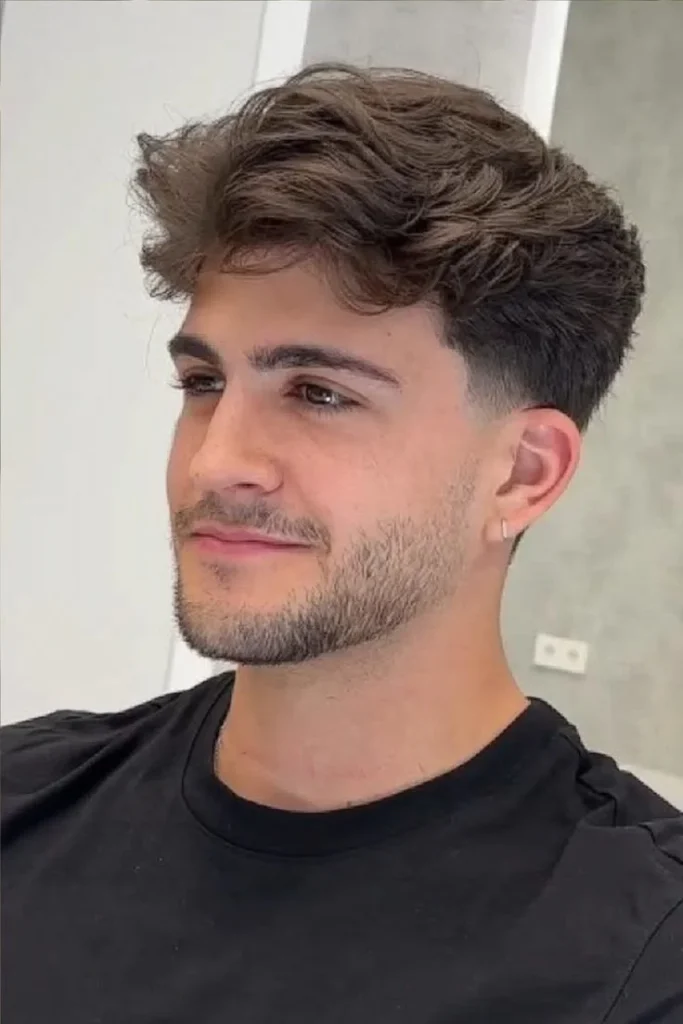
Point-cutting is the technique. Instead of cutting straight across—which creates a blunt, heavy edge—the barber cuts upward into the hair at an angle, creating irregular endpoints that catch light differently and create the appearance of texture.
Ask your barber specifically to point-cut the top section. If they use thinning scissors on straight hair, that is the wrong approach—thinning scissors remove bulk but do not add texture. Point scissors through the top length and add texture without reducing the volume you already have.
Products That Work on Straight Boys’ Hair
The three-product stack that covers every style on this list:
Budget ($5-12):
Gatsby Wax Fiber ($6) for short to medium styles. Cantu Cream for Boys ($8) for longer styles needing light hold. Sea salt spray from any drugstore brand ($8) for texture on medium to long hair.
Mid-range ($12-20):
American Crew Fiber ($16) for short to medium styles. Bumble and Bumble Thickening Spray ($18) for fine straight hair needing volume before blow-drying.
Premium ($20-28):
Moroccanoil Texture Clay ($24) for short styles needing definition. Living Proof Full Thickening Cream ($26) for fine straight hair on medium-length styles.
Blow-Drying Technique for Volume in 3 Minutes
Towel dry until eighty percent dry. Apply a pea-sized amount of mousse or volumizing spray at the roots. Bend forward. Blow dry the roots pointing downward—this creates lift at the base. Flip upright. Blow dry the top in the direction you want it to fall. Apply product. Done.
This works because you are creating lift at the root before the hair dries in its natural flat position. Once roots are lifted and set, they stay up.
What NOT to Use on Straight Boys’ Hair
Heavy pomade weighs straight hair flat. The shinier the product, the heavier it tends to be—shine = oils = weight = flat. Wet look gel does the same thing and adds the visual of flat, greasy hair on top of the physical effect. Both are wrong for straight fine hair.
What is the 3-Hair Rule? It varies by source, but the most useful version for straight hair boys is to use no more than three products at one time, use no more than a pea-sized amount of each, and remove all product residue at least twice a week with a clarifying or sulfate-free shampoo. Product buildup on straight hair is more visible than on any other type because the strands are smooth and reflective.
How to Tell Your Barber Exactly What You Want
The most common cause of a bad boys haircut is not a bad barber. It is a description so vague that the barber had to guess. “Short on the sides, longer on top” describes every fade cut ever cut. It tells the barber nothing specific.
Barber Script for Short Styles
“I want [style name] to keep [X] inches on top and point-cut for texture. [Low/mid/high] fade on the sides. Please cut the top dry so I can see how it falls before you go shorter. No thinning scissors.”
Barber Script for Medium Styles
“I want [style name] to keep [X] inches on top—enough to [fall forward/sweep to one side/part in the middle]. Low taper on the sides. Cut the top dry. Point-cut the top section for texture.”
Barber Script for Long Styles
“I want to keep the length. Add long layers starting from the jawline downward to remove some weight. Do not touch the front length or the crown. Cut the sides and back lightly.”
The One Thing to Always Mention
“My son’s hair is straight—please cut the top dry so we can see where it falls naturally before going any shorter.” This one sentence saves more haircuts than anything else. Straight hair looks shorter when dry than when wet because it does not have curls to hide extra length. A barber cutting wet straight hair is cutting blind.
What are some good haircuts for teenage boys with short straight brown hair and big ears? The side part, curtain bangs, and angular fringe all provide natural coverage around the ear tops without looking deliberate. Ask your barber for a low taper that keeps some length at and around the ear rather than a fade that leaves the ear fully exposed.
School-Safe Straight Hair Cuts That Still Look Good
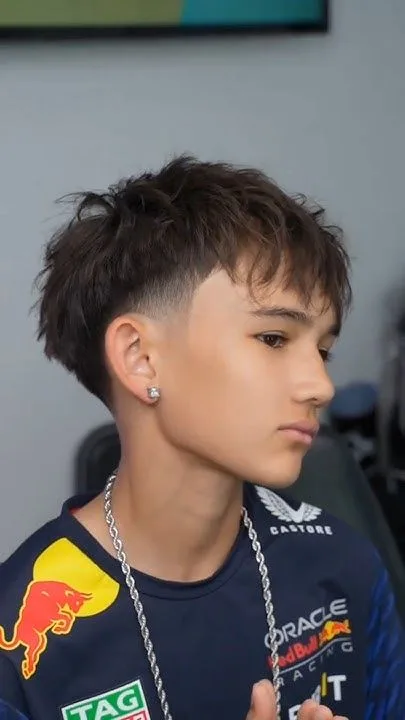
The range of school-safe options for straight-haired boys is wider than most parents think. The only consistent restrictions across UK and US school policies are shaved patterns or designs, unnatural colors, and extreme mohawks where the sides are fully shaved.
Cuts That Pass Every Policy
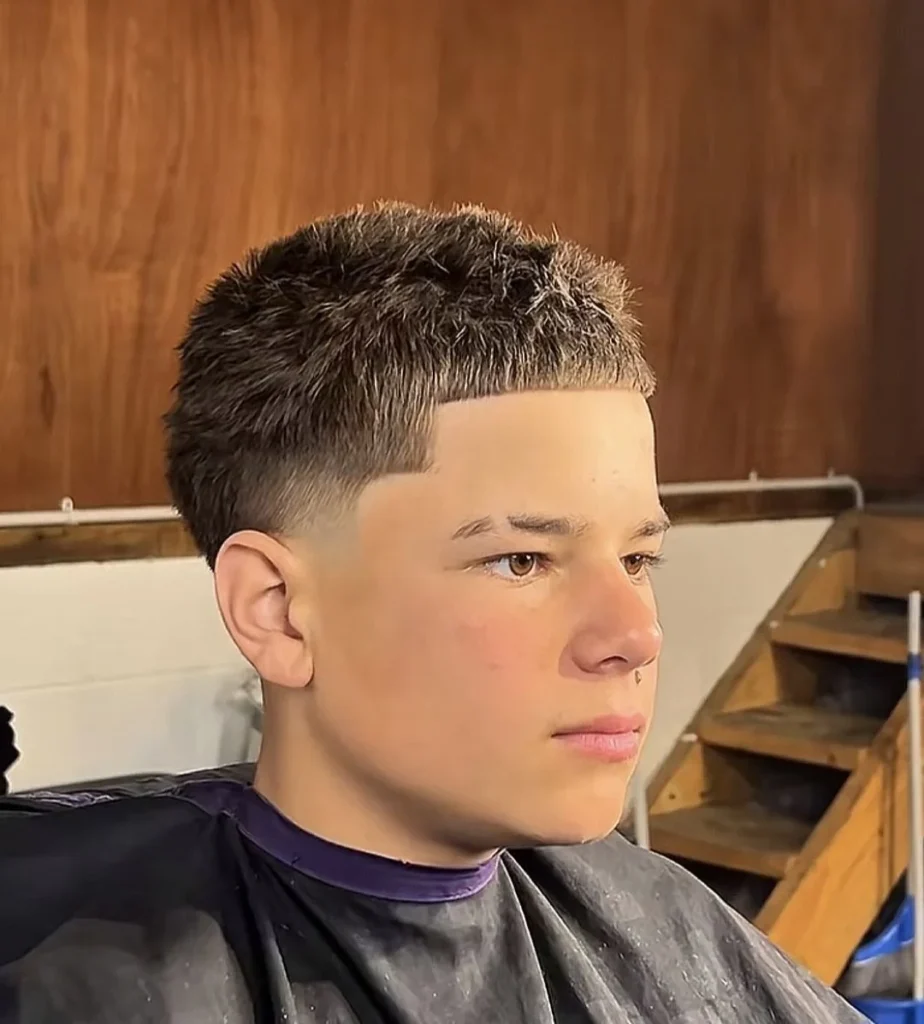
Textured crop, French crop, side part, crew cut, curtain bangs, comma hair, two block, Ivy League, bro flow, executive contour—every one of these is school-safe across all the school policies I have encountered. Nine of the twenty cuts on this page have zero dress code risk.
What Schools Actually Ban
Shaved designs or patterns in the fade. Skin fades combined with shaved lines (sometimes). Hair color that is not a natural shade. Mohawk shapes where the sides are clipped below a number one. Edgar cuts occasionally get flagged at more conservative schools due to the high fade.
Middle School vs High School Rules
Middle school policies tend to be stricter and more literally interpreted. High school policies allow more discretion. As a general rule, add one level of boldness when moving from middle school to high school. The textured crop that is safe at eleven is still safe at fifteen, but the disconnected undercut that might get questioned at eleven is generally fine at fifteen.
For age-specific guides, see our boys’ haircuts hub and teen boy haircuts guide.
How Often Should Straight Hair Boys Get a Haircut?
Straight hair makes the grow-out phase more visible than wavy or curly hair. When a fade grows out on straight hair, the clear line between the faded section and the longer section above it becomes obvious quickly. Short fades need touching up before most other cut types.
| Short fade (Edgar, skin fade) | Every 3 weeks | Fade line visible fast |
| Medium fade (textured crop) | Every 4 weeks | Sides catch up to the top. |
| Low taper (side part, French crop) | Every 5-6 weeks | Gradual grow-out |
| Long styles (bro flow, Ivy League) | Every 8-10 weeks | Length hides growth. |
Cost Over a Full Year
Short fades at $30 every 3 weeks: approximately $520 per year.
Mid-fade cuts at $30 every 4 weeks: approximately $390 per year.
Low taper cuts at $25 every 5 weeks: approximately $260 per year.
Long styles at $25 every 9 weeks: approximately $145 per year.
For more on managing barbershop costs and maintenance schedules, our boys’ haircut guide covers every age and style type.
Signs It Needs a Trim Now
The fade line is visible without the context of the top—the fade has grown into the bottom of the longer section, and the blend has disappeared. The fringe has passed the eyebrows on a style designed to sit above them. The sides have reached the same length as the bottom of the top section. Any of these three signals means the cut has finished its shape and needs a trim.
Frequently Asked Questions
Which haircut is best for straight-haired boys?
The French crop for ages seven to thirteen. The two block or curtain bangs for teens fourteen and older. Both work by using the properties of straight hair—smooth strands, predictable fall, and clean line-holding—rather than fighting against them.
What haircut suits a 12-year-old boy?
The textured crop with mid fade or the curtain bangs. Both are school-safe, require minimal morning effort, and look current without being extreme. The textured crop is lower maintenance. The curtain bangs require a quick blow-dry but photograph significantly better. For the full breakdown, see our 12-year-old boy haircut guide.
What are Gen Z hairstyles?
The two-block, curtain bangs, fluffy fringe, blowout taper, and comma hair define Gen Z style in 2026. The common thread is natural-looking movement achieved with minimal visible product. Straight-haired boys can achieve all of these—the two block and curtain bangs come most naturally, but the blowout taper and fluffy fringe require more effort.
What are the most popular boy haircuts in 2026?
The textured crop remains the most requested cut in barbershops across the US and UK. The blowout taper is growing fastest. The two-block is the strongest rising trend, particularly among boys fourteen and older. All three work on straight hair.
What are the hair trends for 2026?
Texture and movement are the dominant themes. Natural-looking finishes over rigid product-heavy styles. Longer tops with clean fades. The blowout taper, wolf cut, curtain bangs, and comma hair are the specific trend cuts of 2026.
What is the most popular hair right now?
The textured crop and blowout taper are the two most requested cuts across all age groups. For straight hair specifically, the two-block is gaining ground fastest because it works naturally on straight strands without requiring product or tools.
What is the 3-Hair Rule?
The most practical version for boys: no more than three products at once, pea-sized amount of each, and wash all product residue out at least twice per week. For straight hair specifically, this matters more than for other hair types because product buildup shows immediately on smooth, reflective strands.
Is big hair in for 2026?
Yes. The blowout taper is the proof. But big hair on straight hair requires a blow dryer and volumizing product every morning. If that is not realistic for your son, choose the textured crop instead—it achieves a similar volume-at-the-crown effect through the cut structure rather than daily styling.
What are some good haircuts for teenage boys with short straight brown hair and big ears?
Curtain bangs, side-swept fringe, or low taper with length left around the ears. All three provide natural coverage around the ear tops. Ask your barber specifically for a low taper rather than a fade—a fade removes all hair at the ear level and leaves the ears fully exposed.
How do I add volume to flat, straight hair?
Three things in order of importance: point-cut the top section when getting it cut, blow dry roots upward immediately after washing, and use lightweight clay or mousse rather than heavy pomade. The cut matters more than the products. A blunt-cut top on straight hair will always lie flat regardless of what you put on it.
What products work best for straight hair boys?
Lightweight matte clay for short to medium styles. Sea salt spray for texture on medium length. Volumizing mousse before blow-drying for any style that needs lift. Avoid heavy pomades, wet-look gel, and anything with mineral oil in the top five ingredients—all three flatten straight hair.
Will a blowout taper work on straight hair?
Yes, with effort. It requires five minutes with a blow dryer and volumizing mousse every morning. Without the blow dryer, straight hair will lie flat rather than creating the rounded, lifted shape seen in photos. If daily blow drying is not realistic, the textured crop achieves a similar school-appropriate result without any tools.
Every cut on this list was chosen because it works on straight hair—not despite it. Straight hair is not a limitation. It is a characteristic that certain cuts use to their advantage better than any other hair type.
Pick one style, save the barber script, and walk into the appointment with the one line that changes every straight-hair barbershop outcome: “Please cut the top dry so I can see where it falls before you go shorter.”
That one sentence is what most barbers are never told and every straight-haired client should always say.
For the complete hub of boys’ haircut guides by age and style, visit our boys’ haircut guide. For teens specifically, the teen boy haircuts guide covers twenty-five styles with full barber scripts. And if you are still unsure which cut suits your son’s face shape and hair type, our teen haircut finder quiz takes sixty seconds.